Main Facts: A Conflict Rooted in Silt and Survival
In the northern reaches of West Bengal, where the Teesta River descends from the Himalayas and carves a serpentine path through the plains, a fragile and high-stakes drama unfolds annually. On the chars—ephemeral sandbars created by the river’s shifting currents—thousands of migrant farmers have established a precarious existence. These farmers, often landless and displaced by previous floods or economic hardship, utilize the nutrient-rich silt left behind by the monsoon to cultivate seasonal crops like maize, watermelons, pumpkins, and mustard.
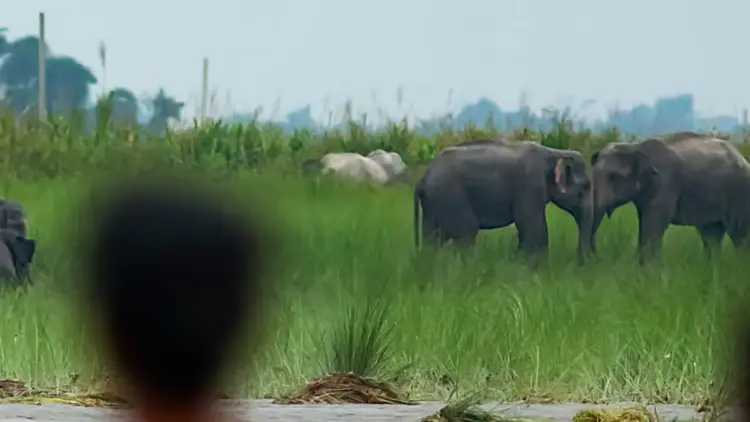
However, this agricultural success has birthed a dangerous ecological crossroads. The lush, green patches in the middle of the riverbed have become a primary attraction for herds of Asian elephants (Elephas maximus) emerging from the dense forests of the Gorumara and Jaldapara National Parks and the Baikunthapur forest division. What follows is a relentless cycle of Human-Elephant Conflict (HEC) that defines life on the Teesta.
The core of the crisis lies in the intersection of three factors: the seasonal migration of landless farmers, the traditional migratory corridors of elephants, and the administrative vacuum regarding land rights on the riverbed. Farmers lose their entire year’s investment in a single night of raiding, while elephants face increasing hostility and the risk of injury. Most critically, because these farmers cultivate "unclaimed" or shifting river land, they exist in a legal grey zone where government compensation for crop loss is non-existent, leaving them to bear the full weight of the conflict alone.
Chronology: The Rhythms of the River and the Raid
The conflict on the Teesta sandbars is not a static event but a seasonal cycle dictated by the monsoon and the harvest.
Phase 1: The Monsoon Retreat (June – September)
During the monsoon, the Teesta is a raging torrent. The sandbars are often completely submerged, and the farmers retreat to higher ground or temporary shelters. The elephants remain deep within the protected forest areas where natural fodder is abundant.
Phase 2: Siltation and Sowing (October – November)
As the water levels recede, the river reveals a transformed landscape. New sandbars emerge, and old ones are reshaped by erosion. Farmers return to these "new" lands, clearing the tall elephant grass (Saccharum ravennae) to plant seeds. The soft, moist silt requires little irrigation, making it an attractive prospect for those with no capital.
Phase 3: The Growth Period and First Contact (December – February)
As the crops—particularly maize and vegetables—begin to mature, the elephants take notice. With the forest undergrowth drying out during the winter months, the high-calorie, easily accessible crops on the sandbars become an irresistible lure. Small bachelor groups of elephants begin making nightly forays onto the chars.
Phase 4: Peak Conflict and Harvest (March – May)
This is the most volatile period. Large herds, including cows and calves, cross the shallow channels of the Teesta to reach the islands. Farmers spend every night in makeshift watchtowers (machans), using flashlights, firecrackers, and drums to ward off the giants. This period sees the highest frequency of property damage, crop destruction, and occasional human and elephant fatalities.
Supporting Data: The Scale of the Crisis
To understand the gravity of the situation, one must look at the demographic and ecological pressures mounting in North Bengal.
The Elephant Population and Habitat Loss
North Bengal is home to approximately 500 to 600 elephants. While this represents only a small fraction of India’s total elephant population, the region accounts for a disproportionately high number of HEC incidents. The primary reason is habitat fragmentation. The traditional corridors connecting the forests of Nepal, West Bengal, and Bhutan are bisected by tea gardens, highways, railway lines, and now, expanding riverbed agriculture.
Economic Vulnerability
A typical migrant farmer on the Teesta chars invests between ₹20,000 to ₹40,000 per acre in seeds, fertilizers, and labor. For many, this capital is borrowed from local moneylenders at high interest rates. A single elephant raid can destroy 80% of a field in a matter of hours. Without insurance or state aid, a single night can result in a debt trap that lasts for generations.
Geographic Instability
The Teesta is one of the most volatile rivers in the eastern Himalayas. Satellite imagery over the last two decades shows that the river’s main channel can shift by several kilometers in a single season. This instability prevents the establishment of permanent anti-depredation measures, such as electric fencing or permanent trenches, which are used in more stable agricultural zones.
Official Responses: The Policy Vacuum
The plight of the Teesta farmers is exacerbated by a lack of official recognition. In interviews and public statements, the response from various departments highlights a bureaucratic deadlock.

The Forest Department’s Stance
Forest officials in West Bengal maintain that compensation for crop damage is governed by strict rules. To claim compensation, a farmer must typically provide proof of land ownership or a valid lease (a Patta). Since the sandbars are "Khas" land (government-owned) or are considered part of the active riverbed where permanent settlement is prohibited, the farmers are technically "encroachers."
"We sympathize with the losses," a forest ranger noted on condition of anonymity, "but our hands are tied by the compensation guidelines. If we pay for crops grown on unauthorized land, it sets a precedent that encourages further encroachment into sensitive ecological corridors."
The Revenue and Disaster Management Departments
The local administration often views the char dwellers as a transient population. While they provide basic relief during major floods (such as the 2023 Glacial Lake Outburst Flood that devastated the Teesta valley), there is no long-term policy to settle these farmers or provide them with "land-use permits" that would enable them to access agricultural subsidies or wildlife compensation.
The Role of "Hulla Parties"
The only tangible support the state provides is the deployment of "Hulla Parties"—rapid response teams of local villagers trained by the Forest Department to drive elephants back into the woods using searchlights and noise. However, these teams are overworked and cannot be present on every isolated sandbar simultaneously.
Implications: A Fragile Future for Man and Beast
The ongoing conflict on the Teesta has far-reaching implications for conservation, human rights, and regional stability.
1. The Erosion of Tolerance
Historically, the communities in North Bengal have shared a cultural and religious reverence for elephants, often referred to as "Mahakal." However, the relentless economic losses are eroding this traditional tolerance. As farmers lose their livelihoods without any hope of compensation, there is an increasing risk of retaliatory measures, such as the use of high-voltage electric fences or poisoned bait, which are illegal but born out of desperation.
2. Ecological Corridor Blockage
The Teesta riverbed is more than just a farm; it is a vital movement corridor for elephants moving between the hills and the plains. As more sandbars are converted into agricultural plots, the "stepping stones" the elephants use to navigate the landscape are disappearing. This forces elephants into closer proximity with human settlements, leading to more frequent encounters in villages further away from the river.
3. Climate Change and Unpredictability
The 2023 Teesta flash flood served as a grim reminder of the region’s vulnerability. Climate change is making the Himalayan rivers more unpredictable. Increased frequency of extreme rainfall events means that the chars will become even more unstable. This will likely push farmers to clear land even closer to forest boundaries, further intensifying the conflict.
4. The Human Rights Dimension
The denial of compensation based on land-tenure status raises significant ethical questions. These migrant farmers are often the most marginalized members of society, driven to the dangerous riverbanks because they have been squeezed out of the formal economy. Their lack of legal standing leaves them "invisible" to the state, even as they provide a significant portion of the region’s seasonal produce.
Conclusion: Toward a Coexistence Model
The situation on the Teesta sandbars is a microcosm of the global challenge of wildlife conservation in human-dominated landscapes. Solving the crisis requires moving beyond the binary of "farmer vs. elephant" or "legal vs. illegal."
Potential solutions include:
- Special Compensation Clauses: Amending forest laws to allow for "ex-gratia" payments for crop loss on riverbeds, recognizing the unique nature of char farming.
- Crop Diversification: Encouraging farmers to grow crops that are less attractive to elephants, such as chili, ginger, or certain aromatic grasses, which could provide income without drawing herds.
- Community-Based Monitoring: Strengthening the capacity of local farmers to use non-invasive deterrents, such as bee-hive fencing or bio-fencing, supported by NGO or government funding.
Until a holistic approach is taken, the farmers of the Teesta will continue to spend their nights in the cold shadows of the Himalayas, watching the horizon for the silent, massive shapes that represent both the majesty of nature and the ruin of their livelihoods. The shifting sands of the Teesta remain a place where every harvest is a gamble, and the price of failure is paid in both hunger and fear.