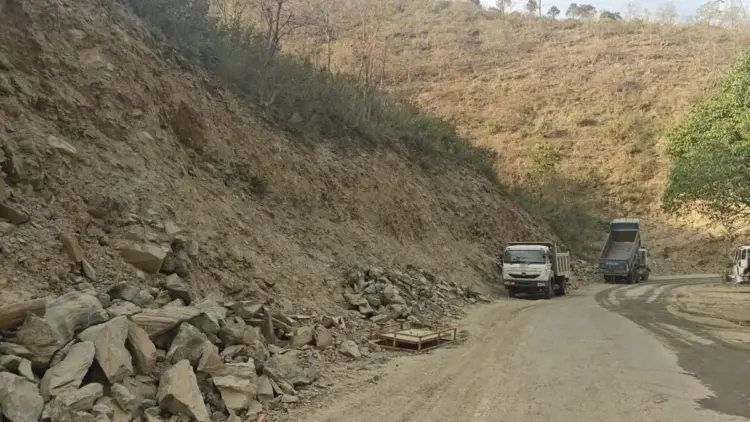
PAURI, UTTARAKHAND — Thirty kilometres from the hill town of Pauri, the asphalt gives way to a solar farm. From there, the path disintegrates into rubble and eventually becomes a narrow, stony footpath that winds for twenty minutes down a steep incline. At the end of this trail lies Chair Talla, a village situated at an altitude of 1,100 metres. In this thin Himalayan air, a disease traditionally associated with the hot, humid plains of the Ganges basin has found a new and dangerous foothold.
Nine years ago, Chair Talla was thought to have recorded the final case of visceral leishmaniasis—commonly known as kala-azar—in Uttarakhand. As a parasitic neglected tropical disease (NTD) spread by the bite of the female sandfly, kala-azar is a ruthless killer, carrying a 75% mortality rate if left untreated. However, far from being eradicated in the hills, the disease has simply gone underground, obscured by a fragmented health surveillance system and a changing climate that is pushing the parasite into uncharted territory.
Main Facts: A Discrepancy in the Data
The central crisis of kala-azar in Uttarakhand is a profound "knowledge gap" between regional health departments and national medical institutions. While the state government of Uttarakhand has largely moved on, considering the disease a relic of the past, data obtained through Right to Information (RTI) requests paints a different, more alarming picture.

Records from the All India Institute of Medical Sciences (AIIMS) in Delhi reveal that the hospital received kala-azar patients from Uttarakhand every single year between 2016 and 2025. In total, 33 cases were recorded by AIIMS Delhi alone—cases that never appeared in Uttarakhand’s state-level data.
The National Health Mission (NHM) in Uttarakhand relies on a bottom-up reporting structure. Information is gathered by frontline workers, such as Accredited Social Health Activists (ASHAs) and Auxiliary Nurse Midwives (ANMs), and then funneled through primary and community health centres to district hospitals. However, when a patient from a mountain village bypasses these local facilities—often due to a lack of diagnostic tools—and seeks specialized care at AIIMS in Delhi or Rishikesh, the data trail breaks. AIIMS maintains its own registers, and these "central" cases are frequently not reconciled with the state’s "peripheral" records. Consequently, on paper, Uttarakhand appears to be nearing elimination, while in reality, the parasite continues to circulate among its rural populations.
Chronology: From the Lowlands to the Peaks
The history of kala-azar in India is a saga of resurgence and retreat. To understand its current presence in the Himalayas, one must look back at the trajectory of the disease over the last two centuries.

- 1824–1825: One of the earliest recorded outbreaks occurred in Jessore (now in Bangladesh), where a "fever disease" known as jwarvikar claimed an estimated 750,000 lives over three years.
- 1950s: The National Malaria Eradication Programme, which involved mass insecticide spraying, inadvertently nearly eliminated kala-azar across India as a secondary benefit.
- 1974: The disease resurged violently in Bihar, spreading through Jharkhand, West Bengal, and eastern Uttar Pradesh.
- 2011: The first modern case was officially recorded in Uttarakhand’s Kumaon region at Sushila Tiwari Hospital in Haldwani. At the time, it was considered an "incidental finding."
- 2013: Bhupendra Chauhan, a 32-year-old resident of Chair Talla, fell ill with what was initially misdiagnosed as typhoid. This began a decade-long struggle that highlighted the diagnostic failures in the region.
- 2014–2020: Clinical studies began documenting cases among children in the Garhwal region who had no history of travel to endemic lowland areas, proving that local transmission was occurring in the mountains.
- 2025: The Ministry of Health and Family Welfare announced that India had met elimination targets (<1 case per 10,000 people) in 633 blocks across 54 endemic districts. However, this success story conspicuously excludes non-endemic states like Uttarakhand, where the disease is emerging.
Supporting Data: The Changing Biology of a Killer
Kala-azar is caused by the parasite Leishmania donovani, which is transmitted by the female sandfly, Phlebotomus argentipes. Once in the human body, the parasite invades macrophages—immune cells—and multiplies, eventually migrating to the spleen, liver, and bone marrow.
Environmental Drivers
Traditionally, it was believed that the cold, dry air of the Himalayan foothills was inhospitable to the sandfly. However, rising global temperatures and infrastructure development have altered this calculus.
- Elevation Shifts: In neighboring Nepal, researchers have found Phlebotomus argentipes at elevations of 1,764 metres—nearly three times the 600-metre limit previously assumed by scientists.
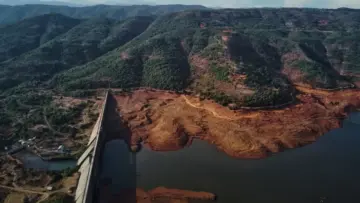
- Microclimates: Road construction and the creation of dam reservoirs in Uttarakhand have disturbed local ecosystems, creating humid micro-pockets that allow sandflies to thrive where they previously could not.
A Different Strain?
A 2014 study revealed that more than a third of patients in the Garhwal region presented with swollen lymph nodes. This is a symptom rarely seen in the classic Indian strain of the disease but is common in the Mediterranean form of visceral leishmaniasis. This suggests that the disease may be evolving or that a different subspecies of the parasite is adapting to the mountain environment.

The Animal Reservoir
While the human-to-sandfly-to-human cycle is the primary driver in the plains, experts like Padma Shri recipient Dr. Shyam Sundar suspect that animal reservoirs play a larger role in the hills. A study conducted with the U.S. Centers for Disease Control and Prevention found that 30% of dogs tested in endemic areas carried antibodies against Leishmania. In Uttarakhand, where families live in close proximity to livestock, sandflies are frequently found in cowsheds. If the insects are being pushed out of homes by insecticide spraying, they may be moving to unsprayed shelters, maintaining the parasite population among cattle and domestic animals.
Official Responses: The "Elimination" Paradox
The Indian government’s official stance on kala-azar is one of triumph. In July 2025, the Ministry of Health and Family Welfare declared that the country had reached its elimination goals ahead of the UN’s 2030 deadline. This was achieved through the National Kala-azar Elimination Programme (NKAEP), which focused heavily on four states: Bihar, Jharkhand, West Bengal, and Uttar Pradesh.
The NKAEP implemented several successful strategies:

- Rapid rK39 Tests: Allowing for diagnosis in rural settings without bone marrow biopsies.
- Single-dose Treatment: Utilizing liposomal amphotericin B infusions, which have a high success rate.
- Active Case Searching: Specifically looking for Post-Kala-azar Dermal Leishmaniasis (PKDL), where the parasite lives in the skin of "recovered" patients, acting as a hidden source for new infections.
However, this focus has created a "blind spot" in states like Uttarakhand. Because Uttarakhand is not classified as an "endemic" state, it does not have a dedicated elimination programme. Surveillance is folded into general vector-borne disease management, which lacks the rigor required to track a disease as elusive as kala-azar. RTI responses from the Uttarakhand NHM claimed zero cases between 2018 and 2025, directly contradicting the 33 cases recorded by AIIMS Delhi and the clinical findings at AIIMS Rishikesh.
Implications: The Human and Economic Toll
The failure to recognize kala-azar as an emerging threat in the Himalayas has devastating consequences for the region’s poorest residents.
The Cycle of Debt
For families in villages like Chair Talla and Askora, a kala-azar diagnosis is often a financial death sentence. Bhupendra Chauhan’s family spent between ₹12-13 lakh (approximately $15,000 USD) on his treatment, visiting four different hospitals across three states. Ramesh Singh, another villager, died in 2022 despite treatment, leaving his family with debts of ₹5 lakh. In these subsistence-farming communities, such sums are insurmountable, forcing elderly parents like 55-year-old Narayan Singh to work as day laborers to pay off medical debts for children they have already lost.

The Diagnostic Delay
Because hill doctors are not trained to suspect kala-azar, patients are often treated for months for typhoid, malaria, or jaundice. This delay allows the parasite to ravage the internal organs, making the eventual treatment less effective and increasing the likelihood of a fatal relapse. Kavita Bisht, a five-year-old from Pithoragarh who had never left her high-altitude village, died in 2020 after a five-month struggle to get a correct diagnosis.
The Need for a Pan-India Strategy
The emergence of kala-azar in the Himalayas serves as a warning that infectious diseases do not respect administrative boundaries or historical "endemic zones." Experts like Dr. Sanjay Sarin of the Drugs for Neglected Diseases initiative (DNDi) argue that the current progress is not a "finish line."
To prevent a full-scale outbreak in the mountains, the health system must:

- Integrate Data: Create a unified national registry where cases treated at central hospitals (AIIMS) are automatically flagged to the patient’s home state.
- Expand Surveillance: Train ASHAs and ANMs in mountain states to recognize the persistent fever and organ enlargement characteristic of the disease.
- Outdoor Vector Control: Move beyond indoor residual spraying to monitor sandfly behavior in peridomestic areas, such as cowsheds and livestock shelters.
As the climate warms, the "fever disease" of the lowlands is no longer a distant threat to the people of the Himalayas. Without a shift in how India tracks and treats this neglected disease, the success of the national elimination programme will remain a reality only on paper, while the residents of villages like Chair Talla continue to pay the price in lives and livelihoods.