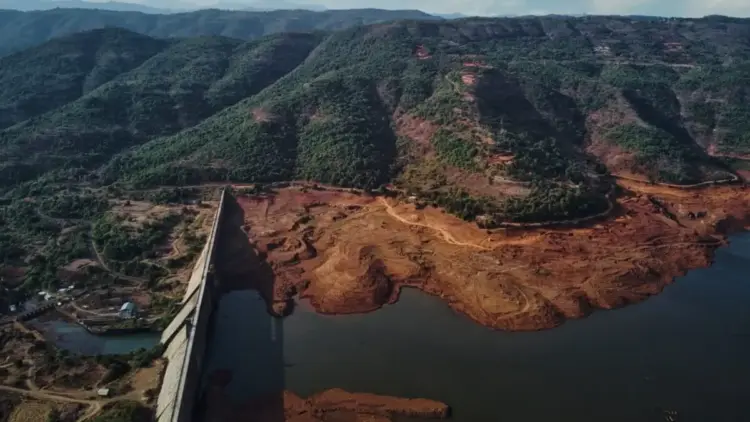
In June 2005, a catastrophic landslide struck the construction site of Maharashtra’s Ghatghar pumped-storage project in the Thane district. Triggered by relentless monsoon rains, a torrent of water, boulders, and debris surged into the project’s tailrace tunnel, trapping nearly 22 workers in a subterranean nightmare. That tragedy served as a grim reminder of the volatile intersection between ambitious engineering and the geological instability of the Western Ghats.
Nearly two decades later, the ghosts of Ghatghar have resurfaced as India embarks on a massive expansion of its renewable energy infrastructure. To stabilize a grid increasingly reliant on intermittent solar and wind power, the Indian government has identified Pumped-Storage Projects (PSPs) as the nation’s primary "water batteries." However, as these massive projects are fast-tracked, experts and environmentalists warn that the push for green energy may be ignoring the deepening risks of landslides and ecological collapse in one of the world’s most significant biodiversity hotspots.
1. Main Facts: The Great Indian "Water Battery" Rush
Pumped-storage technology operates on a simple yet effective principle: surplus electricity generated during periods of low demand is used to pump water from a lower reservoir to an upper reservoir. When demand peaks, the water is released back down through turbines to generate electricity. As India aims for a "renewable-heavy" grid, these projects are seen as essential for managing the fluctuations of energy supply across days and seasons.
The Scale of Ambition
According to a strategic roadmap released by the Central Electricity Authority (CEA) in early 2024, India’s total installed PSP capacity is projected to reach 87 GW by 2034 and surpass 100 GW by 2036. This requires an average annual addition of approximately 9 GW—a staggering increase from the current baseline.

Maharashtra has emerged as the epicenter of this development. The CEA report identifies the western region of India as having the highest potential for PSPs, with Maharashtra leading the country with a staggering potential of 56,355 MW. Currently, the state’s pipeline is a hive of activity:
- 400 MW is already operational.
- 2,500 MW is under active construction.
- 6,300 MW has received CEA approval but awaits the commencement of work.
- 24,800 MW is currently in the survey and investigation stage.
Corporate Proponents
The scale of these projects has attracted India’s largest industrial conglomerates. Adani Green Energy, JSW Energy, Greenko, Torrent Power, and Tata Power are among the primary proponents of these massive interventions. Many of these proposed projects are situated within the Western Ghats, an ancient mountain range that is not only a UNESCO World Heritage site but also a region characterized by steep terrain and high rainfall—factors that make it technically ideal for PSPs but geologically precarious.
2. Chronology: From Local Tragedy to National Policy
The evolution of PSP development in Maharashtra is marked by a shift from cautious engineering to a high-velocity policy environment designed to bypass traditional regulatory bottlenecks.
- June 2005: The Ghatghar landslide serves as a foundational warning regarding the risks of tunneling in the Western Ghats.
- 2010s: Development remains slow as the government focuses on traditional hydropower and coal.
- January 2024: The CEA releases its roadmap, officially designating PSPs as a cornerstone of India’s energy transition.
- 2023–2024: The Ministry of Environment, Forest & Climate Change (MoEF&CC) issues two critical notifications bringing PSPs explicitly into the environmental-clearance framework but simultaneously beginning a process of deregulation.
- August 2024: The Ministry of Power requests the MoEF&CC to exempt exploratory drilling for hydropower and PSPs from forest clearance requirements. The Forest Advisory Committee backs the proposal.
- 2025: The MoEF&CC formalizes an exemption allowing specified exploratory drilling in forest areas without it being treated as a "diversion of forest land," provided certain conditions are met. This move significantly lowers the barrier for developers to begin invasive work in sensitive zones.
3. Supporting Data: The Geological Vulnerability of the Western Ghats
While the steep slopes and numerous streams of the Western Ghats provide the hydraulic head necessary for power generation, those same features make the region a powder keg for landslides.

A Landscape at Risk
The Geological Survey of India (GSI) has identified approximately 90,000 square kilometers of the Western Ghats and Konkan uplands in western Maharashtra as landslide-prone. This area accounts for nearly 30% of the entire state.
The Maharashtra State Disaster Management Plan’s 2024 report further underscores the danger:
- 485 villages have been identified as "high priority," requiring immediate mitigation measures to prevent disasters.
- 145 landslide-related deaths were recorded between 2018 and 2024.
- 2021 and 2022 were the deadliest years, accounting for 105 of those fatalities.
The Impact of Engineering
Experts argue that the very act of building PSPs exacerbates these risks. "Blasting and tunneling destabilize already fragile slopes," explains Parineeta Dandekar of the South Asia Network on Dams, Rivers, and People (SANDRP).
Specific regions illustrate the danger:

- Mahad Taluka (Raigad District): This area holds the highest number of disaster-prone villages in the district. It is the site of two major proposed PSPs: the 1,500 MW Pane Project (JSW) and the 1,500 MW Warasgaon-Warangi Project (Adani Green). In 2021, a landslide in the nearby Taliye village claimed 85 lives.
- Junnar-Ambegaon Region: Home to two proposed projects, this region witnessed the 2014 Malin landslide, which buried an entire village and killed 153 people.
Research by Shishir Rao, a postdoctoral researcher at the University of Texas at San Antonio, suggests that current project assessments focus almost exclusively on "slope stability"—an engineering metric—rather than "historical vulnerability." This omission is critical, as climate change increases the frequency of short-duration, high-intensity rainfall events that trigger slope failures.
4. Official Responses and the Regulatory Landscape
The Indian government and proponents of PSPs maintain that these projects are indispensable for the country’s climate goals. Disha Aggarwal, a fellow at the Council on Energy, Environment and Water (CEEW), notes that as the grid becomes "renewable-heavy," long-duration storage technology like PSPs is vital for managing supply-demand fluctuations and preventing grid collapse during unexpected shortfalls.
The Approval Process
Currently, projects requiring CEA concurrence must pass through a multi-agency vetting process:
- Central Water Commission (CWC): Foundation and seismic aspects.
- Geological Survey of India (GSI): Geological feasibility.
- Central Soil and Materials Research Station (CSMRS): Geotechnical aspects.
However, a significant loophole exists: off-stream closed-loop projects—those located outside natural river systems—are often exempt from the same level of CEA scrutiny. Furthermore, the reliance on private consultants for Environmental Impact Assessments (EIAs) has raised concerns about conflict of interest.

"Project planning should not rely entirely on private consultants appointed by developers," warns Vivek S. Kale, a former adjunct professor of Earth Sciences at IIT Bombay. He emphasizes that while the Western Ghats are naturally eroding landscapes, infrastructure must be aligned with the safest possible geological frameworks, a process that requires independent expert oversight and local community involvement.
5. Implications: The Cumulative Cost of Green Energy
The push for PSPs in Maharashtra presents a profound paradox: using large-scale engineering to solve climate-related energy problems while simultaneously ignoring the climate-related risks those projects face.
The Missing Climate Assessment
One of the most glaring gaps in the current framework is the lack of mandatory climate risk assessments and cumulative impact studies. India’s current EIA framework does not legally require developers to account for how multiple projects in the same vicinity might collectively destabilize an entire mountain range.
"The Western Ghats are already crowded with dam proposals," says Dandekar. "Impact assessments should not be restricted to a particular project; they must account for the combined impact on the ecosystem."

Lessons from the Nepal Disaster
A cautionary tale for India emerged in August 2026 in Nepal. Flash floods on the Nepal-China border decimated the country’s hydropower sector, wiping out or damaging 281 MW of installed capacity and 388 MW of projects under construction. The worst-hit was the 216 MW Upper Trishuli-1 project, which had been financed by international banks that had ignored expert warnings about the lack of climate resilience assessments.
A 2024 review of hydropower in Nepal concluded that climate-related hazards are no longer "outlier" events; they are certainties that must be integrated into the design phase.
Conclusion: A Fragile Balance
As Maharashtra moves to become the "battery" of India, the stakes could not be higher. The Western Ghats are a geological system that has been shaped by the monsoon for millennia. While PSPs offer a technological fix for the intermittency of solar and wind energy, they do so by carving into a landscape that is increasingly unable to withstand human interference.
The transition to renewable energy is non-negotiable for India’s future, but the Ghatghar tragedy and the more recent disasters in the Konkan region suggest that the cost of ignoring geological reality is measured in human lives. Without legally enforceable climate assessments and a shift away from "developer-led" investigations, India’s quest for green energy may inadvertently trigger the very environmental catastrophes it seeks to prevent. "Balancing climate objectives with climate risks," as Aggarwal puts it, "should be a key consideration rather than an afterthought."