

By [Your News Desk]
Last Updated: May 6th, 2026
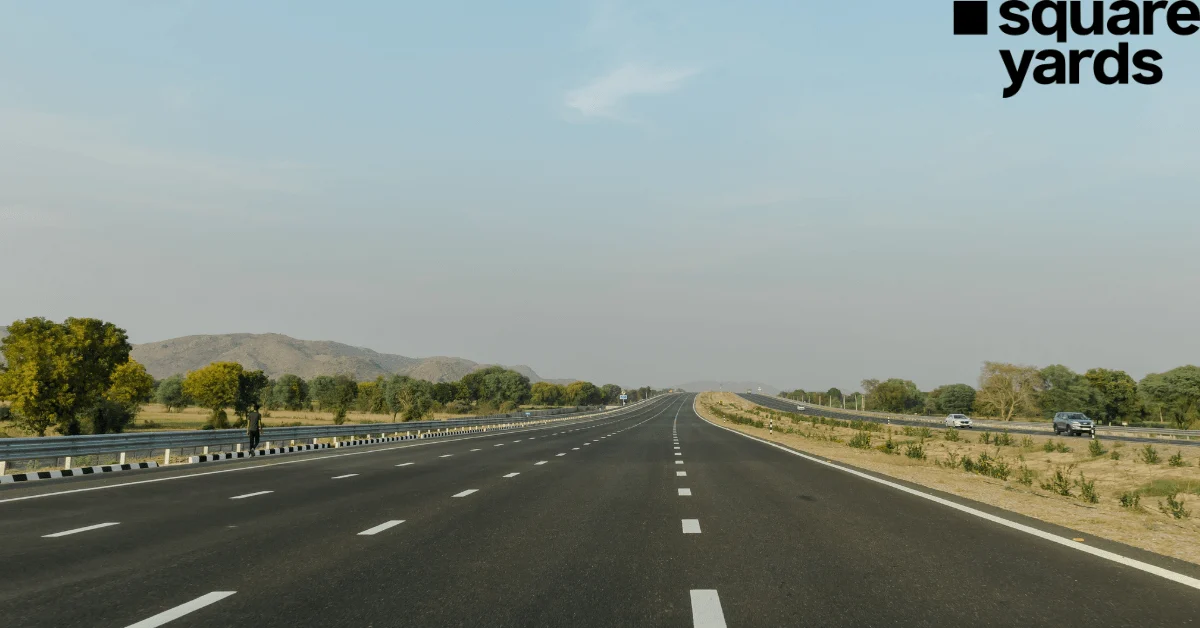
The infrastructure landscape of Northern India is undergoing a monumental shift, with Uttar Pradesh positioning itself as the "Expressway Capital" of the country. At the heart of this transformation is the upcoming Agra-Bareilly Expressway, a greenfield project that promises to redefine connectivity between the western districts of the state and the culturally rich Rohilkhand region.
Spanning approximately 228 kilometers, this four-lane access-controlled corridor is more than just a ribbon of asphalt; it is a strategic economic artery designed to bridge the gap between agrarian heartlands and industrial hubs. With an estimated investment of ₹7,700 crore, the project is being fast-tracked by the National Highways Authority of India (NHAI), with a firm completion target set for December 2027.
Main Facts: A Blueprint for Regional Integration
The Agra-Bareilly Expressway is designed to serve as a high-speed link between two of Uttar Pradesh’s most significant urban centers. Agra, a global tourism magnet and industrial base, and Bareilly, a major commercial hub in the Rohilkhand region, have historically been connected by congested state and national highways that often succumb to seasonal traffic and bottlenecks.
Key Project Specifications:
- Total Length: Approximately 228 km.
- Total Estimated Cost: ₹7,700 crore.
- Lanes: 4-lane (expandable to 6-lane) access-controlled.
- Travel Time Reduction: Expected to drop from the current 5–6 hours to just 2–2.5 hours.
- Connectivity Intersections: Links with the Yamuna Expressway, Agra-Lucknow Expressway, and the Ganga Expressway.
- Major Structures: The route will feature sophisticated engineering, including grade separators, flyovers, rail overbridges (ROBs), and underpasses to ensure uninterrupted high-speed movement.
The expressway is strategically aligned to pass through nearly 15 districts. While Agra and Bareilly serve as the terminal points, the corridor will provide vital transit points for Mathura, Hathras, Kasganj, and Badaun. This alignment ensures that the benefits of modern infrastructure penetrate deep into the rural and semi-urban pockets of Central and Western Uttar Pradesh.
Chronology: From Blueprint to Asphalt
The trajectory of the Agra-Bareilly Expressway reflects the Indian government’s broader "Gati Shakti" vision—a master plan for multi-modal connectivity.
- Conceptualization and Approval (2022–2023): Recognizing the traffic saturation on existing routes, the NHAI and the Ministry of Road Transport and Highways (MoRTH) approved the greenfield alignment to bypass congested town centers.
- Land Acquisition and Tendering (2024): The process of land acquisition was expedited across the 15 districts, focusing on minimizing displacement while ensuring a straight, high-speed alignment.
- Construction Commencement: Work began in multiple phases to allow for simultaneous development across different stretches.
- The Mathura-Badaun Milestone (2025–2026): In a significant achievement for the project, the Mathura-Badaun stretch was completed ahead of the main corridor and opened to public traffic. This operational section has served as a "proof of concept," demonstrating immediate improvements in regional mobility.
- Targeted Completion (December 2027): The final stretches, including complex bridges over local river systems and interchanges connecting to other major expressways, are slated for completion by the end of 2027.
Supporting Data: Measuring the Impact
The economic and logistical implications of the expressway are best understood through a comparison of current and projected metrics.
Travel and Logistics Efficiency
| Parameter | Before Expressway | After Completion (Projected) |
|---|---|---|
| Agra to Bareilly Time | 5.5 Hours | 2.25 Hours |
| Average Speed | 40–50 km/h | 100–120 km/h |
| Fuel Consumption | High (due to idling/congestion) | Optimized (uninterrupted flow) |
| Logistics Cost | High (delayed transit) | Estimated 15-20% Reduction |
Regional Reach: The 15-District Impact
The corridor does not merely connect two cities; it services a population of millions across:
- Western Gateways: Agra, Mathura.
- Industrial/Agrarian Belts: Hathras, Kasganj, Badaun.
- Rohilkhand Hubs: Bareilly and surrounding districts.
By integrating these regions, the NHAI expects a 30% increase in commercial traffic within the first two years of full operation. Furthermore, the proximity to the Noida International Airport (Jewar) adds a layer of international logistics potential that was previously non-existent for the Badaun-Bareilly belt.
Official Responses: A Vision for the "Expressway Economy"
Government officials and NHAI representatives have emphasized that the Agra-Bareilly Expressway is a "game-changer" for the state’s internal trade.
According to senior officials from the NHAI, the focus has been on "future-proofing" the infrastructure. "This is not just a road; it is an economic corridor. By providing access-controlled movement, we are reducing the carbon footprint of logistics and ensuring that the farmers of Kasganj and Badaun can reach the markets of Delhi-NCR in half the time it used to take," stated a regional project director.
Furthermore, the state government has highlighted the "Jewar Effect." With the Yamuna Expressway acting as a feeder, the Agra-Bareilly route becomes a direct conduit for air cargo. Official statements suggest that the expressway will serve as a primary feeder for the upcoming Noida International Airport, facilitating the movement of high-value goods, such as Hathras’ famous hing (asafoetida) or Bareilly’s intricate furniture and zari work, to global markets.
Implications: Reshaping Real Estate and Logistics
The ripple effects of the Agra-Bareilly Expressway are already being felt across various sectors, most notably in real estate and industrial development.
1. Real Estate: The Rise of New Micro-Markets
The operational Mathura-Badaun stretch has already triggered a spike in land inquiries.
- Residential Growth: Areas that were once considered remote are now seeing interest in plotted developments and low-density housing. Investors from Delhi and Noida are looking at these regions as long-term "land bank" opportunities, betting on the improved connectivity.
- Urban Expansion: Cities like Badaun and Kasganj are expected to see a "satellite town" effect, where improved roads allow residents to commute to larger hubs for work while living in more affordable, developing areas.
2. The Logistics and Warehousing Boom
The intersection of the Agra-Bareilly Expressway with the Agra-Lucknow and Ganga Expressways creates a "Golden Quadrilateral" within Uttar Pradesh.
- Warehousing Hubs: Logistics players are scouting for land near the major interchanges. The ability to move goods from the Rohilkhand region to the National Capital Region (NCR) via the Yamuna Expressway makes this corridor a prime location for distribution centers.
- Cold Storage Infrastructure: Given the agricultural nature of the districts involved, there is a massive opportunity for the development of cold chains. Perishable goods can now reach processing units or export hubs before spoiling, significantly boosting farmers’ income.
3. Industrial and Manufacturing Synergy
The expressway passes through regions known for specific artisanal and industrial products.
- Hathras and Kasganj: These districts are known for small-scale manufacturing and agriculture. The expressway provides these MSMEs (Micro, Small, and Medium Enterprises) with a direct link to the industrial clusters of Agra and the consumer markets of NCR.
- Bareilly’s Industrial Hub: Bareilly, already a major center for commerce, will see its industrial estates rejuvenated as transport costs drop, making its manufactured goods more competitive in the national market.
4. Tourism and Cultural Connectivity
The corridor will also bolster the tourism circuit. Travelers visiting the Taj Mahal in Agra or the temples of Mathura can now easily extend their itinerary to the historic sites of Bareilly or the scenic foothills of the Himalayas, which are accessible via Bareilly. This "tourism bridge" is expected to increase footfall in the Rohilkhand region, supporting local hospitality and craft sectors.
Conclusion: A New Era of Connectivity
The Agra-Bareilly Expressway stands as a testament to the power of infrastructure in driving regional parity. By linking the prosperous western regions with the emerging districts of Rohilkhand, the project is dismantling the geographical barriers that have historically hindered the economic pace of Central Uttar Pradesh.
As construction enters its final phases toward the 2027 deadline, the corridor is poised to become a cornerstone of the state’s trillion-dollar economy goal. For residents, it means shorter commutes; for farmers, it means better prices; and for investors, it represents one of the most promising real estate and logistics frontiers in Northern India. The road ahead for Uttar Pradesh looks faster, smoother, and infinitely more connected.
