

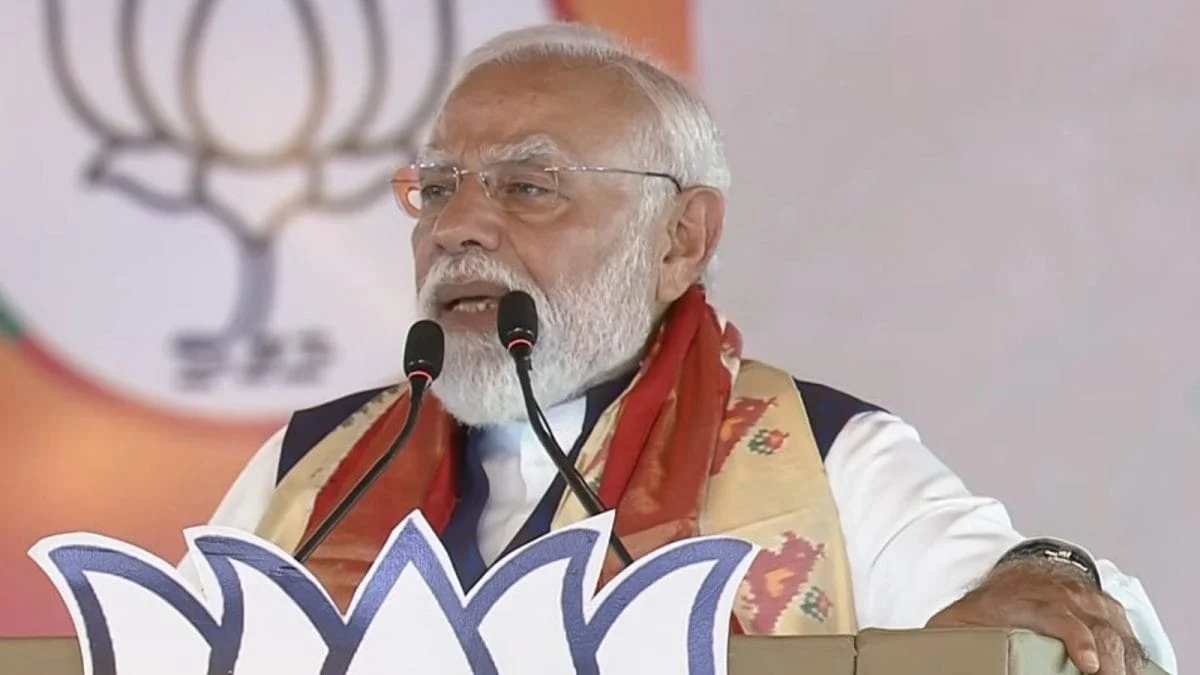
Hyderabad, India – May 10, 2026 – In an extraordinary address delivered from Hyderabad on Sunday, Prime Minister Narendra Modi issued a nationwide appeal, urging Indian citizens and businesses to re-adopt "Covid-era efficiency practices" such as working from home (WFH) and virtual conferences. The Prime Minister underscored the critical need for these measures "in the national interest," citing the severe economic fallout stemming from the escalating US-Iran conflict and its profound impact on global energy markets.
The appeal comes as India grapples with surging import bills and inflationary pressures, driven by the geopolitical turmoil in West Asia. PM Modi’s call for restraint in fuel consumption, greater reliance on public transport and carpooling, and a renewed emphasis on digital collaboration signals a government bracing for a prolonged period of economic instability. The move has reignited national debate on the future of work, productivity, and India’s economic resilience in an increasingly volatile world.
A National Appeal Amidst Global Turmoil
Addressing a public gathering in Hyderabad, Prime Minister Modi painted a stark picture of the global economic landscape, directly attributing the current challenges to the ongoing US-Iran war. He emphasized that the conflict has sent shockwaves through international markets, particularly in the energy sector, leading to a dramatic increase in fuel prices worldwide. For India, a nation heavily reliant on imported energy, this has translated into a significant drain on foreign exchange reserves and rising costs across essential commodities.
"During the Corona period, we adopted work from home, online meetings, video conferences, and developed many such systems. We had also become accustomed to them," PM Modi reminded the populace. "Today, the demands of the times are such that if we restart these systems, it will be in the national interest. We must prioritize work from home, online conferences, and virtual meetings again. We must also place a strong emphasis on saving foreign exchange, as petrol and diesel have become so expensive globally."
His remarks were not merely a suggestion but a potent reminder of the collective responsibility needed to navigate the crisis. Beyond remote work, the Prime Minister urged citizens to use petrol and diesel with utmost restraint, advocating for increased adoption of public transport systems like metros, buses, and trains, and encouraging carpooling for private commutes. This multi-pronged approach aims to curtail demand for fossil fuels, thereby reducing the nation’s import dependency and preserving precious foreign exchange.
The Shadow of War: Escalating US-Iran Tensions and Global Economic Fallout
The US-Iran conflict, which has simmered for decades, escalated dramatically in recent months, plunging the global economy into uncharted territory. At the heart of the crisis lies the critical Strait of Hormuz, a narrow waterway through which roughly one-fifth of the world’s total oil consumption, and a substantial portion of global liquefied natural gas (LNG) shipments, pass daily. Tehran’s intermittent threats and actual blockades of this vital shipping lane, coupled with a robust US naval blockade around Iranian ports, have created an unprecedented chokehold on international trade.
The direct consequence has been a dramatic surge in global crude oil prices. Brent crude, the international benchmark, has been hovering persistently around the psychologically significant $100 per barrel mark, a level not seen consistently since the early 2010s. For a major energy importer like India, which ranks as the world’s third-largest consumer of crude oil, this translates directly into a massive increase in its import bill, exacerbating an already challenging current account deficit.
The ripple effect extends far beyond just crude oil. India is also one of the highest importers of LNG, making the crisis at the Strait of Hormuz particularly impactful on its domestic energy sector. The cost of commercial LPG cylinders, a critical component for businesses and eateries, has already witnessed an alarming jump of over Rs 1,000 in recent weeks. This direct inflation in energy costs percolates through the entire supply chain. Manufacturing, transportation, and agricultural sectors face increased operational expenses, which are inevitably passed on to consumers.
The impact is being felt acutely in Indian households. Cooking oil, a staple in every kitchen, has become significantly more expensive. International travel has seen a drastic hike in prices, deterring non-essential trips. Furthermore, the cost of everyday consumer goods, from electronics and apparel to personal care products like soaps, shampoos, toothpaste, and packaged foods, is projected to rise if the conflict persists and global shipping disruptions continue. The specter of widespread inflation looms large, threatening to erode purchasing power and dampen consumer sentiment.
A Retrospective: India’s Journey with Remote Work
The concept of working from home was not entirely novel to India before the pandemic. Sectors like information technology (IT) and consulting had, for years, offered flexible work arrangements to a segment of their workforce, leveraging robust digital infrastructure. However, it remained a niche practice, far from the mainstream.
The true paradigm shift occurred in March 2020 with the onset of the Covid-19 pandemic. As the government imposed strict lockdowns and urged social distancing to contain the rapidly spreading virus, remote work transitioned from a perk to a necessity. Prime Minister Modi himself became a vocal proponent of the model during this period. In an address in March 2020, he strongly advocated, "Try to do your work, whether related to business or job, from home as much as possible. While it is essential that those who are in government services, healthcare services, people’s representatives and media personnel remain active, everybody else must isolate themselves from the rest of the society." This directive, born out of public health urgency, inadvertently kickstarted India’s largest ever remote work experiment.
Indian companies, particularly in the services sector, rapidly adapted. They invested in digital tools, refined communication protocols, and restructured workflows to facilitate remote operations. Employees, in turn, adjusted to new routines, managing work and personal lives from home. The initial challenges of infrastructure, connectivity, and work-life balance gradually gave way to a new equilibrium.
As the pandemic subsided, the WFH culture evolved into a more nuanced "hybrid work" model for many organizations. Companies recognized the benefits of flexibility – reduced overheads, access to a wider talent pool, and improved employee satisfaction – leading them to retain elements of remote work even after physical restrictions were lifted. In 2022, Prime Minister Modi again acknowledged this evolution, stating that "flexible workplaces, a work-from-home ecosystem and flexible work hours are the need of the future."
However, this forward-looking vision soon collided with practical realities. By late 2022 and early 2023, many companies, citing concerns over productivity, team cohesion, innovation, and company culture, began to actively call employees back to offices, often mandating a minimum number of in-office days. The pendulum had begun to swing back towards traditional office-centric models. PM Modi’s latest appeal, therefore, represents a significant policy pivot, driven not by public health but by an urgent economic imperative, potentially ushering in a second, more forceful wave of remote work adoption.
Official Responses and Strategic Imperatives
Prime Minister Modi’s appeal is not an isolated statement but part of a broader, concerted effort by the Indian government to mitigate the economic fallout of the West Asian crisis. The Ministry of Finance, while not issuing a direct statement on WFH, has reportedly begun internal discussions on fiscal strategies to manage the burgeoning import bill and contain inflationary pressures. Sources within the ministry suggest that alongside the PM’s public appeal, a multi-pronged strategy is being formulated, including exploring alternative energy supply routes and intensifying diplomatic efforts to de-escalate the conflict.
Furthermore, PM Modi’s latest call echoes themes from earlier appeals, such as "Buy Indian, Choose Domestic Tourism," and advisories to avoid unnecessary foreign travel and gold purchases. These directives collectively form a comprehensive strategy aimed at conserving foreign exchange and bolstering the domestic economy. By encouraging citizens to spend within the country and reduce reliance on imported goods and services, the government hopes to create a buffer against global economic shocks.
The Reserve Bank of India (RBI) is also closely monitoring the situation. While the central bank has maintained a cautious stance on monetary policy, the sustained rise in global commodity prices and the threat of imported inflation could force its hand. Analysts anticipate that the RBI might face increased pressure to either hold or even hike interest rates to curb inflation, a move that could temper economic growth but is deemed necessary to maintain price stability. A senior official from the Ministry of Petroleum and Natural Gas, speaking anonymously, stated, "We are exploring all avenues to secure our energy needs and are actively engaging with international partners. The Prime Minister’s appeal for fuel conservation is a crucial domestic step to complement these efforts."
The government’s proactive communication signals that it is bracing for a prolonged period of global economic uncertainty. The appeal for WFH and reduced fuel consumption is therefore not just about immediate savings but about building long-term resilience and preparing the Indian economy for potential further disruptions.
The Road Ahead: Implications for India’s Workforce and Economy
The potential return of widespread work-from-home policies, driven by economic necessity rather than health concerns, carries significant implications for India’s businesses, workforce, and the broader economy.
Impact on Businesses and Productivity
For many businesses, particularly those in the IT and knowledge-based services sectors, a pivot back to WFH might be relatively smooth, given their prior experience during the pandemic. These companies have existing infrastructure and protocols. However, for sectors that had heavily invested in bringing employees back to physical offices, such as certain manufacturing units with administrative staff, financial services, or traditional service industries, this shift could present renewed logistical and operational challenges.
The debate over productivity in remote versus office environments is likely to resurface. While some studies during the pandemic indicated sustained or even increased productivity for certain roles, others highlighted issues of communication breakdowns, supervision difficulties, and the erosion of company culture. Businesses will need to re-evaluate their operational models, invest further in digital collaboration tools, and train managers to effectively lead remote teams. On the upside, reduced office expenses (rent, utilities, maintenance) could offer significant cost savings, especially for SMEs struggling with the current economic climate.
The Employee Perspective
For employees, the return to WFH will be a mixed bag. Many may welcome the flexibility, absence of long commutes, and improved work-life balance that remote work offers. This could translate into reduced personal fuel expenses, aligning with the Prime Minister’s call for conservation. However, the initial challenges of remote work – feelings of isolation, blurred lines between work and home, inadequate home office setups, and the digital divide (access to reliable internet and power) – could also resurface, particularly in tier-2 and tier-3 cities. Mental health support for remote workers will become increasingly crucial. The impact on urban infrastructure, such as commercial real estate and public transport ridership, could also be substantial, leading to shifts in urban planning and investment.
Macroeconomic Ripples
From a macroeconomic perspective, the adoption of WFH and fuel conservation measures is expected to yield tangible benefits. A reduction in petrol and diesel consumption directly contributes to saving foreign exchange, bolstering India’s forex reserves and improving its current account balance. This would, in turn, provide greater stability to the Indian Rupee and reduce the country’s vulnerability to global currency fluctuations.
Furthermore, by dampening demand for imported fossil fuels, the measures could help temper imported inflation, offering some relief to consumers and potentially allowing the RBI more flexibility in its monetary policy. The emphasis on domestic tourism and avoiding non-essential foreign travel would also help retain wealth within the country, stimulating local economies. However, the overall success hinges on the widespread adoption of these practices and the duration and intensity of the US-Iran conflict. If the conflict escalates further, even these measures might only provide partial relief.
A Global Trend: Other Nations Embrace Remote Work as a Mitigation Strategy
India is not alone in contemplating such measures. The global ripple effects of the US-Iran conflict and its impact on energy prices have compelled several other nations, particularly those heavily dependent on oil imports, to adopt similar strategies. Countries across Asia, grappling with identical economic pressures, have already implemented or are actively considering policies to promote remote work and reduce office attendance.
Thailand, for instance, a net oil importer, announced reduced office attendance for government employees and encouraged private sector companies to follow suit, aiming to cut fuel consumption and alleviate traffic congestion in major cities. Indonesia, facing a similar challenge, has promoted hybrid work models and staggered office hours to manage energy demand more efficiently.
Pakistan, Bangladesh, and the Philippines have also explored or implemented various forms of work-from-home or reduced office attendance policies. Their rationale is largely consistent: by minimizing daily commutes, they aim to lower national fuel consumption, reduce the strain on public infrastructure, and conserve valuable foreign exchange that would otherwise be spent on importing expensive oil. These international precedents suggest that PM Modi’s appeal is not an isolated policy but a pragmatic response to a shared global economic dilemma, underscoring the severity of the crisis and the universal need for adaptive strategies.
Conclusion: Navigating an Uncertain Future
Prime Minister Modi’s urgent appeal for the return of "Covid-era practices" marks a critical juncture for India. While born out of economic necessity rather than a health crisis, it reflects the profound impact of global geopolitical events on domestic life. The US-Iran conflict, with its stranglehold on vital energy routes, has forced India to confront its vulnerabilities and strategize for resilience.
The coming weeks and months will reveal the extent to which businesses and citizens embrace these directives. The success of this national endeavor will depend on a complex interplay of corporate flexibility, employee adaptability, government support, and ultimately, the trajectory of the West Asian conflict. As India navigates this uncertain future, the lessons learned during the pandemic – the power of digital collaboration and collective action – may once again prove instrumental in safeguarding the nation’s economic stability and charting a course through turbulent global waters. The call to embrace remote work and judicious resource consumption is not merely a policy suggestion; it is an invitation to redefine productivity and patriotism in an era of unprecedented global challenges.
