

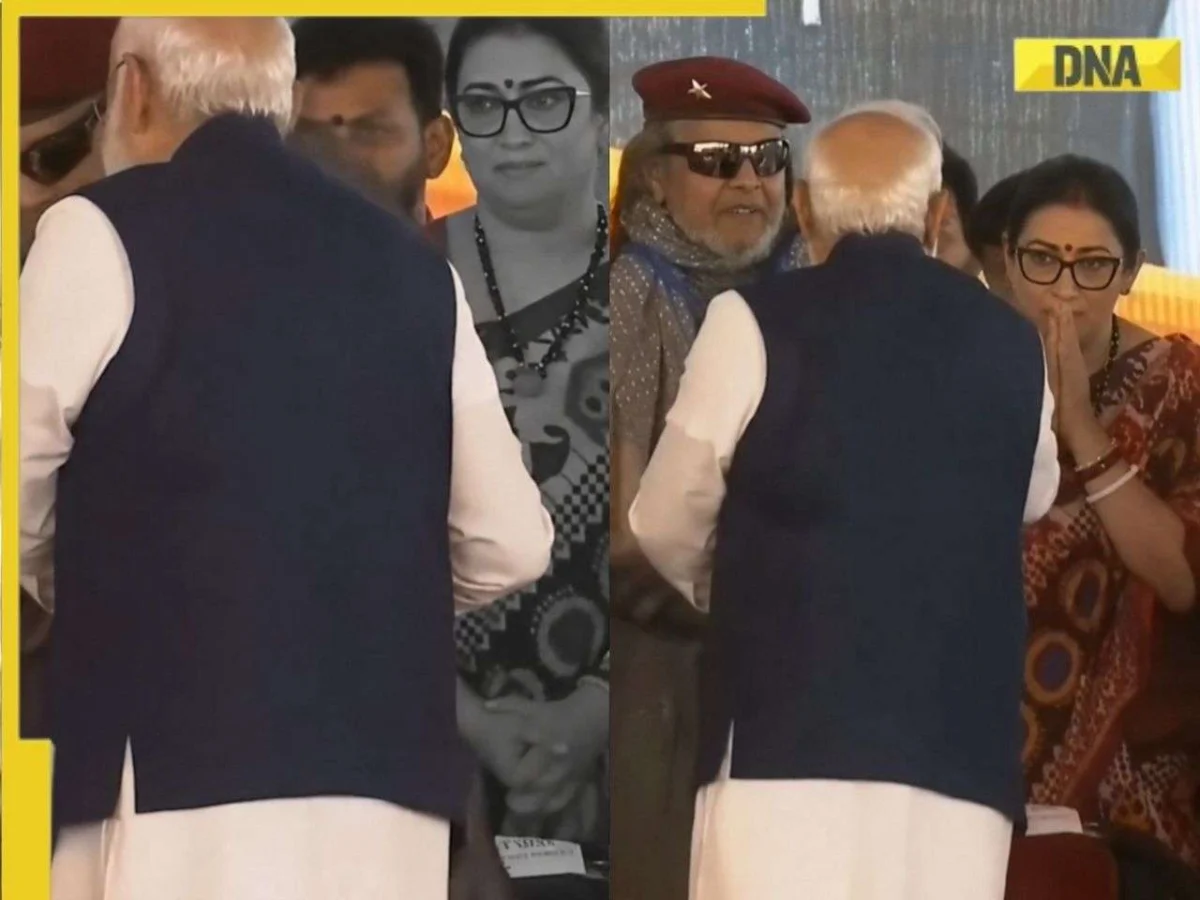
Kolkata, West Bengal – May 10, 2026 – A seemingly innocuous moment at the recent oath-taking ceremony for Suvendu Adhikari as Chief Minister of West Bengal has ignited a firestorm across social media platforms, drawing widespread commentary and speculation. Prime Minister Narendra Modi’s attendance at the high-profile event was marked by an interaction that has captured the nation’s attention: a warm exchange with veteran actor Mithun Chakraborty, juxtaposed with what many perceived as a notable lack of direct acknowledgment towards Union Minister Smriti Irani. This visual dichotomy, captured and disseminated rapidly online, has fueled a fervent debate, with netizens dissecting the perceived snub and its potential implications for political dynamics.
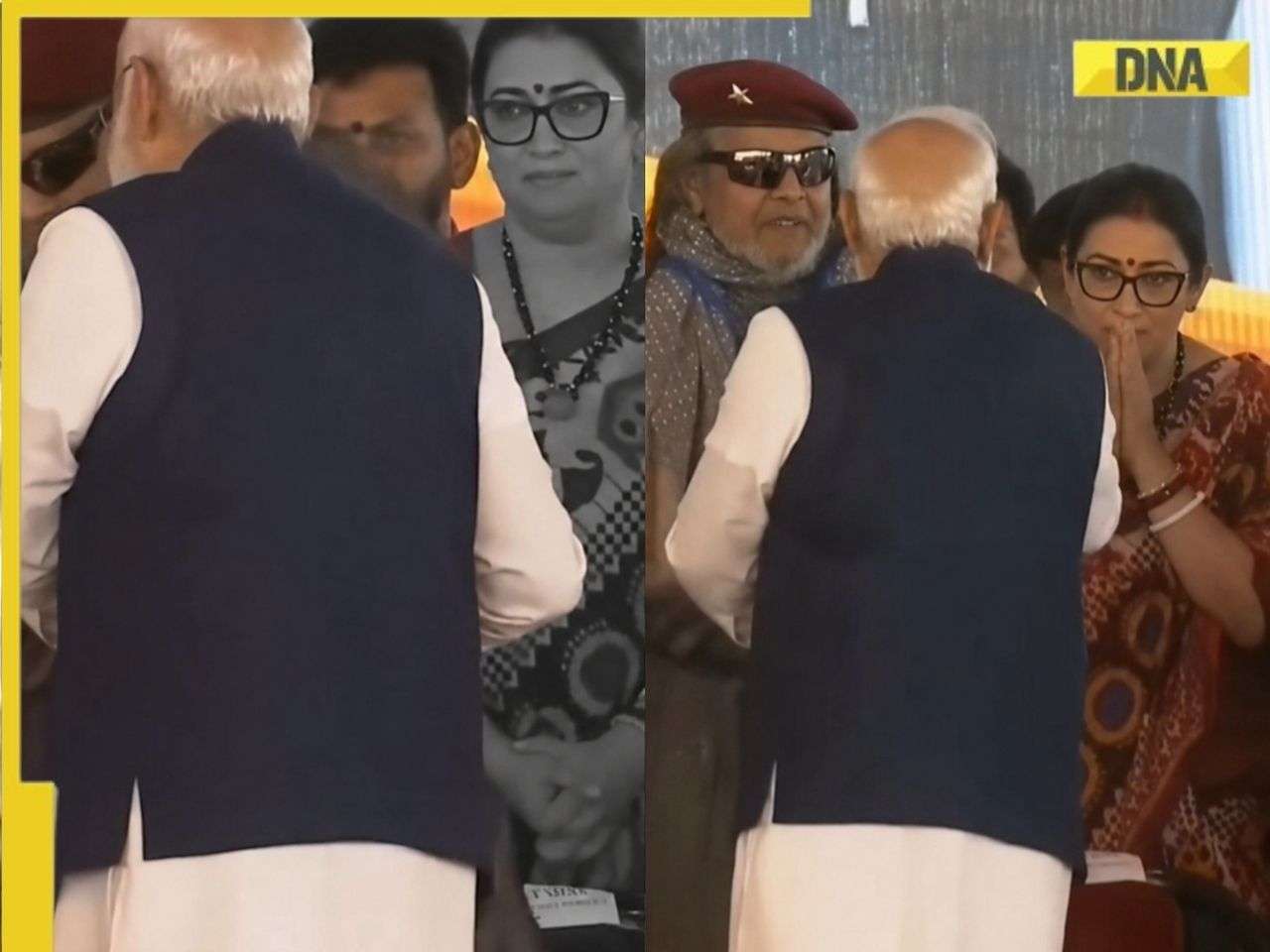
The incident, which unfolded during the post-ceremony felicitations, has transcended typical political discourse, morphing into a viral phenomenon. While the political significance of the oath-taking itself remains paramount, the human element of the interactions has resonated deeply, particularly in an era where every gesture and expression can be magnified and analyzed through the lens of social media. The differing receptions, real or perceived, have led to a flurry of opinions, ranging from astute political observations to sharp, often humorous, critiques of the individuals involved.
)
The Unfolding Scene: A Moment of Contention
The backdrop for this viral moment was the Swearing-In Ceremony of Suvendu Adhikari as the new Chief Minister of West Bengal. The event, a significant political milestone for the state, was attended by a constellation of prominent political figures, including Prime Minister Narendra Modi. His presence underscored the national importance attached to the political shift in West Bengal.
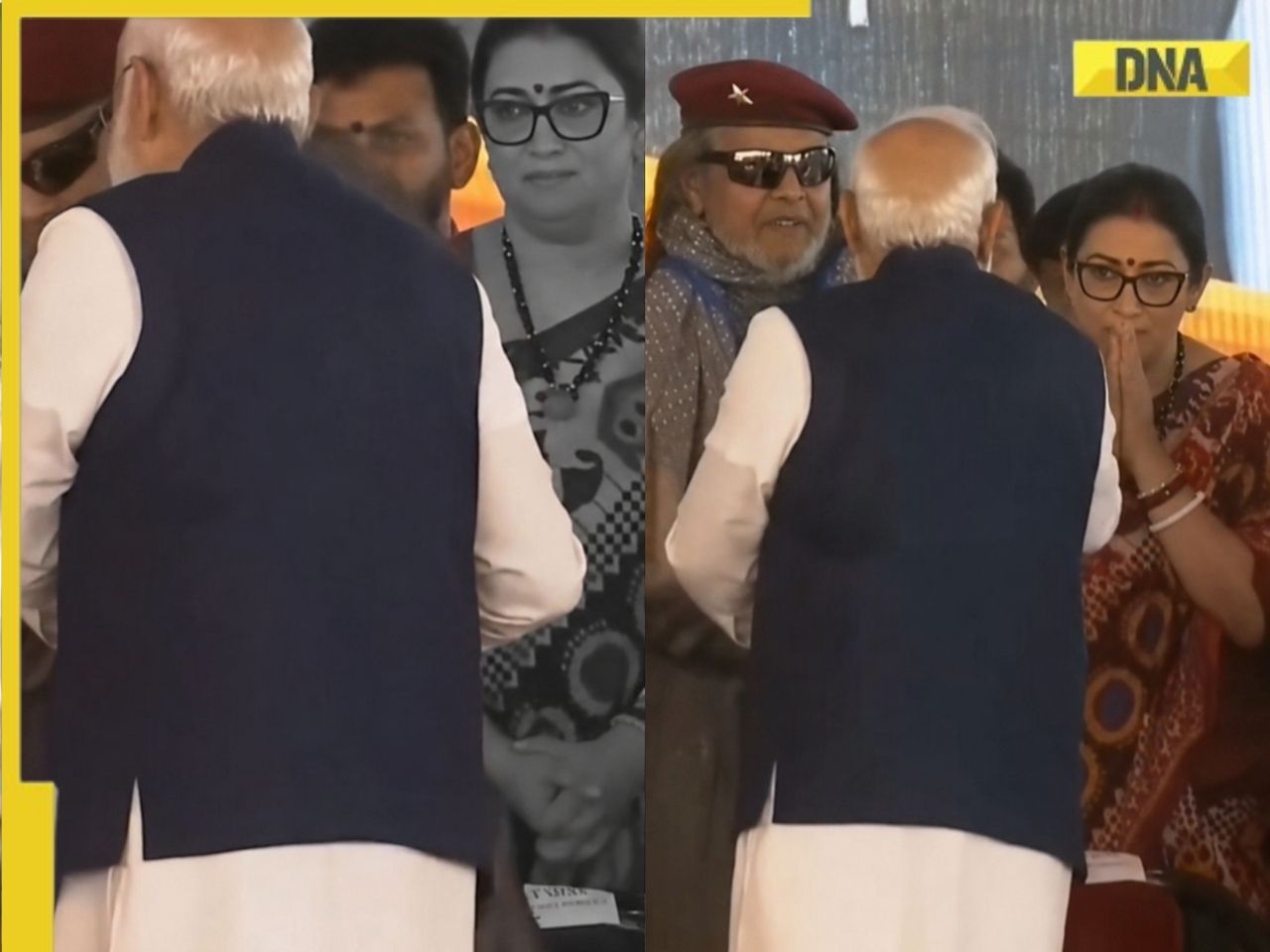)
As the formalities concluded and the dignitaries engaged in informal interactions, Prime Minister Modi was seen engaging in conversation with the esteemed actor and politician, Mithun Chakraborty. Their exchange appeared cordial, marked by smiles and apparent camaraderie. However, it was the subsequent moment, involving Smriti Irani, that has become the focal point of widespread discussion.

According to widely circulated video footage, Smriti Irani, who was positioned behind Mithun Chakraborty, extended a greeting to the Prime Minister with folded hands. The footage appears to capture her making this gesture on at least two occasions. Observers noted that Irani’s demeanor suggested a degree of emotion, with her eyes appearing somewhat teary. Crucially, however, the video seems to indicate that Prime Minister Modi did not directly respond to her greeting. This perceived lack of reciprocation from the Prime Minister has been interpreted by many as a deliberate snub, leading to an immediate and widespread reaction online.
)
Chronology of the Viral Sensation
The genesis of this viral sensation can be traced back to the immediate aftermath of the oath-taking ceremony.
)
- May 10, 2026 (Afternoon/Evening): Prime Minister Narendra Modi attends the Chief Minister’s oath-taking ceremony for Suvendu Adhikari in West Bengal.
- Post-Ceremony Interactions: Prime Minister Modi engages in a brief, seemingly warm, conversation with actor Mithun Chakraborty.
- The Pivotal Moment: Smriti Irani, present at the event, is seen extending a greeting to the Prime Minister with folded hands, appearing visibly emotional.
- Perceived Non-Response: Video evidence suggests Prime Minister Modi does not directly acknowledge Smriti Irani’s greeting.
- Rapid Dissemination: Clips of this specific interaction begin to surface on social media platforms, primarily X (formerly Twitter) and other video-sharing sites.
- Emergence of Hashtags and Trends: Hashtags related to the incident, including #ModiIgnoreSmriti and #ViralMoment, begin trending rapidly.
- Netizen Reactions Pour In: Users across social media platforms start commenting, sharing, and debating the perceived snub. Memes, witty remarks, and critical analyses proliferate.
- Media Amplification: News outlets, both mainstream and digital, pick up on the viral trend, publishing articles and reports detailing the incident and the public’s reaction.
- May 11, 2026 onwards: The debate continues to evolve, with different interpretations and discussions emerging regarding Smriti Irani’s political standing and the dynamics within the ruling party.
The speed at which this incident transformed from a fleeting moment to a national talking point is a testament to the pervasive influence of social media in shaping public discourse and opinion. Within hours, the video clip had been viewed millions of times, sparking a diverse array of reactions.
)
Supporting Data: The Social Media Avalanche
The sheer volume and intensity of the online reaction serve as compelling evidence of the incident’s viral impact. Analyzing the digital footprint reveals the extent of the engagement:
)
- X (formerly Twitter) Activity: A cursory search for the relevant hashtags and keywords reveals tens of thousands of posts within the first 24-48 hours. These posts include video shares, screenshots, user comments, and memes. The engagement metrics (likes, retweets, replies) on individual posts often ran into the thousands, indicating a high level of audience interaction.
- User Commentary Analysis: The comments section across various platforms exhibited a spectrum of opinions. A significant portion expressed sympathy for Smriti Irani, with some lamenting her perceived marginalization. Others, however, offered more critical perspectives, suggesting that Irani might have been seeking attention or that her past political actions warranted a cooler reception. A substantial number of comments focused on the "politics of gestures" and what they might signify about her current standing within the party hierarchy.
- Meme Culture: The incident quickly spawned a variety of memes, a common phenomenon in viral social media trends. These memes often employed humor to highlight the perceived awkwardness or the supposed political implications of the interaction. They ranged from simple visual gags to more elaborate narratives, often referencing popular culture or past political events.
- News Aggregators and Search Trends: The surge in online conversations was reflected in news aggregators and search engine trends. Queries related to "Smriti Irani Narendra Modi interaction," "Modi ignores Smriti Irani," and "Suvendu Adhikari oath ceremony viral moment" saw a significant spike in search volume, indicating widespread public curiosity.
- "Teary-Eyed" Narrative: The detail of Smriti Irani appearing "teary-eyed" became a recurring theme in the online discussion. This visual cue amplified the narrative of her potential distress or emotional vulnerability, further fueling the sympathetic responses from some quarters.
This extensive digital footprint underscores the power of visual media and social networking in shaping public perception, even in the context of high-stakes political events. The interpretation of a brief, unconfirmed interaction became a focal point for national discussion.
)
Official Responses and Political Interpretations
In the immediate aftermath of the viral sensation, there has been a conspicuous absence of official statements from the Prime Minister’s Office or the Bharatiya Janata Party (BJP) directly addressing the incident. This silence is often a deliberate strategy in the face of such viral controversies, allowing the narrative to either dissipate naturally or be managed through subtle channels.
)
However, the lack of an official rebuttal has not prevented a flurry of interpretations and analyses from political commentators and seasoned observers of the Indian political landscape. These interpretations often fall into several categories:
)
- The "Political Snub" Theory: This is the most prevalent interpretation. Proponents argue that Prime Minister Modi’s perceived lack of response signals a cooling of his relationship with Smriti Irani, perhaps due to her electoral performance in the 2024 Lok Sabha elections where she lost her Amethi seat, or due to a strategic re-evaluation of party priorities. Her role as a prominent Union Minister had been a significant aspect of her political career, and her current position, while still active within the party organization, is perceived by some as a step down.
- The "Focus on the Moment" Argument: Some analysts suggest that Prime Minister Modi might have been solely focused on his interaction with Mithun Chakraborty, a significant personality in his own right, and that the lack of response to Irani was an unintentional oversight rather than a deliberate act. They emphasize that such ceremonies are often chaotic with multiple individuals seeking attention, and that focusing on a perceived slight might be an oversimplification.
- The "Strategic Silence" Hypothesis: The BJP is known for its adept handling of media narratives. The absence of a direct response could be a calculated move to avoid giving further oxygen to a potentially distracting issue. By not engaging, the party might be allowing the narrative to run its course, trusting that the public’s attention will eventually shift to more substantive political matters.
- The "Internal Party Dynamics" Speculation: The incident has also fueled speculation about the internal dynamics within the BJP. Smriti Irani has been a prominent figure, known for her vocal support of the party and its leadership. Any perceived shift in her standing could be interpreted as indicative of broader changes within the party’s power structures or future electoral strategies.
- The "Public Perception vs. Reality" Debate: Political observers often highlight the gap between public perception, heavily influenced by social media, and the actual on-ground political realities. While the viral video has created a strong impression of a snub, the true nature of the relationship between Prime Minister Modi and Smriti Irani, and her future role in the party, can only be definitively understood through future political developments.
The absence of any official comment from Smriti Irani herself further adds to the ambiguity. Her silence, in this context, can be interpreted in various ways – either as a dignified acceptance of the situation, a strategic decision to avoid fueling the controversy, or perhaps a sign that she is focusing on her ongoing party responsibilities.
)
Implications and Future Outlook
The viral "ignore" incident, while seemingly a minor moment, carries potential implications that extend beyond the immediate social media buzz. Its resonance highlights several key aspects of contemporary Indian politics:
)
- The Amplified Role of Social Media: The incident underscores how social media platforms have become potent arbiters of public perception. A single video clip, regardless of its full context or intent, can rapidly shape narratives and influence public opinion, often overshadowing substantive political developments. Politicians and political parties are increasingly aware of this dynamic and must navigate the digital landscape with caution and strategic communication.
- The Scrutiny of Political Figures: Prominent political figures, especially those who have held significant positions, are under constant public scrutiny. Every interaction, every gesture, is subject to analysis and interpretation. For Smriti Irani, who has had a high-profile career, any perceived shift in her political fortunes is likely to be amplified and debated.
- The Fluidity of Political Alliances and Favour: The incident, for some, is a stark reminder of the often-unpredictable nature of political relationships. In politics, perceived favour can ebb and flow, and a politician’s standing can be influenced by a multitude of factors, including electoral success, strategic positioning, and evolving party priorities. The notion of "favourite" is rarely static.
- The BJP’s Strategic Communication: The BJP has demonstrated a remarkable ability to control its narrative and manage public perception. The party’s silence on this matter could be indicative of a long-term strategy to let the controversy fade or to address it through internal channels rather than public pronouncements. Their focus remains on governance and future electoral campaigns.
- Smriti Irani’s Future Role: While the incident has sparked debate about her current standing, it is crucial to remember that Smriti Irani remains an active and vocal member of the BJP. Her organizational responsibilities continue, and her political journey is far from over. The loss of her parliamentary seat might represent a setback, but it does not necessarily signify an end to her political influence. Future party assignments and her continued engagement in public discourse will be key indicators of her evolving role.
Ultimately, the viral moment at the West Bengal oath-taking ceremony serves as a fascinating case study in the intersection of politics, media, and public perception. While the true intentions behind Prime Minister Modi’s actions may remain a subject of speculation, the incident has undeniably highlighted the power of visual narratives in the digital age and the intense scrutiny that public figures face. As the political landscape continues to evolve, the subtle nuances of interactions, amplified by the vast reach of social media, will undoubtedly continue to shape public discourse and influence political narratives. The focus will now shift to how Smriti Irani navigates this perceived shift, and how the BJP leadership continues to strategically position its key figures in the lead-up to future political contests.
