

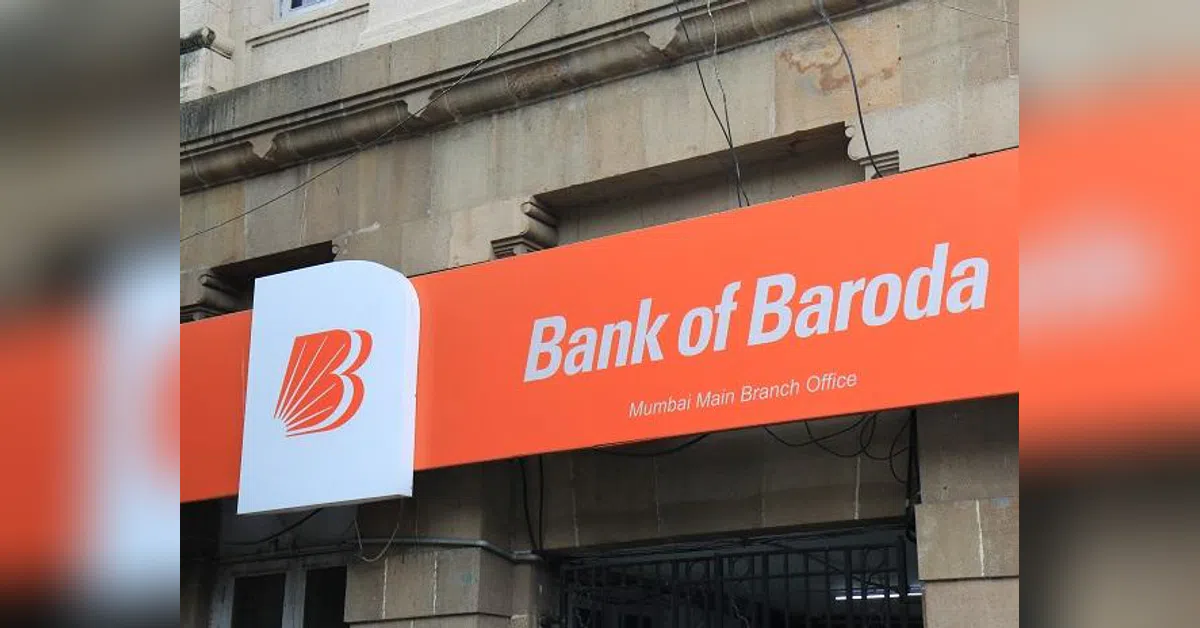
Mumbai, India – State-owned banking behemoth Bank of Baroda (BoB) is poised for significant expansion in its corporate lending portfolio, targeting a robust 10 per cent growth on its formidable ₹4.56 lakh crore corporate book by the financial year 2027. This ambitious projection comes at a time when the broader Indian economy grapples with concerns over sluggish private capital expenditure, underscoring the bank’s strategic intent to play a pivotal role in driving industrial growth.
The bank’s current lending pipeline for big-ticket corporate proposals stands at an impressive ₹50,000 crore, signaling strong underlying demand despite macroeconomic uncertainties. Debadatta Chand, Managing Director and Chief Executive Officer of Bank of Baroda, provided an insightful overview of the bank’s strategy, highlighting a significant tilt towards investment-led credit. He noted that nearly two-thirds of the current proposals are for term loans, with the remaining third allocated to working capital requirements. This composition strongly suggests a healthy appetite for long-term investments and capacity building across various sectors, a crucial indicator for future economic expansion.
Chand’s commentary offers a glimpse into the strategic focus of one of India’s leading public sector banks, outlining its proactive measures to optimize net interest margins, diversify funding, and maintain pristine asset quality in a dynamic financial landscape.
A Strategic Thrust on Corporate Lending
Bank of Baroda’s target to grow its corporate book by 10 per cent by FY27 from its current base of ₹4.56 lakh crore is a testament to its confidence in India’s long-term growth trajectory and its own strategic positioning. This expansion is not merely about increasing volumes but is intricately linked to fostering economic development by providing crucial capital to key industries. The ₹50,000 crore lending pipeline represents a significant commitment, with Chand revealing that half of this amount has already been sanctioned and awaits disbursement, while the other half comprises loan proposals actively under discussion. This dual stage of the pipeline reflects both immediate deployment potential and a forward-looking engagement with future projects.
The emphasis on term loans, which constitute two-thirds of the pipeline, is particularly noteworthy. Term loans are typically long-duration facilities extended for capital expenditure, such as setting up new factories, expanding existing production lines, or investing in new machinery and technology. This trend directly counters the prevailing narrative of subdued private capex, suggesting that specific sectors and large corporations are indeed moving forward with significant investment plans. In contrast, working capital loans are shorter-term facilities designed to meet day-to-day operational needs like inventory management and receivables financing. The higher proportion of term loans indicates a foundational demand for capacity creation rather than just operational sustenance, which is a positive signal for sustained economic growth.
For a bank of BoB’s stature, with a substantial corporate portfolio, even a 10 per cent growth represents a massive infusion of capital into the economy. This growth is expected to be meticulously managed to ensure both profitability and asset quality, twin pillars of sustainable banking operations.
Fueling India’s Growth Sectors
The demand for corporate credit, according to Chand, is particularly robust from sectors deemed critical for India’s economic future. Renewable power, a sector at the forefront of India’s energy transition and climate commitments, stands out as a key driver of demand. The government’s aggressive targets for renewable energy capacity addition, coupled with various incentives, have made it an attractive proposition for both domestic and international investors. Banks like BoB are crucial facilitators in this transition, providing the necessary long-term financing for large-scale solar, wind, and hydro projects.
Beyond green energy, core sectors like steel and cement are also exhibiting strong demand for capacity building. These industries are foundational to infrastructure development and real estate, both of which are receiving significant policy thrusts from the government. The national infrastructure pipeline, smart city projects, and affordable housing initiatives create a sustained demand for steel and cement, necessitating continuous investment in capacity expansion and technological upgrades. BoB’s engagement with these sectors underscores its role in backing the backbone of India’s industrial economy. This targeted lending strategy not only supports specific industries but also aligns with national developmental goals, fostering job creation and economic multiplier effects.
Navigating the Telecom Sector’s Complexities
One of the most keenly watched sectors for banks in India is telecommunications, particularly given the financial travails of Vodafone Idea (VIL). Intense speculation surrounds VIL’s revival plans, which hinge significantly on fresh capital infusion and government support. Chand acknowledged the complexities of lending to this sector, particularly in light of VIL’s challenges. However, he expressed cautious optimism, stating that "right policy measures and coming together of banks and other stakeholders can result in new loans."
This statement is pregnant with implications. "Right policy measures" likely refers to further government interventions, such as relief on Adjusted Gross Revenue (AGR) dues, spectrum payment deferrals, or other regulatory adjustments that could improve the sector’s financial health and predictability. The "coming together of banks and other stakeholders" points to the necessity of a coordinated approach involving existing lenders, potential new investors, and perhaps even the government itself, to devise a viable revival package. For banks, the prospect of new loans to the telecom sector is attractive due to the large ticket sizes and essential nature of the service, but only if the underlying financial health and regulatory environment offer sufficient comfort and risk mitigation. BoB, like other major lenders, has significant exposure to the telecom sector, and a resolution for VIL would not only de-risk existing loans but also open avenues for fresh credit deployment, albeit under stringent conditions.
Financial Prudence and Margin Management
In the fiercely competitive Indian banking landscape, maintaining healthy net interest margins (NIMs) is paramount for profitability. Bank of Baroda is acutely aware of this, with Chand outlining specific measures to ensure NIMs remain within the targeted range of 2.75-2.95 per cent.
Optimising Net Interest Margins (NIMs)
Net Interest Margin is a key profitability metric for banks, representing the difference between the interest income generated from credit assets and the interest paid out on liabilities (primarily deposits), relative to the bank’s interest-earning assets. A higher NIM generally indicates better profitability. BoB’s strategy to maintain its NIMs revolves around two key levers:
- Realigning Corporate Portfolio to External Benchmark-Based Lending Rate (EBLR): The shift from the older Marginal Cost of Funds Based Lending Rate (MCLR) to EBLR for certain loan categories, particularly floating rate loans, has been a significant regulatory change. EBLR, typically linked to the RBI’s repo rate or government bond yields, offers greater transparency and faster transmission of monetary policy changes. By realigning its corporate portfolio towards EBLR, BoB aims to improve the responsiveness of its lending yields to market rates. This strategy allows the bank to quickly benefit from hardening yields in the broader market, ensuring that its loan pricing remains competitive yet profitable.
- Leveraging Hardening Yields in the G-Sec Market: The government securities (G-Sec) market plays a crucial role in determining the overall interest rate environment. When G-Sec yields harden (i.e., increase), it signals a rise in interest rates, often driven by inflation expectations or government borrowing programs. By linking its lending rates to external benchmarks that are sensitive to these market movements, BoB hopes to achieve better spreads. This means the bank can charge higher interest rates on its loans in a rising rate environment, thereby boosting its interest income and contributing positively to NIMs.
Challenges: Cost of Deposits
Despite these proactive measures on the asset side, Chand acknowledged a significant headwind: the cost of deposits. "The bank will have to work on yield on advances as it does not see any reprieve from the cost of deposits in the current situation," he stated. Deposits are the lifeblood of any commercial bank, representing the primary source of funds. In a competitive environment, banks often engage in intense competition to attract deposits, particularly current account and savings account (CASA) deposits, which are generally cheaper. However, rising interest rates and increased competition for funds can drive up the cost of term deposits. With the Reserve Bank of India maintaining a hawkish stance to curb inflation, the cost of funds for banks is likely to remain elevated, putting pressure on NIMs. BoB’s recognition of this challenge underscores the importance of actively managing the yield on its advances to offset the persistent pressure from the liability side.
Diversifying Funding Sources
To mitigate reliance solely on traditional deposits and to ensure a stable and diversified funding base, Bank of Baroda is actively exploring avenues for funding beyond deposits. While Chand affirmed that the current deposit base is "sufficient to take care of the requirements," the strategic intent to broaden funding sources reflects a prudent approach to liability management. This could involve tapping into wholesale funding markets, issuing bonds, or exploring other innovative financial instruments. A diversified funding mix can enhance financial stability, reduce concentration risk, and potentially lower the overall cost of funds over time.
Credit-Deposit Ratio Comfort
Chand also addressed the bank’s credit-deposit (CD) ratio, a critical metric that indicates how much of a bank’s deposits are being used for lending. He noted that BoB’s CD ratio has historically been elevated compared to its state-run peers. Despite this, he expressed comfort operating within the 81-83 per cent range. A higher CD ratio suggests efficient utilization of deposits for credit growth, which is generally positive for profitability. However, an excessively high CD ratio can sometimes signal liquidity constraints or an aggressive lending stance. BoB’s ability to maintain comfort at this elevated level indicates robust liquidity management and a strong capital base that supports its lending activities without undue risk. It also suggests that the bank is effectively deploying its deposit base to generate interest income, which is crucial for its overall financial health.
Fortifying Asset Quality and Future-Proofing
Maintaining superior asset quality is non-negotiable for banks, particularly after periods of stress from non-performing assets (NPAs). Bank of Baroda has been proactive in strengthening its balance sheet and preparing for future regulatory changes.
Resilience in MSME Portfolio
The Micro, Small, and Medium Enterprises (MSME) sector is often considered vulnerable to economic shocks, making asset quality in this segment a key concern for banks. However, Chand expressed confidence in BoB’s MSME portfolio, stating that the bank does not have any asset quality concerns in this segment. This resilience can be attributed to several factors, including prudent lending practices, effective risk management frameworks, and the beneficial impact of government support schemes.
The government-initiated Emergency Credit Line Guarantee Scheme (ECLGS) has been particularly instrumental in supporting MSMEs during economic downturns, especially post-pandemic. ECLGS provides fully guaranteed and collateral-free loans to MSMEs, helping them meet their operational liabilities and restart businesses. By providing a safety net, ECLGS has significantly reduced the credit risk for banks lending to MSMEs, thereby contributing to the stability of these portfolios. BoB’s positive assessment of its MSME book highlights the scheme’s effectiveness and the bank’s ability to manage risks even in a typically challenging segment.
Preparing for the ECL Transition
The Indian banking sector is transitioning to the Expected Credit Loss (ECL) provisioning system, a more forward-looking approach to credit risk management compared to the existing Incurred Loss (IL) model. Under the ECL system, banks are required to provision for potential losses based on future expectations of credit defaults, rather than waiting for a loan to actually become non-performing. This proactive approach aims to build stronger buffers against future credit losses and enhance financial stability.
Bank of Baroda had made a floating provision of ₹1,500 crore in the March quarter. Chand clarified that this provision was not specifically made for the ECL system but asserted that the bank’s "current buffers are sufficient to take care of the requirements that will come by way of the transition." This statement is significant as it indicates BoB’s preparedness for the new regulatory regime. Floating provisions are general provisions made by banks over and above the specific provisions for identified NPAs, often to cover unforeseen contingencies or general risks. While not explicitly an ECL provision, such buffers contribute to the bank’s overall financial strength and its ability to absorb the impact of the new provisioning norms. The transition to ECL is a major undertaking for all banks, requiring significant changes in risk modeling, data analytics, and financial reporting. BoB’s confidence in its existing buffers suggests a well-thought-out strategy and robust financial health to navigate this critical regulatory shift smoothly.
Broader Implications for India’s Economic Landscape
Bank of Baroda’s ambitious corporate lending strategy carries significant implications for India’s broader economic landscape. As a major public sector bank, its aggressive push for corporate credit, particularly into core and emerging sectors, can act as a powerful catalyst for economic growth.
Firstly, a surge in corporate term loans from a bank like BoB signifies a positive outlook on the part of large corporations and an availability of capital for long-term projects. This directly translates into increased investment in infrastructure, manufacturing, and green technologies, which are critical for job creation, productivity enhancement, and overall GDP growth. The focus on renewable power, steel, and cement aligns perfectly with India’s national priorities of sustainable development and infrastructure build-out.
Secondly, the bank’s proactive approach to managing NIMs and diversifying funding sources sets a precedent for financial prudence within the banking sector. In an environment of fluctuating interest rates and intense competition for deposits, efficient capital allocation and liability management are crucial for maintaining profitability and stability. BoB’s strategies could serve as a model for other banks navigating similar challenges.
Lastly, the emphasis on fortifying asset quality, particularly in the MSME sector, and preparing for the ECL transition, reflects a commitment to building a resilient and future-ready banking system. A healthy MSME sector is vital for inclusive growth, and robust provisioning frameworks are essential for preventing future financial crises. By demonstrating preparedness for new regulatory standards, BoB contributes to the overall stability and credibility of the Indian banking industry.
In conclusion, Bank of Baroda’s multi-pronged strategy, as articulated by CEO Debadatta Chand, paints a picture of a dynamic and forward-looking institution. With a clear vision for corporate growth, prudent financial management, and a robust approach to asset quality and regulatory preparedness, BoB appears well-positioned to not only achieve its ambitious targets but also to contribute substantially to India’s economic ascent in the coming years. Its ability to leverage market opportunities while mitigating risks will be closely watched as the Indian economy continues its trajectory of growth and transformation.
