

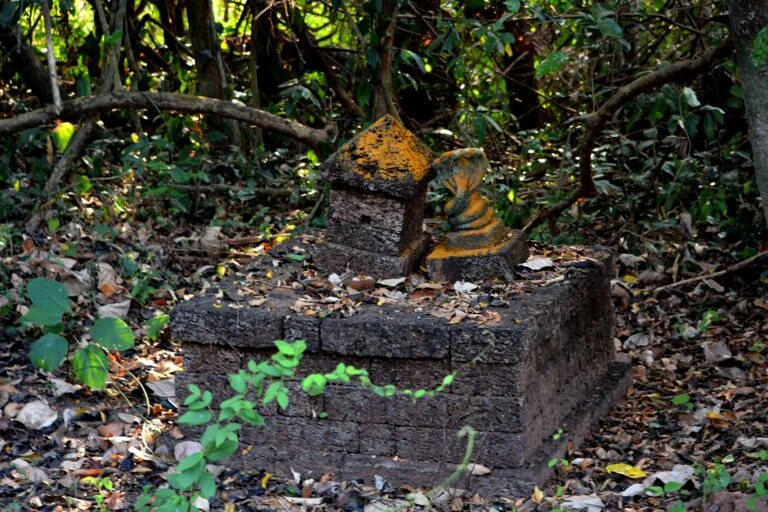
KERALA, INDIA – For centuries, the landscape of Kerala was dotted with "Sarpa Kaavus"—traditional sacred groves dedicated to serpent deities. These verdant islands of biodiversity survived not through government legislation or forest guard patrols, but through the formidable power of local belief. To touch a leaf or fell a tree in a kaavu was to invite the wrath of the divine. Today, however, these ancient sanctuaries face a paradoxical threat: the very rituals designed to honor them are being used to dismantle them, as spiritual practice becomes increasingly decoupled from ecological preservation.
Main Facts: The De-coupling of Faith and Nature
The sacred groves of Kerala are more than just religious sites; they are micro-ecosystems that have historically functioned as the lungs of the state’s midlands and coastal belts. Traditionally, a Sarpa Kaavu (Snake Grove) consists of a dense cluster of native trees, climbers, and medicinal plants, often surrounding a central stone idol of a serpent.
The current crisis stems from a shift in how "sacredness" is perceived. In contemporary Kerala, the physical presence of the grove—the trees, the soil, the water, and the wildlife—is being replaced by symbolic representations. This shift is most evident in two burgeoning trends:
- Kaavu Avahana (Ritual Relocation): A ritual where a tantri (priest) performs a ceremony to transfer the "divine essence" or chaitanya of the grove into a single idol or a smaller, more "convenient" location. Once the ritual is complete, the original grove is no longer considered sacred, allowing landowners to clear the land for housing, agriculture, or commercial development.
- The Rise of Concrete Shrines: In many areas where groves are "restored" or newly established, the dense, layered vegetation of the past is absent. Instead, these new spaces are often constructed using concrete, granite, and tiles. While they fulfill a ritualistic purpose, they offer zero ecological value, failing to support the biodiversity that the original kaavus once harbored.
Ecologists warn that if this trend continues, Kerala will lose one of its most effective traditional carbon sinks and groundwater recharge systems, leading to localized climate shifts and a decline in endemic species.
Chronology: From Ancient Sentinels to Fragmented Islands
The evolution and subsequent decline of Kerala’s sacred groves can be traced through several distinct historical and social phases:
![The changing fate of Kerala’s sacred groves [Commentary]](https://imgs.mongabay.com/wp-content/uploads/sites/30/2026/05/11171600/Sarpa_Kavu_By_Manojk-1200x800.jpg)
The Pre-Modern Era: Guardians of the Tharavad
Historically, kaavus were integral parts of the Tharavad (ancestral joint-family homes). They were managed by family elders and were strictly off-limits for any form of extraction. During this era, thousands of groves existed across the state, acting as a network of "stepping stones" for wildlife moving between larger forest tracts.
The Post-Independence Land Reforms (1960s-1970s)
The Kerala Land Reforms Act led to the redistribution of land and the breakup of large ancestral estates. As joint families splintered into nuclear units, the responsibility for maintaining large kaavus became a burden. Many groves were cleared during this period to make way for food crops as the state pushed for agricultural self-sufficiency.
The Urbanization Boom (1990s-2010s)
With the rise of the "Gulf Dream" and the subsequent influx of remittances, Kerala saw a massive surge in construction. Land prices skyrocketed, turning ancestral groves into valuable real estate. It was during this period that the practice of kaavu avahana gained popularity as a way to reconcile religious guilt with economic aspiration.
The Contemporary Crisis (2020-Present)
Today, the remaining groves are under intense pressure from "edge effects." As urban sprawl surrounds these small patches of forest, they become vulnerable to invasive species, plastic pollution, and the drying up of traditional water sources. The 2014 decision by certain traditional households, such as the Pathirikunnath Mana, to cease avahana rituals represents a nascent counter-movement, but it remains a minority stance.
Supporting Data: The Ecological and Social Cost of Loss
The impact of losing sacred groves is measurable across several scientific and social metrics:
![The changing fate of Kerala’s sacred groves [Commentary]](https://imgs.mongabay.com/wp-content/uploads/sites/30/2026/05/11173520/Nadini_and_other_icons_near_Shiva_shrine_at_Maha_Vishnu_Thirunelli_temple-768x512.jpg)
Biodiversity Refugia
Sacred groves are known to host species that have vanished from the surrounding landscape. In Kerala, kaavus are often the only remaining habitats for rare plants like Syzygium travancoricum (an endangered water-loving tree) and various species of amphibians and reptiles. A single acre of a well-preserved grove can support up to 150 species of plants, many of which have medicinal properties used in Ayurveda.
The Hydrological Cycle
Groves typically contain a Chira (pond) or are located near a natural spring. The thick leaf litter on the forest floor acts as a sponge, slowing down rainwater runoff and allowing it to percolate into the ground. Studies have shown that wells in the vicinity of a Sarpa Kaavu maintain higher water levels during the harsh summer months compared to wells in fully urbanized areas.
The "Snake-Economy"
The central figure of the grove—the snake—serves a vital agricultural purpose. By regulating rodent populations, snakes prevent significant crop loss in nearby paddy fields and reduce the spread of zoonotic diseases like leptospirosis. The loss of groves leads to increased human-snake conflict as these reptiles lose their natural habitat and wander into homes.
Estimated Numbers
While no definitive recent census exists, historical estimates suggested Kerala once had over 10,000 sacred groves. Current estimates by the Kerala State Biodiversity Board suggest this number has dwindled significantly, with many surviving only as "relic patches" of less than 0.05 hectares.
Institutional and Official Responses: A Struggle for Protection
The protection of sacred groves in Kerala falls into a legal gray area, as most are privately owned. However, various institutions have attempted to intervene:
![The changing fate of Kerala’s sacred groves [Commentary]](https://imgs.mongabay.com/wp-content/uploads/sites/30/2026/05/11174105/Sarpapooja_in_in_Chithrakoodam_at_Kalathil_Sree_Rudhiramala_Bhagavathy_Temple-4-768x512.jpg)
- The Kerala State Biodiversity Board (KSBB): The KSBB has launched several incentive programs, offering financial assistance to private owners for the "conservation and rejuvenation" of sacred groves. However, critics argue the funding is insufficient to compete with the lucrative nature of real estate development.
- The Forest Department: While the department manages larger forest tracts, it has limited jurisdiction over private kaavus. They have, however, initiated the "Kavu Samrakshanam" scheme, which provides saplings and technical advice to those wishing to restore degraded groves.
- The Role of the Tantri (Priests): There is an ongoing debate within the priestly community. While some tantris facilitate avahana for a fee, others are beginning to speak out against the practice. Leading spiritual figures are increasingly being called upon to emphasize that the vriksha (tree) is as sacred as the vigraha (idol).
- Judicial Intervention: The Kerala High Court has, in various landmark judgments, emphasized the need to protect "ecologically fragile" lands, but applying this specifically to small, privately owned sacred groves remains legally complex.
Implications: The Future of Faith-Based Conservation
The decline of Kerala’s sacred groves carries profound implications for the future of conservation in India and globally.
1. The Loss of Traditional Ecological Knowledge (TEK)
As kaavus disappear, so does the community’s knowledge of native flora and fauna. The rituals were once a way to transmit ecological values to the next generation. Without the physical grove, these rituals become hollow, and the connection between the people and their land is severed.
2. Climate Vulnerability
Kerala has recently faced devastating floods and landslides. The loss of natural drainage systems like sacred groves exacerbates these disasters. The removal of the canopy layer increases local "heat island" effects, making urban and semi-urban living more uncomfortable and energy-intensive.
3. A Shift in Global Conservation Strategy
The "Kerala Model" of sacred groves was long cited by international conservationists as proof that "Indigenous and Community Conserved Areas" (ICCAs) are more effective than state-run parks. The current trend suggests that belief systems are not static; they are susceptible to market forces. This implies that faith-based conservation must be supported by economic incentives and modern scientific understanding to remain viable.
4. The "Museumization" of Nature
If the current trend of concrete shrines continues, the Sarpa Kaavu will cease to be a living ecosystem and will instead become a "museum piece"—a symbolic nod to a past when humans lived in harmony with nature, but which provides no actual service to the environment.
![The changing fate of Kerala’s sacred groves [Commentary]](https://imgs.mongabay.com/wp-content/uploads/sites/30/2026/05/11174617/%E0%B4%95%E0%B4%AE%E0%B5%8D%E0%B4%AE%E0%B4%BE%E0%B4%9F%E0%B4%82_%E0%B4%95%E0%B4%BE%E0%B4%B5%E0%B5%8D_Kammadam_Kaavu-768x512.jpg)
Conclusion: Redefining the Sacred
The survival of Kerala’s sacred groves depends on a fundamental re-evaluation of what constitutes "the sacred." If the essence of the deity is believed to reside only in an idol, then the trees are expendable. However, if the "divinity" is understood to be the entire ecosystem—the shade, the snake, the soil, and the spring—then clearing the grove becomes an act of sacrilege.
For the Sarpa Kaavus of Kerala to survive the 21st century, the custodians of tradition—the priests, the landowners, and the local communities—must bridge the gap between ancient ritual and modern ecology. The decision to stop kaavu avahana and prioritize the physical preservation of the land is not a rejection of tradition, but a return to its most primal and essential form: the protection of life in all its diverse manifestations. Without this shift, the "God’s Own Country" of the future may find itself with plenty of temples, but very little of the nature that once made it divine.
