

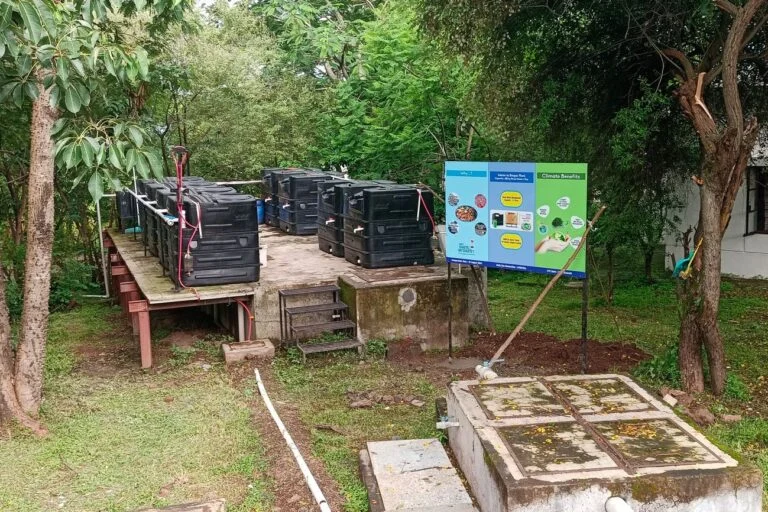
PUNE, INDIA — For Priyadarshan Sahasrabuddhe, the founder of Vaayu Mitra, the last several months have been a blur of constant phone notifications and urgent inquiries. As the founder of a decentralized, waste-to-energy biogas startup, his mission has always been to decouple Indian kitchens from their reliance on fossil fuels. However, it took a geopolitical shock thousands of miles away to turn his niche environmental solution into a national necessity.
“My phone has not stopped ringing since the LPG crisis began,” Sahasrabuddhe says. His company, which promotes home-generated biogas from wet waste, has suddenly become a lifeline for a population grappling with the fragility of a globalized energy supply chain.
Main Facts: A Nation Caught in an Energy Pincer
India’s energy security is currently facing its most significant test in decades. The catalyst was the escalation of conflict in West Asia, which led to the closure of the Strait of Hormuz—a narrow, strategic waterway through which the vast majority of India’s Liquefied Petroleum Gas (LPG) imports must pass.
The impact was immediate and devastating. India imports approximately 60% of its total LPG consumption. Of that imported volume, a staggering 90% is routed through the Strait of Hormuz. When the waterway was blocked, the supply chain for cooking fuel, which millions of households and businesses take for granted, effectively snapped.

In the wake of the shortage, the following trends have emerged:
- Black Market Explosion: While a standard LPG cylinder is officially priced around ₹950, desperate consumers in cities like Delhi and Pune have reported paying between ₹2,500 and ₹5,000 on the black market.
- Regression to Solid Fuels: Many households, unable to afford black-market prices or wait in mile-long queues, have reverted to traditional wood-fired "chulhas" and cow-dung cakes, undoing years of progress in respiratory health and clean cooking.
- Surge in Alternatives: Businesses in the hospitality and food processing sectors are frantically seeking alternatives, ranging from industrial-scale biogas digesters to bio-pellet stoves and solar cookers.
Chronology: From Geopolitical Tension to Kitchen Crisis
The timeline of the current crisis illustrates how quickly international instability can manifest as a domestic emergency.
Early 2025: Tensions in West Asia escalate, leading to maritime restrictions in the Persian Gulf. India, which had seen its LPG imports rise from 18,514 thousand metric tonnes in 2023-24 to over 20,667 thousand metric tonnes in 2024-25, finds itself highly over-leveraged on a single supply route.
March 2026: The Strait of Hormuz is officially closed to commercial traffic. Within days, the ripple effects reach Indian shores. Stockpiles of LPG begin to dwindle.

April 2026: The "LPG Panic" takes hold. Long queues at distribution centers become a daily sight. The hospitality industry, particularly small restaurants and canteens, begins to see production halts. An ice-cream manufacturer in Pune approaches Sahasrabuddhe, begging for an "overnight" installation of a biogas system to save his business—a request Sahasrabuddhe has to decline due to the necessity of a proper waste-audit.
May 2026: A secondary market for green energy solutions explodes. Companies like Ecosense Appliances, which previously sold only a handful of commercial stoves a month, report selling hundreds in a matter of weeks. The narrative shifts from "environmental consciousness" to "energy survival."
Supporting Data: The Economics of the Biogas Pivot
The shift toward biogas isn’t just a reactive measure; for many, it has proven to be a masterclass in long-term fiscal prudence. Sahasrabuddhe himself has been LPG-free for seven years, saving an estimated ₹70,000 in fuel costs.
Across his 405 active installations, the data paints a compelling picture of sustainability:

- Waste Management: These systems process 1,119 tonnes of organic waste annually, diverting it from landfills where it would otherwise produce methane, a potent greenhouse gas.
- Fuel Displacement: Over the last decade, Vaayu Mitra systems have saved approximately 3,000 LPG cylinders (14 kg each).
- Monetary Value: These savings equate to roughly ₹2.8 million in avoided fuel costs for his clients.
Individual success stories further validate the model. Angad Patwardhan, a Pune-based actor and voice artist, has been LPG-free for four years. His family of five, along with two domestic staff members, runs two independent kitchens entirely on biogas generated from a 10 kg digester. By purchasing wet waste from the SWaCH waste picker cooperative for just ₹300 a month, Patwardhan manages 3.5 tonnes of waste annually and saves an average of 12 cylinders per year.
Official Responses and Expert Perspectives: Barriers to Scale
Despite the clear benefits, experts and stakeholders point to significant hurdles that prevent these green solutions from becoming the national standard.
The Real Estate Hurdle
Suneel Kulkarni, representing the Megapolis township in Hinjawadi, notes that while their installation of Vaayu Mitra across 26 buildings has provided residents with immense energy security, the upfront costs are a deterrent for developers.
"Developers are required by law to install waste management systems," Kulkarni explains. "Traditional Organic Waste Composters (OWCs) carry heavy electricity bills that residents must pay. Vaayu’s set-up is zero-energy, saving about ₹2,000 per flat per month. However, the installation cost of ₹10,000 per flat is an expense many builders are reluctant to absorb." For a large township, this can mean an initial outlay of ₹8 million to ₹8.5 million.

The Technical and Social Stigma
Vitthal Kauthale of the Bharatiya Agro Industries Foundation (BAIF) warns that biogas is not a "plug-and-play" solution. It requires a specific ecosystem:
- Calorific Value: Biogas has a lower calorific value (4,500 to 5,000 kcal/m3) compared to LPG, meaning it can be slower for certain types of high-heat cooking.
- Maintenance: Factors like temperature, sunlight, and moisture content are critical. "In our campus, we use three storage tanks to ensure even supply across a distance of one kilometer," Kauthale notes.
- Social Perception: Angad Patwardhan highlights the "stigma of waste." Neighbors often complain about perceived smells, even when the systems are functioning correctly, forcing users to move digesters to terraces or out of sight.
The Rise of Solar and Pellets
Vishakha Chandhere, founder of Orjabox, has seen a fundamental shift in consumer psychology. "Two months ago, I had to convince people of the health and cost benefits of solar cookers. Now, they are approaching me," she says. Innovations like tube-solar cookers, which work in partial cloud cover, and parabolic cookers that rival LPG speeds, are finally gaining traction.
Similarly, Ketaki Kokil of Ecosense Appliances reports a massive surge in bio-pellet stoves. From selling 3–5 commercial units a month in early 2026, her company sold over 300 commercial units and 1,000 domestic units in March alone. These stoves use pellets made from agricultural waste, providing a circular economy solution that appeals to major hotel chains and individual households alike.
Implications: A New Strategy for Clean Cooking
The current crisis has exposed a fundamental flaw in India’s "clean cooking" strategy. For years, the government has focused heavily on the Pradhan Mantri Ujjwala Yojana, which successfully moved millions of households from wood to LPG. However, by tethering the nation’s health to a fuel source that is 60% imported and subject to the whims of Middle Eastern geopolitics, the strategy created a new form of vulnerability.

1. The Need for Decentralization:
The crisis underscores that energy security is not just about having enough fuel, but about where that fuel comes from. Decentralized biogas and solar provide "on-site" security that no maritime blockade can disrupt.
2. Policy Shift Toward Subsidies:
Stakeholders are calling for the government to treat biogas and solar cooking with the same urgency as solar rooftop panels. This includes providing property tax rebates (as Pune has started to do) and direct subsidies to offset the high initial installation costs for housing societies and SMEs.
3. Behavioral Change:
As Vitthal Kauthale of BAIF concludes, these solutions should not be viewed as "emergency backups." To achieve true energy independence, green cooking must be integrated into the Indian lifestyle.
The Strait of Hormuz may eventually reopen, and the long queues for LPG may vanish, but the lesson of 2026 remains clear: India’s kitchens are currently at the mercy of global tides. The pioneers in Pune and beyond are proving that the solution to energy security doesn’t lie in more imports, but in the waste bins and sunshine of India’s own backyards.
