

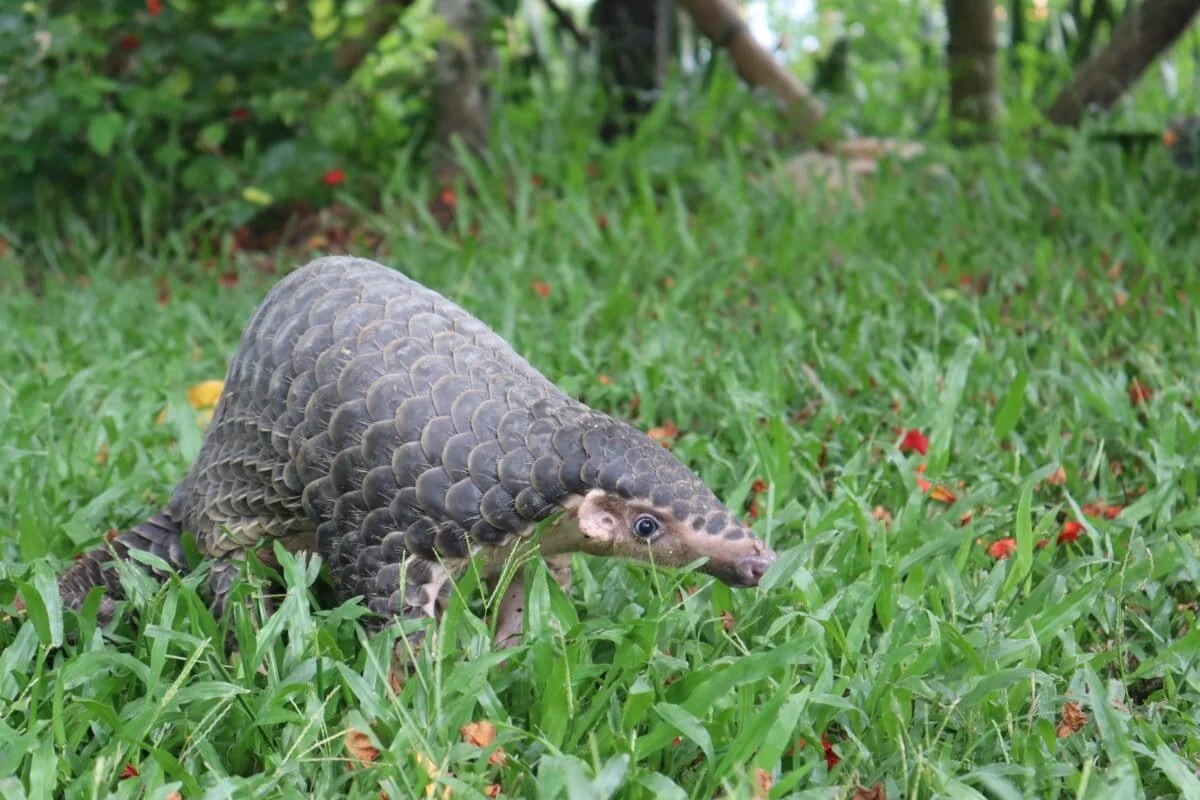
KIPHIRE, NAGALAND — In the dense, mist-shrouded hills of Nagaland’s Kiphire district, a transformation is taking place. For generations, the pangolin—the world’s only scaled mammal—was viewed through a lens of superstition or as a source of subsistence. Today, that narrative is being rewritten by the very communities that once hunted them. In a landmark move for indigenous-led conservation, the Sangtam Naga community has established a localized ban on pangolin hunting, signaling a shift in how India’s Northeast approaches the protection of its most vulnerable wildlife.
Main Facts: A Community-Led Shield
The core of this conservation movement lies in the hands of the United Sangtam Likhum Pumji (USLP), the apex tribal body of the Sangtam Naga people. Earlier this year, the USLP passed a formal resolution to implement a community-led ban on pangolin hunting across 42 villages in the Kiphire district. This region, which borders Myanmar, is part of the Indo-Myanmar biodiversity hotspot, one of the most ecologically rich yet threatened areas on Earth.
The ban specifically targets the protection of the Chinese pangolin (Manis pentadactyla), a species currently listed as "Critically Endangered" on the IUCN Red List. While the pangolin is already protected under Schedule I of India’s Wildlife Protection Act, 1972—granting it the same legal status as the tiger—enforcement in remote, mountainous borderlands has historically been a logistical nightmare for state authorities.
By utilizing customary laws and the influence of village councils, conservationists believe they have found a more effective deterrent than state-led policing. In Nagaland, where tribal bodies hold significant socio-political sway, a resolution from an apex body like the USLP carries more weight than a distant federal statute. The ban is not merely a legal restriction but a social contract, enforced by customary courts that can impose local sanctions on violators.
Chronology: From Bad Omen to Biodiversity Hero
The history of the pangolin in Nagaland is a complex tapestry of culture, myth, and increasingly, the pressures of global capitalism.

The Era of Superstition:
For decades, the pangolin was a creature of mystery and ill-repute. L. Kipitong Sangtam, a 61-year-old resident of Amahator village, recalls the stories passed down through generations. "Our forefathers would say that if a pangolin enters a house, it was considered a bad omen or a curse," he explains. This belief often led to the immediate killing of any pangolin encountered near human settlements, as villagers sought to "neutralize" the perceived threat.
2010–2015: The Trafficking Surge:
As global demand for pangolin scales—used in traditional Chinese and Vietnamese medicine—surged, the Indo-Myanmar border became a critical artery for the illegal wildlife trade. During this period, significant trafficking was reported in neighboring Manipur, particularly through the "Golden Triangle" corridor connecting India to Thailand, Laos, and Myanmar.
2016: Global Intervention:
Recognizing the precipitous decline of the species, all eight species of pangolins were moved to Appendix I of CITES (Convention on International Trade in Endangered Species of Wild Fauna and Flora), effectively banning all international commercial trade.
2018–2024: Shifting Focus to Nagaland:
While conservation efforts initially concentrated on Manipur, the Wildlife Trust of India (WTI) observed a shift in trafficking routes. The ongoing civil unrest in Manipur and stricter enforcement in certain sectors pushed the trade toward Nagaland’s porous borders. In response, the WTI launched the "Countering Pangolin Trafficking Project," modeled after a successful initiative with the Tangkhul Naga community in Manipur, which saw 252 villages adopt similar bans.
2025: The Kiphire Resolution:
In early 2025, the USLP finalized its resolution, marking a new chapter for the 42 Sangtam villages. This move was bolstered by the return of educated youth from urban centers, who brought back an increased awareness of environmental conservation and the ecological importance of the "scaly anteater."

Supporting Data: The High Cost of the Scaly Trade
The pangolin holds the dubious honor of being the world’s most trafficked mammal. The scale of the crisis is reflected in staggering global and regional statistics:
- Global Seizures: Between 2016 and 2024, more than 530,000 pangolins were seized globally in various law enforcement operations.
- Indian Context: Between 2018 and 2022, over 1,000 pangolins were documented in the illegal trade within India alone, though experts believe the actual number is much higher due to the clandestine nature of the trade.
- Biological Vulnerability: Pangolins have extremely low reproductive rates, typically giving birth to only one pup per year. This makes it nearly impossible for populations to recover quickly once they are targeted by hunters.
- Ecological Impact: A single adult pangolin is estimated to consume more than 70 million insects annually. In Nagaland, where communities rely on wood and bamboo for housing, pangolins serve as a vital natural defense against termite infestations that can devastate local infrastructure and agriculture.
Despite these figures, baseline data on the actual population of pangolins in Nagaland remains non-existent. "Most available data is not about how many pangolins exist, but how many are being hunted, seized, or traded," says Mukesh Thakur, a wildlife forensic expert at the Zoological Survey of India.
Official Responses: Challenges of the Porous Border
The task of protecting the pangolin is complicated by the unique social and geographical landscape of the Indo-Myanmar border.
An official from the Wildlife Crime Control Bureau (WCCB), speaking on the condition of anonymity, highlighted the "social fabric" as a primary challenge. "Many communities living along the border have relatives on both sides—India and Myanmar," the official noted. "Movement across borders has historically been common and culturally accepted. When we talk about restricting hunting, it is not just a legal issue but a social and cultural one."
Monesh Tomar, assistant manager and officer-in-charge at WTI, emphasizes that the approach must be "bottom-up" rather than "top-down." Tomar explains that in a region where customary laws regulate land and resources, central laws like the Wildlife Protection Act are often difficult to enforce. "If communities themselves reject pangolin hunting and trade, it becomes much harder for external traders to operate," Tomar says.

Araluen "Azza" Schunmann, director of the Pangolin Crisis Fund, points out that while local consumption exists, the "primary threat today comes from the global trade in their scales—falsely believed to have medicinal value." She notes that while the situation is serious, the resilience of the species offers hope if they are given "space and protection."
Implications: A New Model for Conservation
The success of the USLP resolution in Kiphire could serve as a blueprint for wildlife conservation across the Northeast and other regions where indigenous land rights and customary laws are paramount.
1. The Primacy of Customary Law:
The Kiphire model suggests that for conservation to be sustainable in tribal areas, it must be integrated into the existing social hierarchy. By empowering village councils and customary courts to handle violations, the ban gains a level of legitimacy and "buy-in" that state-imposed fines or jail time may lack.
2. Ecological Livelihood Security:
By framing the pangolin as a "friend of the farmer" rather than a "bad omen," conservationists have successfully linked the survival of the species to the economic well-being of the villagers. The reduction in termite damage and the decreased need for chemical pesticides provide a tangible, local incentive for protection.
3. The "Respite" Strategy:
Interestingly, the ban is often discussed in terms of a "temporary protection" period of five to ten years. This pragmatic approach allows the community to see the benefits of population recovery without feeling that their traditional rights are being permanently extinguished. It creates a "cooling-off" period for the ecosystem to heal.

4. Shifting Trade Dynamics:
There is evidence that the nature of the trade may be shifting. Mukesh Thakur of the ZSI suggests that post-COVID-19 regulations in China and increased global scrutiny may have reduced the massive, industrial-scale trafficking, leaving "small-scale use" and "subsistence hunting" as the primary local hurdles. Addressing these smaller, localized incidents requires the deep community engagement now seen in Kiphire.
As the youth of Nagaland return to their ancestral villages, they carry with them a dual identity: guardians of their heritage and stewards of their environment. L. Kipitong Sangtam reflects this optimism: "We are confident that the ban will be successful because the villagers have understood and agreed to protect the species."
In the end, the fate of the Chinese pangolin may not be decided in the courtrooms of New Delhi or the markets of Hanoi, but in the village council halls of Kiphire, where a ancient community has decided that a "bad omen" is actually a silent, scaly ally worth saving.
