

By [Your Name/Journalist Name]
Published: March 6, 2022
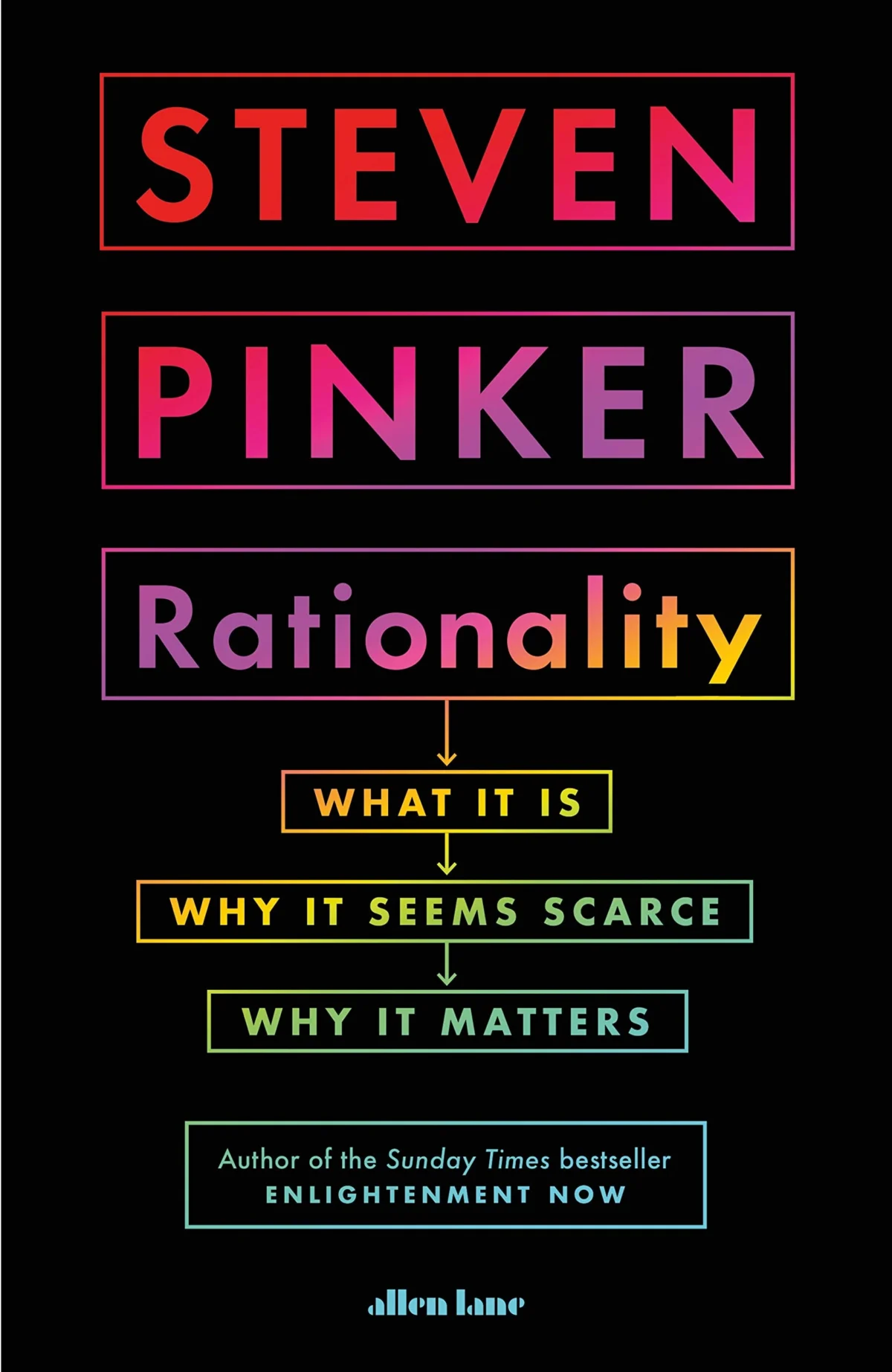
At the prestigious Jaipur Literature Festival (JLF) 2022, a gathering long heralded as the "greatest literary show on Earth," the air was thick with the tension between traditional wisdom and modern upheaval. Into this fray stepped Steven Pinker, the renowned Canadian-American cognitive psychologist and Harvard professor, to discuss his latest intellectual endeavor: Rationality: What It Is, Why It Seems Scarce, Why It Matters. In a wide-ranging conversation with economist and author Mihir S. Sharma, Pinker dissected the paradox of the 21st century—a world where humanity possesses unprecedented scientific tools yet remains ensnared in conspiracy theories, "cancel culture," and tribalism.
Main Facts: The Cognitive Roots of Human Progress
The central thesis of Pinker’s JLF session was that rationality is not merely a dry academic pursuit but the very engine of human survival and flourishing. Pinker described his latest work as a "homecoming" to his foundational training in cognitive psychology. After decades of exploring broad historical trends in violence and social progress, he has returned to the internal mechanics of the human mind.
Pinker argued that rationality is a set of cognitive tools—logic, probability, critical thinking, and correlation—that allow us to navigate a world governed by entropy. He challenged the notion that human progress is an inevitable, magical force. Instead, he posited that the natural state of the universe is chaos and decay. Without the deliberate application of human reason, life would naturally drift toward famine, disease, and conflict.
"Progress doesn’t happen just like that," Pinker told the JLF audience. "There is no magical force in the universe that makes life better. Contrarily, the laws of nature tend to make life worse." He emphasized that the significant reductions in global poverty, child mortality, and large-scale warfare over the last few centuries are direct dividends of the Enlightenment’s focus on rational inquiry over dogma.
Chronology: The Intellectual Evolution of Steven Pinker
To understand Pinker’s current focus on rationality, one must trace the trajectory of his career, which he outlined during the session as a series of cascading inquiries into human nature.
The Foundation: Language and Instinct
Pinker’s journey into the public consciousness began with his work on linguistics. In his seminal book The Language Instinct (1994), he argued that language is a biological adaptation, an innate structure of the human mind rather than a purely cultural construct. This led him to a broader question: If language is an instinct, what other faculties of the mind are "hard-wired" by evolution?
The Blank Slate and Human Nature
By the early 2000s, Pinker moved into the realm of social philosophy with The Blank Slate. He challenged the prevailing academic orthodoxy that the human mind has no innate traits. By arguing that evolution gives us a specific "human nature," he began exploring the political and social implications of our biological heritage, including our capacities for both empathy and aggression.

The Macro-Trends: Violence and Enlightenment
In The Better Angels of Our Nature (2011) and Enlightenment Now (2018), Pinker used data to show that, contrary to daily news cycles, the world is becoming less violent and more prosperous. These works set the stage for his current focus. If the world is getting better because of reason, why does it feel like we are living in an era of peak irrationality? This question served as the bridge to his 2021-2022 focus on the scarcity of logic in public discourse.
Supporting Data: Why Rationality Feels Scarce
During the JLF session, Mihir S. Sharma pushed Pinker on the apparent "scarcity" of rationality in the modern age. Pinker’s response was rooted in the distinction between "individual rationality" and "public rationality."
The Bias Blind Spot
Pinker explained that humans are not inherently "irrational" in their daily lives; we are rational enough to get to work, feed ourselves, and manage complex social relationships. However, we suffer from "motivated reasoning" and "myside bias." Supporting data from cognitive science suggests that people use their intelligence not to find the objective truth, but to defend the positions of their "tribe" or political identity.
The Entropy of Information
Pinker referenced the Second Law of Thermodynamics—entropy—as a metaphor for social systems. Without a constant "input" of rational energy and error-correction mechanisms, information systems naturally devolve into noise and misinformation. He noted that while rationality has reduced famine and war, the digital age has accelerated the spread of "rationalized" irrationality, where sophisticated logic is used to defend absurd premises.
The Role of Education
Pinker underscored that rationality is a "gift" that must be cultivated. He argued that our education systems often fail to teach the basic tools of probability and logic, leaving citizens vulnerable to cognitive illusions. For example, the human brain is naturally poor at understanding statistical risk, leading to disproportionate fears of rare events (like plane crashes or shark attacks) while ignoring more common threats (like heart disease or climate change).
Official Responses: On Cancel Culture and Institutional Infallibility
One of the most provocative segments of the discussion centered on "cancel culture" and the rising tide of censorship in academic and public spheres. Pinker’s stance was an uncompromising defense of the Socratic method and open inquiry.
The Fallacy of Infallibility
Pinker warned that modern authoritarian impulses—whether from the state or from social groups—stem from a dangerous "feeling of infallibility." He argued that the implicit rationale behind silencing controversial speakers or "canceling" writers is the assumption that the censors already possess the absolute truth.
"The problem is that people who are doing the censoring or cancelling others have to assume that they are infallible," Pinker stated. "They are so sure about their opinion that they will use group force to shut people up and remove opposing views from their platforms."

The Psychology of Censorship
As a psychologist, Pinker identified the "bias to assume that we are not biased, but somebody else is." He argued that the act of suppressing speech is intellectually indefensible because no human has a "pipeline to the truth." Instead, truth is a collective discovery that can only emerge from the friction of competing ideas. When institutions—universities, media outlets, or tech platforms—pre-emptively decide which ideas are "harmful" or "misinformation," they dismantle the very mechanisms of error correction that lead to progress.
Implications: The Future of Democracy and Truth
The session concluded with a somber look at the implications of a society that abandons rationality in favor of emotional tribalism or enforced orthodoxy.
The Erosion of Democratic Institutions
Pinker suggested that democracy itself is a technology of rationality. It is a system designed to resolve conflicts through debate and voting rather than through violence. If the public loses the ability to engage in rational discourse, the foundational pillars of democratic governance—compromise, evidence-based policy, and the peaceful transfer of power—begin to crumble.
The Challenge of Global Crises
The implications extend to global challenges. Pinker noted that solving issues like climate change or pandemics requires a high degree of global cooperation and a commitment to scientific rationality. If the "scarcity of rationality" persists, humanity may find itself unable to coordinate on the solutions necessary to counteract the "laws of nature" that tend to make life worse.
A Call for Intellectual Humility
Pinker’s final message at JLF 2022 was a call for intellectual humility. By recognizing that our reasoning is subjective and prone to flaws, we can foster a culture that prizes "open debate and evaluation of ideas" over the comfort of tribal certainty. Rationality, in Pinker’s view, is not a cold, robotic trait but a deeply human one—a tool that allows us to transcend our instincts and build a world that is measurably better for everyone.
As the session at the Diggi Palace came to a close, Pinker’s words served as a reminder that the progress we enjoy today is a fragile achievement. It was built by the application of reason and can only be sustained by a renewed commitment to the same principles in an increasingly polarized world. The "scarcity" of rationality is not a permanent condition, but a challenge that requires active, daily resistance against the forces of dogma and censorship.
About the Author: Navneet Vyasan is a Senior Sub Editor at News18, specializing in city life, art, culture, and intellectual discourse. This report was enriched with additional context regarding Steven Pinker’s body of work and the broader philosophical implications discussed during the 2022 Jaipur Literature Festival.
