

KADAPAKKAM, TAMIL NADU — In the quiet fishing hamlet of Kadapakkam, tucked between the historic shore temple town of Mamallapuram and the French-inflected boulevards of Puducherry, stands a structure that challenges the modern definition of luxury. En Vilasam, a private villa perched on the Alamparai coast, began not with a blueprint, but with a landscape.
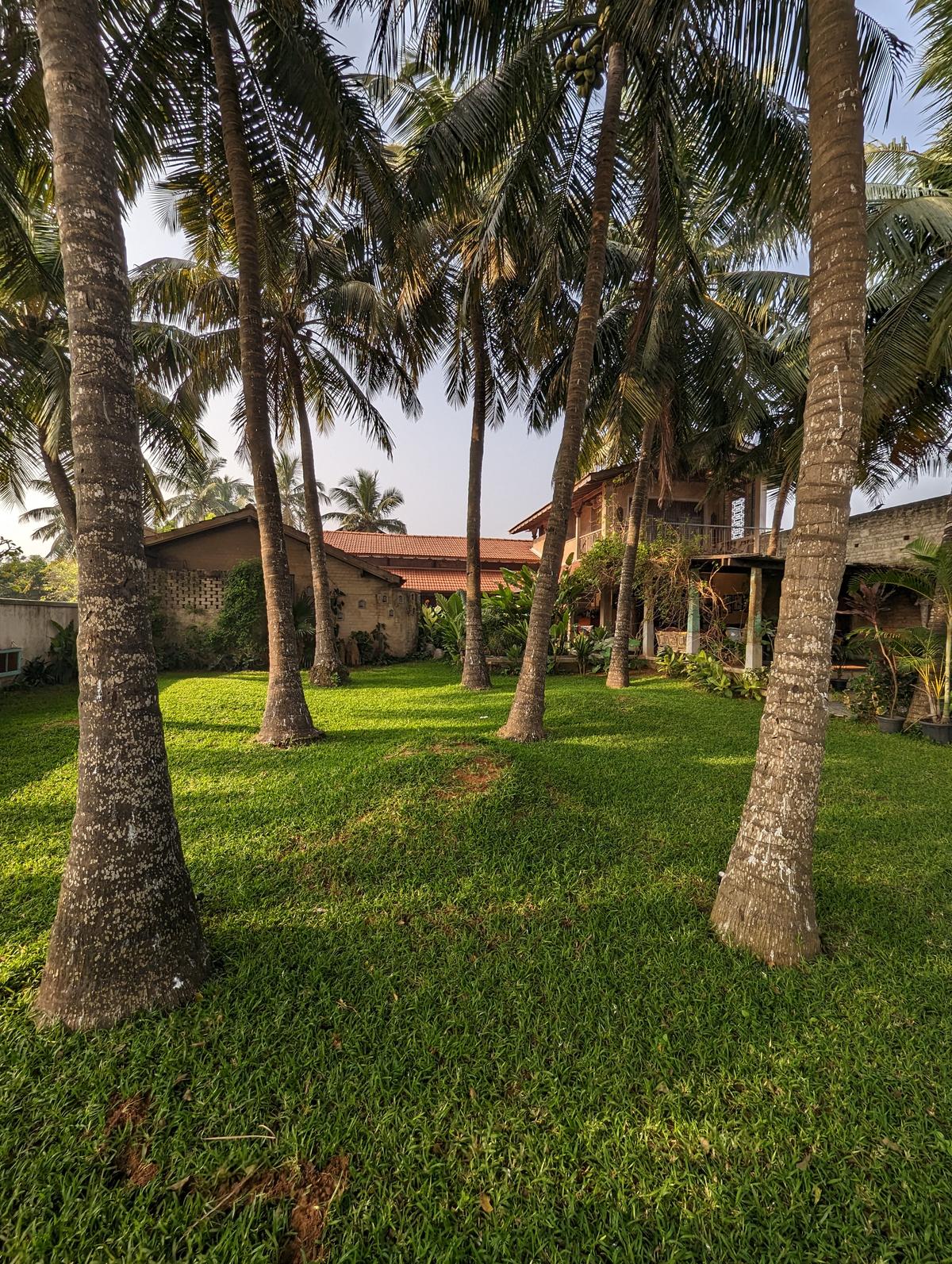
According to its architect, Raj Andagere, the story of this residence is inextricably linked to a sun-dappled gathering of coconut trees that stood like silent sentinels on a bed of buffalo grass. When Gomathi Subramanian, a renowned antiques collector from Chennai, first encountered this grove, she saw more than a plot of land; she saw an escape from the urban cacophony and a canvas for her life’s collection.
Today, En Vilasam stands as a testament to the "slow living" movement, a residence where the boundaries between the indoors and the outdoors blur, and where the materials of the past—lime, stone, and reclaimed wood—create a sensory experience that contemporary glass-and-steel structures cannot replicate.
Main Facts: A Synthesis of Antiquity and Contemporary Design
En Vilasam is a three-bedroom private villa designed to function as both a personal sanctuary and a gallery for South Indian heritage. The property is currently managed by LuxUnlock, a specialist villa rental company that focuses on "emotionally layered" properties.
The villa’s design is rooted in the Chettinad architectural tradition, characterized by central courtyards, heavy granite columns, and intricate woodwork. However, it departs from rigid traditionalism by incorporating a "contemporary language" developed by Auroville-based architect Raj Andagere.
Key Features of the Property:
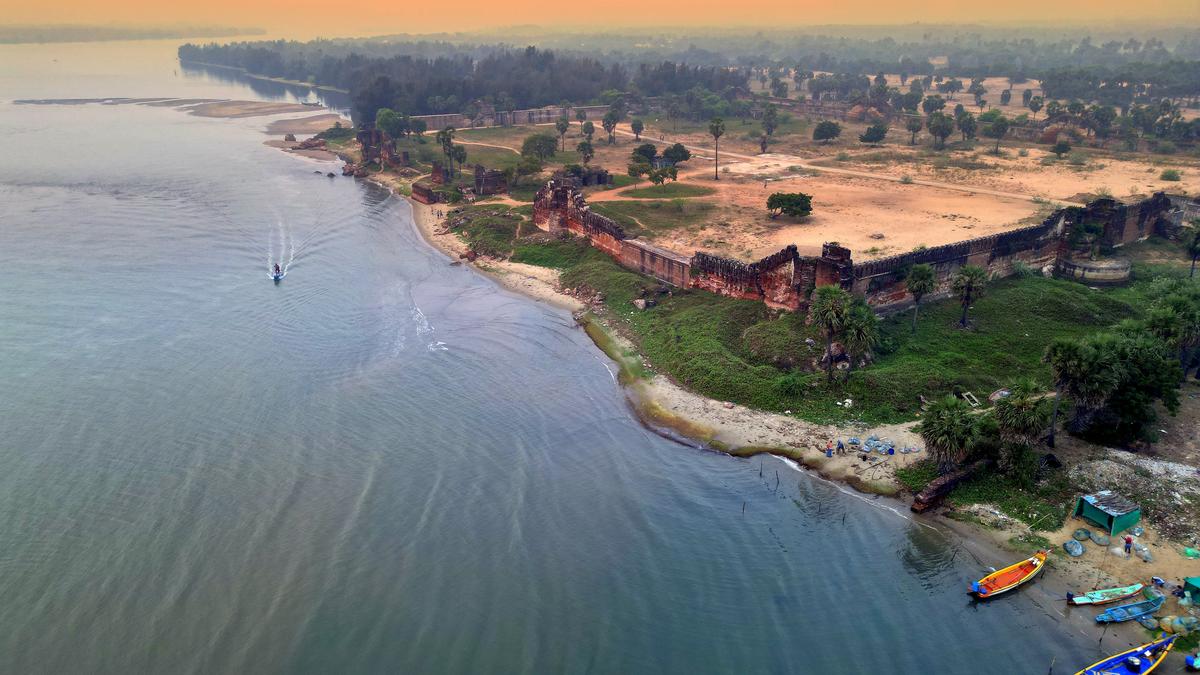
- Location: Kadapakkam, near the 18th-century Alamparai Fort ruins.
- Architectural Style: Vernacular, craft-based, and eco-friendly.
- Primary Materials: Lime plaster with natural pigments (brick powder), coconut rafters, reclaimed catamaran logs, and antique granite columns.
- Layout: A rectangular site featuring nine distinct roofs, a koi pond courtyard, and open-to-sky bathrooms.
- Artistic Elements: Hand-plastered walls in ochre, emerald, and lapis lazuli; Tanjore art; and louvered French accordion doors.
Chronology: From a Collector’s Dream to a Shared Legacy
The evolution of En Vilasam can be traced through three distinct phases: discovery, construction, and transition.
2015–2017: The Visionary Phase
Gomathi Subramanian, seeking a retreat from Chennai, discovered the coconut grove in Kadapakkam. Armed with her extensive collection of antiques and a seminal book on the mansions of Karaikudi by architectural historian George Michell, she sought an architect who could translate her nostalgia into a functional home. She approached Raj Andagere, who, along with his brother Ajith, specialized in sustainable and vernacular design.
2018–2019: The Construction Phase
The building process was a "puzzle," according to Andagere. The challenge was to integrate Subramanian’s vast inventory—stacks of louvered doors, ancient columns with remnants of old paint, and bridal chests—into a new structure. The construction focused on "good bones," utilizing traditional techniques like lime plastering that would allow the house to age gracefully in the salty coastal air. The house was completed in late 2019, just before the global shift in travel preferences toward private, isolated retreats.
2021–Present: The Transition to Heritage Hospitality
Following the passing of Gomathi Subramanian, the villa was inherited by Anjan Rangaraj. Recognizing the home as his predecessor’s artistic legacy, Rangaraj sought to share the space with a wider audience. In 2021, the property joined the LuxUnlock portfolio, transitioning from a private residence to a high-end rental that offers guests a "sensory experience" rather than a conventional hotel stay.
Supporting Data: The Science and Craft of Vernacular Building
The architectural significance of En Vilasam lies in its rejection of industrial materials in favor of "living" substances.
The Magic of Lime Plaster
Architect Raj Andagere, who studied under George Michell in Melbourne, emphasizes the use of lime and sand over cement. "The lime grows harder as it grows older. It stays alive," Andagere explains. Unlike modern paint, lime plaster is breathable and hygroscopic. At En Vilasam, the walls change with the seasons—deepening in hue during the monsoon and lightening under the summer sun. The use of natural pigments, such as crushed brick powder for the ochre walls, ensures that the color is integrated into the material rather than sitting on the surface.
Structural Innovation: The Nine Roofs
The site’s rectangular geometry posed a significant challenge for a traditional courtyard layout. To maintain airflow and light while accommodating the specific dimensions of the land, Andagere designed a complex system of nine roofs. To manage costs and maintain an eco-friendly footprint, coconut rafters sourced from Karnataka were used throughout. This choice was both aesthetic and functional, providing a rustic texture that complements the polished granite and brass accents.
Reclaimed Materiality
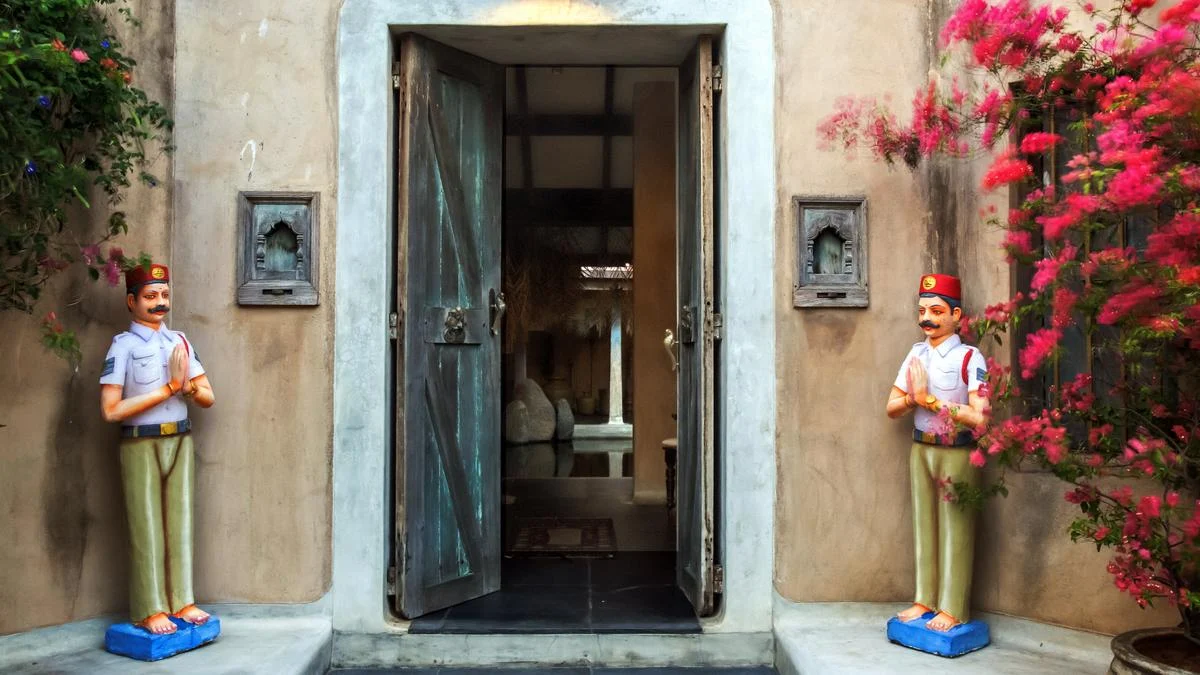
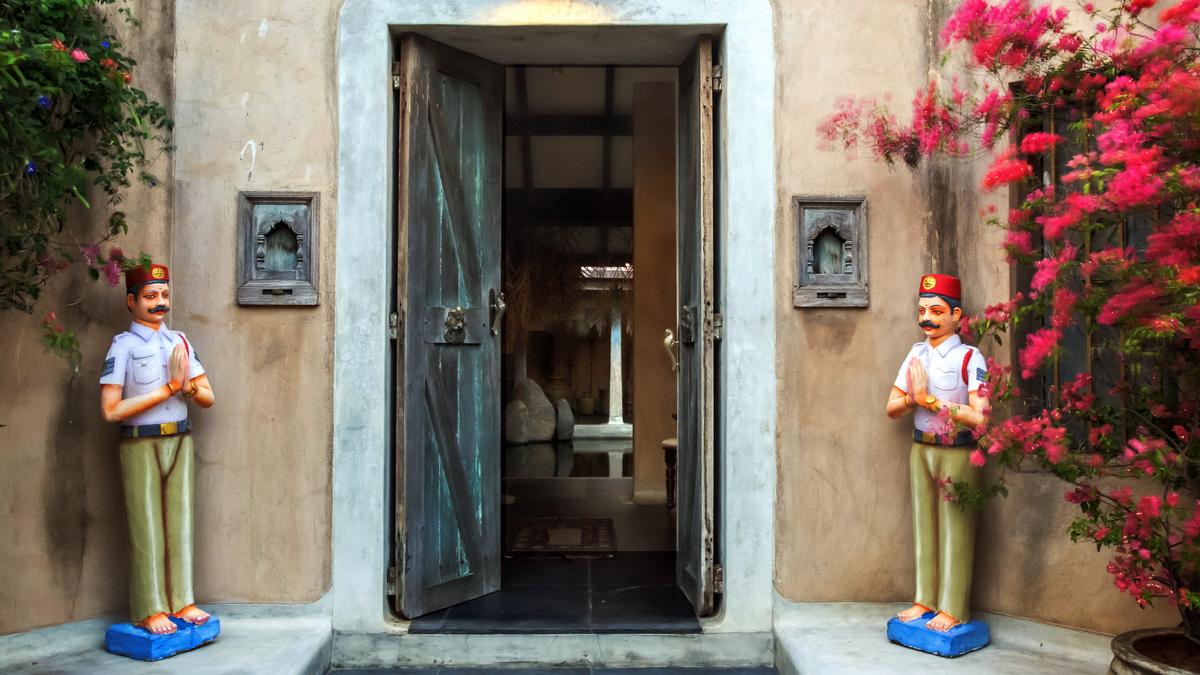
The villa is a masterclass in upcycling. The dining table is crafted from reclaimed catamaran logs—dense wood seasoned by years in the Arabian Sea—and old railway benches. The entry is guarded by two traditional policeman statues, and the internal doors are antique louvered sets that Subramanian had collected over decades. These elements are not merely decorative; they are structural components that define the home’s rhythm.
Official Responses: Redefining Luxury in the Post-Pandemic Era
The management and current ownership of En Vilasam view the property as a bridge between the past and a new kind of future for Indian tourism.

Anjan Rangaraj, Owner of En Vilasam:
"En Vilasam is a reflection of Gomathi’s mind, her taste, and the way she saw the world. It stands as both her legacy and a quiet continuation of her artistic mind. This was a home she built to share and be appreciated, and I wish to do the same."
Ashish Gupta, Founder of LuxUnlock:
Gupta notes that of the 40-plus properties his company operates across South India, En Vilasam is the most "emotionally layered." He argues that the market is shifting away from "predictable luxury-villa aesthetics" toward something more authentic.
"What I love about it is that it doesn’t try to be conventionally luxurious. It is earthy, eccentric in parts, and deeply Tamil in its references. Guests often arrive expecting a beach villa, but leave talking about the feeling of the place instead. It feels lived-in rather than styled," Gupta says.
Solachi Ramanathan, Principal Architect at Urban Workshop:
As a guest and industry professional, Ramanathan highlights the emotional impact of the design. "There’s a warmth and thoughtfulness to the place that makes it feel deeply personal. The seamless indoor-outdoor spaces invited us to slow down, gather, and enjoy the rain."
Implications: The Future of Coastal Architecture and Heritage Preservation
En Vilasam serves as a case study for several burgeoning trends in architecture and regional development.
1. The Environmental Imperative
By using lime plaster and reclaimed wood, En Vilasam demonstrates that high-end residential architecture can significantly reduce its carbon footprint. The "breathable" nature of the house reduces the reliance on heavy air conditioning, as the sea breeze moves through louvered doors and open corridors, cooled by the central koi pond.
2. Heritage as a Living Asset
The project proves that "antiques" need not be relegated to museums. By integrating 19th-century granite columns and louvered doors into a 21st-century home, the architect has preserved the craftsmanship of the past in a way that is functional and relevant. This model offers a blueprint for preserving Chettinad and Tamil coastal heritage which is often lost to modern concrete redevelopment.
3. Sustainable Tourism in Fishing Villages
The villa’s presence in Kadapakkam highlights a sensitive approach to tourism. Rather than building a walled-off resort, En Vilasam remains part of the village’s "unselfconscious rhythm." This encourages "design-forward" travelers to engage with the local community, from eating at small local restaurants to observing the traditional fishing practices near the Alamparai Fort.
4. The Sensory Turn in Architecture
The success of En Vilasam suggests that the future of luxury lies in the sensory and the tactile. As Andagere notes, while modern consumers may step gingerly into high-end luxury showrooms, a house made of humble, natural materials "feels like an embrace." This psychological comfort is becoming the ultimate luxury in an increasingly digital and sterilized world.
In conclusion, En Vilasam is more than a coastal villa; it is a narrative of continuity. It stands as a reminder that the most enduring structures are those that honor the land they sit on, the materials they are built from, and the memories of those who envisioned them. As the sun sets over the ruins of Alamparai Fort, reflecting off the ochre walls of the villa, it is clear that the coconut grove and the house have finally become one.
