

The Metropolitan Museum of Art’s annual Costume Institute Gala, a beacon of high fashion and celebrity, unfolded this year with its customary grandeur, albeit with an undercurrent of sharper societal commentary. The theme, "Costume as Art," provided a rich canvas for designers and attendees alike, transforming the red carpet into a living exhibition. However, the glitz and glamour were juxtaposed by vocal protests outside the museum, highlighting the growing chasm between elite extravagance and pressing global concerns.
The Price of Prestige: Escalating Costs and Record-Breaking Philanthropy
The 2026 Met Gala witnessed a significant escalation in its already stratospheric pricing. A single ticket, once a symbol of access, now commanded a staggering $100,000, a substantial increase from the previous year’s $75,000. Corporate tables began at $350,000, underscoring the event’s reliance on brand sponsorships and the strategic placement of guests by influential entities.
This heightened exclusivity did not deter the elite, as evidenced by the gala’s record-breaking fundraising. Reports indicate that the event garnered an impressive $42 million for the Costume Institute, a notable surge from the approximately $31 million raised in 2025. This financial success points to a shifting landscape of wealth and a willingness among a select few to bankroll such opulent affairs. The sheer volume of funds raised serves as a powerful testament to the event’s enduring appeal within the highest echelons of society.
A Canvas of Controversy: Protests Mar the Gala’s Opening
While the opulent interiors of the Metropolitan Museum of Art buzzed with fashion’s elite, the exterior was a scene of fervent protest. Demonstrators gathered outside, their placards held high, targeting honorary co-chairs Jeff Bezos and Lauren Sánchez. Their presence alongside Anna Wintour, Nicole Kidman, Venus Williams, and Beyoncé became a focal point for dissent, transforming the familiar New York contrast of flashing cameras and picket signs into a stark visual representation of societal divides.
The protests, aimed at issues often associated with the immense wealth of individuals like Bezos, cast a shadow over the celebratory atmosphere. The juxtaposition of extreme wealth and privilege with calls for social responsibility and equity served as a potent reminder of the complex socio-economic realities that persist even amidst the most glamorous events. The determined presence of both the protestors and the gala attendees, each vying for visibility, underscored a nation grappling with its priorities and the distribution of its resources.
India’s Ascending Presence: From Underfoot to Spotlight
This year, India’s engagement with the Met Gala felt more profound than ever, transcending mere guest attendance to become an integral part of the event’s fabric. A diverse contingent of Indian personalities, including Karan Johar making his debut, Manish Malhotra, Ananya Birla, Natasha Poonawalla, and Isha Ambani, showcased a sophisticated understanding of both spectacle and strategic engagement.

Significantly, even the very ground upon which the stars walked was touched by Indian artistry. The carpet, crafted in Kerala by Neytt and later artfully re-imagined, served as a subtle yet powerful declaration of India’s presence. It was a reminder that the nation’s contribution was not confined to its celebrated guests but was, quite literally, underfoot, woven into the very foundation of the evening.
Natasha Poonawalla: The Living Sculpture
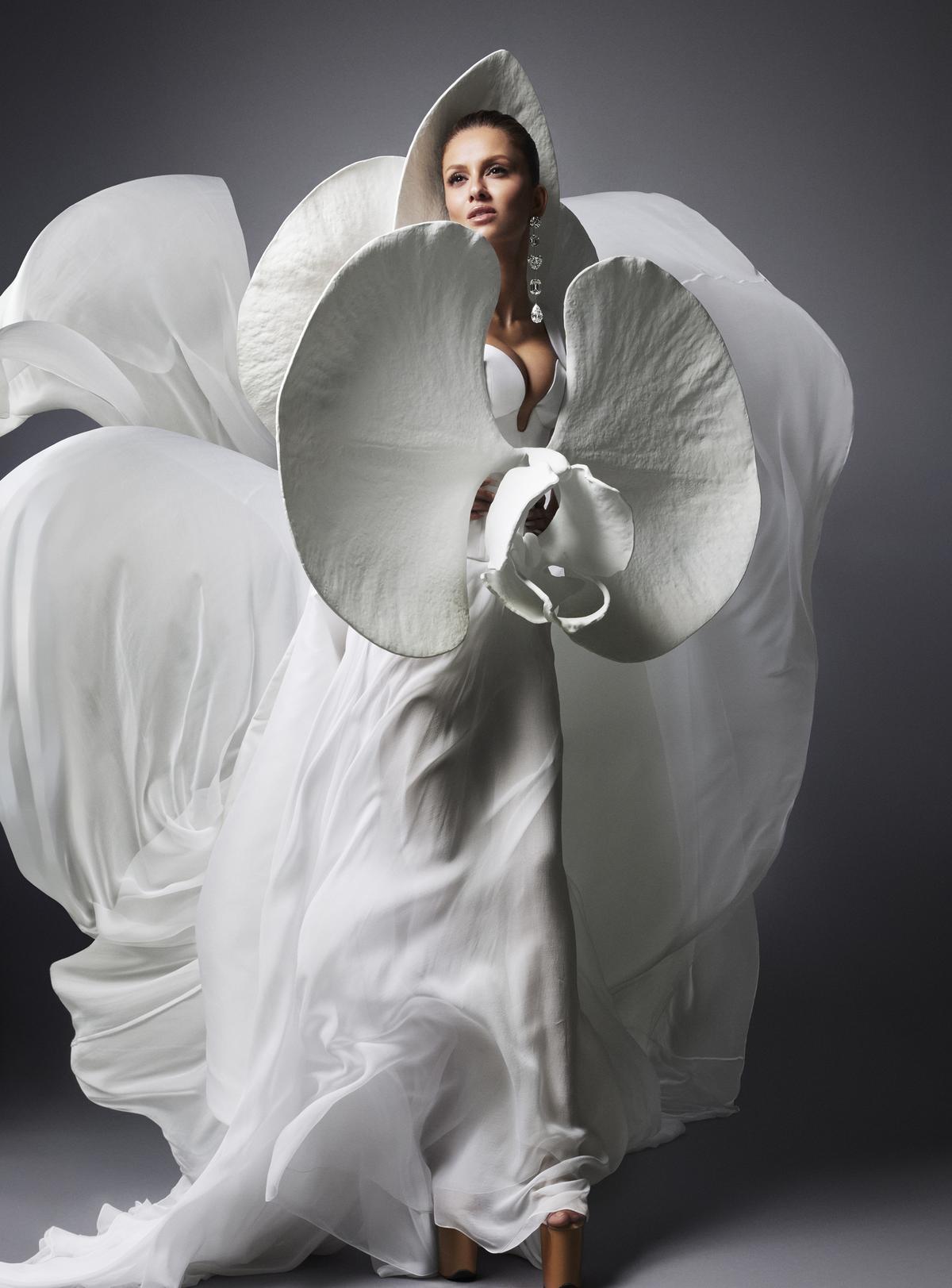
Natasha Poonawalla embraced the "Costume as Art" theme with a daring and avant-garde ensemble. Eschewing a traditional gown, she opted for a breathtaking orchid pectoral by renowned British visual artist Marc Quinn. This striking piece, a Phalaenopsis orchid cast in white, was designed not to be displayed on a plinth but to exist in symbiosis with the wearer, demanding a human form to truly "work."
Worn across her chest like a piece of intricate armor, the pectoral blurred the lines between haute couture and fine art. The orchid, a symbol of renewal and longevity that graces cultures across continents, took on a new dimension as a statement piece that was both deeply symbolic and visually arresting. The rest of Poonawalla’s ensemble, meticulously curated with the expertise of Domenico Dolce of Dolce & Gabbana and the Alta Moda team, complemented the sculptural centerpiece, creating a look that was both artistic and undeniably impactful.
Karan Johar: A Cinematic Tapestry on the Red Carpet
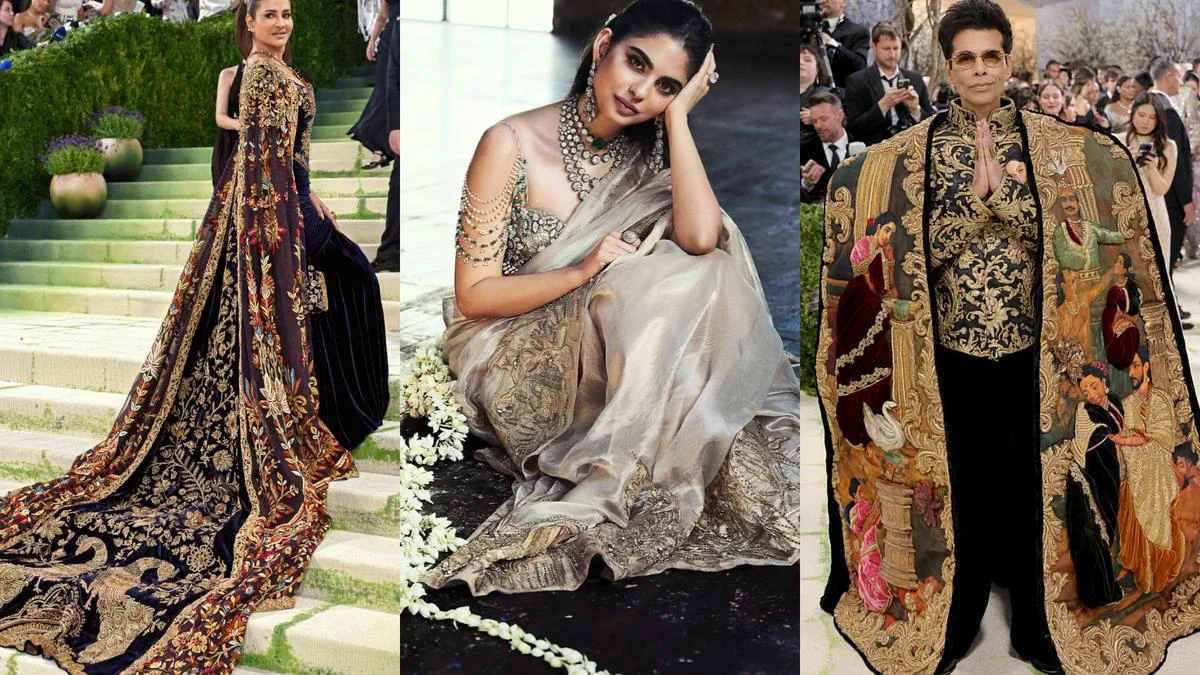
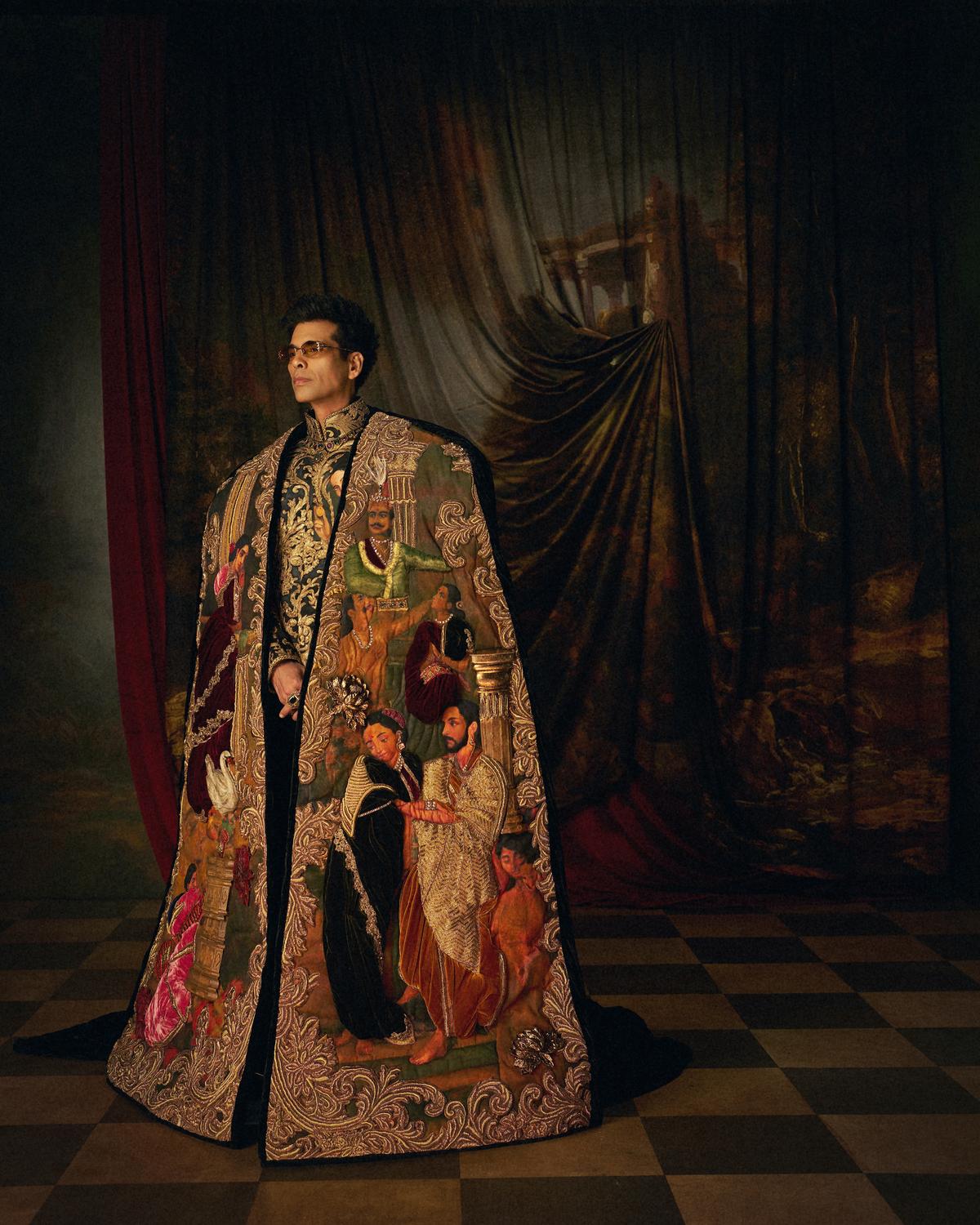
Filmmaker Karan Johar made history as the first Indian filmmaker to grace the Met Gala red carpet, and he did so with a sartorial tribute to India’s rich artistic heritage. His Manish Malhotra couture creation was a magnificent hand-painted cape, a wearable gallery of 19th-century Indian art. The cape featured Raja Ravi Varma’s iconic "Lady With A Lemon" as its centerpiece, surrounded by other celebrated works such as "Arjuna and Subhadra," "Hamsa Damayanti," and "There Comes Papa."
This six-foot-long masterpiece was not merely painted; it was brought to life with intricate embroidery, acrylic oil, and varnish finishes, a testament to the dedication of over 80 artisans who worked for 86 days. The cape’s dimensionality was further enhanced by sculpted pillars, lotuses, and swans, adding a tactile, three-dimensional element to the velvety drapes. Styled by Eka Lakhani, Johar completed his artistic ensemble with jewels from his own brand, Tyaani, solidifying his status as a connoisseur of both cinema and style.
Sudha Reddy: "The Tree of Life" Embodied
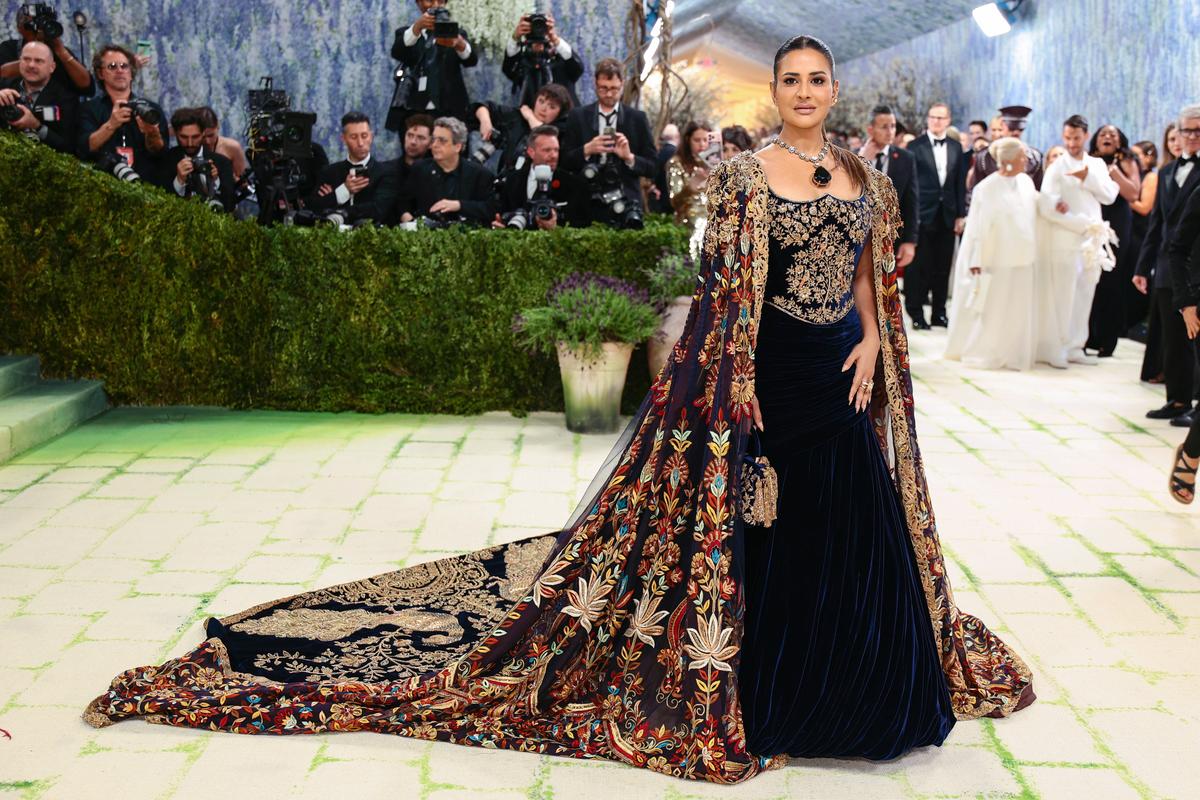
Billionaire philanthropist Sudha Reddy returned to the Met Gala in a resplendent custom creation by Manish Malhotra, titled "The Tree of Life." Styled by Mariel Haenn, the ensemble was a profound exploration of heritage designed for global appeal. Drawing inspiration from the ancient Indian textile tradition of Kalamkari, Malhotra reimagined its motifs into a sculptural form that was both rich in detail and elegantly contemporary.
The gown, crafted from luxurious velvet, was adorned with antique gold zari and heavy zardozi work, creating a surface of exquisite texture that conveyed opulence even from a distance. The motifs themselves told a story, incorporating elements like Palapitta (a bird), Jammi Chettu (a tree), Kalpavriksha (a wish-fulfilling tree), Tangedu (a flower), and representations of Surya (the sun) and Chandra (the moon). Reddy aptly described the creation as "Hyderabad translated into clothing," a harmonious blend of costume and archive that resonated with the gala’s theme.
Manish Malhotra: A Homage to Mumbai and Artisanship
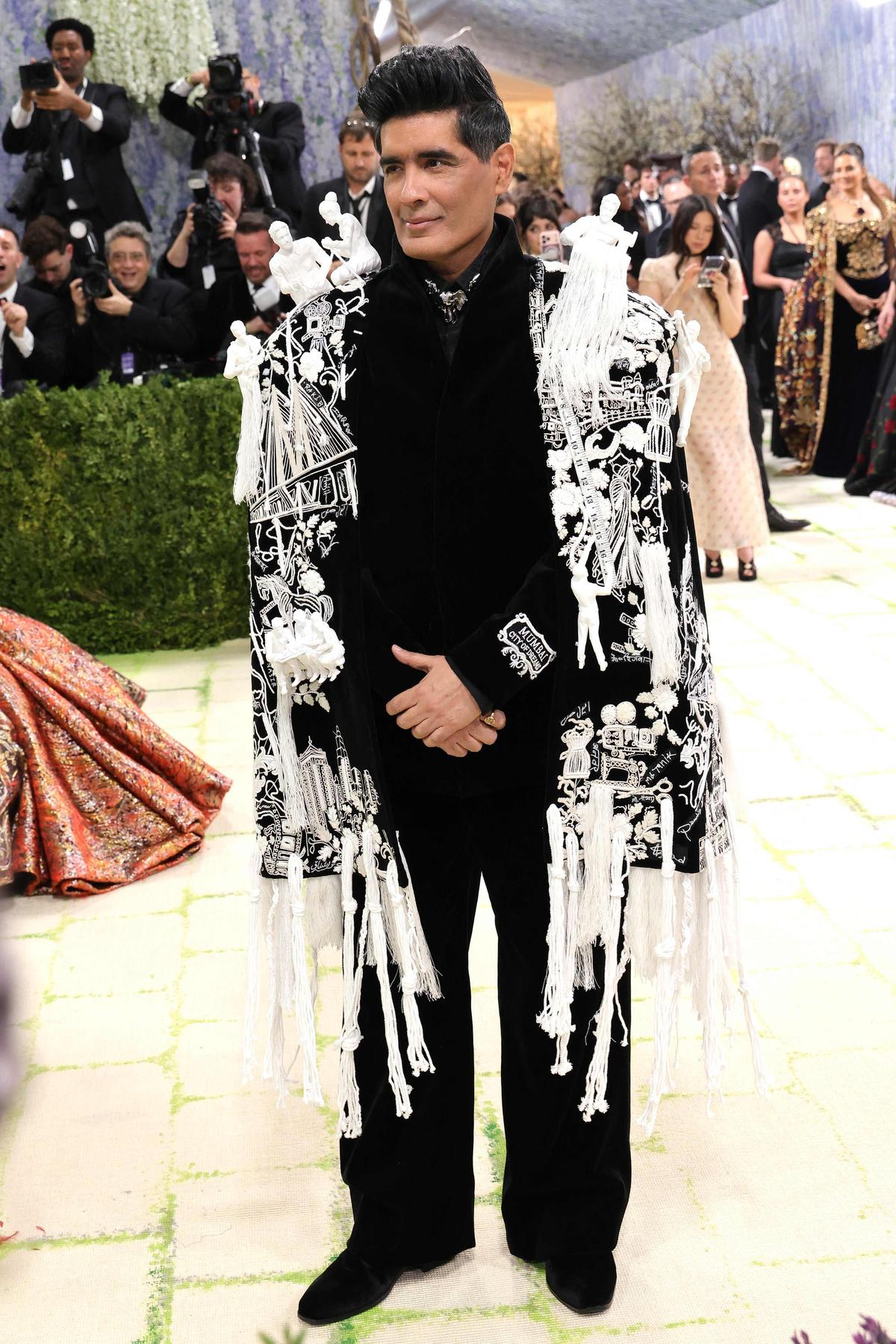
Couturier Manish Malhotra, in his second Met Gala appearance, presented a look that was a deeply personal ode to his journey in Indian cinema and design. "Taking my atelier to the Met Gala," he declared, embodying the spirit of his craft. His architectural cape, worn over a classic bandgala, was a canvas showcasing the intricate artistry of dori, chikankari, zardosi, and kasab hand embroidery.
The cape was meticulously detailed with white embroidery depicting iconic Mumbai landmarks, including the Chatrapathi Shivaji Terminus and the Gateway of India. In a poignant tribute to his collaborators, Malhotra also embroidered the names of every artisan he has worked with, emphasizing their crucial role in his creative legacy. This deliberate act underscored his commitment to honoring their skill, artistry, and the enduring legacy of Indian craftsmanship. Beyond his own ensemble, Malhotra also dressed actress Camila Mendes in a mahogany custom couture gown inspired by the timeless works of Amrita Sher-Gil, further extending his artistic reach.
Isha Ambani: A Living Canvas of Gold and Heirlooms
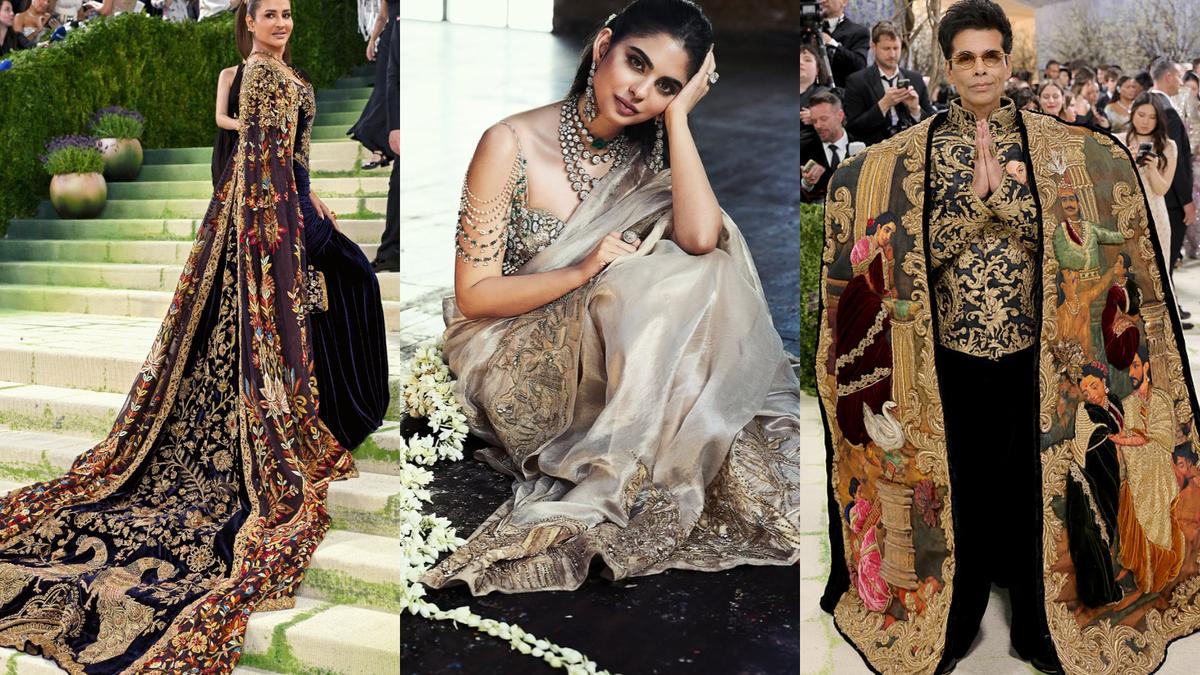
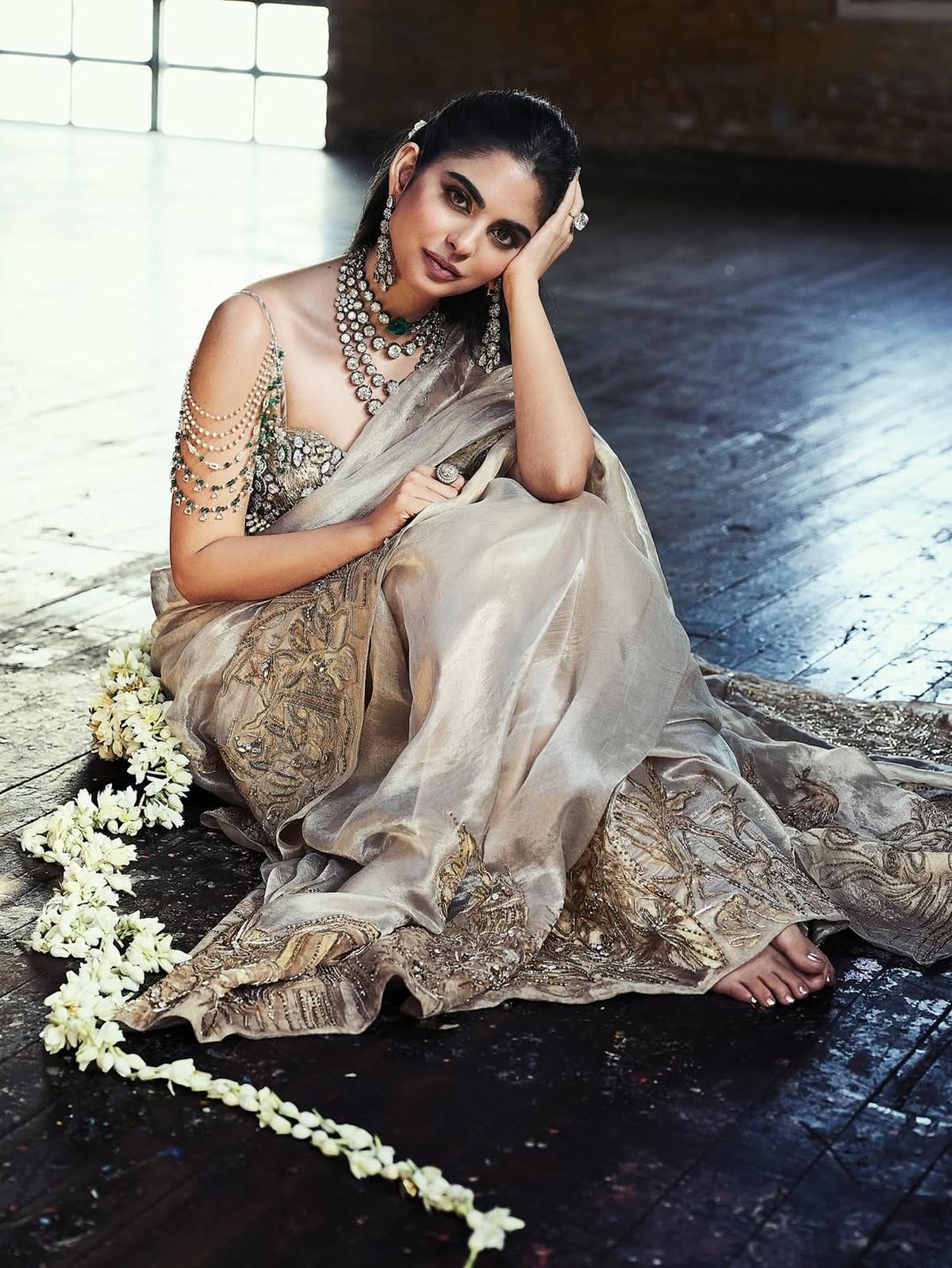
Isha Ambani, the heiress of the Ambani empire, made a memorable entrance in a custom couture creation by Gaurav Gupta, a collaboration that seamlessly blended textiles, surface work, and artistic styling by Anaita Shroff Adajania. The sari, conceived as a "living canvas," was a testament to meticulous craftsmanship. Woven with threads of pure gold by Swadesh artisans, it featured Pichwai-inspired motifs rendered in soft gold and earthy tones.
The blouse, a treasured piece from Nita Ambani’s personal collection, was embellished with diamonds and metallic zardozi embroidery. Adding a layer of historical significance, a sarpech, once part of the Nizam’s collection, adorned the back, a remarkable testament to the power of inherited heirlooms. Ambani’s hair was transformed into a jasmine-inspired sculpture, a painstakingly crafted reimagining of the traditional mogra gajra, requiring over 150 hours of work by artist Sourabh Gupta. This piece, existing at the intersection of ornament and object, perfectly captured the spirit of the "Costume as Art" theme. To complete her ensemble, Ambani carried a mango sculpture by artist Subodh Gupta, a bold and literal interpretation of fashion as art, declaring that subtlety was not the assignment for the evening.
Ananya Birla: The Mask of Transformation
Entrepreneur and singer Ananya Birla embraced the theme with a striking look that featured a stainless steel mask by renowned Indian sculptor Subodh Gupta. Dressed in Robert Wun couture, her ensemble comprised an elaborately pleated, puffed skirt paired with a sharp, structured peeplum blazer and shirt in black and light blue. Stylist Rhea Kapoor aptly described the look as "the moving of the ordinary to the extraordinary."
The mask, designed to both obscure identity and project strength, served as a powerful symbol of transformation. Birla’s outfit, a masterful reinterpretation of everyday workwear into the realm of high fashion, was one of the night’s most impactful. It was a look that truly embodied the spirit of reimagining costume as art.
Gauravi Kumari and Padmanabh Singh: Royal Roots, Contemporary Expressions
The debut of Jaipur royalty, Gauravi Kumari and Padmanabh Singh, at the Met Gala was marked by elegant ensembles by Prabal Gurung, each deeply rooted in personal history yet expressed through contemporary design. Gauravi’s gown was a poignant reinterpretation of a chiffon sari once worn by Maharani Gayatri Devi. This sentimental piece was masterfully reworked into a sharp, modern silhouette, paying homage to nostalgia without succumbing to overt sentimentality. Her adornments, pearls and uncut gemstones from The Gem Palace, kept the connection to her heritage close and refined.
Padmanabh, on the other hand, showcased a profound appreciation for craftsmanship with his "phulghar" coat. Crafted from velvet and meticulously hand-embroidered over 600 hours by artisans in Jaipur, the coat was a testament to traditional Indian artistry. The intricate quilting with cotton further enhanced its artisanal appeal, proving that Padmanabh, too, possesses a keen eye for sartorial elegance.
Diya Mehta Jatia: Kolkata’s Whispers and Shola’s Grace
Fashion consultant Diya Mehta Jatia’s presence at the Met Gala marked the design debut of Mayyur Girotra, whose inspiration was drawn from the charming lanes of Kolkata and the endangered art of Shola craft. The Shola plant, a water-based material used in traditional Bengali decorations, inspired a gown that was both innovative and deeply symbolic.
Jatia wore a custom Mayyur Girotra gown fashioned from metallic, rustic gold Kanjivaram silk. An ivory-sheath overlay, meticulously crafted from recycled industrial waste and raw compounds, was intricately carved with filigree work and 3D rosettes, drawing clear parallels to Baroque architecture. This fusion of ancient Indian textiles with contemporary material innovation and artistic embellishments created a look that was both visually stunning and conceptually rich, celebrating a unique facet of Indian heritage.
Conclusion: A Multifaceted Spectacle
The Met Gala 2026, while a dazzling display of fashion and art, also served as a potent reminder of the complex interplay between wealth, society, and activism. The escalating costs and record-breaking fundraising painted a picture of an event firmly entrenched in the world of elite affluence. Yet, the protests outside underscored the growing demand for accountability and a more equitable distribution of resources.

The strong presence of Indian designers and celebrities, celebrated for their innovative and heritage-rich creations, signaled a new era of global influence for Indian artistry. From wearable art pieces to tributes to cinematic legacies and ancestral craftsmanship, the Indian contingent demonstrated a sophisticated mastery of the "Costume as Art" theme. Ultimately, the Met Gala 2026 was more than just a fashion event; it was a multifaceted spectacle that mirrored the ongoing dialogues and tensions shaping our contemporary world.
