

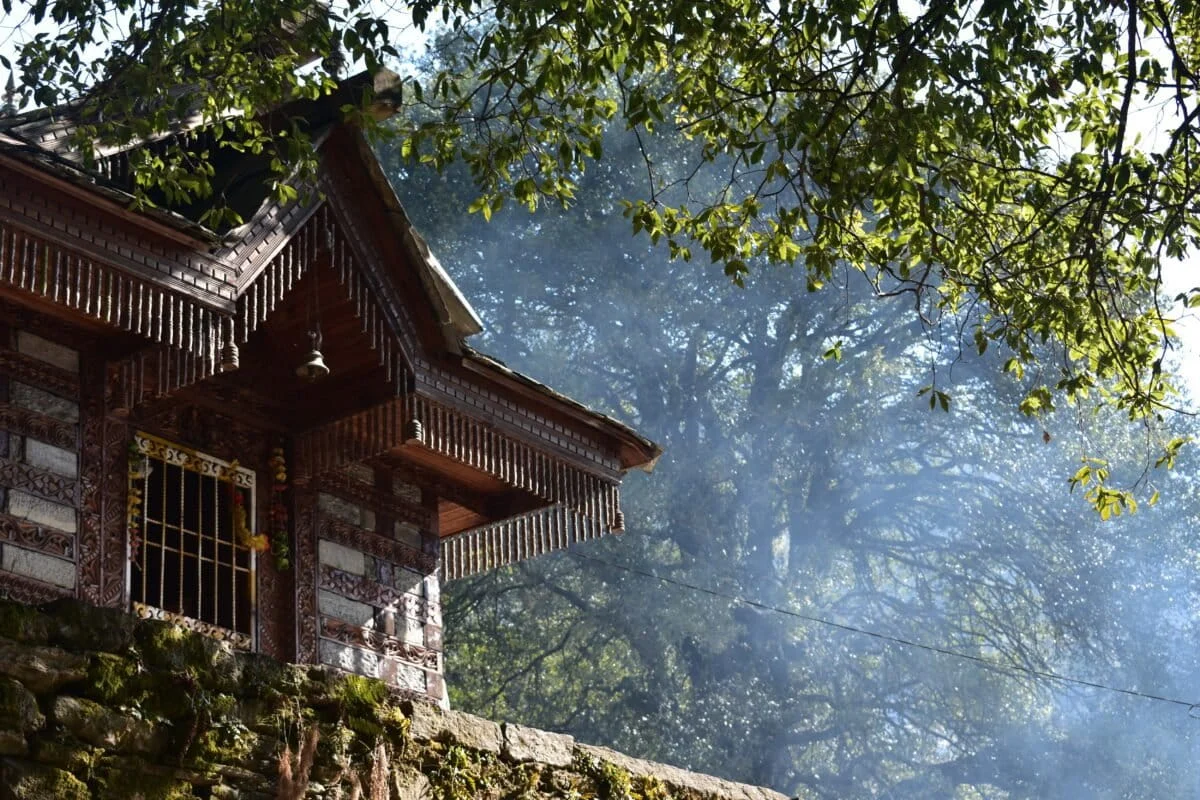
In the rugged, mist-shrouded peaks of Himachal Pradesh, a state often referred to as Dev Bhoomi (the Land of the Gods), an ancient system of environmental governance is quietly struggling for survival. For centuries, the conservation of the region’s vast forest tracts was not the remit of uniformed rangers or legislative mandates, but of the divine. These are the Dev Vans, or sacred groves—forest patches revered as the exclusive domain of local deities.
Today, as the state grapples with the dual pressures of a burgeoning tourism industry and the escalating volatility of climate change, these sacred landscapes find themselves at a critical crossroads. The transition from a "moral framework" of land use to an "economic framework" is not merely a cultural shift; it is an ecological gamble that could redefine the resilience of the Himalayan ecosystem.
Main Facts: The Anatomy of a Sacred Grove
Himachal Pradesh spans 55,673 square kilometers of diverse topography, ranging from lush alpine meadows to arid high-altitude deserts. Within this expanse, researchers have documented at least 514 sacred groves. These are not merely clusters of trees; they are complex socio-ecological units found near settlements, ancient temples, and vital water sources.
The rules governing these Dev Vans are absolute and enforced through deep-seated communal faith. In these patches, tree-felling is strictly prohibited, as is the collection of dry leaves or fallen twigs. Cultural taboos extend to human behavior within the boundaries: the consumption of alcohol or meat and the entry of "impure" items are met with severe social—and supposedly spiritual—sanctions.

"Nobody wants to anger the god," explains Anurita Saxena, Principal at Rajkiya Kanya Mahavidyalaya, Shimla, who has dedicated decades to studying the state’s cultural tapestry. "The customs allow certain forests to remain untouched, hence conserving nature through a mechanism of reverence and fear that no government policy could replicate."
At the heart of this system are the kardars, or traditional caretakers. They act as the intermediaries between the deity and the village, governing access and ensuring that the ancestral rules are upheld. In remote valleys, these groves remain the center of community life, where rituals and festivals under the forest canopy reinforce the symbiotic bond between the inhabitants and their terrain.
Chronology: From Village Commons to Commercial Commodities
The evolution of forest management in Himachal Pradesh can be divided into three distinct eras: the Pre-Colonial Customary Era, the Bureaucratic Transition, and the Modern Commercial Era.
1. The Pre-Colonial Customary Era:
Before the arrival of formal forestry departments, Himalayan villages operated as autonomous units. Forests were viewed as living, inhabited spaces rather than "unclaimed" land. Cultural researcher Rahul Bhushan, who specializes in Himalayan communities, notes that every village in areas like Kullu, Upper Shimla, and Kinnaur maintained its own inviolate zones. Belief systems described a landscape populated by forest guardians like Bansheera (forest spirits) and Jognis (female spirits), ensuring that human extraction was kept within sustainable limits.
2. The Bureaucratic Transition:
With the advent of the British Raj and the subsequent formation of the Indian Forest Department, the state began to categorize land into "Reserved" and "Protected" forests. This period saw the first friction between statutory law and customary belief. While the government claimed ownership of the land, the villagers continued to manage their Dev Vans through oral traditions, creating a parallel system of governance that often went unrecorded in colonial land records.

3. The Modern Commercial Era (Present Day):
The last three decades have seen an unprecedented acceleration in infrastructure development. As road networks expanded into previously isolated valleys, the "Land of the Gods" became a premier global tourism destination. This shift has fundamentally altered the relationship between the people and the land. Younger generations, often educated outside the village or employed in the hospitality sector, are increasingly viewing the forest through the lens of economic opportunity rather than spiritual obligation.
Supporting Data: The Ecological Dividends of Faith
While the motivation for protecting Dev Vans is spiritual, the results are quantifiable and scientific. In mountain terrains, forests act as "biological sponges," and the sacred groves of Himachal Pradesh offer a masterclass in hydrological management.
Local testimonies from the Seraj and Lug Valleys highlight a stark contrast between sacred and secular lands. In villages where Dev Vans remain intact, residents report that natural springs (known locally as baoris) maintain their flow even during the height of the dry season.
"Earlier, the springs used to flow throughout the year because the forest above the village was dense," says Lokesh, a resident of the Kullu district. "Now, in areas where trees have been cleared for roads or orchards, the water reduces almost immediately after the monsoon."
Another resident, Anil, points out the role of these groves in slope stability. "Where the dev ban forest is still intact, the land is more stable. But where forests have been cleared, rainwater flows down quickly, carrying the soil with it."

This observation aligns with ecological data suggesting that the undisturbed leaf litter and complex root systems of sacred groves maximize rainwater infiltration. In contrast, the peri-urban zones around Shimla and the rapidly developing Kullu Valley have seen increased forest fragmentation. The result is a documented rise in "accelerated runoff," which contributes to the frequency and severity of landslides during the monsoon season.
Official Responses: The Challenge of Legal Invisibility
One of the most significant threats to the Dev Vans is their lack of formal legal status. Despite their obvious ecological and cultural importance, these groves occupy a "grey zone" in Indian law.
Most Dev Vans are not officially classified as Protected Forests, Biodiversity Heritage Sites, or Community Forest Resources under the Forest Rights Act (FRA). Because their protection stems from oral tradition and religious belief rather than a government gazette, they are often "invisible" on official maps used for infrastructure planning.
This legal invisibility has several consequences:
- Infrastructure Encroachment: When new highways or hydroelectric projects are planned, Dev Vans may be treated as "wasteland" or "unclassed forest," making them easier to divert for non-forest purposes.
- Lack of Conservation Funding: Without formal recognition, these groves do not receive the budgetary support allocated to state-managed national parks or sanctuaries.
- Vulnerability to Encroachment: As land prices soar due to tourism, the boundaries of sacred groves are increasingly pressured by "creeping encroachment" for parking lots, scenic overlooks, and small-scale construction.
While some local representatives in the Kullu Valley have begun to challenge the commercialization of sacred hillsides, asserting that these territories are vital for both cultural identity and environmental safety, the state’s official response has remained largely focused on standardized conservation models that often overlook these small, community-managed pockets.

Implications: Climate Vulnerability and the Loss of Resilience
The decline of the Dev Van system carries implications that extend far beyond the borders of Himachal Pradesh. As the Himalayan region faces increasing climate variability—characterized by "cloudbursts," flash floods, and erratic snowfall—the loss of these natural anchors could prove catastrophic.
Rahul Bhushan warns that the erosion of the "moral framework" governing these forests is creating a vacuum. "In the past, people might not have discussed climate change, but their behaviors helped contain environmental damage," he says. Now, as those containment systems vanish, the mountain communities are losing their first line of defense against natural disasters.
The future of Himachal’s sacred groves depends on a paradigm shift in how conservation is defined. If the state continues to rely solely on formal, top-down legislation, it risks losing hundreds of self-sustaining micro-ecosystems that have survived for millennia.
The survival of the Dev Vans requires a hybrid approach: one that recognizes the legal rights of these groves while respecting the traditional authority of the kardars. Incorporating these "sacred landscapes" into the state’s climate adaptation strategy could provide a blueprint for other mountain regions globally, demonstrating that in the fight against climate change, ancient faith may be one of our most modern assets.
As the fog rolls over the Chachogi Temple and the surrounding Dev Van, the silence of the grove serves as a reminder: these forests were never "empty" land. They were, and remain, inhabited spaces—anchors of a culture that understood, long before the advent of modern science, that to protect the forest is to protect oneself. Whether the next generation will continue to hear the "voice of the gods" over the roar of tourist buses remains the defining question for the Land of the Unknown Gods.
