

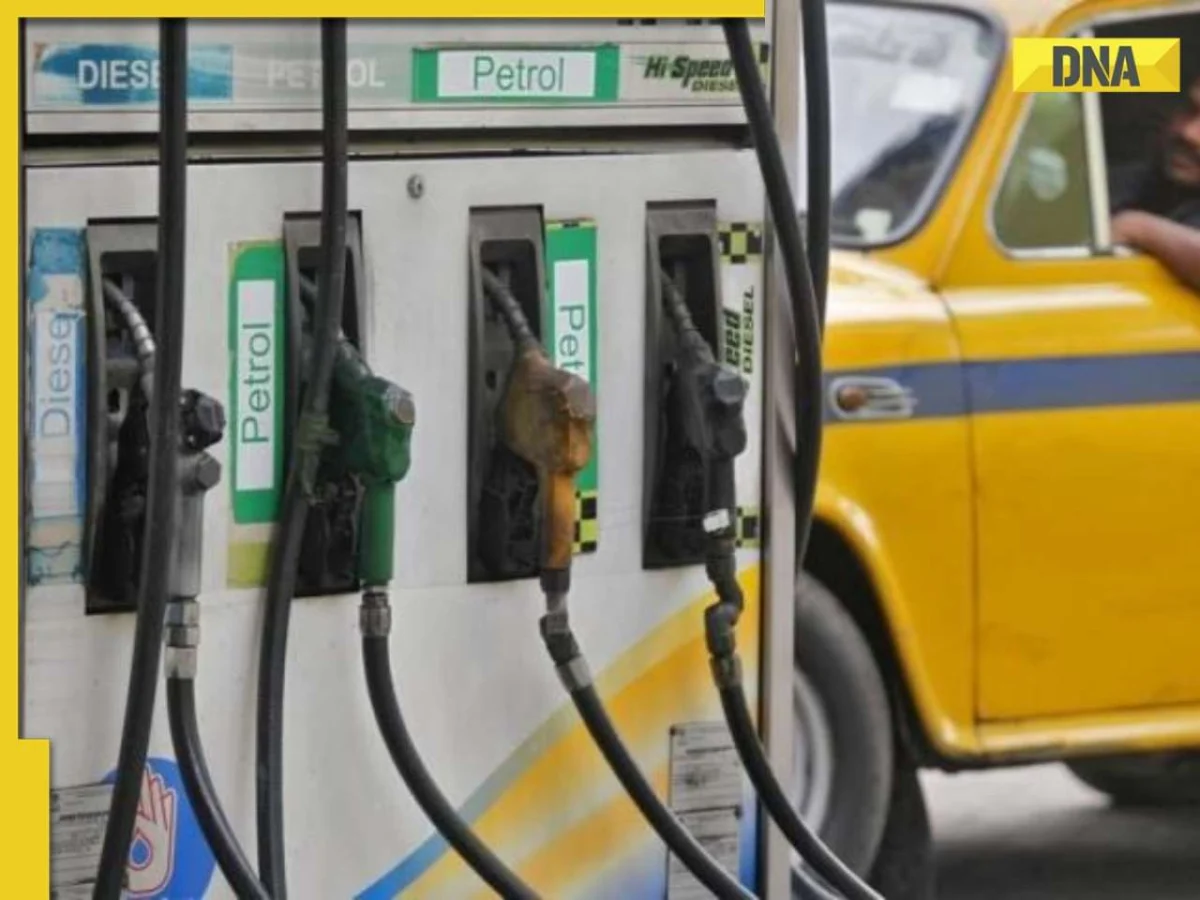
Mumbai, India – May 12, 2026 – In a notable display of domestic market resilience, petrol and diesel prices across major Indian cities, including the financial hub of Mumbai, have maintained remarkable stability. As of May 12, 2026, consumers in Mumbai witnessed no change in fuel costs, with petrol holding steady at Rs 103.54 per litre and diesel at Rs 90.03 per litre. This consistent pricing comes despite persistent fluctuations in the global crude oil market, underscoring the efficacy of India’s multi-pronged approach to energy price management.
The stability in fuel prices has emerged as a crucial economic anchor, shielding consumers and industries from the inflationary pressures often associated with volatile energy markets. While international benchmarks for crude oil continue to react to geopolitical developments, supply-demand dynamics, and economic forecasts, India’s domestic fuel pricing mechanism, influenced by state-specific taxes and local levies, has managed to largely insulate the end-user from these external shocks.
This ongoing stability is not an isolated incident but rather the culmination of strategic interventions and market mechanisms that have been fine-tuned over several years. For the average Indian citizen and business, this predictability in fuel costs translates directly into greater economic certainty and planning capabilities.
The Main Facts: Unwavering Prices in Mumbai
On Monday, May 12, 2026, Mumbai residents found their daily commute and business operations unaffected by any immediate changes in fuel expenditure. Petrol prices remained firmly at Rs 103.54 per litre, a figure that has shown negligible movement over recent weeks. Similarly, diesel, the lifeblood of India’s logistics and agricultural sectors, maintained its price point at Rs 90.03 per litre. These figures reflect a broader national trend of stability that has characterized the Indian fuel market for an extended period, contrasting sharply with the often-turbulent international energy landscape.
This steadfastness in pricing is particularly significant given the global context. Crude oil futures have been a rollercoaster of highs and lows throughout 2025 and into 2026, driven by factors ranging from geopolitical tensions in the Middle East and Eastern Europe to fluctuating demand signals from major economies like China and the United States. Despite these external pressures, Indian oil marketing companies (OMCs) — primarily Indian Oil Corporation (IOCL), Bharat Petroleum Corporation Limited (BPCL), and Hindustan Petroleum Corporation Limited (HPCL) — have managed to absorb or mitigate the impact of international price movements, thereby providing a consistent pricing environment domestically.
The mechanism through which these prices are set involves a daily review, where OMCs consider the average international crude oil prices over the preceding 15 days and the Rupee-US Dollar exchange rate. However, the consistent final retail prices suggest a deliberate strategy to buffer consumers from daily market volatility, often through a blend of governmental excise duties, state-level Value Added Tax (VAT), and dealer commissions. This intricate balance ensures that while OMCs operate on commercial principles, the broader economic welfare remains a paramount consideration.
)
Chronology of Stability: A Journey Through Volatility and Resilience
The journey to sustained fuel price stability in India has been a complex one, marked by strategic shifts and robust policy implementations, particularly in the wake of unprecedented global energy market upheavals.
The Era of Global Turmoil (2020-2024)
The initial years of the decade were defined by extreme volatility in crude oil markets. The COVID-19 pandemic in 2020 saw an unprecedented collapse in demand, leading to historical lows for crude prices, even negative futures in some instances. This was followed by a sharp rebound as economies reopened, exacerbated by supply chain disruptions and geopolitical events. The conflict in Eastern Europe in early 2022 sent crude prices soaring to multi-year highs, pushing Brent crude well over $100 per barrel.
During this period, India, a net importer of over 85% of its crude oil requirements, faced immense pressure. The government and OMCs adopted a multi-pronged strategy. Initially, excise duties were adjusted to partially cushion consumers from rising international prices, albeit with some criticism regarding the extent of the relief. Simultaneously, the government aggressively diversified its crude oil import basket, seeking more favorable terms and sources, notably increasing imports from non-traditional suppliers to secure energy at competitive rates.

Building the Buffer: Strategic Reserves and OMC Strategies (2023-2025)
By 2023, the focus shifted towards building greater resilience. India’s strategic petroleum reserves were further optimized, providing a crucial buffer against sudden supply shocks. OMCs, with implicit government backing, began implementing a more sophisticated pricing strategy. Rather than passing on every daily fluctuation, they started to average out prices over a longer cycle, absorbing minor increases and decreases to present a more stable retail price. This "smoothing" mechanism was crucial in normalizing the market perception of fuel prices.
The period between late 2023 and early 2025 saw global crude oil prices oscillating within a broad range, often driven by OPEC+ production decisions, global economic growth forecasts, and the pace of energy transition. Despite these swings, India’s domestic prices showed increasing resistance to sharp movements. Minor adjustments, when they occurred, were typically small and infrequent, often absorbed by internal adjustments within the OMCs’ operational margins or through slight recalibrations of the tax components.
The Current State: May 2026 and the 10-Day Window
Leading up to May 2026, this policy of stability has become entrenched. The unmoving prices in Mumbai on May 12 are a testament to this sustained effort. Looking back at the preceding 10 days, petrol prices in Mumbai have indeed seen only minor fluctuations, ranging narrowly between Rs 103.50 and Rs 103.54 per litre. Diesel prices, critical for the logistics sector, have remained even more stable within this period, holding steadfast at Rs 90.03 per litre.
)
This micro-level stability over a 10-day window, as observed in Mumbai, exemplifies the larger macroeconomic policy. It suggests that even minor shifts in the global crude oil market or the Rupee-Dollar exchange rate are being systematically managed, preventing any ripple effect on the end consumer. This strategic insulation provides a predictable operating environment for businesses and households, allowing for better financial planning and reducing inflationary expectations.
Supporting Data: Dissecting the Fuel Price Architecture
Understanding India’s fuel price stability requires a deeper dive into the data that underpins it, encompassing global crude oil benchmarks, the intricate tax structure, and the comparative landscape across major cities.
Global Crude Oil Context: Brent and WTI Dynamics
As of May 2026, global crude oil benchmarks like Brent crude and West Texas Intermediate (WTI) have been trading within a range that reflects a delicate balance between supply concerns and demand uncertainties. For instance, in the weeks leading up to May 12, Brent crude, a key reference for India’s import basket, might have been hovering between $80-$88 per barrel, while WTI could have been slightly lower, perhaps in the $75-$83 range. These figures, while seemingly stable, represent a significant premium compared to pre-2020 levels and are prone to sudden shifts based on geopolitical news or economic data releases.
)
The relative stability of these international prices, albeit at elevated levels, provides a more manageable environment for OMCs compared to the wild swings observed in previous years. However, even within these ranges, the daily or weekly fluctuations would typically necessitate price adjustments if a purely market-linked mechanism were strictly followed. The absence of such adjustments in India highlights the strategic interventions.
Components of Fuel Pricing in India
The retail price of petrol and diesel in India is a complex calculation involving several components:
- Base Price/Dealer Price: This is the cost at which OMCs supply fuel to dealers, incorporating the international crude oil price, refining costs, and freight.
- Excise Duty (Central Government): A significant component, this fixed or ad-valorem tax is levied by the central government. Historically, changes in excise duty have been used as a tool to absorb international price shocks or generate revenue.
- Dealer Commission: A fixed amount paid to petrol pump owners for their operational costs and profit margin.
- Value Added Tax (VAT) / Sales Tax (State Government): This is a state-specific tax, often levied as a percentage of the dealer price plus excise duty. This percentage varies significantly from state to state, explaining the price differential across India. Mumbai, being in Maharashtra, typically has higher VAT rates compared to some other states.
- Local Charges: Minor levies like pollution cess or road development cess might also be included.
The fact that prices remain stable implies that OMCs are managing their base price component effectively, or that governmental taxes are being strategically held constant to avoid further burden on consumers.
)
Inter-City Price Variations: The Role of State Taxes
While Mumbai maintains its specific rates, fuel prices in other major Indian cities on May 12, 2026, also reflect regional tax structures. For instance:
- Delhi: Petrol might be priced around Rs 96.72 per litre, and diesel at Rs 89.62 per litre. The slightly lower rates compared to Mumbai are primarily attributable to Delhi’s lower VAT rates.
- Kolkata: Petrol could be Rs 106.10 per litre, and diesel Rs 92.76 per litre, potentially indicating higher state levies than Delhi.
- Chennai: Petrol at Rs 102.63 per litre and diesel at Rs 94.24 per litre, showcasing another unique state tax scenario.
These variations underscore the critical role of state governments in the final retail pricing. The stability observed in Mumbai, therefore, points to a consistent policy within Maharashtra, mirroring the broader national effort to maintain price predictability. The uniformity in price within each city, despite global fluctuations, signifies a concerted effort by OMCs and governments to provide a steady economic environment.
Rupee-Dollar Exchange Rate
Another vital factor is the Rupee-US Dollar exchange rate. Since crude oil purchases are predominantly denominated in USD, a depreciation of the Rupee against the Dollar would make imports more expensive, even if international crude prices remain stable. Conversely, an appreciation would make imports cheaper. The sustained fuel price stability suggests that the Rupee has either remained relatively stable against the Dollar, or OMCs have effectively hedged their currency risks, or the government has absorbed currency-induced cost increases through other means.
)
Official Responses: Government Stance and Industry Perspectives
The sustained stability in fuel prices has drawn varied responses from government officials, oil marketing companies, and economic analysts, all shedding light on the underlying strategies and future outlook.
Ministry of Petroleum and Natural Gas: Commitment to Stability
Officials from the Ministry of Petroleum and Natural Gas have consistently reiterated the government’s commitment to ensuring energy security and price stability for Indian consumers. A hypothetical statement from the Union Minister for Petroleum and Natural Gas might emphasize: "Our priority remains to shield the common man from the vagaries of international oil markets. Through judicious management of strategic reserves, diversification of import sources, and close coordination with our public sector OMCs, we have successfully maintained a stable pricing regime. This stability is crucial for controlling inflation and supporting economic growth, especially for our transport and agricultural sectors."
Such statements often highlight the government’s proactive role in navigating global energy challenges, balancing consumer welfare with the fiscal health of the nation and OMCs. The policy often involves a mix of supply-side management, demand-side considerations, and targeted interventions.
)
Oil Marketing Companies: Absorbing the Shocks
Executives from major OMCs, such as the Chairman of Indian Oil Corporation (IOCL), typically acknowledge the challenges but express confidence in their operational strategies. A representative might state: "Our robust procurement strategy, combined with efficient refining and distribution networks, allows us to manage cost fluctuations effectively. We continuously monitor global prices and currency movements, utilizing various mechanisms to ensure that price volatility is not directly passed on to the end consumer. Our focus is on sustainable pricing that supports both our commercial viability and the national economic interest."
These statements often allude to the OMCs’ ability to absorb minor price variations within their profit margins, facilitated by the sheer scale of their operations and, at times, indirect support or policy flexibility from the government. The long-term stability suggests a well-coordinated approach between the government and these state-owned enterprises.
Economic Analysts: Praising the Buffer, Cautioning the Future
Economists and energy market analysts generally commend India’s ability to maintain price stability, recognizing its positive impact on macroeconomic indicators. Dr. Anjana Sharma, a leading energy economist, might comment: "The consistent fuel prices are a significant achievement, acting as a powerful anti-inflationary buffer. It provides predictability for businesses, particularly SMEs, and insulates household budgets. This stability has played a non-trivial role in India’s robust economic performance amidst global slowdowns."
)
However, analysts also often raise questions about the long-term sustainability and potential costs. "While beneficial, this stability comes with underlying costs," Dr. Sharma might add. "Whether it’s OMCs absorbing losses, or the government foregoing potential tax revenues during periods of lower international prices, there’s always a trade-off. The key will be to maintain this balance without significantly impacting the fiscal health of the nation or the commercial viability of our OMCs, especially if global crude prices experience another sustained surge." These expert opinions provide a critical perspective on the economic implications and potential future challenges.
Implications: A Steady Hand in Economic Turbulence
The sustained stability in India’s fuel prices, exemplified by Mumbai’s unchanged rates on May 12, 2026, carries profound implications across various facets of the economy and society.
Economic Impact: An Anchor Against Inflation
One of the most significant implications is the control over inflation. Fuel prices are a critical input cost for almost every sector, from agriculture and manufacturing to transport and services. Stable fuel prices directly translate into predictable operational costs for businesses, preventing a cascade of price increases across the economy. This predictability helps the Reserve Bank of India (RBI) in managing monetary policy and maintaining price stability, which is crucial for fostering investor confidence and promoting sustainable economic growth. Without this anchor, India’s inflation trajectory could be far more volatile and challenging to manage.
)
For the transport sector, which relies heavily on diesel, stable prices mean predictable freight costs. This benefits logistics companies, e-commerce firms, and ultimately, the end consumer through more stable prices for goods. The agricultural sector, where diesel powers irrigation pumps and farm machinery, also benefits immensely, ensuring that farming costs remain predictable and supporting food security.
Consumer Welfare: Enhanced Purchasing Power and Planning
For the average Indian household, stable fuel prices offer significant relief. Commuters, daily wage earners, and families can budget their expenses more effectively without the constant worry of rising petrol or diesel costs eroding their disposable income. This enhanced purchasing power, even if marginal per transaction, accumulates over time and contributes to greater consumer confidence and spending, which is vital for domestic demand-driven growth.
The psychological impact of price stability should not be underestimated. It reduces anxiety about daily necessities and allows households to plan their finances with greater certainty, contributing to overall economic well-being.
)
Government Fiscal Health: Balancing Act and Revenue Implications
Maintaining fuel price stability is a delicate balancing act for the government. On one hand, it supports economic stability and public welfare. On the other, it involves potential trade-offs regarding government revenues. If OMCs absorb costs, it might impact their profitability, which can eventually affect government dividends from these public sector undertakings. If the government reduces excise duties to cushion prices, it leads to a direct loss of revenue, which could otherwise be used for infrastructure development or social programs.
The current stability suggests a period where the government’s revenue from fuel taxes is perhaps deemed sustainable, or that the benefits of stability outweigh the revenue sacrifices. Future policy decisions will need to carefully navigate this balance, especially if global crude prices see a sustained upward trend.
Environmental Considerations: Impact on Energy Transition
Stable conventional fuel prices could have mixed implications for India’s ambitious energy transition goals. On one hand, if conventional fuel remains affordable, it might reduce the immediate economic incentive for consumers and businesses to switch to electric vehicles (EVs) or other alternative fuels. The economic argument for EVs, often centered on lower running costs compared to volatile petrol/diesel prices, might be slightly weakened if conventional fuel costs are consistently low and predictable.
)
However, the government is also simultaneously pushing for EV adoption through subsidies and infrastructure development. The long-term vision for energy security and environmental sustainability remains unchanged, with stable conventional fuel prices perhaps buying more time for a smooth and planned transition rather than a rushed, reactive one.
Future Outlook: Challenges and Sustained Resilience
Looking ahead, the stability achieved by May 2026 is not without its potential challenges. Geopolitical tensions remain a constant threat to global oil supplies. Any major disruption in key oil-producing regions could send crude prices spiraling upwards. Similarly, a sudden surge in global demand, perhaps driven by stronger-than-expected economic growth in China or the US, could also exert upward pressure.
The Rupee-Dollar exchange rate will continue to be a crucial variable. A significant depreciation of the Rupee could make imports more expensive, challenging the current pricing mechanism. Furthermore, the sustainability of OMCs absorbing costs will depend on their financial health and profitability margins over the long term.
)
Despite these potential headwinds, India’s experience in navigating the extreme volatility of the early 2020s has equipped it with robust mechanisms and policy frameworks. The commitment to energy security, coupled with diversified sourcing, strategic reserves, and a refined domestic pricing strategy, positions India to continue its pursuit of stable fuel prices, serving as a critical pillar for its economic resilience in the years to come. The unchanged prices in Mumbai on May 12, 2026, stand as a testament to this ongoing, deliberate, and successful endeavor.
