New Delhi, India – BYD (Build Your Dreams), the world’s preeminent manufacturer of New Energy Vehicles (NEVs), has officially announced a strategic price revision for its entire passenger vehicle lineup in the Indian market. This adjustment, slated to take effect from July 1, 2026, marks a significant moment in the brand’s trajectory as it balances premium positioning with the volatile realities of global economics.
As the Indian electric vehicle (EV) landscape matures, BYD India is navigating the complexities of supply chain costs and currency valuations. This article provides a comprehensive breakdown of the price hike, the underlying economic drivers, the brand’s recent performance milestones, and what the future holds for BYD’s "Ocean" and "Dynasty" series in the subcontinent.
1. Main Facts: The July 2026 Price Adjustment
BYD India has confirmed that the upcoming price increase will range between 1% and 2% across its current four-model portfolio. The revision is not a flat increase but is calibrated based on specific models and their respective variants.
The Grace Period and Price Protection
In a move designed to maintain consumer momentum and reward early adopters, BYD has introduced a "Price Protection" window. Customers who book their vehicles during May 2026 and June 2026 will be eligible for the current (pre-hike) prices. However, there is a crucial caveat: to avail of these rates, the delivery of the vehicle must be completed by or before July 1, 2026. This strategy is likely intended to clear existing inventory and ensure a robust sales performance in the final quarter of the first half of the year.
Current Price Spectrum (Ex-Showroom)
To understand the impact of the 1-2% hike, one must look at the current entry points for the BYD range in India:
BYD Atto 3 (SUV): Starting at ₹24.99 Lakh
BYD eMax 7 (MPV): Starting at ₹26.9 Lakh
BYD Seal (Sedan): Starting at ₹41 Lakh
BYD Sealion 7 (SUV): Starting at ₹49.4 Lakh
A 2% increase on the flagship Sealion 7 could result in a price jump of nearly ₹1 lakh, pushing the premium SUV further into the luxury bracket, while the Atto 3 might see a more modest adjustment of approximately ₹25,000 to ₹50,000.
2. Chronology: BYD’s Recent Strategic Moves in India
The July 2026 price hike is not an isolated event but part of a broader sequence of strategic adjustments and product lifecycle management by BYD India.
January 2026: The Milestone Hike: Earlier this year, BYD implemented a price revision for the Sealion 7. This was framed as a celebratory move following the achievement of the 2,000-unit sales milestone for the model—a significant feat for a premium EV in a nascent market.
Launch of the Anniversary Edition: Following the milestone, BYD introduced the Sealion 7 Anniversary Edition. This variant was designed to offer exclusive aesthetic and functional upgrades, further cementing the vehicle’s status as a leader in the performance EV SUV segment.
The Seal Recall: In a demonstration of corporate transparency and commitment to safety, BYD issued a voluntary recall for the Seal sedan. The recall focused on battery-related inspections and potential replacements, ensuring that the brand’s reputation for safety remained untarnished despite technical hurdles.
Expansion of the Retail Footprint: Throughout late 2025 and early 2026, BYD aggressively expanded its network. As of mid-2026, the company operates 48 dealerships across 40 major Indian cities, providing a comprehensive sales and service infrastructure that rivals established luxury marques.
3. Supporting Data: Economic Drivers and Model Specifications
The Forex Factor
The primary catalyst for this price revision, according to official statements, is the constant fluctuation in foreign exchange (Forex) rates. While BYD has increased its footprint in India, many high-value components—including the proprietary Blade Battery cells and advanced semiconductor chips—are sourced globally. As the Indian Rupee (INR) fluctuates against major trading currencies, the cost of landed kits and raw materials shifts, necessitating a "correction" to maintain sustainable margins.
Portfolio Overview: What Buyers Are Paying For
The price hike applies to a diverse range of vehicles, each occupying a specific niche:
BYD Atto 3
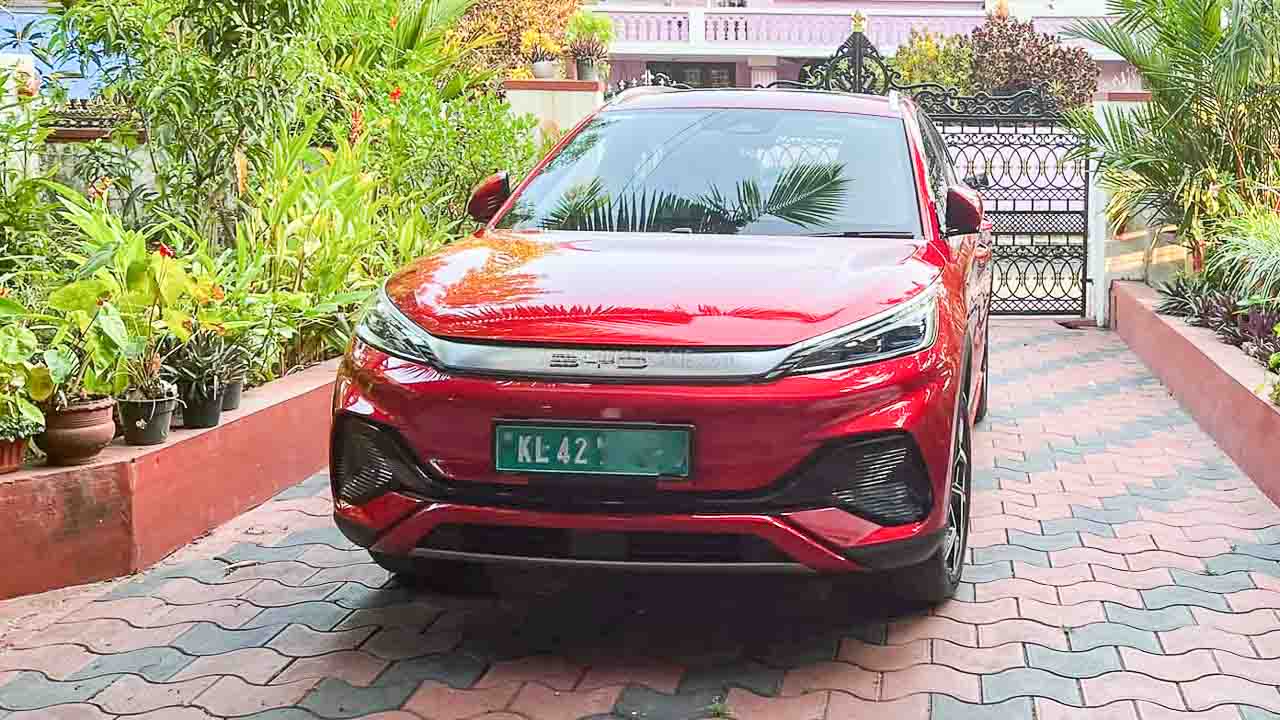
The Atto 3 remains the volume driver for the brand. Built on the e-Platform 3.0, it offers a 60.48 kWh battery pack and a range of approximately 521 km (ARAI). Its quirky "music-inspired" interior and high safety ratings have made it a favorite in the mid-premium SUV segment.
BYD eMax 7
As an evolution of the e6, the eMax 7 serves the premium family and fleet segment. It is currently the only high-range electric MPV in its price bracket, offering a blend of utility and zero-emission luxury that appeals to corporate executives and large families alike.
BYD Seal
The Seal is BYD’s "halo" product in India, competing with the likes of the Hyundai Ioniq 5 and even entry-level German luxury sedans. With a 0-100 km/h sprint time of just 3.8 seconds in its AWD avatar, it showcases the pinnacle of BYD’s performance engineering.
BYD Sealion 7
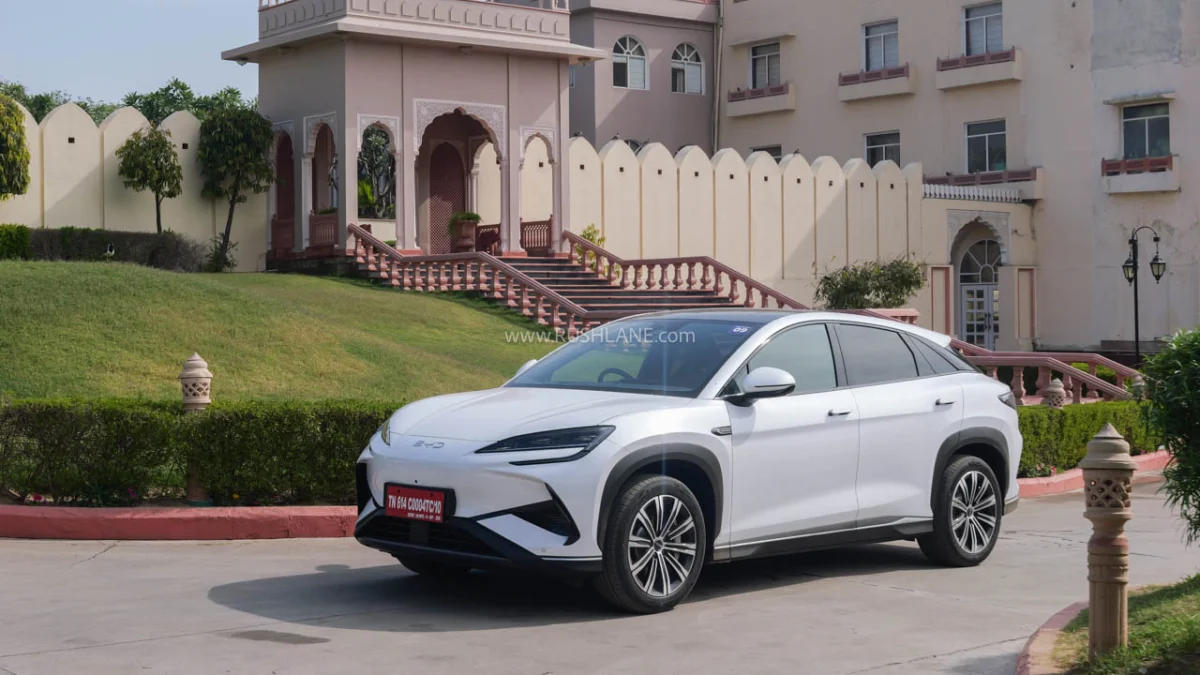
The newest flagship, the Sealion 7, brings a "sportback" SUV silhouette to the lineup. It features advanced Cell-to-Body (CTB) technology, which integrates the battery into the vehicle structure, enhancing both safety and cabin space.
4. Official Responses: The Leadership Perspective
Mr. Rajeev Chauhan, Head of Electric Passenger Vehicles (EPV) Business at BYD India, addressed the price revision with a focus on value retention and market resilience.
"This price revision is in lieu of foreign exchange fluctuations. Even in a challenging market environment, BYD India remains focused on delivering high-value, advanced, safe, and premium electric mobility solutions to customers. We continue to see strong market demand for products such as the BYD ATTO 3 and the BYD SEALION 7, reflecting growing confidence in premium electric mobility among Indian consumers."
Chauhan’s statement underscores a dual reality: while external economic pressures (Forex) are forcing a price update, the underlying consumer demand for high-tech EVs remains robust. By framing the hike as a "revision in lieu of fluctuations," the company aims to reassure customers that the increase is a logical business necessity rather than a change in brand philosophy.
5. Implications: What This Means for the Indian EV Market
The July 2026 price hike carries several implications for both the brand and the wider industry.
Anticipation of the BYD Atto 2
Perhaps the most significant implication is how this pricing strategy clears the deck for the BYD Atto 2. Spied testing multiple times on Indian roads, the Atto 2 is expected to be a more compact, more affordable entry into the BYD ecosystem.
By moving the Atto 3 and Sealion 7 slightly up the price ladder, BYD creates a "pricing cushion" for the Atto 2. This upcoming model is expected to undergo local assembly via Completely Knocked Down (CKD) kits, which requires rigorous homologation and certification from Indian authorities. Local assembly for the Atto 2 would allow BYD to compete more aggressively with domestic giants like Tata Motors and Mahindra.
Development of an India-Specific Model
BYD has confirmed that a dedicated model for the Indian market is currently under development. This vehicle is expected to be tailored to local driving conditions, cabin preferences, and price sensitivities. The current price hike on the premium imported/CKD range helps fund the R&D and infrastructure necessary to bring this "India-first" vehicle to fruition.
Competitive Positioning
In the ₹25 lakh to ₹50 lakh range, BYD is currently in a "sweet spot." While the price hike might deter a small percentage of price-sensitive buyers, the lack of direct competition in the electric MPV and performance sedan segments keeps BYD in a dominant position. However, with the expected entry of Tesla and the expansion of Hyundai’s EV line, BYD’s ability to justify these premium prices will depend heavily on its service quality and the reliability of its Blade Battery technology.
Consumer Sentiment and the "Buy Now" Signal
Historically, the announcement of a future price hike serves as a powerful marketing tool. By giving consumers a two-month window (May and June) to lock in old prices, BYD is likely to see a surge in bookings. This "pre-hike rush" helps the company maintain a strong cash flow and provides a clear picture of demand heading into the second half of 2026.
Conclusion
BYD India’s decision to raise prices in July 2026 is a calculated response to the global economic climate. While it adds a premium to an already premium lineup, the brand’s focus on technology, safety, and network expansion suggests it is playing a long game. As the Atto 2 nears its launch and the India-specific model takes shape, BYD remains a formidable force, steering the Indian automotive market toward a more electrified and sustainable future.
For the prospective buyer, the message is clear: the window for the "original" 2026 pricing is closing, and the next two months represent the final opportunity to secure a BYD vehicle at current rates.