

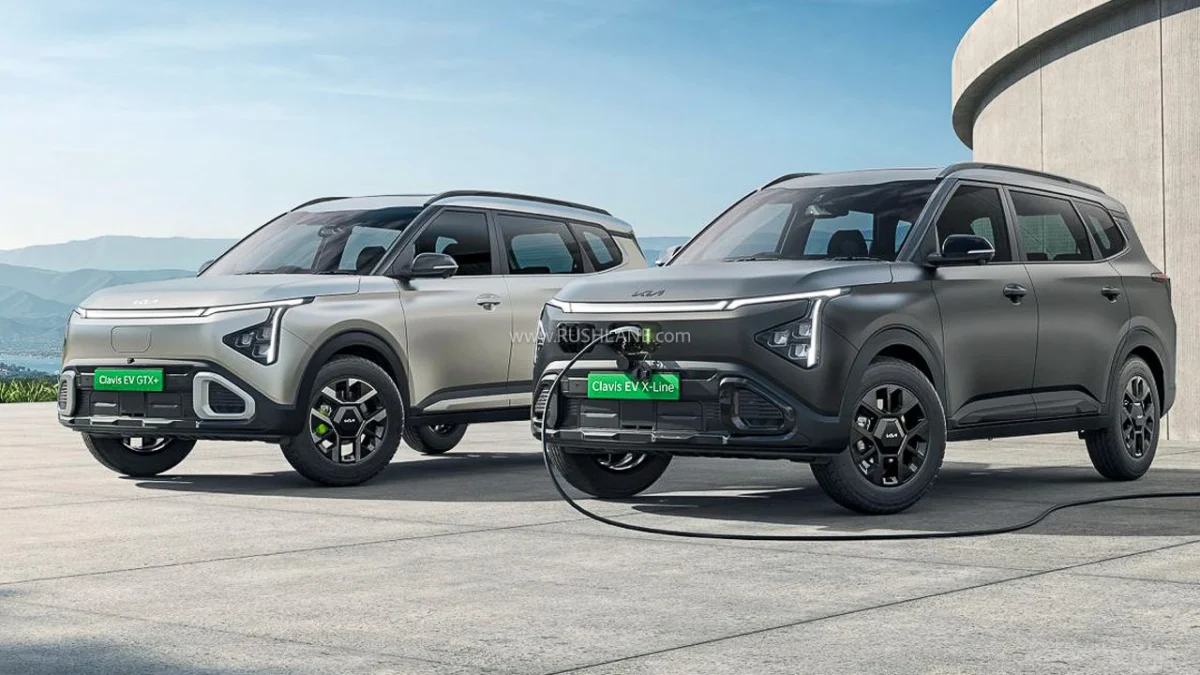
The Indian automotive landscape is currently witnessing a seismic shift in how electric vehicles (EVs) are perceived, purchased, and financed. At the forefront of this transformation is Kia India, which has recently announced a groundbreaking Battery-as-a-Service (BaaS) finance program specifically tailored for its latest offering, the Kia Carens Clavis EV. By decoupling the most expensive component of an electric car—the battery—from the vehicle itself, Kia is not just selling a car; it is proposing a new philosophy of mobility.
This strategic move aims to dismantle the primary barrier to EV adoption: the high upfront acquisition cost. Through the BaaS model, Kia seeks to bring electric mobility within the reach of the burgeoning Indian middle class, offering a financial structure that mirrors the familiarity of traditional internal combustion engine (ICE) vehicle ownership while leveraging the long-term efficiency of electric drivetrains.
1. Main Facts: Understanding the BaaS Framework
The core of Kia’s new initiative lies in the separation of the vehicle chassis and the battery pack. Traditionally, when a consumer buys an EV, they pay for the entire technology stack upfront, including the battery, which can account for 30% to 40% of the total vehicle cost. Kia’s BaaS model changes this equation fundamentally.
The Dual-Ownership Concept
Under the BaaS structure, the customer enters into a dual-loan arrangement. The vehicle chassis—the body, interior, safety features, and mechanical components—is financed through a standard automotive loan. Meanwhile, the battery is treated as a separate entity, provided through a subscription-based usage plan. This effectively lowers the "sticker price" of the car at the dealership, making the initial down payment and subsequent EMIs significantly more manageable.
Financial Engineering for Accessibility
Kia has collaborated with a consortium of India’s leading financial institutions to ensure the program’s viability. Partners include ICICI Bank, HDFC Bank, Axis Bank, Kotak Mahindra Bank, and Bajaj Finserv. This robust financial backing allows Kia to offer:
- Reduced Down Payments: Starting as low as ₹51,520 for the Standard Pack.
- Lower Chassis EMIs: Starting from ₹26,650.
- Usage-Based Battery Costing: A fixed rate of ₹3.3 per kilometer.
By shifting the battery cost to a per-kilometer operational expense, Kia aligns the cost of the vehicle with its actual usage, much like how consumers view fuel costs in a petrol or diesel car.
2. Chronology: Kia’s Strategic Journey Toward Mass EV Adoption
The introduction of BaaS for the Carens Clavis EV is not an isolated event but the culmination of a multi-year strategy by Kia to dominate the Indian EV segment.
- The Premium Entry (2022-2023): Kia entered the Indian EV space with the EV6, a premium, high-performance electric crossover. While the EV6 established Kia as a technological leader, its high price tag limited it to a niche audience.
- The Infrastructure Phase (2023-2024): Recognizing that "range anxiety" and "charging anxiety" were major deterrents, Kia began an aggressive rollout of DC fast chargers across its dealership network. They also launched the "K-Charge" platform within the MyKia app to aggregate third-party charging points.
- The "Mass-Premium" Pivot (2024-2025): With the development of the Carens Clavis EV, Kia shifted its focus toward the "heart" of the Indian market—the family-oriented SUV/MPV segment.
- The BaaS Launch (Present): Realizing that even a localized EV might have a higher upfront cost than its ICE counterparts, Kia officially launched the BaaS program to bridge the price gap and accelerate the transition from fossil fuels to electricity.
3. Supporting Data: The Economics of the Carens Clavis EV
To understand the impact of this program, one must look at the specific figures provided by Kia India for the Carens Clavis EV variants.
Standard Pack vs. Extended Range: A Financial Breakdown
| Feature | Standard Pack (BaaS) | Extended Range (BaaS) |
|---|---|---|
| Full Ex-Showroom Price | ₹17,99,000 | ₹21,99,000 |
| BaaS Chassis Price | ₹12,84,000 | ₹15,94,000 |
| Minimum Down Payment | ₹51,520 | ₹60,452 |
| Starting EMI (Chassis) | ₹26,650 | ₹33,099 |
| Battery Subscription | ₹3.3 / km | ₹3.3 / km |
Flexible Tenure Options
One of the most innovative aspects of this program is the divergence in loan tenures. Kia offers:
- Chassis Tenure: Up to 60 months (5 years), aligning with standard car loan cycles.
- Battery Tenure: Up to 96 months (8 years).
This 96-month tenure for the battery is particularly strategic, as it typically aligns with the industry-standard 8-year warranty on EV batteries. This ensures that the customer is paying for the battery over its most productive lifespan, providing peace of mind regarding the component’s longevity and residual value.
Infrastructure Support
A financial program is only as good as the ecosystem supporting the vehicle. Kia has bolstered its BaaS launch with significant infrastructure milestones:

- 15,000+ Charging Points: Accessible via the K-Charge platform.
- 100+ Dealerships: Equipped with high-speed DC fast chargers for quick turnarounds.
- 267+ EV-Ready Workshops: Ensuring that specialized maintenance is available across the country, not just in Tier-1 cities.
4. Official Responses: The Visionary Outlook
The leadership at Kia India views the BaaS program as a critical pillar of their "Plan S" global strategy, adapted specifically for the unique nuances of the Indian market.
Sunhack Park, Chief Sales Officer of Kia India, emphasized the customer-centric nature of this initiative during the launch announcement. "Our goal is to create a more practical and customer-friendly EV ecosystem in India," Park stated. "By reducing the initial acquisition cost—the single biggest hurdle for most buyers—and increasing financial flexibility through our banking partners, we are making the Carens Clavis EV a viable alternative to traditional family cars. We aren’t just selling a product; we are facilitating a lifestyle change."
Industry analysts have noted that Kia’s move is a direct response to the evolving competitive landscape. With players like MG Motor India also experimenting with battery rental models (as seen with the Windsor EV), Kia’s implementation for a larger, family-oriented vehicle like the Carens Clavis EV suggests that BaaS may soon become the industry standard for mass-market EVs in the subcontinent.
5. Implications: A Paradigm Shift in Indian Mobility
The introduction of BaaS for the Carens Clavis EV carries profound implications for the Indian automotive industry, the environment, and the consumer.
Democratization of Technology
By bringing the "chassis price" down to ₹12.84 lakh, Kia has positioned the Carens Clavis EV in the same price bracket as many mid-to-high-spec petrol and diesel SUVs. This allows a customer who was originally considering a traditional ICE vehicle to opt for an EV without needing a significantly larger upfront investment.
Mitigation of Resale Value Concerns
One of the lingering fears among EV buyers is the resale value of a car with an aging battery. Under the BaaS model, since the battery is a subscription-based component, the risk of battery degradation is partially mitigated for the owner. The secondary market for the "chassis" becomes more predictable, as the next owner could potentially start a new battery subscription or upgrade to a newer battery pack technology in the future.
Encouraging Efficient Driving
The ₹3.3 per kilometer battery fee introduces a "pay-as-you-go" transparency to driving costs. This could lead to more mindful driving habits among consumers, further enhancing the environmental benefits of transitioning to electric power.
Challenges and Considerations
Despite the benefits, the BaaS model faces hurdles. The complexity of managing two separate financial agreements may require a learning curve for both dealership sales staff and customers. Furthermore, the tracking of kilometers for billing purposes requires robust telematics—a feature Kia has integrated through its "MyKia" suite, but one that necessitates consistent data connectivity.
Conclusion: The Road Ahead
The Kia Carens Clavis EV, backed by the Battery-as-a-Service program, represents a sophisticated attempt to solve the "EV Paradox"—the fact that the cars which are cheapest to run are often the most expensive to buy.
With a down payment starting at approximately ₹51,000 and a comprehensive charging network already in place, Kia is making a compelling case for the Indian family to "go electric." If successful, this model will likely be emulated by other manufacturers, potentially marking the moment when electric vehicles moved from being a luxury statement to a practical, everyday reality for the Indian masses.
As the first units of the Carens Clavis EV hit the roads under this new finance scheme, all eyes will be on Kia to see if this financial innovation can truly supercharge the nation’s journey toward a sustainable, electric future.
