

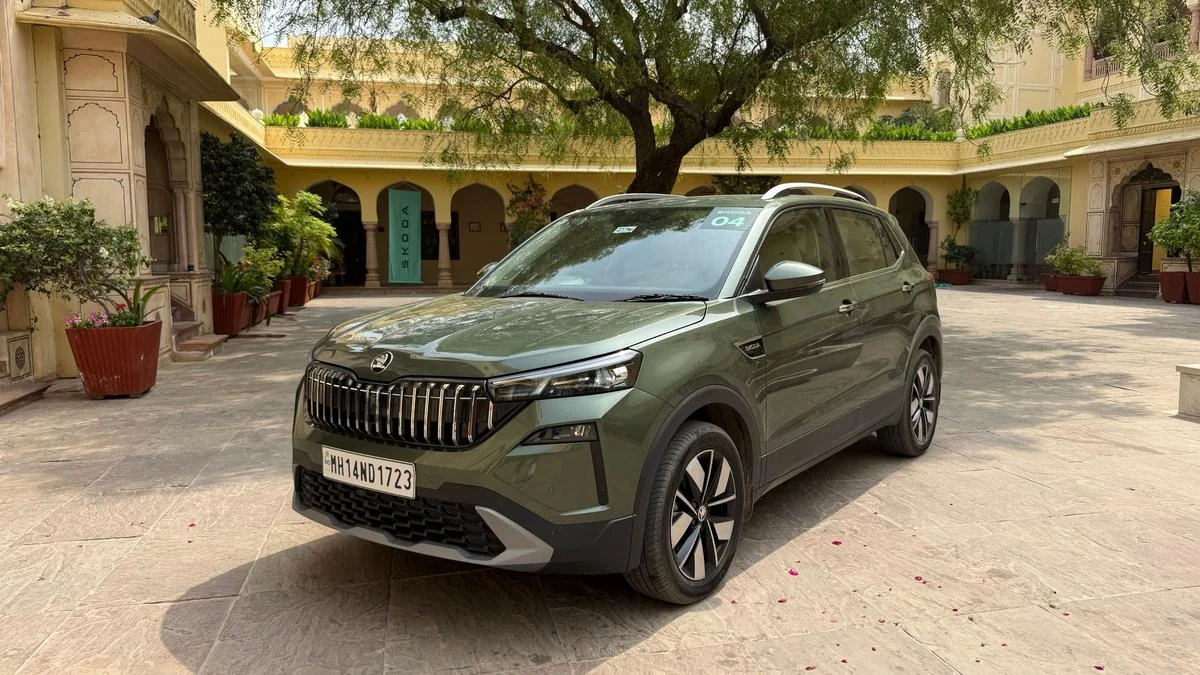
The city of Jaipur serves as a poetic backdrop for testing any modern automobile. It is a landscape defined by sharp polarities: the high-speed, glass-smooth bypasses that skirt the city’s periphery, and the claustrophobic, pulsating arteries of the old walled city where every inch of road space is a hard-won victory. To navigate this environment effectively, a vehicle requires more than just raw power; it needs adaptability, composure, and a degree of mechanical empathy.
It is in this challenging arena that the updated Skoda Kushaq 1.0 TSI Automatic makes its case. Rather than chasing headlines with radical aesthetic overhauls or gimmicky tech, Skoda has opted for a path of "intelligent refinement." By addressing the nuanced feedback of owners and focusing on the mechanical soul of the vehicle, the Czech automaker has transformed a fundamentally strong SUV into a more cohesive, mature, and formidable contender in India’s crowded C-SUV segment.
Main Facts: The Evolution of a European Stalwart
The Skoda Kushaq was the pioneer of the Volkswagen Group’s "India 2.0" project, a multi-billion dollar bet on the Indian market. While it initially arrived with high expectations and a 5-star safety pedigree, the market’s evolving demands necessitated a mid-cycle refresh that went beyond skin-deep.
The core of this update is the introduction of a new 8-speed torque converter automatic transmission, paired with the tried-and-tested 1.0-litre Three-cylinder Turbocharged Stratified Injection (TSI) engine. While the power figures remain steady at 115 hp and 178 Nm of torque, the delivery of that power has been fundamentally reimagined.
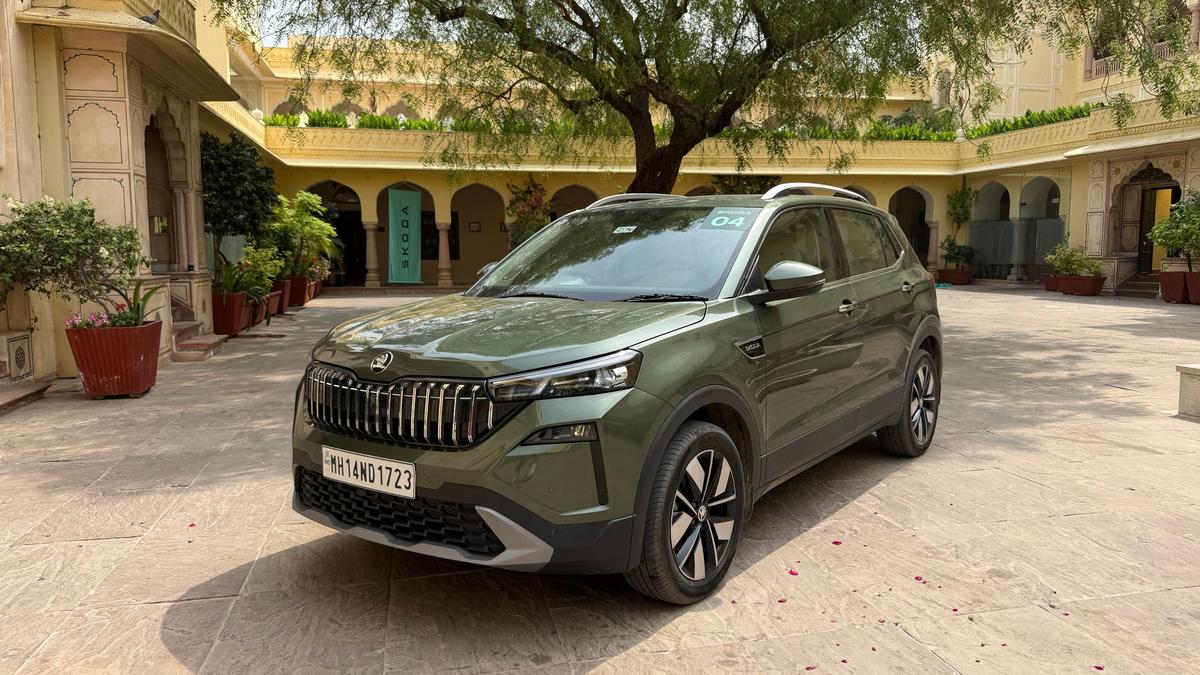
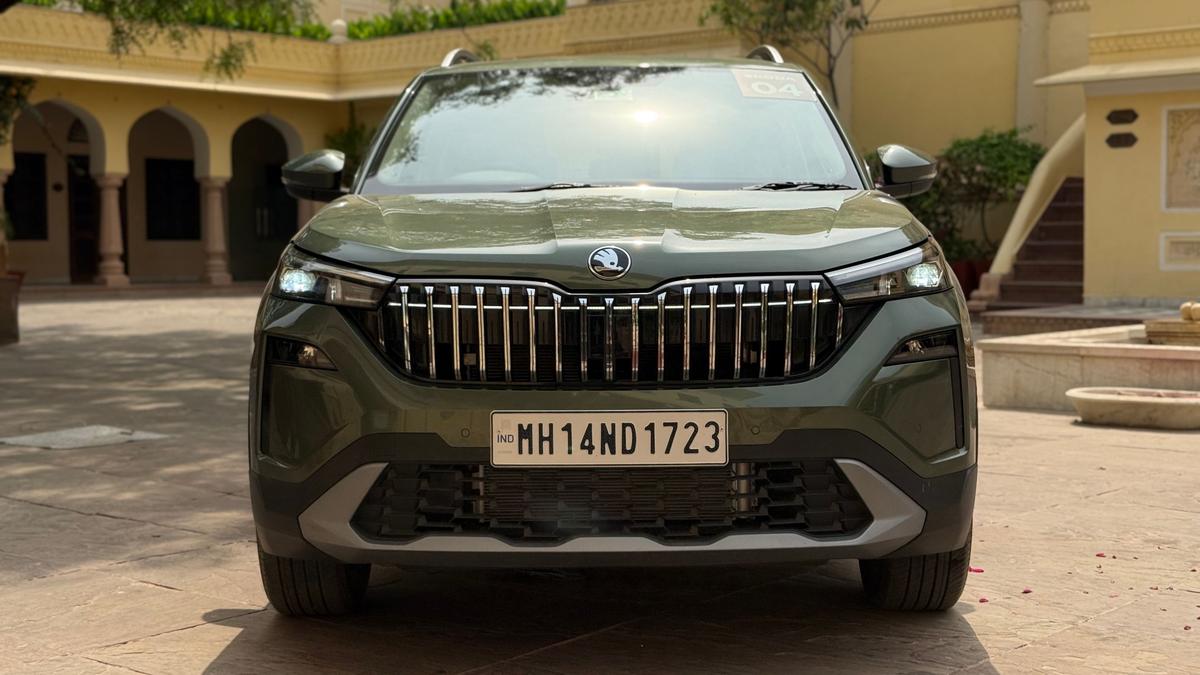
Visually, the Kushaq retains its signature European restraint. Skoda’s design philosophy has always leaned toward longevity over trend-chasing, and the updated model doubles down on this. The front fascia appears wider and more planted, thanks to subtle tweaks to the bumper and grille detailing. Perhaps the most significant "democratization" of the design is the standardization of alloy wheels across the entire range. By offering distinct alloy designs for every trim level, Skoda has ensured that even the entry-level variants maintain a premium road presence, eliminating the "base-model blues" that often plague vehicles in this price bracket.
Chronology: From Launch to Refinement
To understand the significance of this update, one must look at the Kushaq’s journey since its 2021 debut.
- The Launch (2021): The Kushaq launched as a driver-centric SUV, praised for its handling and safety but criticized by some for a slightly firm low-speed ride and interior material choices that felt a step down from the legendary Skoda Octavia or Superb.
- The Safety Benchmark (2022): The Kushaq became one of the first vehicles in India to secure a full 5-star rating for both adult and child occupant protection under the more stringent Global NCAP crash test protocols. This solidified its reputation as the "safe choice."
- The Feedback Loop (2023): Skoda spent the year gathering data from Indian road conditions. Key takeaways included the desire for a smoother transmission for city crawls and a more "forgiving" suspension setup for broken urban tarmac.
- The 2024 Update: This current iteration represents the culmination of that feedback. It is a product of evolution, focusing on the "invisible" improvements—transmission calibration, suspension damping, and cabin acoustics.
Supporting Data: Technical Specifications and Performance
The updated Kushaq 1.0 TSI is a masterclass in why displacement isn’t the only metric for performance. The 999cc engine is an overachiever, utilizing direct injection and turbocharging to provide a torque curve that feels much meatier than its size suggests.
The 8-Speed Transformation
The headline change is the 8-speed torque converter. In the previous iteration, the 6-speed unit was competent, but the new 8-speed gearbox offers a broader spread of ratios.
- City Driveability: The first three gears are closely stacked, allowing the car to crawl in heavy traffic with a fluid, seamless motion. There is no "hunting" for gears, a common complaint in lesser automatics.
- Highway Efficiency: The addition of higher gears allows the engine to "relax" at cruising speeds. At 100 km/h, the engine spins at lower RPMs compared to the previous model, which directly translates to improved fuel economy and reduced NVH (Noise, Vibration, and Harshness) levels.
- Responsiveness: The inclusion of paddle shifters allows the driver to take manual control, providing a 15-20% faster response time during spirited driving compared to the older software mapping.
Ride and Handling Dynamics
Skoda engineers have recalibrated the suspension bushings and damper rates. The result is a ride that has lost the "brittleness" associated with the early Kushaq models.
- Low-Speed Composure: Sharp-edged potholes and expansion joints are now rounded off with a muffled "thud" rather than a jarring kickback through the steering column.
- High-Speed Stability: Despite the softer low-speed ride, the Kushaq remains a "European" car at heart. It does not suffer from the wallowy, boat-like floatiness found in some of its Korean and Japanese rivals. It stays glued to the tarmac at triple-digit speeds.
The Interior and Feature Set
The cabin experience has been elevated through better material consistency.
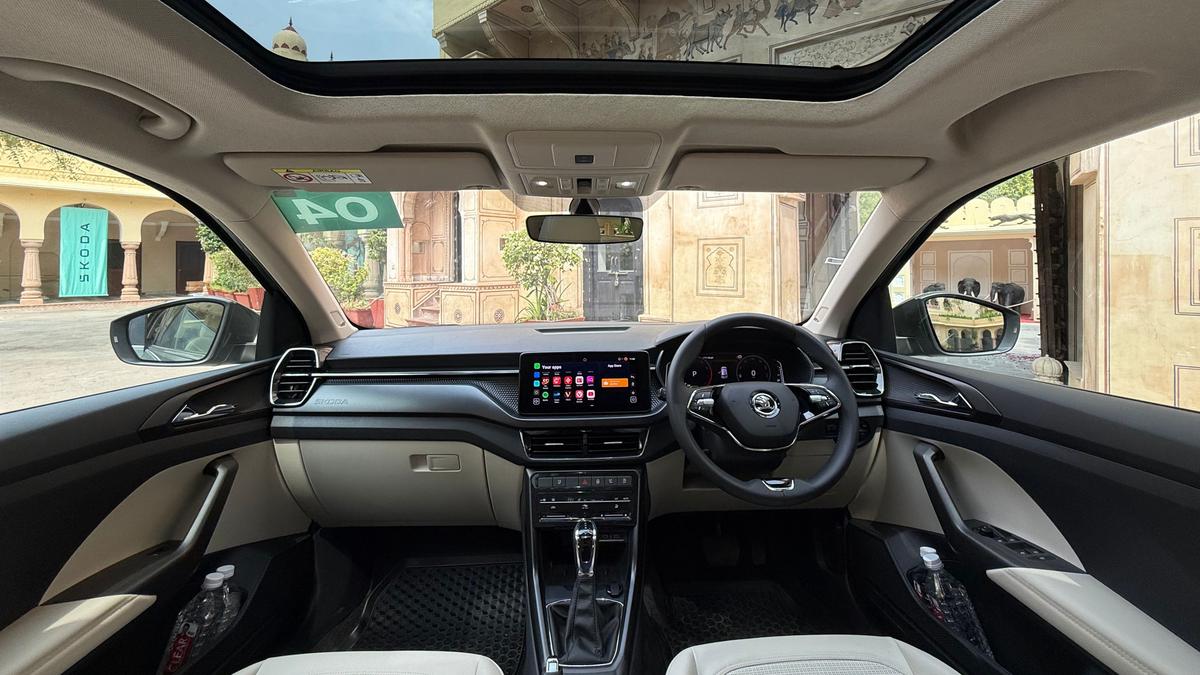
- Ergonomics: The "V" layout of the dashboard remains intuitive, with the 10-inch infotainment system angled slightly toward the driver.
- The "Luxe" Addition: The introduction of a rear-seat massage function is a strategic move. In the Indian market, where many SUVs are used for the weekday commute with a chauffeur, this feature provides a genuine USP (Unique Selling Proposition) that was previously reserved for luxury sedans.
- Safety Suite: Beyond the 5-star NCAP rating, the car comes equipped with up to six airbags, Electronic Stability Control (ESC) as standard, and Multi-Collision Braking.
Official Philosophy: The "Simply Clever" Approach
While official executive quotes are often framed in marketing jargon, Skoda’s strategy with the updated Kushaq reflects a clear brand philosophy: Premium Functionalism.
Skoda’s "India 2.0" strategy has pivoted from competing on the lowest price to competing on the highest "value-per-kilometer." By standardizing safety features and alloy wheels, Skoda is signaling that it will not compromise its brand identity for volume. The company’s focus on the 1.0 TSI engine as the volume driver suggests they are targeting the "rational enthusiast"—the buyer who wants the German-engineered driving feel but needs the efficiency and lower insurance premiums of a smaller displacement engine.
The brand’s association with "Motorscribes" and "The Hindu" for this reveal underscores their target demographic: an educated, professional audience that values engineering integrity over flashy, short-lived trends.
Implications: A Shift in the C-SUV Landscape
The arrival of the updated Kushaq 1.0 TSI Automatic has several implications for the Indian automotive market:
1. The End of the "Small Engine" Stigma
For years, Indian buyers equated "1.0-litre" with "budget." The Kushaq, especially with the 8-speed automatic, proves that a well-engineered small-capacity turbo engine can outperform larger naturally aspirated engines. This sets a precedent for other manufacturers to move toward downsized, high-efficiency powertrains.
2. Value vs. Features
The Kushaq’s pricing (INR 10.69 – 18.99 lakh) places it in the heart of the most competitive segment in India. However, Skoda is betting that customers are becoming "spec-sheet weary." While rivals might offer more "screen real estate" or panoramic sunroofs on lower trims, Skoda is offering structural integrity and a superior transmission. This move tests whether the Indian consumer is ready to prioritize "how a car drives" over "how many gadgets it has."
3. The Internal Cannibalization of the 1.5 TSI
Interestingly, the refinement of the 1.0 TSI might make the more powerful (and more expensive) 1.5 TSI variant a harder sell for everyone except the most hardcore enthusiasts. The 1.0 TSI now offers 90% of the real-world usability for a significantly lower price point, potentially making it the "sweet spot" of the entire Skoda India portfolio.
4. Resale and Longevity
By choosing a torque converter automatic over a Dual-Clutch Transmission (DSG) for the 1.0 variant, Skoda is addressing long-term reliability concerns often associated with DSGs in stop-and-go Indian traffic. This is likely to boost the long-term resale value of the Kushaq, making it a more sensible financial investment for families.
Conclusion: A Cohesive Masterpiece
The updated Skoda Kushaq 1.0 TSI Automatic is a car that demands a test drive to be understood. On a spec sheet, the 115 horsepower might seem modest. On a showroom floor, the subtle exterior changes might seem minor. But on the chaotic, unpredictable roads of Jaipur—and by extension, the rest of India—the car reveals its true character.
It is a vehicle that feels "of a piece." The engine and the 8-speed transmission work in a symbiotic harmony that is rare in this segment. It is an SUV that respects the driver through its precise steering and rewards the passengers through its improved ride and thoughtful features like the massage seats.
In a market segment that often feels like an arms race of superficiality, the Skoda Kushaq stands out by doing something radical: it focuses on being a better car, not just a better gadget. For the discerning buyer who values safety, engineering pedigree, and a sophisticated driving experience, the updated Kushaq is no longer just a contender—it is perhaps the most balanced choice on the market today.
Pricing Overview:
- Base Variant: INR 10.69 Lakh (Ex-showroom)
- Top-End Automatic: INR 18.99 Lakh (Ex-showroom)
This review was produced in association with Motorscribes and The Hindu.
