

New Delhi, India – May 23, 2024 – The air in New Delhi is charged with anticipation, not just for the upcoming musical spectacle, but for the very presence of the artist headlining it. On May 23rd, Jawaharlal Nehru Stadium will open its gates to Kanye West, now legally known as Ye, for his first-ever concert in India. This event arrives on the heels of a tumultuous period for the artist, marked by visa cancellations in Australia and entry denials in the United Kingdom, starkly contrasting with India’s embrace.
Ye’s impending performance in the Indian capital highlights a fascinating dichotomy: while Western democracies have increasingly sought to silence his often inflammatory rhetoric, India is providing him with a prominent platform. This paradox is deeply intertwined with the rapidly evolving landscape of India’s concert economy, a sector that has transcended its former status as a mere stopover and firmly established itself as a crucial destination on the global touring circuit.
A String of Denials: Ye’s Global Rebuffs
The contrast between Ye’s recent international experiences and his upcoming Indian debut could not be starker. Last year, Australia denied him a visa following the release of his song "Heil Hitler," a track that coincided with the 80th anniversary of Nazi Germany’s defeat, sparking widespread condemnation.
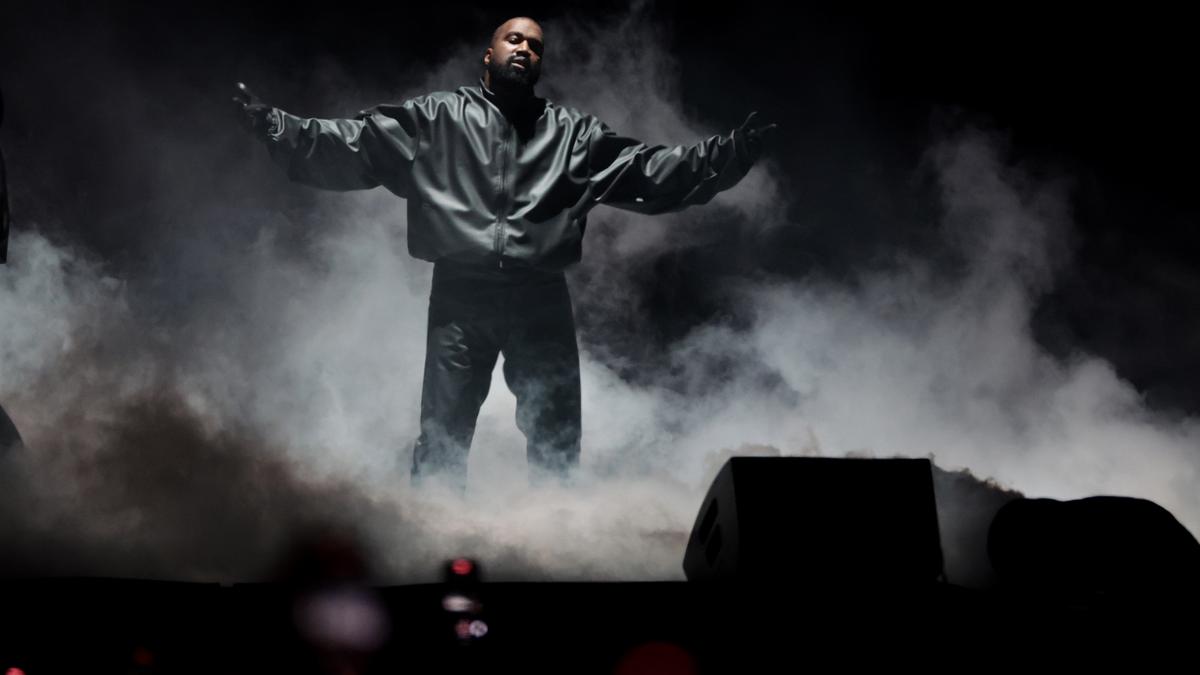
More recently, in March of this year, Ye’s planned appearance as a headliner at London’s Wireless festival ignited a firestorm of controversy. The backlash reached such a fever pitch that it prompted a statement from Prime Minister Sir Keir Starmer, who deemed the artist’s invitation "deeply concerning." Within days, the Home Office revoked Ye’s Electronic Travel Authorisation, declaring his presence "not conducive to the public good." The fallout was swift and severe, with major sponsors like Pepsi and Diageo withdrawing their support, ultimately leading to the cancellation of the festival.
These incidents, while drawing significant media attention, are not isolated. Ye’s past provocations, including his infamous on-stage interruption of Taylor Swift’s acceptance speech at the 2009 MTV Awards to champion Beyoncé, and more recent controversial statements such as calling slavery a "choice" and selling swastika-branded merchandise, have cemented his reputation as a polarising figure. Even before the Wireless festival debacle, the mayor of Marseille expressed concern about potential Nazi propaganda during a scheduled concert, stating Ye was "not welcome."
India’s Open Door: A Shifting Global Concert Landscape
Despite these widespread international rejections, India is set to host Ye for a concert that promises to draw thousands. This is not an anomaly, but rather a reflection of India’s burgeoning position within the global live entertainment industry. As Andre Timmins, co-founder of Wizcraft, one of the promoters bringing Ye to India, aptly puts it, "India is not a fly-over country anymore. It’s becoming a must-stop."

Timmins elaborates on the evolving audience: "The young concert-going audience here are tuned into global conversations surrounding their favourite performers. An artist’s identity does register." However, within India’s live performance ecosystem, this notoriety appears to be managed rather than outright rejected.
Navigating the Nuances: India’s Approach to Controversial Artists
Deepak Choudhary, founder and MD of Eva Live, a company that has previously brought artists like Bryan Adams and Enrique Iglesias to India, explains the industry’s approach. "When getting performers to India, we are well-versed with the controversy that precedes them and associated risks," he states. Promoters maintain detailed records of artists’ reputational setbacks, scandals, and problematic comments. "The biggest fallout is always commercial, as sponsors and brands may opt out," Choudhary acknowledges.
Crucially, however, this controversy rarely impacts the primary driver of live entertainment: the audience. "The consumer knows what it wants. If they want to see Kanye West, they will come," Choudhary asserts, highlighting a paradox that shapes the Indian concert economy.

This sentiment is echoed by music journalist Amit Gurbaxani, co-founder of The Indian Music Charts Podcast. He observes that, generally, Indian audiences exhibit a remarkable indifference to the personal controversies of international artists. Gurbaxani cites the example of the Backstreet Boys, whose lead vocalist Nick Carter has faced legal controversies. Despite this, the band’s 2023 India performances saw overwhelming market response that overshadowed any preceding scandal. Similarly, American DJ Diplo, having faced similar charges, performed to a packed crowd at Goa’s Royal Enfield Motoverse festival in 2025.
Spectacle Over Scandal: The Indian Concert Model
This dynamic positions India uniquely in the global artiste landscape. While controversy might deter sponsorship, it seldom diminishes public demand. The system, therefore, does not typically bar controversial artists. Instead, it employs a strategy of mitigating the impact of controversy without compromising the spectacle itself.
"Before even the international act arrives in India, what they can say, wear, comment, or even sing, is already communicated to them," explains Akshat Mudbidri, founder of Adventure Global Talent. His company not only assesses an artist’s marketability but also scrutinizes their political stances for potential controversy. Mudbidri notes that in India’s increasingly ideologically sensitive climate, "these days, we are given mandates by local government authorities – no obscenity, no profanity, and must not challenge the current political standing of the country."
The heightened scrutiny from human rights groups, women’s organizations, and watchdogs often compels organizers to engage in pre-emptive censorship to avert backlash. These pressures significantly shape both the performer and the performance. Choudhary recalls an instance where Enrique Iglesias’s suggestion to bring a female fan on stage for a flirtatious number, a common practice abroad, was immediately rejected. "The police could get involved; I told him. And promoters become accountable," he explains, emphasizing how a seemingly harmless gesture can escalate into a liability. "Artists are briefed about cultural sensitivities. Restrictions are explicitly mentioned in the contracts."
The Art of Translation: Cultural Adaptation in Indian Concerts
In India, the concert economy extends to monitoring even spontaneous moments. Mudbidri, who manages Romanian singer-songwriter Akcent, shares instances where artists have had to tweak lyrics, avoiding references to alcohol, drugs, or the physical attributes of women. "We have alternate versions of his song prepared for Indian concerts," he reveals.
Even seemingly spontaneous on-stage banter and jokes are subject to careful curation. "Many interactions with the audience are scripted. International acts use teleprompters so that the lines and situations are delivered naturally," Mudbidri adds.

Wardrobe choices are also carefully considered. For a show in Hyderabad, Akcent intentionally wore a kurta, a decision made to resonate more with his audience during Eid. Gauri Aayeer, a music label head and frequent concert-goer, highlights the impact of such visual representations, recalling rapper Central Cee wearing a Mahadev t-shirt at Rolling Loud Mumbai. "Audiences respond to it every single time," she observes.
The difference in an artist’s performance across varying political environments becomes particularly evident. Aayeer recounts attending a Coldplay concert in London where support for Palestine was a recurring theme, even featuring a Palestinian artist. In contrast, the same band, when performing in India, shifted its tone, referencing British colonial history, waving the LGBTQ+ rainbow flag, and reciting a Hindu chant. "A political statement lands differently in the West than it does in India," Aayeer notes.
Red Lines and Responsible Promotion
When controversy directly implicates India, promoters exercise extreme caution. Gurbaxani points to the cancellation of Canadian-Punjabi rapper Shubh’s tour in 2023, following backlash over a social media post that depicted an altered map of India. "No promoter has attempted to stage another tour with him since then," Gurbaxani observes.

For Andre Timmins, the decision to bring Ye to India is not solely about his political views, but rather a holistic assessment that includes his public image and the global discourse surrounding him. "But you have to look at the complete picture," he urges. He draws a parallel to bringing Michael Jackson to India in 1996, describing him as "arguably the most polarizing figure at the time." Timmins emphasizes, "But we focused on his craft and the cultural bridge his presence could build."
Today, Timmins positions himself as a "cultural translator." He states, "We are having clear conversations with the artist’s teams, not to censor him, but to provide on-ground context." This "cultural translation" is precisely what distinguishes India’s concert economy from others.
Conclusion: A Calculated Embrace
Kanye West’s arrival in India, though amidst significant international backlash, signifies a calculated embrace. Upon taking the stage in New Delhi, he will enter an ecosystem adept at translating, editing, and softening controversy before it reaches the audience. Politics will likely be dialed down, lyrics may be tweaked, and spontaneity will be carefully supervised, all filtered through a distinct cultural and legal lens. And should any unforeseen moments slip through the meticulously crafted net, the sheer power of the music is expected to fill any void, ensuring the spectacle remains paramount. India’s concert economy, in its unique way, is demonstrating its capacity to navigate global artistic complexities, offering a platform where art, commerce, and cultural adaptation converge.
