

The Indian automotive landscape, while increasingly dominated by the surging popularity of Compact and Mid-size SUVs, still holds a venerable place for the executive sedan. At the pinnacle of this segment’s history lies the Honda City—a nameplate that has defined aspirational motoring in India for over two decades. As Honda Cars India Ltd (HCIL) prepares for a broader offensive in the Indian market, the latest development involves a significant mid-life refresh for its flagship sedan.
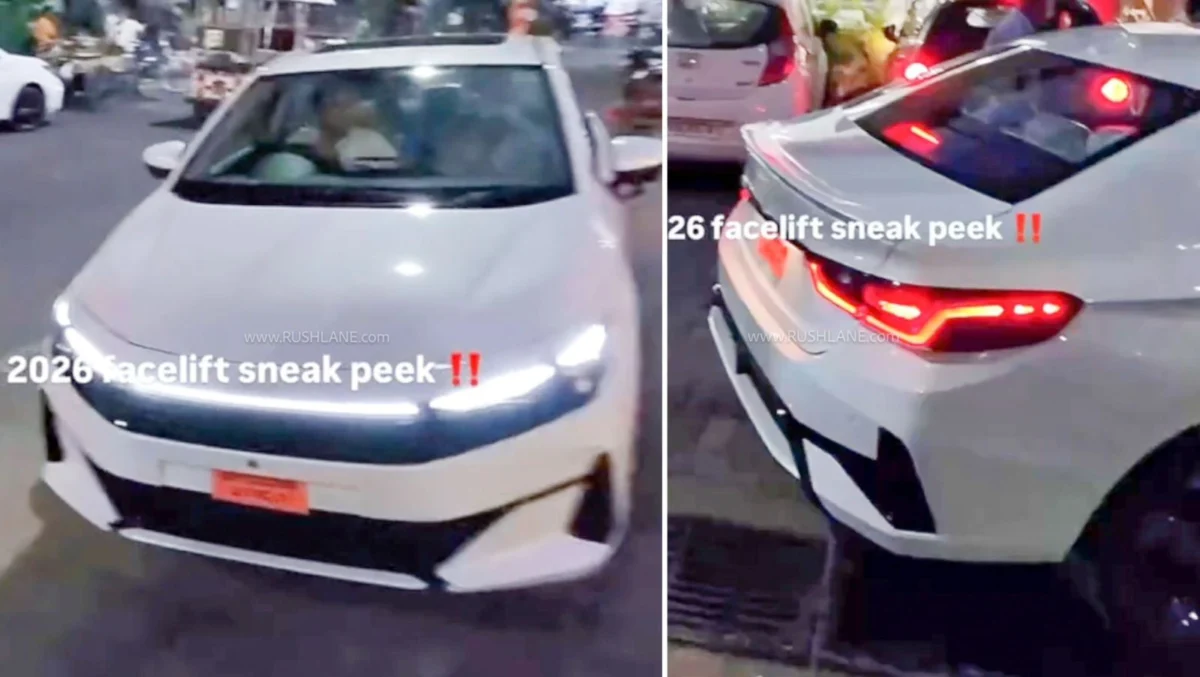
Recently, undisguised units of the 2026 Honda City Facelift were spied at a dealership showroom, signaling that the official launch—slated for May 22nd—is imminent. These spy shots, captured by automotive enthusiast Atharv Aryan, provide an exhaustive look at the aesthetic and functional revisions Honda has implemented to keep the 5th-generation City competitive against rivals like the Hyundai Verna, Volkswagen Virtus, and Skoda Slavia.

Main Facts: What the Spy Shots Reveal
The leaked images offer a comprehensive preview of the 2026 iteration, suggesting a shift toward a more aggressive and "youthful" design language without sacrificing the "Man Maximum, Machine Minimum" philosophy that Honda is known for.
Exterior Revisions
The most striking changes are concentrated at the front fascia. The 2026 Honda City Facelift features a redesigned grille that appears more intricate than the outgoing model. A key highlight is the integration of a new lighting signature. While the primary LED headlight clusters retain their sophisticated multi-element look, they are now complemented by a subtle light bar that seems to bridge the gap between the DRLs, creating a wider, more planted stance.

The front bumper has undergone a total transformation. The air dams are more pronounced, and the fog lamp housings have been reshaped to provide a sharper, more aerodynamic look. Interestingly, the spied units did not prominently display fog lamps, suggesting they might be reserved for specific trims or have been integrated more discreetly into the new LED setup.
At the rear, the City Facelift maintains its class-leading silhouette but introduces a more aggressive trunk-lid spoiler. The Z-shaped 3D wrap-around LED tail lamps appear to have received a "smoked" or darkened treatment, enhancing the sporty appeal. The rear bumper also mirrors the front’s sportiness, ditching the simpler reflectors for a more sculpted, diffuser-like finish.

Interior and Technology
Inside, the spy shots confirm that Honda is doubling down on its premium cabin experience. The dual-tone Black and Beige theme continues to dominate the dashboard and door trims, maintaining an airy and luxurious feel. However, the centerpiece of the update is the infotainment system. The 2026 model appears to house a larger, more modern touchscreen unit that stands out from the dashboard. This upgraded interface is expected to support wireless Apple CarPlay and Android Auto, along with an enhanced version of Honda Connect telematics.
Chronology: The Evolution of the 5th Gen City
To understand the significance of the 2026 facelift, one must look at the timeline of the current generation’s journey in the Indian market:

- July 2020: Honda launched the 5th Generation City in India amidst the global pandemic. It was a "Supremacy" themed launch, introducing Alexa integration and a completely new 1.5L i-VTEC DOHC engine.
- May 2022: Honda introduced the City e:HEV (Strong Hybrid), making it the first mainstream sedan in India to offer a dedicated hybrid powertrain, boasting a fuel efficiency of over 26 km/l.
- March 2023: A minor refresh was introduced to comply with RDE (Real Driving Emissions) norms, which also saw the introduction of ADAS (Honda Sensing) features on the petrol variants.
- May 2026: The current facelift represents the most significant visual and technological overhaul of the 5th-generation platform to date, intended to extend the product’s lifecycle until the next generation arrives toward the end of the decade.
Supporting Data: Specifications and Powertrains
While the aesthetics have evolved, Honda is expected to stick with its proven mechanical foundations. The 2026 City Facelift will likely continue to offer two distinct powertrain options, catering to both traditional enthusiasts and eco-conscious buyers.
The 1.5L i-VTEC Petrol
The mainstay of the range will be the 1.5-liter, 4-cylinder naturally aspirated petrol engine.

- Power: 121 PS @ 6,600 rpm
- Torque: 145 Nm @ 4,300 rpm
- Transmission: 6-speed Manual and a 7-step CVT (Continuously Variable Transmission).
- Efficiency: Expected to hover around 17.8 km/l for the MT and 18.4 km/l for the CVT.
The 1.5L i-MMD e:HEV (Hybrid)
The "Strong Hybrid" variant remains the crown jewel of the City lineup. It utilizes two electric motors paired with an Atkinson-cycle petrol engine.
- Combined Power: 126 PS
- Torque: 253 Nm (Electric Motor Torque)
- Transmission: e-CVT (Single-speed fixed gear)
- Fuel Efficiency: A segment-leading 27.13 km/l.
Safety Features (Honda Sensing)
The 2026 facelift will likely see a democratization of the Honda Sensing ADAS suite. Expected features include:

- Adaptive Cruise Control (ACC)
- Lane Keeping Assist System (LKAS)
- Road Departure Mitigation (RDM)
- Collision Mitigation Braking System (CMBS)
- Lead Car Departure Notification
Official Context: Honda’s 2028 Vision
The launch of the City Facelift is not an isolated event but a cog in a much larger strategic machine. Honda Cars India Ltd’s CEO has recently outlined a roadmap to revitalize the brand’s presence in India.
For years, critics pointed toward Honda’s "thin" portfolio in India. The company has responded by confirming the launch of five new SUVs by 2030. This includes a highly anticipated sub-4m SUV (to rival the Brezza and Venue) and a new mid-size SUV to sit alongside the Elevate. By refreshing the City now, Honda ensures that its core brand identity remains strong while it builds the infrastructure for its upcoming SUV-heavy offensive.

The company is also pivoting toward electrification. While the City e:HEV serves as a bridge, Honda is reportedly working on a fully electric version of the Elevate (Elevate EV), which is expected to debut in the coming years. The 2026 City Facelift serves as a reminder that even as the world moves toward SUVs and EVs, the "City" remains the soul of the Honda brand.
Implications: The Battle for the Sedan Segment
The arrival of the 2026 Honda City Facelift has several implications for the Indian automotive market:

1. Re-energizing the Executive Sedan Segment
In recent years, the sedan segment has felt the heat from mid-size SUVs like the Hyundai Creta and Maruti Grand Vitara. However, the success of the Volkswagen Virtus and the new Hyundai Verna proved that there is still a significant demographic that prefers the driving dynamics, high-speed stability, and "three-box" prestige of a sedan. The updated City, with its sportier look and upgraded tech, is poised to reclaim its position as the default choice for the sophisticated urban buyer.
2. The "Black Edition" Trend
The spy shots reveal new 16-inch alloy wheels finished in a deep black shade. This follows a growing industry trend (seen in Tata’s Dark Edition or Hyundai’s Knight Edition) where manufacturers use blacked-out elements to attract a younger audience. By adopting this "sporty-stealth" look, Honda is moving away from its traditional "chrome-heavy" luxury image toward something more contemporary.

3. Pricing and Positioning
With the addition of a larger infotainment screen, refined styling, and potential feature additions like ventilated seats (a much-requested feature currently missing in some trims), the pricing is expected to see a marginal upward revision. Currently, the City is priced between ₹11.82 lakh and ₹16.35 lakh (ex-showroom) for the petrol, and up to ₹20.55 lakh for the hybrid. The facelift might see a 2-3% price hike, positioning it as a premium alternative in the segment.
4. Resale Value and Brand Loyalty
The Honda City has historically enjoyed some of the highest resale values in the Indian market. By providing a meaningful update to the 5th-gen model, Honda is protecting the equity of existing owners while giving new buyers a reason to stay within the Honda ecosystem rather than migrating to an SUV.

Conclusion
The 2026 Honda City Facelift is a calculated move by HCIL to maintain its dominance in a segment it essentially created in India. While the spy shots confirm that the mechanical heart of the car remains largely unchanged, the aesthetic and technological "botox" is exactly what the model needs to stay relevant in a tech-driven market.
As units continue to arrive at dealerships across the country, the May 22nd launch will be a pivotal moment for Honda. It will set the tone for the brand’s journey toward 2028, proving that while SUVs might be the future, the City—much like the name suggests—is an evergreen part of the Indian landscape. For the enthusiast, the "City" badge continues to represent a blend of reliability and elegance; for the competitor, it remains the benchmark that refuse to be ignored.
