

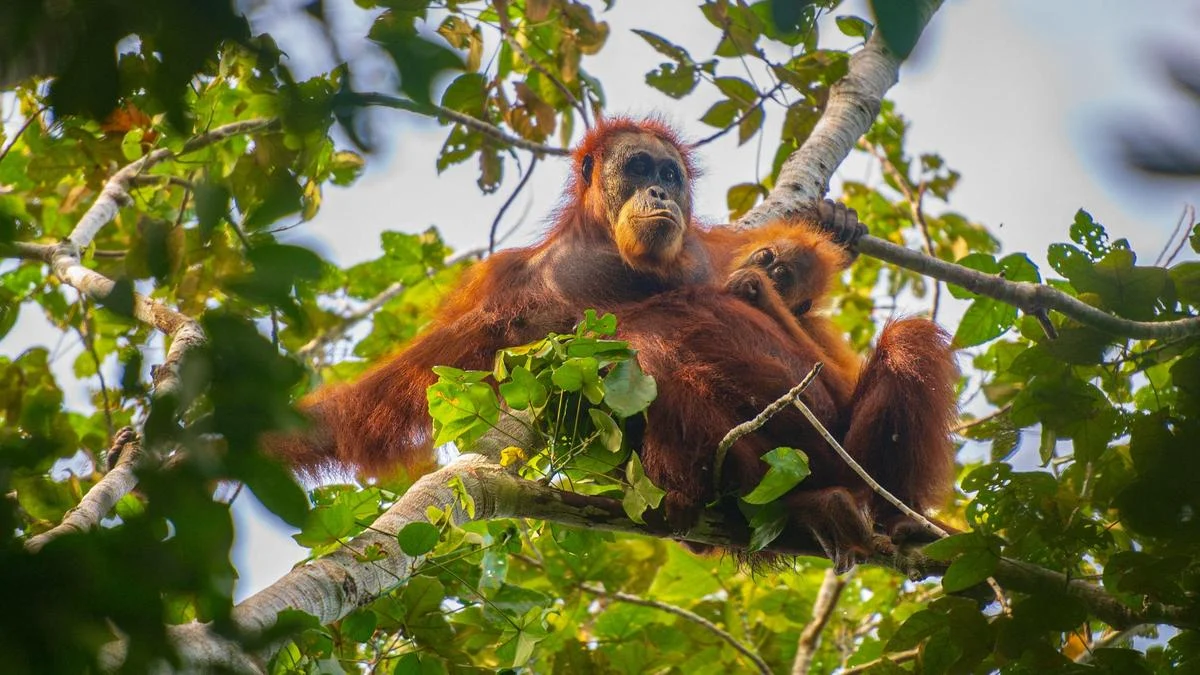
Kuala Lumpur, Malaysia – August 17, 2026 – A captivating black-and-white image recently circulated across social media platforms, seemingly depicting a tender moment: a Tapanuli orangutan cradling a pair of endangered leopard cubs deep within the lush, ancient forests of Malaysia’s Sabah state. The image, shared widely and eliciting an outpouring of "likes" and emotional responses, appeared to be a rare glimpse into interspecies compassion in the wild. However, this viral sensation, far from being a testament to nature’s wonders, was a sophisticated fabrication, a product of artificial intelligence.
This incident is not isolated. It represents a rapidly escalating trend of hyper-realistic, yet entirely synthetic, wildlife visuals that are not only deceiving the public but also posing tangible threats to animal conservation efforts, public safety, and the integrity of scientific research. Experts across zoology, conservation, and digital forensics are issuing urgent warnings: the digital illusion created by AI is casting a dangerous shadow over the real world.
Main Facts: The Pervasive Deception of Synthetic Wildlife
The core issue at hand is the prolific generation and dissemination of AI-fabricated images depicting wild animals in unnatural or anthropomorphic scenarios. The image of the orangutan with leopard cubs, initially presented as an authentic photograph by the Orangutan Information Centre on June 10, 2026 (though later debunked), serves as a stark illustration of this pervasive problem. While initially appearing innocuous or even "feel-good," these synthetic visuals are far from harmless.
The dangers are multi-faceted and profound:
- Distorted Public Perception: AI images blur the lines between reality and fiction, creating unrealistic expectations about wildlife behavior and accessibility.
- Public Safety Risks: Misinformed individuals, emboldened by seemingly docile or approachable digital portrayals, may attempt dangerous interactions with wild animals, leading to severe consequences.
- Fueling Exploitation: The romanticization of wild animals as "cute" or "cuddly" can inadvertently drive demand for exotic pets, unethical tourism interactions, and the illicit wildlife trade.
- Erosion of Trust in Conservation: When genuine, rare footage from conservationists is met with skepticism and accusations of being AI-generated, it undermines critical efforts to raise awareness and secure funding.
- Compromising Scientific Data: The integration of AI-generated content into citizen science platforms can contaminate valuable datasets, leading to flawed research and misinformed conservation strategies.
This digital deluge of misinformation represents a "major threat" to society, as highlighted by a September 2026 study in the journal Conservation Biology, underscoring the urgent need for robust countermeasures and increased digital literacy.
The Rise of Synthetic Wildlife: A Chronology of Deception
The proliferation of AI-generated wildlife imagery is a relatively recent phenomenon, coinciding with the rapid advancements in generative adversarial networks (GANs) and diffusion models over the past few years. What began as a novelty has quickly evolved into a sophisticated tool capable of producing visuals almost indistinguishable from genuine photographs.
Early Forays into Falsity
Before the sophisticated imagery seen today, early AI-generated content often betrayed subtle imperfections, making it easier for discerning eyes to spot the fakes. However, the exponential growth in AI’s capabilities, fueled by vast datasets and increasingly powerful algorithms, has erased many of these tell-tale signs. By the mid-2020s, AI models had reached a level of photorealism that began to challenge human perception, particularly in casual social media browsing environments. The allure of creating fantastical scenarios – animals in improbable situations or displaying human-like emotions – proved irresistible to content creators, some with benign intentions, others less so.
Viral Incidents and Growing Concerns
The initial wave of concern emerged as these synthetic images began to gain significant traction online. Fact-checkers found themselves increasingly debunking a variety of elaborate animal hoaxes. One notable instance involved a widely shared image of an elephant purportedly climbing a tree to escape unprecedented flooding in Myanmar. While the imagery was dramatic and evoked strong empathy, the physics and biology of such an event were impossible, yet millions believed it. Similarly, a vibrant pink dolphin leaping out of water in the Philippines captured imaginations, only to be exposed as an AI construct, leveraging the rarity and beauty of genuine pink river dolphins to create a fictional marine marvel. These early incidents served as crucial precursors, demonstrating the power of AI to create compelling narratives and the public’s susceptibility to such visual storytelling.
The Orangutan Hoax and Its Wider Context
The Tapanuli orangutan and leopard cubs image, released on June 10, 2026, by the Orangutan Information Centre, marked a significant escalation. Unlike some earlier, more fantastical fakes, this image presented a scenario that, while rare, seemed plausible enough to be credible. The orangutan, a critically endangered species, and leopard cubs, also endangered, added a layer of emotional resonance and urgency to the narrative. The sheer realism, coupled with a seemingly reputable source (even if mistakenly attributed or later clarified), allowed the image to spread like wildfire. It quickly became a prime example of how AI can tap into human empathy for wildlife, inadvertently turning that empathy against genuine conservation efforts by creating a false sense of reality. The incident underscored that even well-meaning organizations, or those whose content is appropriated, can be caught in the crossfire of AI-driven misinformation.
The Unseen Toll: From Digital Likes to Real-World Risks
The chronology of these viral incidents paints a clear picture: AI’s ability to generate convincing wildlife imagery has rapidly outpaced the public’s ability to critically evaluate it. This technological leap has transformed a digital curiosity into a profound real-world challenge. The cumulative effect of these deceptions is not merely a matter of misleading individual users; it’s a systemic problem that chips away at the foundations of trust, understanding, and safety regarding the natural world. Each "like" and "share" of a fake image contributes to a larger narrative that can have devastating consequences for both animals and the people who interact with them.
Supporting Data and Expert Insights
The implications of AI-generated wildlife imagery extend beyond mere digital fakery, permeating critical areas from public education to scientific research. Experts from various fields are sounding the alarm, providing compelling data and insights into the multi-faceted damage being inflicted.
Distorted Realities: The Impact on Public Perception
One of the most immediate and pervasive dangers is the distortion of public perception regarding wildlife. Hyper-realistic AI visuals blur the lines between authentic animal behavior and fabricated narratives, creating a skewed understanding of the natural world. Jose Guerrero-Casado, a zoology professor at Spain’s University of Cordoba, emphasizes this critical point. "This misunderstanding can lead people to approach animals too closely or interact with them in unsafe ways," he warned. The constant exposure to images of wild animals behaving like pets, or even like humans, fosters a false sense of familiarity and docility. This can diminish the public’s appreciation for the inherent wildness and unpredictability of these creatures, leading to potentially fatal encounters. The psychological impact of seeing animals consistently portrayed in non-threatening, often anthropomorphic, ways desensitizes viewers to the actual dangers and complexities of wildlife interactions.
Exploitation and the Illicit Wildlife Trade
Beyond direct physical harm, AI-generated images contribute significantly to the exploitation of animals. Chris Lewis, a researcher at the international wildlife charity Born Free, highlights how these visuals can inadvertently fuel unethical practices. "They increase demand for certain species ‘to be used in the tourism industry as photo props, exploited to make social media content or to be kept as pets’," Lewis stated. When an AI image portrays a rare or exotic animal as a docile companion, it can ignite a desire among unsuspecting individuals to acquire such a creature, often unaware of the immense cruelty and environmental damage involved in the illegal pet trade. Similarly, the demand for "cuddly" animal interactions in tourism, often facilitated by exploitative operations, can be exacerbated by idealized AI depictions, leading to animals being removed from their natural habitats, subjected to cruel training, and kept in deplorable conditions for human entertainment. The digital fantasy directly translates into real-world suffering.

Eroding Trust in Genuine Conservation Efforts
Perhaps one of the most insidious impacts of AI-generated content is its capacity to erode public trust in authentic conservation messaging and scientific documentation. Jenny Roberts of the conservation group WWF articulates this challenge vividly. While WWF meticulously uses real images for its fundraising and awareness campaigns, the deluge of fake content online "desensitises" people, making them question even the most incredible original visuals. Roberts recounted a particularly disheartening incident where a camera trap set up by her charity captured unprecedented footage of a tiger with five cubs in China – a rare and remarkable sight never before filmed in the East Asian country. "But when we put the content out there, we were questioned on social media: ‘Is this AI-generated?’" she said. This skepticism is deeply damaging. If the public cannot discern between genuine evidence of conservation success or urgent threats and sophisticated fakes, the entire foundation of public support for environmental causes begins to crumble, jeopardizing funding and political will.
Compromising Scientific Research and Data Integrity
The ripple effect of AI misinformation also extends into the realm of scientific inquiry. A September 2026 study in the journal Conservation Biology, co-authored by Professor Guerrero-Casado, concluded that the rapid spread of AI misinformation and its potential to harm environmental efforts is a "major threat" to society, specifically highlighting its impact on research. The researchers pointed out that AI images "could affect the ability of people to identify species" and cause misunderstandings about the abundance and distribution of wildlife.
This is particularly problematic for citizen science platforms, which rely heavily on user-submitted photos and recordings of wildlife to collect invaluable data on species distribution, population dynamics, and behavioral patterns. As warned by several experts in a recent commentary in the journal Nature, AI generation and manipulation could lead to the contamination of these datasets, resulting in flawed research, incorrect conservation priorities, and misallocation of resources. If researchers are unknowingly basing their analyses on AI-generated "ghost data," the scientific understanding of ecosystems could be fundamentally compromised, leading to ineffective or even detrimental conservation strategies. The integrity of ecological monitoring and biodiversity assessments hangs in the balance.
Official Responses and Industry Actions
The escalating threat posed by AI-generated wildlife imagery has prompted a range of responses from governmental bodies, technology platforms, and conservation organizations, though comprehensive solutions remain elusive.
Governmental Warnings and Public Safety Measures
Governments are beginning to recognize the direct public safety implications of this digital phenomenon. A widely reported incident in China’s northwest Xinjiang region in January serves as a stark example. A woman was attacked by a rare snow leopard after attempting to get closer for a photograph, likely influenced by the perceived docility of such animals in online content. In response, China’s forestry department swiftly stepped up patrols in wildlife-rich areas and issued public warnings, urging individuals to maintain a safe distance when encountering wild animals. This reactive measure underscores the tangible dangers and the challenge authorities face in policing digital content that incites real-world risks. Other national parks and wildlife agencies globally are issuing similar advisories, emphasizing the unpredictability of wild animals regardless of their digital portrayals. However, monitoring and regulating the vast ocean of online content remains a monumental task for any single government entity.
Social Media Platforms: Policies and Enforcement
The major social media platforms, recognizing their role in content dissemination, have begun to implement policies aimed at curbing the spread of AI-generated misinformation. Meta, Facebook’s parent company, and TikTok, two of the largest platforms, now require users to label realistic visuals that have been generated or significantly altered using AI. They also claim to be developing and deploying tools that automatically detect and label AI-generated content. This represents a crucial step towards transparency and user awareness.
However, the effectiveness of these measures is still under scrutiny. Fact-checkers routinely report instances where AI-generated wildlife posts circulate widely without the required clear labels, suggesting that either users are circumventing the rules or the automated detection tools are not yet robust enough. The sheer volume of content uploaded daily, combined with the rapid evolution of AI generation capabilities, presents an immense technical challenge for platforms. There is a clear tension between the platforms’ stated intentions and their capacity for consistent, effective enforcement, leaving a significant gap for misinformation to exploit.
Conservation Organizations’ Stance
Conservation groups like WWF are clear in their stance: they exclusively use real, verified images for their fundraising and awareness campaigns. Their commitment to authenticity is a direct counter to the rising tide of AI fakes. Beyond their internal policies, many organizations are actively working to educate the public on digital literacy and critical thinking when encountering wildlife content online. They are investing in advanced camera trap technologies and remote sensing to capture undeniable evidence of wildlife, hoping to provide compelling, authentic visuals that can cut through the noise of AI-generated content. However, as Jenny Roberts noted, even their most remarkable genuine footage is now being questioned, highlighting the uphill battle they face in maintaining public trust and effectively communicating conservation needs.
Broader Implications and The Path Forward
The phenomenon of AI-generated wildlife images is more than just a passing trend; it is a microcosm of the broader challenges posed by advanced AI and digital misinformation in the 21st century. Its implications resonate across ethical, societal, and environmental domains, demanding a concerted and multi-faceted response.
The "Infodemic" in the Age of AI
This issue is a prime example of an "infodemic" – an overabundance of information, some accurate and some not, that makes it difficult for people to find trustworthy sources and reliable guidance. The ethical considerations surrounding AI development are now more pressing than ever. Developers must contend with the potential for misuse, not just for malicious deepfakes, but also for seemingly innocuous content that can have devastating downstream effects. The speed and scale at which AI content can be generated and disseminated far outstrip traditional methods of content creation and verification, creating a significant imbalance in the information ecosystem. This necessitates a fundamental shift in how society approaches digital content, moving from passive consumption to active, critical engagement.
Educating the Public: Digital Literacy as a Conservation Tool
At the heart of any sustainable solution lies public education. Fostering digital literacy is no longer merely an academic exercise; it is a critical tool for conservation and public safety. Individuals need to be equipped with the skills to critically evaluate online content, question its authenticity, and understand the potential motivations behind its creation. This includes knowing how to reverse image search, scrutinize details (e.g., unnatural animal anatomy, repetitive patterns, unusual lighting), and cross-reference information with reputable sources. Educators, journalists, and conservation communicators have a vital role to play in developing and disseminating resources that empower the public to become more discerning digital citizens. Programs teaching media literacy from an early age can inoculate future generations against the pervasive influence of AI-generated misinformation.
Collaborative Solutions for a Sustainable Digital Ecosystem
Ultimately, addressing this complex challenge requires a collaborative effort involving tech companies, governments, conservationists, academics, and the public.
- Tech Companies: Must invest more heavily in advanced AI detection tools, enhance their labeling policies, and enforce them rigorously. They also bear a responsibility to ensure their AI models are developed with ethical safeguards that mitigate the potential for harmful misuse.
- Governments: Need to consider policy development and regulation that addresses the creation and dissemination of AI-generated misinformation, particularly when it poses risks to public safety or environmental conservation. This could involve clear legal frameworks for accountability.
- Conservationists and Academics: Must continue to research the impacts of AI misinformation, develop strategies to counter it, and provide verified, authentic content to educate the public. Their expertise is crucial in guiding both technological and policy solutions.
- The Public: Needs to cultivate a healthy skepticism, engage in critical thinking, and support initiatives that promote digital literacy and responsible content creation.
The ultimate goal is to foster a digital ecosystem where information about the natural world is accurate, reliable, and serves to protect both wildlife and the public’s trust. The orangutan with leopard cubs, though a digital phantom, serves as a powerful reminder that the battle for truth, in an age of artificial intelligence, is one we cannot afford to lose.
