

By Lead Correspondent
Last Updated: May 6th, 2026
The landscape of Uttar Pradesh is undergoing a radical transformation, driven by a series of high-speed corridors that are redefining regional connectivity. At the heart of this infrastructure revolution is the upcoming Agra-Bareilly Expressway. As a critical greenfield project, this expressway is designed to bridge the gap between the western industrial hubs and the Rohilkhand region, fostering a new era of economic integration, real estate appreciation, and logistical efficiency.
With the National Highways Authority of India (NHAI) accelerating construction schedules, the project is no longer just a blueprint but a rapidly manifesting reality. This report provides a comprehensive analysis of the expressway’s development, its strategic importance, and its far-reaching implications for North India’s growth trajectory.
I. Main Facts: The Blueprint of Progress
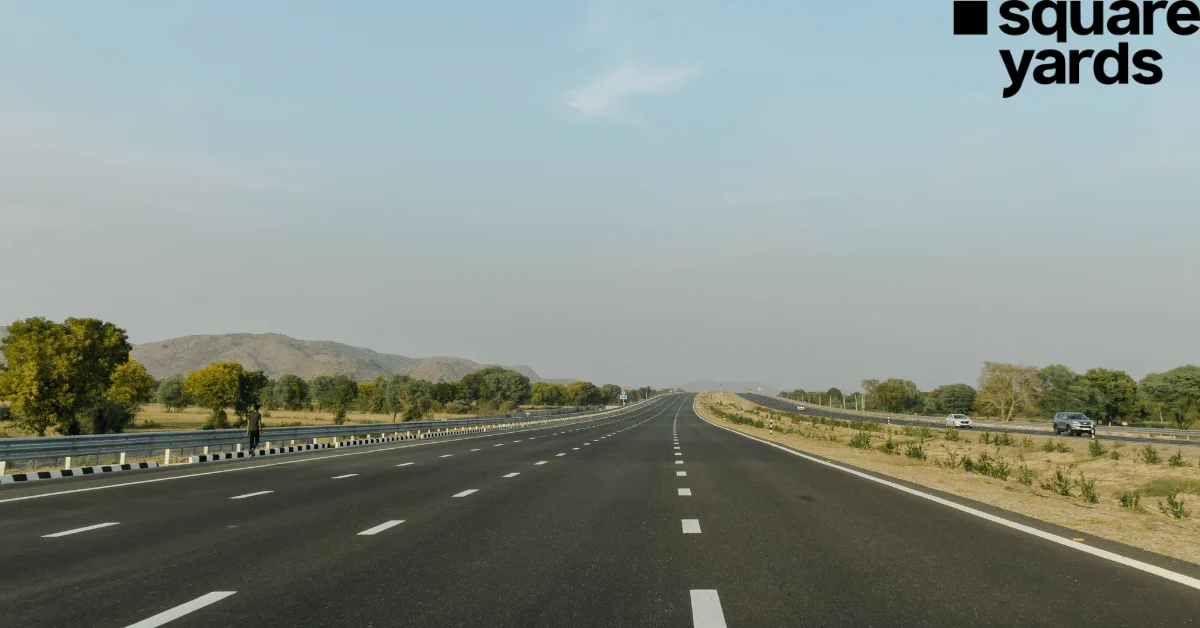
The Agra-Bareilly Expressway is a four-lane, access-controlled greenfield highway spanning approximately 228 kilometers. Managed by the NHAI, the project represents a massive capital investment of roughly ₹7,700 crore. Its primary objective is to provide a seamless high-speed link between Agra, the world-renowned tourism hub, and Bareilly, a vital commercial center in the Rohilkhand region.
Key Project Highlights:
- Total Length: Approximately 228 km.
- Investment: Estimated at ₹7,700 crore.
- Project Nature: Greenfield (constructed on entirely new alignments to minimize displacement and maximize speed efficiency).
- Current Status: Under active construction, with the Mathura-Badaun section already operational.
- Target Completion: December 2027.
The expressway is designed to support a design speed of 100-120 km/h, featuring advanced engineering solutions such as grade separators, flyovers, and rail overbridges (ROBs). By bypassing congested urban centers and traditional narrow highways, the corridor will slash travel time between the two cities from the current 5–6 hours to a mere 2 to 2.5 hours.
II. Chronology: From Vision to Execution
The journey of the Agra-Bareilly Expressway reflects the broader national push toward the "Gati Shakti" framework, which emphasizes integrated planning and synchronized implementation of infrastructure projects.
1. Conceptualization and Planning (2021-2023)
The project was conceived as part of a larger strategy to link the various expressways of Uttar Pradesh. Initial surveys identified the need for a direct route that could bypass the bottlenecked local roads in districts like Kasganj and Hathras. Land acquisition processes were initiated following a greenfield alignment to ensure the highway remains "access-controlled," preventing local traffic from slowing down long-distance transit.
2. Commencement of Work (2024)
Construction began in multiple phases to ensure rapid progress. The NHAI divided the 228 km stretch into several packages, allowing different contractors to work simultaneously. This period saw the heavy deployment of earth-moving machinery and the establishment of on-site casting yards for bridges and flyovers.
3. Partial Operationalization (Early 2026)
A significant milestone was achieved with the completion of the Mathura-Badaun stretch. This section was opened to the public ahead of the full project completion to provide immediate relief to commuters in central Uttar Pradesh. Its opening has served as a "proof of concept," demonstrating the project’s ability to cut travel times significantly even before the full corridor is ready.
4. Final Push Toward Completion (Present – December 2027)
Currently, the NHAI has entered the final phases of construction for the remaining stretches. Work is focused on the complex interchanges that will link this expressway with the Agra-Lucknow Expressway and the Ganga Expressway. The target for full commissioning remains December 2027.
III. Supporting Data: Technical and Geographic Breakdown
To understand the scale of the Agra-Bareilly Expressway, one must look at the data that defines its reach and technical sophistication.
Geographic Reach: The 15-District Impact
The corridor traverses nearly 15 districts, creating a "development spine" through the heart of the state. Key districts directly benefiting from the alignment include:
- Agra: The western terminus and a major tourism/industrial hub.
- Mathura: A religious tourism center and industrial base.
- Hathras & Kasganj: Traditionally agricultural belts now being integrated into the industrial grid.
- Badaun: A central node that has historically lacked high-speed connectivity.
- Bareilly: The eastern terminus and the gateway to the Rohilkhand region and Uttarakhand.
Project Specification Table
| Parameter | Details |
|---|---|
| Project Name | Agra-Bareilly Expressway |
| Total Length | ~228 km |
| Total Cost | ~₹7,700 Crore |
| Configuration | 4-Lane Access-Controlled (Expandable to 6 lanes) |
| Travel Time (Current) | 5 – 6 Hours |
| Travel Time (Projected) | 2 – 2.5 Hours |
| Nodal Agency | National Highways Authority of India (NHAI) |
| Key Structures | Grade separators, Flyovers, ROBs, and Underpasses |
| Functional Sections | Mathura-Badaun (Partially Open) |
| Completion Deadline | December 2027 |
IV. Official Responses and Strategic Vision
Government officials and NHAI representatives have frequently highlighted the Agra-Bareilly Expressway as a "game-changer" for regional logistics. While specific political statements vary, the consensus among policymakers is that this project is essential for de-congesting the National Capital Region (NCR) and spreading economic development to the "hinterlands" of Uttar Pradesh.
Strengthening the "Expressway State"
Uttar Pradesh has earned the moniker of India’s "Expressway State." Officials from the Uttar Pradesh Expressways Industrial Development Authority (UPEIDA) and NHAI emphasize that the Agra-Bareilly corridor is a "missing link" that completes a vital triangle of connectivity. By linking the Yamuna Expressway (Delhi-Agra) with the Ganga Expressway (Meerut-Prayagraj), the state is creating a grid where no major city is more than a few hours away from a high-speed road.
Integration with Noida International Airport
A recurring theme in official briefings is the synergy between this expressway and the Noida International Airport (Jewar). Officials have noted that once the Agra-Bareilly Expressway is fully operational, air cargo from the Rohilkhand region can reach the Jewar airport in record time, significantly boosting export capabilities for local industries such as Bareilly’s furniture and Zari-Zardosi sectors.
V. Implications: A Multi-Sectoral Transformation
The impact of the Agra-Bareilly Expressway extends far beyond mere asphalt and concrete. It is set to trigger a domino effect across several sectors of the economy.
1. Real Estate: The Rise of Micro-Markets
The "Expressway Effect" is already visible in the real estate sector. Historically, districts like Kasganj and Badaun were considered "tier-3" or "tier-4" locations with stagnant property values.
- Plotted Developments: There is a surge in demand for plotted housing and low-density residential projects near the expressway interchanges. Investors from Delhi-NCR and Agra are looking at these areas for long-term capital appreciation.
- Urban Expansion: Cities like Agra and Bareilly are expected to expand outward along the expressway route. We are likely to see the emergence of "Satellite Townships" that offer modern amenities while being connected to major urban centers by a 30-minute drive.
2. Logistics and the "Industrial Corridor"
Uttar Pradesh’s agricultural heartland produces vast quantities of perishable goods, including potatoes, sugarcane, and dairy.
- Supply Chain Efficiency: The reduction in travel time will allow farmers and FPOs (Farmer Producer Organizations) to transport goods to the high-consumption markets of Delhi-NCR and Lucknow with minimal wastage.
- Warehousing Hubs: The intersection points of the expressway are becoming prime locations for large-scale warehousing and cold storage facilities. This is particularly relevant for the logistics industry, which seeks "mid-way" points between major metropolitan areas.
3. Tourism Synergy
The expressway creates a seamless "Tourism Circuit." Travelers visiting the Taj Mahal in Agra or the temples of Mathura can now easily extend their journey to the scenic foothills of the Himalayas via Bareilly. This improved accessibility is expected to increase the "stay-duration" of tourists in the state, providing a boost to the hospitality sector in previously overlooked towns.
4. Integration with Global Infrastructure
The proximity to the Noida International Airport is perhaps the most significant long-term implication. The expressway acts as a feeder route for the airport, ensuring that the industrial output of central UP can be air-freighted globally. This makes the region along the Agra-Bareilly corridor highly attractive for Foreign Direct Investment (FDI) in manufacturing.
5. Socio-Economic Upliftment
Beyond big-ticket investments, the expressway provides "last-mile" benefits to local populations. Improved roads mean better access to healthcare in major cities, easier commutes for students to regional universities, and the creation of thousands of direct and indirect jobs during and after the construction phase.
Conclusion: A New Horizon for Rohilkhand
The Agra-Bareilly Expressway is more than a road; it is a bridge to the future. By December 2027, when the final stretch is inaugurated, it will symbolize the successful marriage of engineering excellence and strategic economic planning. For the 15 districts it touches, the expressway promises to replace isolation with integration, and stagnation with growth. As the Mathura-Badaun stretch already demonstrates, the era of five-hour commutes is ending, making way for a faster, more prosperous Uttar Pradesh.
