

Introduction: Beyond the Asphalt
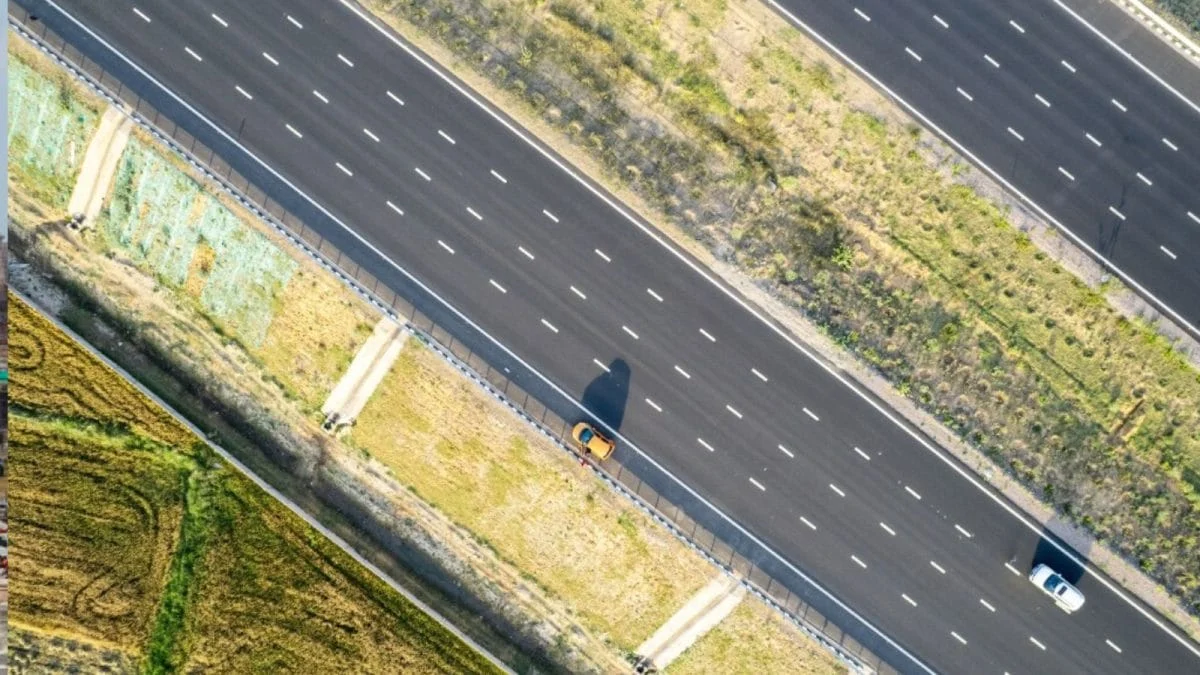
The Delhi-Mumbai Expressway (DME), a monumental 1,386-kilometer engineering marvel, is no longer just a blueprint for faster transit; it has evolved into the primary engine of a socio-economic revolution. As the country’s longest expressway nears its 2026 completion deadline, its impact is being felt far beyond the lanes of bitumen and concrete. It is fundamentally altering the valuation of land, the strategy of institutional investors, and the aspirations of homebuyers across six Indian states.
While the headline promise of the DME is the reduction of travel time between India’s political capital and its financial capital from 24 hours to a mere 12, the "side effect" is a massive appreciation in property values. From the outskirts of Gurugram to the industrial belts of Vadodara, the corridor is birthing a new class of "smart property buyers" who are looking past the saturated Tier-I markets toward the high-growth potential of Tier-II cities.
I. Main Facts: The Economic Surge Along the Corridor
The Delhi-Mumbai Expressway is not merely a road; it is an economic corridor designed to facilitate seamless trade and urban expansion. Recent data indicates that land prices within a 50-kilometer radius of the expressway have witnessed an unprecedented surge, increasing by 30% to 40% in several key stretches.
Key Highlights of the Boom:
- Price Appreciation: In high-demand zones like the Gurugram-Sohna-Dausa stretch, land rates have skyrocketed by 60% to 70%. In Sohna, residential property prices have touched the milestone of ₹15,000 per square foot.
- Tier-II Dominance: For the first time in recent history, land deals in Tier-II and Tier-III cities are outpacing those in Tier-I metros. In the first half of 2025, Tier-II/III cities recorded 1,907 acres of land transactions compared to 991 acres in Tier-I cities.
- The Logistics Pivot: The demand is not limited to housing. There is a massive appetite for industrial land, warehouses, and logistics parks, as companies seek to capitalize on the 120 kmph speed limit that allows for overnight delivery between major hubs.
II. Chronology: From Vision to Valuation
The journey of the Delhi-Mumbai Expressway has been one of phased milestones, each acting as a trigger for real estate activity.
- 2018–2019: The Foundation: The project was conceived under the Bharatmala Pariyojana. Initial land acquisition sparked the first wave of speculative buying in rural pockets of Haryana and Rajasthan.
- February 2023: The Sohna-Dausa Catalyst: Prime Minister Narendra Modi inaugurated the 246-km Delhi-Dausa-Lalsot section. This immediately connected Delhi to Jaipur via a high-speed link, leading to an overnight spike in interest for "weekend homes" and satellite townships in Alwar and Dausa.
- 2024–2025: The Mid-Corridor Awakening: As sections in Madhya Pradesh (near Indore and Ratlam) and Gujarat (near Vadodara and Bharuch) became operational, industrial developers began shifting their focus. The realization that 64% of the stretch was operational by early 2025 solidified investor confidence.
- May 2026 (Projected): Full Operationality: The final completion is expected to coincide with a "price correction" or stabilization, meaning the current window represents the final phase of high-alpha growth for early-stage investors.
III. Supporting Data: A City-by-City Analysis
The real estate story of the DME is best told through the lens of the cities it touches. Each urban center is leveraging the expressway to solve local economic bottlenecks.
1. Jaipur: The New Corporate Satellite
Jaipur’s residential market has climbed 12–18% in the past year alone. However, the commercial story is even more compelling. The city’s office space is projected to grow from 7.8 million square feet to 13 million square feet by 2030.
- The Cost Advantage: Office rentals in Jaipur remain roughly 54% cheaper than in the Delhi-NCR region. This price gap, combined with 4-hour connectivity to Delhi, is encouraging IT firms and startups to establish "near-shore" centers in the Pink City.
2. Indore: The Logistics Heart
Indore, consistently ranked as India’s cleanest city, saw residential prices rise 10–15% in 2025.
- Rental Yields: IT and enterprise rentals in Indore are now hovering between ₹150–₹200 per square foot. The expressway provides Indore-based manufacturers a direct, high-speed pipe to the Jawaharlal Nehru Port Trust (JNPT) in Mumbai, making it a premier hub for export-oriented units.
3. Vadodara and Bharuch: The Industrial Powerhouses
In Gujarat, the expressway is reinforcing an already strong industrial base. Experts forecast an 8–10% annual price appreciation in Vadodara’s prime areas.
- Future Projections: Analysts suggest that newer localities on the outskirts of Vadodara and Bharuch could deliver returns of 20–25% over the next three to five years as the "influence zone" of the expressway expands.
4. The Sohna-Gurugram Hub
Sohna has transitioned from a sleepy suburb to "South Gurugram." With the expressway starting here, the region has become a magnet for luxury gated communities and plotted developments. The proximity to the Western Peripheral Expressway (KMP) creates a "cloverleaf" of connectivity that is unique in Northern India.
IV. Official Responses and Industry Perspectives
Government officials and industry experts view the expressway as more than just a transport project; they see it as a tool for urban decentralization.
National Highways Authority of India (NHAI) Perspectives:
NHAI officials have highlighted that the DME is the first expressway in India to feature 94 wayside amenities (WSAs). These amenities—ranging from resorts and restaurants to charging stations and trauma centers—are themselves becoming micro-real estate markets, creating local employment and driving up the value of adjacent rural land.
Expert Insights:
Real estate analysts note that the "early-mover advantage" is still active but rapidly disappearing. "We are seeing a shift from speculative buying to end-user demand," says a senior consultant at a leading property firm. "Institutional money is moving into Tier-II cities because the infrastructure—water, electricity, and now high-speed roads—is finally catching up to the land availability."
Developers also point out the logistical efficiency. "The expressway has slashed transportation costs by nearly 15-20% for many manufacturers. Those savings are being plowed back into expanding facility footprints along the corridor," says a representative from a national logistics park developer.
V. Implications: The Future of Urban India
The long-term implications of the Delhi-Mumbai Expressway extend into the very fabric of Indian urbanism.
1. Reverse Migration and Talent Retention:
As Tier-II cities like Jaipur and Indore offer Grade-A office spaces and luxury housing at a fraction of the cost of Mumbai or Delhi, the "brain drain" from these cities is slowing. Young professionals are choosing to stay in their home states, supported by the high-speed connectivity that allows for easy business travel to metros.
2. The Rise of the ‘Logistics Town’:
Small towns like Dausa in Rajasthan and Ratlam in Madhya Pradesh are evolving into logistics towns. These areas are no longer just transit points but are becoming storage and processing hubs, leading to a rise in demand for affordable housing for the industrial workforce.
3. Environmental and Sustainable Development:
The DME is being touted as a "Green Expressway," with millions of trees planted and the inclusion of animal overpasses (a first in Asia). This focus on sustainability is attracting a new demographic of "conscious buyers" who seek homes in green-belt areas that remain connected to the economic grid.
4. The Window of Opportunity:
For property buyers, the message is clear: the period between now and the full operational launch in 2026 is the final "pre-completion" value phase. Once the entire 1,386-km stretch is open to the public, the "infrastructure premium" will be fully baked into the prices, likely leading to a plateau in growth rates.
Conclusion: A New Map for a New India
The Delhi-Mumbai Expressway is far more than a feat of civil engineering; it is a 1,300-kilometer-long economic catalyst. By bridging the gap between the two most important cities in India, it has inadvertently unlocked the potential of the vast hinterland between them.
For the smart investor, the expressway provides a roadmap. It shows exactly where the next generation of industrial hubs, satellite towns, and corporate centers will emerge. As Jaipur, Indore, and Vadodara rise to meet the opportunities of this new connectivity, the real estate market is witnessing a fundamental truth: in a growing economy, wealth follows the road. The window for the early-mover advantage is narrowing, but for those who act now, the Delhi-Mumbai Expressway remains the most promising investment corridor in South Asia.
