

MOUNTAIN VIEW, CA – May 19, 2026 – In a move poised to fundamentally redefine how humanity interacts with information, Google today announced the most significant overhaul to its iconic Search interface in over two and a half decades. Bidding farewell to the static search box that has anchored the internet age, the tech giant is rolling out a dynamic, AI-powered system designed not merely to answer questions, but to anticipate needs, process complex multimodal inputs, and even proactively manage users’ digital lives. This monumental shift, spearheaded by a rapidly expanding AI infrastructure and the burgeoning success of its Gemini ecosystem, marks Google’s decisive leap into an era of ambient, intelligent assistance.
The transformation, which commenced its global rollout today in all regions where Google AI Mode is active, transcends a simple interface refresh. At its core lies an advanced AI-powered input box that intelligently expands as users type, moving far beyond traditional text-based queries. This reimagined search bar is now capable of accepting a diverse array of inputs, including images, files, videos, and even open Chrome browser tabs, fundamentally changing the nature of a "query."
Elizabeth Reid, Google’s Vice President of Search, articulated the ambitious vision behind this evolution in an official blog post. "The goal has always been to help people ask anything on your mind – from quick facts to the deep, complex or hyper-specific questions that can be hard to articulate," Reid stated, underscoring a commitment to demystifying complex information retrieval. This philosophy is already resonating, with AI Mode, launched roughly a year ago, having surpassed one billion monthly active users, and queries more than doubling every quarter since its inception. This surge in engagement has contributed to overall Google Search queries hitting an all-time high in the most recent quarter, signaling a profound user appetite for more intelligent search capabilities.
Beyond the Text Box: Multimodal Search Redefined
For decades, the Google search bar was a testament to minimalist design and singular function: type keywords, get links. The new AI-powered input box shatters this paradigm. Its dynamic expansion is not just an aesthetic flourish; it’s an adaptive canvas designed to accommodate the evolving complexity of human thought. Imagine searching for a recipe by simply showing a picture of the ingredients in your fridge, or troubleshooting a technical issue by uploading a video of the problem. This multimodal capability fundamentally re-imagines the initial point of interaction, making search inherently more intuitive and aligned with how people naturally think and communicate.
The ability to directly integrate inputs like images, files, videos, and even active Chrome browser tabs signifies a pivotal departure from the text-centric model. Instead of describing a visual, users can now show it. Instead of summarizing a document, they can upload it. The integration of Chrome tabs as input is particularly revolutionary, enabling users to contextually query based on their active browsing session, transforming the search bar into an intelligent extension of their current digital workflow. This eliminates friction and drastically reduces the cognitive load associated with translating complex information into concise text queries.
The Vision Behind the Evolution: From Keywords to Context
Elizabeth Reid’s vision of empowering users to "ask anything on your mind" speaks to a deeper ambition than mere information retrieval. It reflects a shift towards understanding user intent rather than just keywords. The traditional search engine excelled at matching discrete terms to indexed pages. The new AI-driven approach aims to grasp nuanced, multi-faceted inquiries, including those that are "deep, complex, or hyper-specific." This capability is crucial in an information-rich world where answers often require synthesis across multiple sources, understanding implicit context, and personalized filtering.
This evolution is not merely a technical upgrade; it’s a philosophical one, positioning Google Search as a true digital assistant capable of engaging in a more human-like dialogue. The rapid adoption of AI Mode, reaching over a billion monthly users and experiencing quarterly query doubling, provides compelling validation for this strategic direction. It indicates that users are actively seeking and embracing more sophisticated and intuitive ways to interact with information, moving beyond the constraints of traditional search paradigms.
The Rise of Proactive Intelligence: Introducing "Information Agents"
Perhaps the most groundbreaking announcement from Google’s developer conference this year is the unveiling of "information agents." These are not merely advanced search queries; they represent a fundamental paradigm shift from reactive search to proactive, ambient intelligence. Information agents are persistent, background processes that continuously scan a vast array of digital sources on the user’s behalf, providing synthesized updates when something relevant surfaces.
These digital sentinels tirelessly monitor the web, social media platforms, news outlets, financial data streams, and real-time information sources. Instead of users needing to explicitly ask a question and await a response, these agents operate in a perpetual state of inquiry, sifting through the digital deluge to identify and deliver pertinent information. Imagine an agent tracking specific market trends, a developing news story about a local community issue, or real-time updates on a hobbyist topic, delivering concise summaries or alerts without a direct prompt.
This is a significant departure from the foundational principle of Search as a reactive tool. Historically, users pulled information when they needed it. With information agents, Google is pushing relevant insights to users, transforming the search experience into a personalized, always-on intelligence layer. For instance, an investor might set an agent to monitor specific stock volatility signals across financial news and social media, receiving a synthesized alert when conditions meet predefined criteria. A local resident could have an agent tracking community meeting agendas and relevant discussions across local news and social platforms, ensuring they’re always informed about local developments without constant manual checking.
Initially, these powerful information agents will be made available to Google AI Pro and Ultra subscribers in the coming months, marking them as a premium offering designed for early adopters and power users. While promising unprecedented levels of personalized information flow, the introduction of persistent agents also raises important considerations regarding information overload, the potential for filter bubbles, and the critical need for transparent control over what agents monitor and how they deliver information. Google will need to meticulously design user interfaces that empower individuals to manage these agents effectively, ensuring utility without overwhelming or inadvertently shaping perspectives.
Transforming Local Experiences and Service Automation
Beyond information agents, Google is also injecting AI into the fabric of everyday life by enhancing its capacity to organize local experiences. The company announced that its search service can now handle the "full arc" of arranging local activities, from discovery to booking. This includes pulling live pricing and availability data for various services and offering direct links to complete reservations or purchases. Whether it’s finding a restaurant, booking a haircut, or securing tickets for a local event, the process is streamlined and integrated directly within the search results.
Even more remarkably, Google is stepping into the realm of direct service automation. For complex or time-consuming tasks such as home repair, beauty appointments, or pet care services, Google said it will even phone businesses on users’ behalf to gather information or complete bookings. This audacious feature essentially positions Google as a personal concierge, eliminating the hassle of phone calls, waiting on hold, and coordinating schedules. This capability, set to roll out broadly across the U.S. first, holds the potential to significantly reduce friction in managing daily errands and appointments, transforming how individuals interact with local businesses. It also signals Google’s intent to move deeper into transactional services, directly facilitating commerce rather than just providing links to it.
This move could have profound implications for local service providers, potentially increasing their visibility and accessibility while also introducing Google as a powerful intermediary. For users, it offers unparalleled convenience, but also raises questions about the degree of automation desired in personal interactions and the transparency of Google’s involvement in these transactions.
The AI Engine Underpinning the Revolution: Unprecedented Token Growth
The sheer scale and ambition of these service upgrades are underpinned by Google’s massive, continuously expanding AI infrastructure. The company’s internal metrics on "token growth" provide a stark illustration of this exponential expansion. Tokens are the fundamental units of data (words, subwords, characters, images, etc.) that AI models process. The more tokens an AI system processes, the more complex and nuanced tasks it can handle, and the more deeply it can understand and generate information.
Two years ago, Google’s AI systems were processing 9.7 trillion tokens per month across its vast array of products. By last year’s I/O developer conference, that figure had already exploded to 480 trillion tokens per month. Today, just one year later, the number stands at an astonishing over 3.2 quadrillion tokens per month – a sevenfold increase in a single year. This rate of growth is unprecedented and highlights the accelerating pace of AI development and deployment within Google.
Further emphasizing this colossal scale, CEO Sundar Pichai, in his keynote address, revealed that internally, Google is processing more than three trillion tokens per day through its developer tools alone. He noted that this number has been doubling every few weeks, indicating an exponential trajectory that is challenging even Google’s immense computational resources. This token growth is a critical indicator of the increasing complexity, intelligence, and pervasiveness of Google’s AI models across its entire ecosystem, from Search to productivity tools and developer platforms. It signifies not just more data, but more sophisticated data processing, enabling the kind of multimodal understanding and proactive assistance now being rolled out.
Gemini’s Ascendancy: User and Developer Adoption
At the heart of Google’s AI strategy is Gemini, its multimodal large language model. The Gemini app itself has witnessed impressive growth, evolving from approximately 400 million monthly active users (MAU) at last year’s I/O to over 900 million MAU this year. This near-doubling of its user base underscores Gemini’s increasing acceptance and utility in everyday tasks, from creative writing to complex problem-solving.
Equally significant is the rapid adoption of Gemini by the developer community. More than 8.5 million developers are now building with Google’s AI models monthly, indicating a robust ecosystem flourishing around Gemini. The Gemini API, which allows developers to integrate Google’s AI capabilities into their own applications, is processing approximately 19 billion tokens per minute. This incredible throughput highlights not only the demand for Gemini’s power but also the scalability of Google’s underlying infrastructure.
Gemini 3.5 Flash: The New Standard for AI Mode
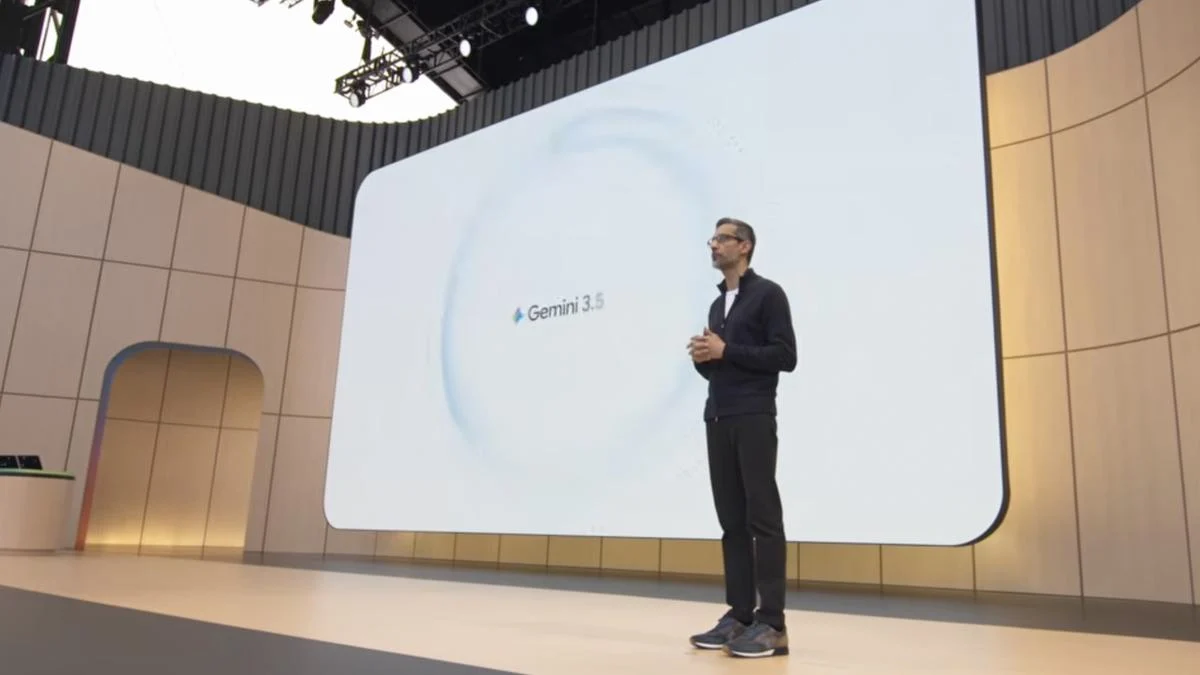
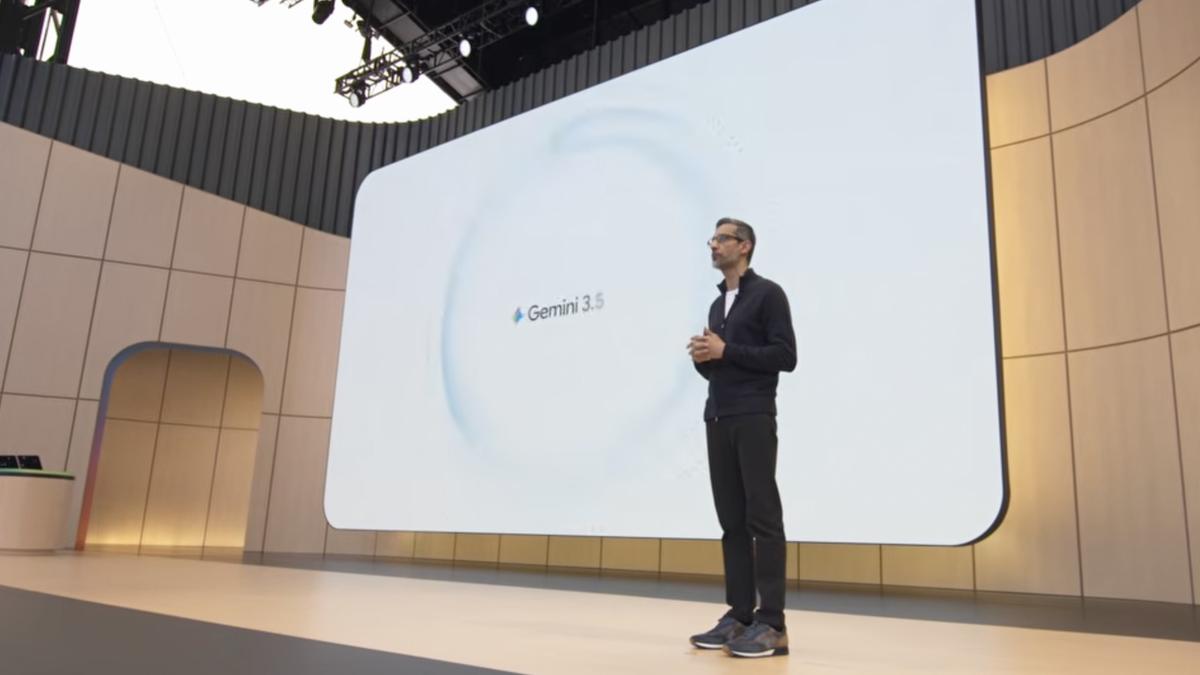
Further solidifying its AI foundation, Google announced that Gemini 3.5 Flash is now the default model in AI Mode globally. Google has strategically positioned Gemini 3.5 Flash as operating in a class of its own, offering an unparalleled combination of "frontier-level intelligence" and exceptional output speed. The company claims it produces responses four times faster than comparable frontier models, making it ideal for the dynamic, real-time interactions demanded by the new Search interface and information agents. This speed is critical for maintaining a seamless and responsive user experience, especially when dealing with complex, multimodal inputs and proactive information delivery.
Expanding AI’s Reach: New Features Across Google’s Ecosystem
The AI revolution is not confined to Google Search; it’s permeating every corner of Google’s vast ecosystem, enhancing existing products with intelligent capabilities designed to boost productivity, creativity, and accessibility.
"Ask YouTube": Conversational Video Search
One notable feature upgrade is the planned rollout of "Ask YouTube." This innovative capability will allow US-based YouTube Premium subscribers to orally query the platform for specific videos or content within videos. Instead of laboriously typing keywords or scrolling through endless suggestions, users can simply speak their request, like "Show me the segment where the chef explains how to perfectly caramelize onions" or "Find videos about the history of quantum physics from accredited sources." This dramatically improves content discovery and accessibility, transforming YouTube from a passive consumption platform into an interactive knowledge hub. It opens new avenues for learning, entertainment, and information retrieval, especially for long-form content.
"Live" in Docs, Gmail, Keep: Streamlining Thought to Text
Google is also adding a potent dose of AI to its productivity suite with a new "Live" feature for Google Docs, Gmail, and Google Keep. This feature addresses a common challenge: organizing spontaneous thoughts and verbal "brain dumps." Users will be able to verbally articulate their ideas, notes, or drafts into these applications, and Gemini will instantly organize and structure the content. For instance, a user can speak a stream of consciousness about a project, and Gemini will intelligently convert it into a structured outline, a draft email, or categorized notes.
Designed to mirror the organic, often non-linear way many people think, this feature is set to arrive for Google AI subscribers this summer. It promises a significant boost to productivity, allowing users to capture ideas rapidly and efficiently, reducing the friction between thought and documented content. This could be particularly transformative for brainstorming sessions, meeting notes, and initial content creation, blurring the lines between verbal ideation and structured writing.
Personal Intelligence: Unifying Digital Life
Further extending its ambition to create a more cohesive and intelligent digital experience, Google is introducing "Personal Intelligence." This feature will empower users to search and draw contextual information directly from their personal data stored within Gmail and Google Photos apps. Imagine asking Google to find "the email with the flight details for my trip last summer" or "all photos from Sarah’s birthday party in 2024." This moves beyond public web search into the realm of personal digital archives, making individual information more accessible and actionable.
The company stated that this feature will first be integrated into its Calendar app, allowing for contextual scheduling and reminders based on personal communications and media. Crucially, Google plans for this service to be expanded globally and across 98 languages, indicating a broad strategic rollout. While offering immense convenience, Personal Intelligence also foregrounds paramount concerns regarding data privacy, security, and user control over their highly sensitive personal information. Google will need to ensure robust privacy frameworks and clear user permissions to build and maintain trust for such an intimate integration of personal data.
The Broader Implications: Navigating a New Digital Frontier
Google’s comprehensive AI overhaul carries profound implications across technology, society, and the economy.
Impact on User Experience and Digital Literacy
The new interface promises a more intuitive, less frictional interaction with information. For many, it will lower the barrier to complex queries, making advanced research and information synthesis accessible to a broader audience. However, it also demands a new form of digital literacy: understanding how to effectively phrase multimodal queries, interpret AI-generated summaries, and critically evaluate information provided by proactive agents. The shift from "searching" to "dialoguing" or "delegating" tasks to AI will require users to adapt their mental models of information retrieval.
Competitive Landscape and Market Dynamics
This aggressive push positions Google firmly at the forefront of the AI race, particularly against rivals like Microsoft, which has been integrating its Copilot AI into Windows and Office, and Apple, which is increasingly infusing AI into its ecosystem. Google’s advantage lies in its unparalleled search index and massive data infrastructure, which fuels its AI models. The introduction of "information agents" and deeply integrated service automation could create a significant moat, making it harder for competitors to replicate the breadth and depth of Google’s offerings. It also reinforces Google’s strategic move to monetize AI through premium subscriptions (AI Pro and Ultra), potentially diversifying its revenue streams beyond advertising.
Data Privacy and Ethical Considerations
The expansion of information agents and Personal Intelligence features brings data privacy and ethical considerations to the forefront. The constant scanning of web activity, social media, and personal data requires Google to uphold the highest standards of data security, transparency, and user consent. Users will need clear, granular controls over what information agents monitor and how their personal data is used for contextual intelligence. The potential for AI bias in synthesizing information, the challenge of combating misinformation, and the sheer power vested in these proactive systems demand continuous vigilance and ethical governance from Google.
Future of Work and Productivity
The "Live" feature in Docs, Gmail, and Keep, along with the service automation capabilities, stands to significantly transform professional and personal productivity. By streamlining the thought-to-text process and automating mundane tasks like booking appointments, these tools can free up cognitive load and time, allowing individuals to focus on higher-value creative and strategic work. However, it also raises questions about the future of certain administrative roles and the necessary adaptation of skill sets in an increasingly AI-augmented workplace.
Digital Divide and Accessibility
While these advancements promise immense benefits, their initial rollout often targets premium subscribers or specific geographic regions. This raises concerns about the digital divide, where access to cutting-edge AI tools could exacerbate existing inequalities for those without premium subscriptions or the latest hardware. Google’s stated goal to expand Personal Intelligence globally and across 98 languages is a positive step, but ensuring equitable access to these transformative technologies remains a crucial challenge.
Conclusion: A Leap into the Age of Proactive AI
Google’s announcements today represent far more than a mere product update; they signal a fundamental pivot in the company’s trajectory and a bold leap into an era where AI is not just a feature, but the core operating principle of digital interaction. The transformation of Search from a reactive query box to a dynamic, multimodal, and proactively intelligent assistant marks an inflection point in the internet’s evolution.
With information agents poised to redefine how we consume news and insights, and personal intelligence weaving context across our digital lives, Google is shaping a future where technology anticipates our needs, streamlines our tasks, and profoundly alters our relationship with information. The exponential growth in token processing, coupled with the rapid adoption of Gemini by users and developers, demonstrates the robust foundation upon which this ambitious vision is built. As these features roll out, the world will witness an ongoing evolution, with Google at the helm, charting a course toward a more intuitive, intelligent, and deeply integrated digital experience. The challenges of privacy, ethics, and accessibility will undoubtedly accompany this journey, but the promise of a truly proactive and personalized AI companion is now tangibly within reach.
