

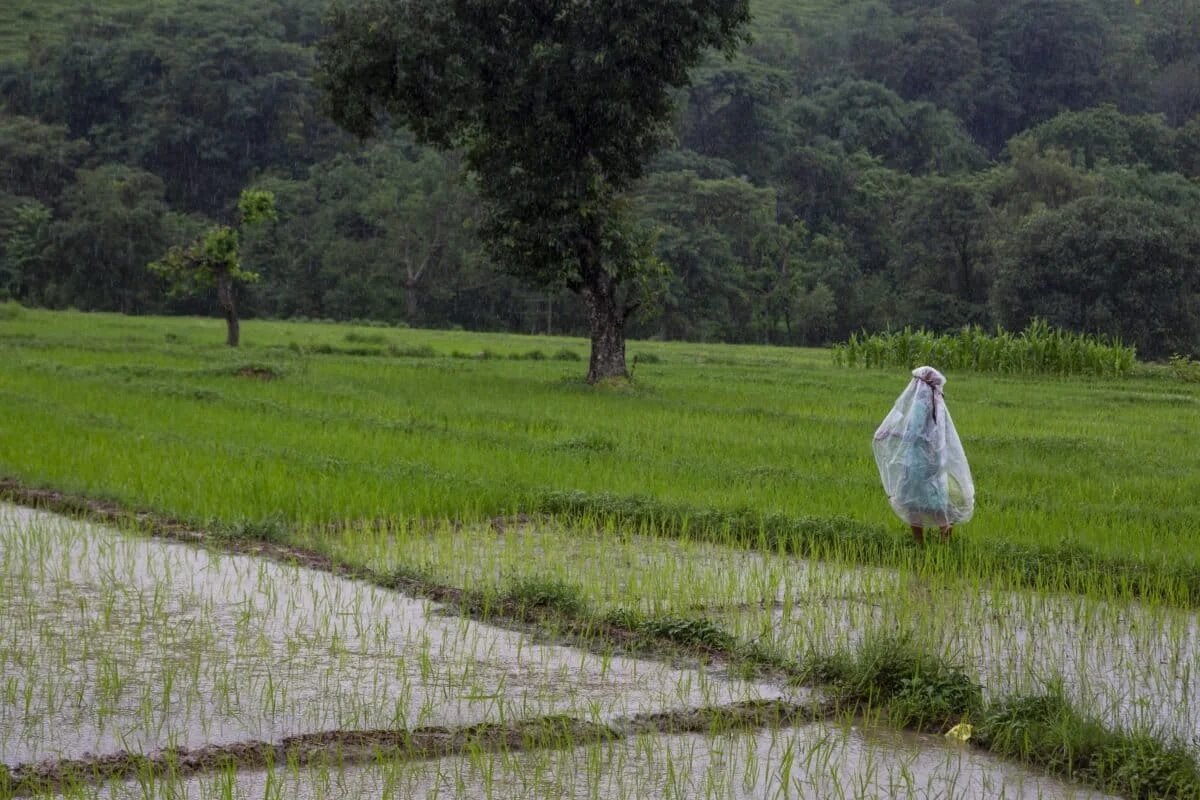
KOLAR, KARNATAKA — Under the relentless glare of the May sun in Karnataka’s semi-arid Kolar district, the rhythmic thud of a rig echoes through Channasandra village. Nagaraj N., a local farmer, is digging yet another borewell. It is an act of expensive desperation. His mulberry and paddy fields, the lifeblood of his family’s survival, are parched. Groundwater levels in this region are plummeting, and the local canals offer little more than dust and hope.
“The monsoon is our only lifeline,” Nagaraj says, wiping sweat from his brow. “But the news says the Pacific is warming. If the rains fail, these fields will turn to graveyards.”
Nagaraj’s anxiety is not misplaced. Across the globe, climate scientists are turning their gaze toward the equatorial Pacific with increasing unease. Global weather agencies have begun sounding the alarm: a strong El Niño event is brewing, and its arrival in 2026 could trigger a cascade of meteorological disruptions, ranging from a weakened Indian monsoon to acute water stress and catastrophic crop failures.
Main Facts: The Anatomy of a Looming Crisis
El Niño, the "warm phase" of the El Niño-Southern Oscillation (ENSO), is a periodic climate pattern characterized by the abnormal warming of surface waters in the central and eastern tropical Pacific Ocean. While it is a natural phenomenon occurring every two to seven years, its implications are anything but localized. Because the atmosphere is globally interconnected, a spike in Pacific temperatures can reroute jet streams, shift rainfall patterns, and alter the fate of nations thousands of miles away.

Current climate model predictions are painting a grim picture. Madhavan Nair Rajeevan, Vice Chancellor of Atria University, Bengaluru, and the former Secretary of India’s Ministry of Earth Sciences, warns that the upcoming event could be "severe."
“The latest models suggest sustained warming in the central tropical Pacific exceeding 1.5°C,” Rajeevan told Mongabay-India. “Abnormally warm waters are already present below the ocean surface across the equatorial Pacific. This subsurface heat acts as a reservoir that could further strengthen the event, with a projected peak around November or December 2026. Some models even suggest the warming could exceed 2°C.”
A warming of 2°C would categorize this as a "Very Strong" or "Super" El Niño, comparable to the devastating events of 1997-98 and 2015-16. For India, where nearly half the population depends on agriculture and the summer monsoon provides 70% of the annual rainfall, the stakes could not be higher.
Chronology: The Transition from La Niña to El Niño
To understand the urgency of 2026, one must look at the timeline of the current ENSO cycle. For the past few years, the world experienced a rare "triple-dip" La Niña—the cooling phase of the cycle—which generally favors the Indian monsoon. However, that phase has officially ended.
- Early 2026: The tropical Pacific entered a "neutral" phase, a brief atmospheric pause between extremes.
- May 2026: The U.S. Climate Prediction Center (CPC) issued an "El Niño Watch," noting an 82% probability that El Niño conditions would develop between May and July.
- Late 2026: The probability of a fully developed El Niño rises to a staggering 96% for the period between December 2026 and February 2027.
- Peak Intensity: Scientists expect the maximum thermal anomaly to occur in late 2026, potentially disrupting the tail end of the Indian monsoon and the subsequent winter (Rabi) cropping season.
“While confidence in the occurrence of El Niño has increased, there is still substantial uncertainty in the peak strength,” CPC scientists noted in a recent advisory. However, the presence of significant subsurface heat suggests that once the event begins, it may have the "fuel" required to reach extreme levels.

Supporting Data: Indices, Anomalies, and the IOD Wildcard
Meteorologists track ENSO using the Oceanic Niño Index (ONI), which measures sea surface temperature anomalies in the "Niño 3.4" region of the Pacific. A reading of +0.5°C indicates El Niño, while +2.0°C indicates a "Very Strong" event.
However, the strength of El Niño is not the only variable at play. P. Vijaykumar, an assistant professor at the University of Kerala’s Department of Environmental Sciences, points to the "Indian Ocean Dipole" (IOD) as a critical counter-balance. Often called the "Indian El Niño," the IOD refers to the temperature difference between the western and eastern Indian Ocean.
- Positive IOD: Warmer waters in the western Indian Ocean (near Africa) and cooler waters in the east (near Indonesia). This phase typically boosts the Indian monsoon.
- Negative IOD: The reverse, which often suppresses rainfall.
“Regional outcomes remain uncertain because a positive IOD is also likely to emerge in mid-2026,” Vijaykumar explains. “If both El Niño and a positive IOD develop together, their opposing influences could partly offset each other. This happened in 1997 and 2023, where India managed to avoid a total drought despite a strong El Niño.”
Despite this potential "buffer," the historical data remains sobering. Out of the 15 strongest El Niño years since 1950, 10 resulted in deficient rainfall for India. The risk of "canonical" behavior—where El Niño leads to a direct and devastating drought—remains the primary concern for policymakers.
Official Responses: Navigating Uncertainty
The India Meteorological Department (IMD) has issued its preliminary forecast for the 2026 summer monsoon, projecting rainfall at approximately 92% of the Long Period Average (LPA). While this technically falls within the "normal" range (defined as 90% to 110% of the LPA), it sits on the lower end of the spectrum, leaving little room for error.

Dr. Rajeevan emphasizes that while the national average might look acceptable, the distribution of rain is likely to be erratic. “Not every El Niño leads to a poor monsoon, but a severe event often results in below-normal or deficient rainfall,” he said. He warned that even if the total volume of rain is near normal, long "dry spells" during the crucial sowing months of July and August could decimate yields.
In response to these forecasts, state governments in rain-shadow regions like Karnataka and Maharashtra are being urged to begin "contingency planning." This includes:
- Crop Diversification: Encouraging farmers to shift from water-intensive crops like paddy and sugarcane to millets and pulses.
- Water Auditing: Assessing reservoir levels early to prioritize drinking water over irrigation if the monsoon falters.
- Groundwater Management: Implementing stricter regulations on new borewells to prevent the total exhaustion of aquifers.
Implications: From the "Skull Famine" to Modern Economic Resilience
The historical memory of El Niño in India is written in tragedy. Vinita Damodaran, Director of the Centre for World Environmental History at the University of Sussex, points to the devastating famines of the 18th century as a reminder of the Pacific’s power.
The 1783 Chalisa famine and the 1791 "Skull Famine" in Bijapur—so named because the ground was literally covered in the skulls of the unburied dead—were both linked to prolonged droughts exacerbated by severe El Niño cycles. While modern India has far better food security and logistics, the underlying vulnerability of the rural economy remains.
1. Agricultural Impact
For a farmer like Nagaraj in Kolar, the failure of the monsoon is not just an economic hit; it is a debt trap. Mulberry cultivation, essential for the region’s silk industry, requires consistent soil moisture. A failed monsoon leads to the death of the plants, requiring years of reinvestment to recover.

2. Water Disputes
Bengaluru-based water conservation expert Vishwanath Srikantaiah warns of a secondary crisis: social conflict. “If the monsoon disappoints, water shortages lead to disputes over river water sharing between states,” he says, referencing the perennial tensions over the Cauvery River. “Local storage is our best defense. We must capture and conserve every drop of pre-monsoon rain.”
3. Economic Inflation
A weak monsoon exerts upward pressure on food prices. Given that food accounts for a significant portion of the Indian consumer price index (CPI), an El Niño-driven crop failure could trigger high inflation, forcing the Reserve Bank of India to maintain high interest rates, thereby slowing overall economic growth.
4. The Climate Change Multiplier
Perhaps the most concerning implication is how global warming interacts with El Niño. Scientists believe that a warmer atmosphere can hold more moisture, leading to a paradox: longer dry spells interrupted by "cloudbursts" and flash floods. This "extreme weather whiplash" makes traditional farming knowledge obsolete and infrastructure planning nearly impossible.
Conclusion: A Call for Preparedness
As the Pacific Ocean continues its slow, thermal ascent, the message from experts is clear: 2026 will be a year of atmospheric volatility. While the "wildcard" of the Indian Ocean Dipole may offer some protection, relying on luck is not a strategy.
“There is no need for panic, but this is the time to seriously formulate strategies,” says Dr. Rajeevan.

For Nagaraj N. in Channasandra village, the strategy is a new borewell and a prayer for clouds. But for the rest of India, the strategy must involve large-scale rainwater harvesting, the restoration of ancient tanks, and a fundamental shift in how the nation values its most precious resource: water. The Pacific has a fever, and India must prepare for the heat.
