

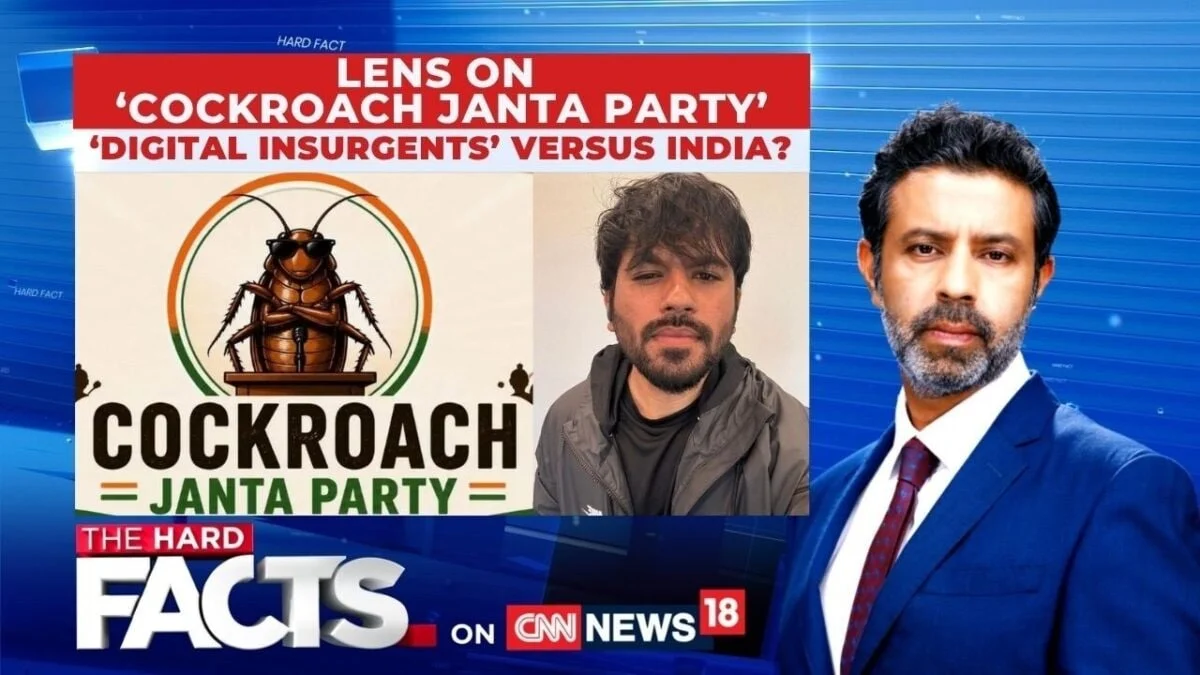
NEW DELHI, India – India’s dynamic political landscape is currently wrestling with an unprecedented phenomenon: the meteoric rise of the ‘Cockroach Janta Party’ (CJP). This satirical political movement, which burst onto the digital scene just days ago, has amassed over 15 million followers on Instagram alone, capturing the imagination and frustration of a significant segment of India’s Gen Z population. While proponents laud the CJP as a groundbreaking expression of youth dissent and digital activism, a growing chorus of critics and security analysts are raising serious alarms about potential political manipulation, the proliferation of misinformation, and even the specter of foreign interference, positioning the CJP as a focal point in the ongoing debate between "digital insurgents" and India’s national security.
The CJP’s sudden virality has ignited a national conversation, forcing policymakers, media, and the public to confront the evolving nature of political engagement in the digital age. Is this a genuine grassroots movement, a much-needed outlet for a generation often feeling unheard, or a sophisticated information operation masquerading as satire to destabilize the nation’s democratic processes? The questions are complex, and the answers carry profound implications for India’s future.
Main Facts: A Digital Juggernaut Emerges
The ‘Cockroach Janta Party’ (CJP) is not a registered political entity in the traditional sense, nor does it possess a conventional leadership structure. Instead, it exists primarily as a social media phenomenon, characterized by a rapid-fire dissemination of memes, short videos, and satirical commentary that critiques established political norms, government policies, and the broader socio-political fabric of India. Its name itself, "Cockroach Janta Party," is a deliberate act of subversion, employing self-deprecating humor to ironically highlight a perceived resilience and ubiquity of ordinary citizens in the face of systemic challenges, or perhaps, to represent a perceived nuisance to the establishment.
Its core appeal lies with Gen Z – individuals born roughly between the late 1990s and early 2010s – a demographic renowned for its digital fluency, skepticism towards traditional institutions, and a penchant for expressing dissent through humor and internet culture. The CJP’s content often uses dark humor, relatable everyday grievances, and highly shareable formats to resonate with this audience, touching upon issues ranging from unemployment and economic disparities to environmental concerns and social freedoms.
The speed of its ascent is staggering. Within an astonishingly short span of days, the CJP’s primary Instagram handle, alongside numerous affiliated accounts, collectively garnered over 15 million followers. This level of organic viral growth is exceptional, even in the hyper-connected world of social media, leading many to scrutinize the authenticity of its reach and the mechanisms behind its propagation.
The dual narrative surrounding the CJP is stark:
- Youth Expression and Digital Activism: Supporters view the CJP as a legitimate and innovative platform for youth to voice their opinions, bypass traditional media gatekeepers, and engage in political discourse in a manner that feels authentic to their generation. They see it as a powerful, non-violent form of protest, leveraging satire to provoke thought and encourage critical engagement.
- Political Manipulation and Foreign Interference: Critics, particularly from government circles and security agencies, express grave concerns that the CJP’s rapid rise and its often pointed, though satirical, critiques could be orchestrated. They fear it may be a front for political actors, domestic or foreign, aiming to sow discord, spread misinformation, and influence public opinion, potentially jeopardizing national security and electoral integrity. The blurring lines between satire and genuine political messaging, especially when amplified by sophisticated digital tactics, pose a significant challenge.
This dichotomy forms the crux of "The Hard Facts" investigation, aiming to peel back the layers of this unprecedented digital movement.
Chronology: From Digital Seed to National Phenomenon
The emergence of the Cockroach Janta Party can be understood through a brief, albeit rapid, timeline of its development and the escalating scrutiny it has attracted.
Pre-CJP Landscape (Early 2020s – Early 2026):
The fertile ground for the CJP’s emergence was cultivated over several years. India’s youth, particularly Gen Z, have increasingly expressed dissatisfaction with traditional political avenues, feeling a disconnect from mainstream parties and their rhetoric. Issues like persistent youth unemployment, rising cost of living, environmental degradation, and concerns over freedom of expression have fueled a simmering discontent. Concurrently, the proliferation of smartphones and affordable internet data transformed India into a digital-first nation, making social media the primary medium for news, entertainment, and social interaction for millions of young people. This period also saw a rise in meme culture and satirical content as popular forms of online expression and protest.
The Genesis (Early May 2026):
The precise origins of the CJP remain shrouded in a degree of anonymity, a characteristic often associated with successful viral campaigns. Initial posts, seemingly innocuous, began appearing on Instagram and other platforms. These early pieces of content were primarily satirical takes on everyday frustrations, utilizing popular internet memes and inside jokes understood by the Gen Z demographic. There was no explicit political agenda initially, which allowed the content to spread organically, resonating with a broad audience seeking humorous relief from daily woes. The "Cockroach Janta Party" moniker, a quirky and memorable phrase, likely played a significant role in its initial stickiness.
The Meteoric Rise (Mid-May 2026):
Within days, what started as a niche humor account rapidly gained traction. This exponential growth was fueled by several factors:
- Highly Shareable Content: Memes, short video reels, and relatable satirical captions were designed for maximum shareability.
- Algorithmic Amplification: Social media algorithms, which favor engaging and trending content, likely played a crucial role in pushing CJP content into wider feeds.
- Network Effects: As more users followed and shared, their networks were exposed, creating a domino effect of adoption.
- Anti-Establishment Sentiment: The underlying tone of gentle rebellion and critique of perceived systemic flaws tapped into existing frustrations.
- Gen Z Engagement: The movement’s aesthetic and language were perfectly tailored to the digital natives, making it feel authentic and "of their generation."
By mid-May, the follower count had surged past the 15 million mark, transforming the CJP from an internet curio into a verifiable social media juggernaut.
Escalation of Scrutiny and Concerns (Late May 2026):
The sheer scale and speed of the CJP’s growth, coupled with its increasingly pointed (though still satirical) political commentary, quickly caught the attention of mainstream media, political analysts, and government agencies. Questions began to surface regarding:
- Authenticity of Growth: Was the growth purely organic, or was it augmented by coordinated bot activity or paid amplification?
- Funding and Backing: Who was funding the creation and dissemination of such high-quality, consistent content?
- Underlying Motives: Was the satire merely a veneer for a more serious, potentially destabilizing political agenda?
- Misinformation Potential: The fine line between satire and misleading information became a critical concern, especially given the platform’s reach.
This period marked the transition of the CJP from a mere online trend to a subject of national security concern, prompting the "Lens On ‘Cockroach Janta Party’" investigation by News18 and other media outlets. The "Last Updated: May 22, 2026, 22:15 IST" timestamp in the original news snippet reflects the urgent, real-time nature of this developing story.
Supporting Data and Analytical Perspectives
While specific, verifiable data on the CJP’s internal operations remains elusive, a comprehensive understanding requires examining various analytical perspectives and hypothetical data points that would typically be investigated in such a scenario.
The Power of Gen Z Demographics and Digital Native Habits:
India boasts one of the world’s largest youth populations, with Gen Z constituting a significant electoral and social force. This demographic is characterized by:
- Digital Fluency: They are "digital natives," having grown up with the internet and social media as integral parts of their lives.
- Skepticism of Authority: Often more distrustful of traditional media, political parties, and established institutions.
- Value-Driven: More attuned to issues like climate change, social justice, and economic equity.
- Online Identity: Social media is not just a tool but a core part of their identity and how they express themselves.
- Short Attention Spans: Favoring concise, visually engaging, and easily digestible content (memes, reels, short videos).
This makes them prime targets and powerful amplifiers for movements like the CJP, which speaks their language and operates on their preferred platforms. Hypothetical surveys of CJP followers would likely reveal high engagement rates, a sense of shared community, and a belief that the CJP articulates frustrations they themselves feel.
Anatomy of a Viral Phenomenon: Beyond Organic Growth?
The CJP’s exponential growth raises questions about the mechanisms behind its virality. While genuine organic reach is possible, particularly with highly shareable content, the scale and speed (15 million in "days") invite scrutiny into potential augmentations:
- Algorithmic Optimization: CJP content might be expertly crafted to exploit platform algorithms, using trending sounds, hashtags, and formats.
- Coordinated Amplification: Investigations would typically look for evidence of "coordinated inauthentic behavior" (CIB) – a hallmark of bot networks or troll farms. This involves multiple accounts sharing identical content simultaneously, often from unusual geographic locations or newly created profiles.
- Influencer Marketing (Paid or Unpaid): Did prominent micro-influencers or content creators spontaneously pick up on CJP content, or were they subtly incentivized?
- Cross-Platform Synergy: While Instagram is highlighted, the CJP’s success might be part of a broader, synchronized campaign across TikTok, X (formerly Twitter), Facebook, and WhatsApp, each feeding into the other.
Digital forensics would analyze follower demographics, engagement patterns (likes, comments, shares per follower), and source IP addresses to differentiate between genuine virality and artificial inflation.
Content Strategy and the Art of Political Satire:
The CJP’s content is a masterclass in modern political satire. It employs:
- Humor as a Shield: Satire allows critiques to be delivered in a palatable, non-threatening way, making them harder to censor or dismiss outright.
- Relatable Grievances: Content often focuses on common frustrations – rising fuel prices, bureaucratic hurdles, promises unfulfilled – making it universally appealing to the disaffected.
- Memetic Language: Using inside jokes, recurring characters, and evolving meme formats that resonate deeply with internet culture.
- Ambiguity: Satire often thrives on ambiguity, allowing different interpretations. This can be a strength for engagement but also a weakness when concerns about misinformation arise, as the line between humor and a subtly conveyed, potentially false, narrative can blur.
The Shadowy Undercurrent: Red Flags for Manipulation:
Concerns about "political manipulation and possible foreign interference" are not unfounded in the digital age. Security agencies would typically look for:
- Sudden Shifts in Tone or Messaging: A rapid transition from general humor to specific political targeting.
- Unusual Funding Sources: Any indication of financial backing from shell companies, foreign entities, or non-profits with opaque funding.
- Linguistic or Cultural Anomalies: Subtle errors in local dialects, cultural references, or political nuances that might suggest content is being generated by non-native speakers or external actors.
- Server Locations and IP Traces: Tracing the origin of accounts, content uploads, and server infrastructure could point to foreign involvement.
- Propaganda Echo Chambers: The CJP’s content being amplified by known foreign-linked accounts or state-sponsored media could be a strong indicator.
- Targeted Disinformation: While the CJP is satirical, if its reach is exploited to spread outright false narratives under the guise of humor, it crosses into disinformation territory.
The "digital insurgents" vs. "India" framing suggests that intelligence agencies are likely analyzing the CJP through the lens of information warfare and hybrid threats, where non-state actors or proxies can be used to achieve geopolitical objectives by destabilizing a target nation’s internal cohesion.
Official Responses and Reactions
The emergence of the CJP has triggered a predictable, yet complex, set of responses from various stakeholders across India’s political and administrative spectrum.
Government’s Stance: Vigilance and National Security
The ruling party and the central government have adopted a cautious yet firm stance. Initially, there might have been a tendency to dismiss the CJP as fleeting internet humor. However, its explosive growth and increasingly pointed political undertones quickly elevated it to a matter of national concern.
- Public Statements: High-ranking government officials, including the Minister of Home Affairs, have issued veiled warnings against "digital insurgents" and "elements seeking to destabilize the nation through online propaganda." While not explicitly naming the CJP, the timing and context of these statements leave little doubt about their target. They emphasize the government’s commitment to protecting national sovereignty and electoral integrity.
- Calls for Investigation: Demands have been made for intelligence agencies and cybersecurity units to conduct thorough investigations into the CJP’s origins, funding, and potential external links. The focus is on identifying any evidence of foreign interference or coordinated efforts to manipulate public opinion.
- Emphasis on Misinformation: The government has reiterated its commitment to combating misinformation and disinformation, highlighting the dangers of satirical content being misinterpreted or deliberately used to spread false narratives, especially amongst impressionable youth.
Opposition’s Divided Opinion:
Opposition parties have displayed a more fragmented response, reflecting their own strategic calculations:
- Support for Youth Voice: Some opposition leaders, particularly those with a strong youth following, have cautiously welcomed the CJP as a sign of healthy youth engagement and a valid critique of government policies. They frame it as a spontaneous, organic expression of democratic dissent, cautioning against government attempts to stifle free speech.
- Echoing Concerns: Other opposition factions, particularly those more aligned with traditional politics or national security concerns, have echoed the government’s worries about potential manipulation and foreign interference, emphasizing the need for transparency and investigation. They are wary of movements that could be co-opted or exploited, potentially undermining the opposition’s own efforts.
Social Media Platforms Under Pressure:
The platforms hosting the CJP, primarily Instagram (owned by Meta), find themselves once again in the crosshairs of global scrutiny regarding content moderation and platform integrity.
- Statements on Policy: Meta, and potentially other platforms, would likely issue statements reiterating their commitment to combating coordinated inauthentic behavior, hate speech, and misinformation, while also upholding freedom of expression.
- Cooperation with Authorities: Platforms are often caught between government demands for data and user privacy concerns. They would likely indicate cooperation with law enforcement agencies on legitimate investigations, while also emphasizing their independent content moderation processes.
- Technical Challenges: The CJP case highlights the immense technical challenge platforms face in distinguishing genuine grassroots movements from sophisticated influence operations, especially when satire and humor are involved.
Cybersecurity Agencies on High Alert:
India’s cybersecurity agencies and intelligence apparatus would be working overtime, deploying resources to:
- Digital Forensics: Tracing IP addresses, analyzing metadata, identifying bot networks, and mapping out the CJP’s digital footprint.
- Threat Intelligence: Monitoring for patterns of foreign state actors or proxy groups known for information warfare campaigns.
- Public Awareness: Potentially issuing advisories to the public about the dangers of online manipulation and the importance of critical thinking when consuming digital content.
Election Commission’s (ECI) Potential Role:
While the CJP is not a registered party, its burgeoning influence could impact future elections. The Election Commission of India (ECI) might be prompted to:
- Review Digital Campaigning Rules: Re-evaluate and potentially strengthen guidelines regarding online political advertising, undisclosed endorsements, and the use of satirical content in electoral contexts.
- Monitor Influence Campaigns: Work with social media platforms to identify and mitigate any attempts to manipulate electoral processes through such movements.
Broader Implications: A Shifting Political Landscape
The ‘Cockroach Janta Party’ phenomenon is more than just a fleeting internet trend; it carries significant implications for India’s political future, national security, and the global digital landscape.
The Future of Indian Politics:
The CJP represents a potent illustration of how digital activism can disrupt traditional political structures.
- Challenge to Traditional Parties: Mainstream political parties, often slow to adapt to digital trends, face an existential challenge. They must learn to engage with Gen Z on their own terms, understand their grievances, and communicate effectively through digital channels, or risk becoming increasingly irrelevant.
- Rise of Digital-First Movements: The CJP could be a precursor to a new era of political movements that are born, grow, and exert influence almost entirely online, bypassing traditional media and organizational hierarchies.
- Decentralization of Power: While potentially empowering, this decentralization also makes it harder to identify leaders, hold entities accountable, and understand true motivations.
Redefining National Security in the Digital Age:
The concerns around foreign interference elevate the CJP’s significance beyond domestic politics.
- Hybrid Warfare: This incident underscores India’s vulnerability to hybrid warfare tactics, where information operations, psychological warfare, and digital destabilization campaigns are interwoven with traditional geopolitical rivalries.
- Information Sovereignty: The ability of external actors to influence internal discourse poses a direct threat to a nation’s information sovereignty, making it harder for citizens to make informed decisions.
- Cybersecurity and Intelligence: The CJP serves as a critical case study for cybersecurity agencies to refine their capabilities in detecting, analyzing, and countering sophisticated influence operations.
Youth Voice: Empowerment or Exploitation?
The CJP highlights the double-edged sword of digital empowerment for youth.
- Genuine Empowerment: It undeniably provides a platform for young people to articulate their frustrations, find community, and engage with political issues in a manner that resonates with them. This could foster greater civic participation.
- Vulnerability to Exploitation: Simultaneously, the very characteristics that make Gen Z digitally engaged – their openness to new ideas, their trust in online communities, and their preference for engaging content – can also make them susceptible to manipulation by well-resourced actors hiding behind satirical facades. Distinguishing genuine dissent from manufactured narratives becomes critical.
The Regulatory Maze for Social Media:
The CJP phenomenon adds another layer to the global debate surrounding social media governance.
- Platform Accountability: It intensifies pressure on social media companies to take more proactive measures against coordinated inauthentic behavior, state-backed influence operations, and the spread of misinformation, even when cloaked in satire.
- Balancing Free Speech and Harm Prevention: Regulators face the complex task of enacting policies that protect freedom of expression while preventing the weaponization of online platforms to cause societal harm or undermine democratic processes.
- Transparency: Calls for greater transparency from platforms regarding content amplification, moderation decisions, and the identity of influential accounts will likely intensify.
A New Era of Digital Insurgency?
The term "digital insurgents" from the original title suggests a paradigm shift. If the CJP is indeed orchestrated, it signifies a new playbook for political influence, where anonymity, satire, viral content, and algorithmic manipulation are combined to create a formidable, yet elusive, force. This model could inspire similar movements globally, challenging governments and traditional media to adapt at an unprecedented pace.
Conclusion: Navigating the Digital Fog
The rise of the ‘Cockroach Janta Party’ is a defining moment for India, encapsulating the promises and perils of the digital age. It represents the vibrant, often irreverent, voice of a generation demanding to be heard, leveraging the power of connectivity to bypass traditional gatekeepers. Yet, it simultaneously embodies the profound challenges of navigating a landscape increasingly blurred by satire, misinformation, and the omnipresent shadow of potential manipulation.
As investigations continue into the CJP’s true nature, India faces a critical juncture. The nation must foster an environment that encourages genuine youth activism and freedom of expression, while simultaneously developing robust defenses against information warfare and foreign interference. The hard facts, when they eventually emerge, will not only shape the narrative around the CJP but will also dictate the future trajectory of digital politics and national security in one of the world’s largest democracies. The ultimate test will be India’s ability to discern genuine grassroots movements from strategically deployed "digital insurgents" and to respond effectively to both.
