

May 23, 2026, 04:51 PM IST
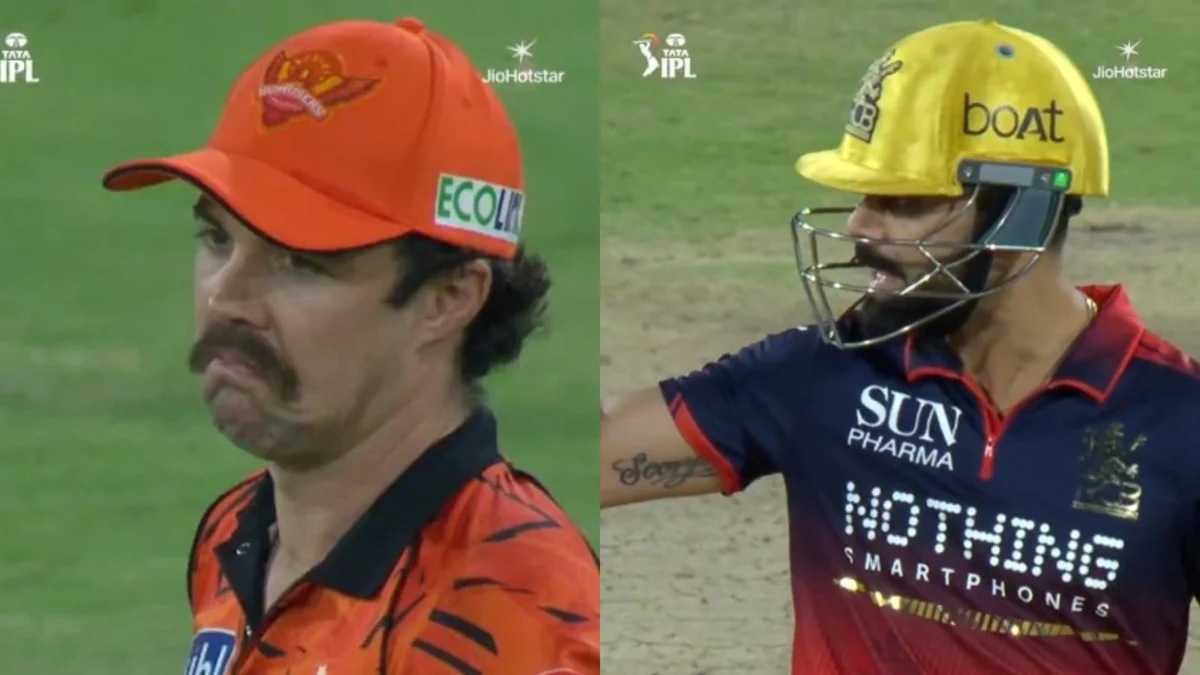
The intense pressure cooker of the Indian Premier League (IPL) 2026 reached a boiling point on Friday, May 22nd, as an on-field altercation between Royal Challengers Bengaluru (RCB) talisman Virat Kohli and Sunrisers Hyderabad (SRH) opener Travis Head captured headlines and ignited a passionate debate among cricket aficionados. What began as a seemingly innocuous verbal exchange during a high-stakes chase escalated into a post-match snub that underscored the fierce competitive spirit inherent in professional cricket, especially as teams vie for playoff supremacy.
The incident, which saw Kohli mock Head’s role as an Impact Substitute and later refuse a handshake, has become a focal point of discussion, drawing in cricketing legends and pundits alike. While RCB ultimately secured their Qualifier 1 berth despite the loss, the personal drama between two of the game’s most formidable figures added an undeniable layer of intrigue to an already thrilling season.
The Core of the Confrontation: Main Facts Unveiled
The flashpoint occurred during the pivotal IPL match where Sunrisers Hyderabad had set a daunting target of 255 runs for Royal Challengers Bengaluru. Virat Kohli, leading RCB’s chase, found himself in a heated exchange with Travis Head. Kohli was seen gesturing towards Head, who was off the field as an ‘Impact Substitute’, seemingly taunting him to come on and bowl a few deliveries rather than remaining on the sidelines. The implication was clear: Kohli questioned Head’s presence and contribution at that specific moment.
However, the tables turned swiftly. Kohli, known for his aggressive starts, was dismissed shortly after for a quickfire 15 runs off just 11 balls. This early exit provided Travis Head with the perfect opportunity for a retort, which he promptly delivered with a subtle but pointed sledge towards the departing Kohli. The tension didn’t dissipate with Kohli’s wicket. Following SRH’s commanding 55-run victory, Head extended his hand for the customary post-match handshake, only for Kohli to walk past him, pointedly ignoring the gesture. This public snub further amplified the perceived animosity between the two stars.
Despite the loss, which saw RCB finish at 200 for four, falling short by 55 runs, the Bengaluru side managed to retain their top spot on the points table. Their ability to avoid a defeat by a margin exceeding 90 runs was crucial, ultimately securing their coveted Qualifier 1 berth against Gujarat Titans. The incident, therefore, serves as a testament to the high stakes and emotional investment that characterizes the business end of the IPL.
A Ball-by-Ball Account: Chronology of Events
The narrative of the Kohli-Head tiff is deeply embedded within the larger context of a fiercely contested IPL match, where every run, every wicket, and every psychological battle carries immense weight.
Pre-Match Build-up: The Playoff Pressure Cooker
The encounter between Sunrisers Hyderabad and Royal Challengers Bengaluru was earmarked as a crucial fixture long before the first ball was bowled. Both teams were locked in a desperate battle for playoff positions, with the stakes exceptionally high. SRH, renowned for their explosive batting lineup and aggressive approach under captain Pat Cummins, had consistently posted monumental totals throughout the season. RCB, on the other hand, had experienced a rollercoaster campaign, marked by moments of brilliance and periods of struggle. Their recent form, however, had shown an uptick, fueled by strong individual performances, including from Kohli himself. The historical rivalry between the two franchises, often producing thrilling contests, added another layer of anticipation. The air was thick with the promise of a high-octane clash, where not just runs and wickets, but also mental fortitude and on-field leadership, would be tested.
The Match Unfolds: Setting the Stage for Conflict
The match commenced with SRH putting on a batting masterclass. True to their reputation, they unleashed a relentless assault on the RCB bowlers, piling on a colossal total of 255 runs. This formidable target immediately placed immense pressure on RCB’s chase, demanding an exceptional performance from their top order. As the innings break concluded and RCB began their daunting pursuit, all eyes were on Virat Kohli, the anchor and aggressor of the Bengaluru batting lineup.
The On-Field Exchange: A Taunt and a Challenge
It was during RCB’s chase, as Kohli was attempting to lay a strong foundation, that the initial verbal sparring took place. Travis Head, having contributed significantly with the bat, was off the field, likely resting or strategizing in his capacity as an Impact Substitute. Kohli, in a moment captured by broadcast cameras and widely circulated on social media, was seen directing gestures and words towards Head. The essence of his message, interpreted by many, was a challenge to Head to step onto the field and bowl a few deliveries, implying that his current off-field status was less impactful. This taunt, delivered with Kohli’s characteristic intensity, was a clear psychological play, aimed at disrupting Head’s focus or perhaps even subtly questioning the strategic use of the Impact Player rule.
Kohli’s Dismissal and Head’s Swift Retort
The irony, and indeed the dramatic turn of events, came swiftly. Despite his aggressive stance and apparent confidence, Virat Kohli’s innings was cut short. He departed for a relatively modest 15 runs off 11 balls, a score far below his usual high standards and certainly not the start RCB needed in such a mammoth chase. As Kohli made his way back to the pavilion, Head seized his moment. With a quick, pointed sledge, he responded to Kohli’s earlier taunt. While the exact words exchanged remain a subject of speculation, the intent was undeniable: a direct counter-attack to Kohli’s earlier jibe, highlighting his quick dismissal after his challenge.
Head’s Timely Bowling Spell: Adding Insult to Injury
The drama wasn’t confined to verbal exchanges. SRH skipper Pat Cummins, perhaps strategically or perhaps with a subtle nod to the on-field tension, brought Travis Head into the attack to bowl an over. The decision proved to be a masterstroke. Head, a part-time off-spinner, delivered a crucial blow by bagging the prized scalp of RCB captain Rajat Patidar, who had been building a dangerous innings, falling for 56 in the 19th over. This wicket, coming at a critical juncture, not only stemmed RCB’s momentum but also added a layer of poetic justice to the earlier confrontation, with Head proving his ‘impact’ on the field in a manner Kohli had seemingly challenged him to. RCB eventually finished exactly at 200 for four in 20 overs, falling short by 55 runs.
Post-Match Snub: The Lingering Aftermath
The tension visibly lingered even after the final ball was bowled. During the customary post-match handshakes, a ritual of sportsmanship and camaraderie, Travis Head extended his hand towards Virat Kohli. However, in a move that sent shockwaves across social media and garnered significant media attention, Kohli walked past Head without acknowledging the gesture. This public snub cemented the perception of a personal rivalry having been ignited, transforming a competitive exchange into a potentially long-standing individual conflict. The images and videos of this moment quickly went viral, fueling further debate about sportsmanship, aggression, and the thin line between competitive fire and disrespect.
Deeper Dive: Supporting Data and Analysis
The Kohli-Head incident is not merely an isolated event but a confluence of strategic innovations, individual temperaments, and the overarching pressure of elite sport.
The ‘Impact Player’ Rule: A Strategic Game-Changer
Central to Kohli’s initial taunt was Travis Head’s role as an ‘Impact Substitute’. Introduced in IPL 2023, the Impact Player rule allows teams to substitute one player from their playing XI with another player from a list of four nominated substitutes at any point in the match. This rule has fundamentally altered team strategies, enabling greater flexibility in balancing batting and bowling resources. For example, a team batting first can use a specialist batsman and then replace him with a specialist bowler when fielding, or vice-versa.
The rule has been a subject of considerable debate among purists and innovators alike. Proponents argue it adds a new tactical dimension, allowing teams to adapt to evolving match situations and optimize their lineup. Critics, however, contend that it dilutes the all-rounder’s role, as teams no longer need players who can both bat and bowl effectively. It can also lead to situations, as perhaps perceived by Kohli, where a player might seem less ‘involved’ in the active play, being held back for a specific phase. Travis Head, a powerful opener, was likely being rested from fielding to preserve his energy for a potential second batting innings or brought on specifically for his bowling later in the game. Kohli’s comment highlighted this strategic nuance, perhaps suggesting that Head should be more actively engaged on the field if he was indeed an ‘impact’ player.
Kohli’s Aggression: A Hallmarked Trait
Virat Kohli’s on-field aggression and intense competitiveness are not new phenomena; they are hallmarks of his illustrious career. From his early days, Kohli has embraced a fiery, in-your-face approach, often channeling his emotions into his performances. He has been involved in numerous animated exchanges with opponents, notably with Gautam Gambhir in various IPL seasons, Naveen-ul-Haq, and several Australian players across formats. His philosophy has always been to play hard, compete fiercely, and never back down.
This aggressive temperament, while occasionally drawing criticism for perceived unsportsmanlike conduct, is also a significant part of his appeal to fans. It is seen by many as a reflection of his passion and desire to win. Irfan Pathan’s observation that Kohli ‘has always enjoyed playing cricket with that aggressive Australian-style intensity’ aptly captures this facet of his personality. For Kohli, these exchanges are not just about sledging; they are about asserting dominance, unsettling opponents, and driving himself and his team to perform at their peak. The public perception of Kohli’s aggression is polarized, with some admiring his fighting spirit and others wishing for a more measured approach.
Travis Head’s Composure and Dual Role
Travis Head, in contrast to Kohli’s often overt displays of emotion, typically maintains a more composed demeanor. Known primarily for his explosive left-handed batting, particularly in limited-overs formats, Head has established himself as a destructive force at the top of the order. His temperament, while competitive, is usually less outwardly demonstrative than Kohli’s. However, the incident showcased a different side of Head – one capable of delivering a sharp retort when provoked. His ability to then contribute with the ball, taking a crucial wicket, further underscored his value to the team and perhaps added an extra layer of satisfaction to his response. His role as a part-time off-spinner, often underestimated, proved to be highly effective in this match, demonstrating his all-round utility.
Team Dynamics and Playoff Pressure: The Magnifying Glass
The incident also highlights how the immense pressure of the IPL playoffs can magnify individual rivalries and emotional outbursts. At the business end of the tournament, with every match potentially determining a team’s fate, the stakes are astronomically high. Players are not just competing for victory but for a chance at glory, substantial prize money, and personal accolades. This environment naturally intensifies emotions, making minor provocations more likely to escalate. The mental fortitude of players is severely tested, and any perceived weakness or taunt can be exploited. Such incidents, while potentially disruptive, can also galvanize a team, either by uniting them against a common ‘adversary’ or by fueling individual performances.
Expert Voices and Official Responses
The immediate aftermath of the Kohli-Head confrontation saw a flurry of reactions from former players, commentators, and the cricketing fraternity.
Irfan Pathan’s Nuanced Perspective
Former India all-rounder Irfan Pathan offered a balanced and insightful perspective on the incident. He stated, "Virat Kohli has always enjoyed playing cricket with that aggressive Australian-style intensity, a bit of banter, competitiveness, and emotion on the field. During that moment, he was asking Travis Head to come on and bowl a few deliveries instead of remaining off the field as an impact substitute. These kinds of exchanges are quite natural in high-pressure games, especially when both teams are competing for crucial positions on the points table. In the end, it was simply part of the intensity and competitive spirit that comes with top-level cricket."
Pathan’s commentary effectively contextualized Kohli’s actions within his established persona and the inherent nature of competitive sport. By invoking the ‘aggressive Australian-style intensity,’ he alluded to a brand of cricket where verbal jousting and psychological warfare are often considered integral to the game. Pathan, having played at the highest level, understands the emotional investment and the pressure that can lead to such exchanges, particularly when the stakes are as high as they are in the IPL playoffs. His view suggests that while the incident was notable, it falls within the acceptable boundaries of competitive sportsmanship, driven by the desire to win.
The Captain’s Strategy: Pat Cummins’s Implicit Response
While SRH captain Pat Cummins did not directly comment on the exchange between Kohli and Head, his decision to bring Head on to bowl an over after Kohli’s taunt could be interpreted as a subtle, yet potent, response. It allowed Head to literally answer Kohli’s challenge on the field, and his subsequent dismissal of Rajat Patidar further validated Cummins’s strategic call. This move demonstrated not only tactical astuteness but also an understanding of the psychological battle unfolding. It reinforced the idea that in top-tier cricket, actions often speak louder than words, and proving one’s worth through performance is the ultimate retort.
Broader Cricket Punditry: Sportsmanship vs. Competitive Fire
The incident sparked a wider debate among cricket pundits. Many weighed in on the fine line between aggressive competitiveness and unsportsmanlike conduct. Some argued that Kohli’s post-match snub crossed that line, as the handshake is a universal symbol of respect after a contest. They emphasized the importance of setting a good example, especially for younger players. Others defended Kohli, asserting that such intense moments are part and parcel of professional sport, particularly when emotions run high in critical matches. They highlighted that players are fiercely competitive individuals, and sometimes, those emotions boil over. The ‘sledging’ aspect, a long-standing tradition in cricket, was also discussed, with some viewing it as an acceptable form of psychological warfare, while others see it as unnecessary aggression. The general consensus leaned towards understanding the high-pressure environment but also acknowledging the importance of upholding sporting etiquette.
Looking Ahead: Implications and Future Outlook
The Kohli-Head incident is unlikely to be a standalone event. Its implications could resonate throughout the remainder of the IPL season and potentially influence future encounters between the two players and their respective teams.
Impact on IPL 2026 Playoff Race: A New Narrative
While RCB secured their Qualifier 1 berth against Gujarat Titans, the incident has added an intriguing narrative layer to the playoffs. Should RCB and SRH meet again in a subsequent playoff match or even the final, the Kohli-Head rivalry will undoubtedly be a central talking point. It could inject an additional dose of intensity and personal motivation into those encounters, turning already high-stakes games into epic battles of wills. The memory of the taunt, the retort, and the snub will fuel anticipation, transforming individual performances into statements.
Wider Sporting Ethics: Drawing the Line
The incident reignites discussions about sporting ethics and the role of match officials. While no official sanctions were immediately reported, the governing bodies like the BCCI and ICC have codes of conduct in place to address unsportsmanlike behavior. The question arises: where does one draw the line between acceptable competitive banter and actions that undermine the spirit of the game? This incident serves as a reminder that while passion is celebrated, it must be tempered with respect for opponents and the game itself. The example set by star players like Kohli and Head has a profound impact on aspiring cricketers and the broader sporting community.
The Narrative for Future Engagements: A Lingering Rivalry
The Kohli-Head confrontation has undoubtedly cemented a new individual rivalry within the IPL landscape. How will these two formidable players interact if they cross paths again? Will the tension subside, or will it simmer, ready to ignite at the next opportune moment? This personal dynamic adds an extra layer of intrigue to any future match involving RCB and SRH, ensuring that fans and commentators will be keenly watching their every interaction. Such rivalries, whether between individuals or teams, often become legendary, contributing to the rich tapestry of sporting history.
Impact on Player Brands: A Double-Edged Sword
For players of Kohli and Head’s stature, every on-field action is scrutinized, and incidents like this can have implications for their personal brands. While Kohli’s fiery persona is well-established and even celebrated by a segment of his fanbase, sustained instances of perceived unsportsmanlike conduct could impact broader public perception or even endorsement deals. Conversely, Head’s measured response followed by a crucial performance could enhance his image as a calm and impactful competitor. Ultimately, the long-term impact will depend on how both players navigate similar situations in the future and whether this incident is viewed as an isolated burst of emotion or a pattern of behavior.
In conclusion, the Virat Kohli-Travis Head confrontation was more than just a fleeting moment of anger; it was a microcosm of the IPL’s intense competitive spirit, strategic innovations, and the raw emotions that define elite sport. As the IPL 2026 playoffs unfold, this incident will undoubtedly be remembered as a defining moment, adding another chapter to the league’s rich history of drama, rivalry, and cricketing excellence.
