

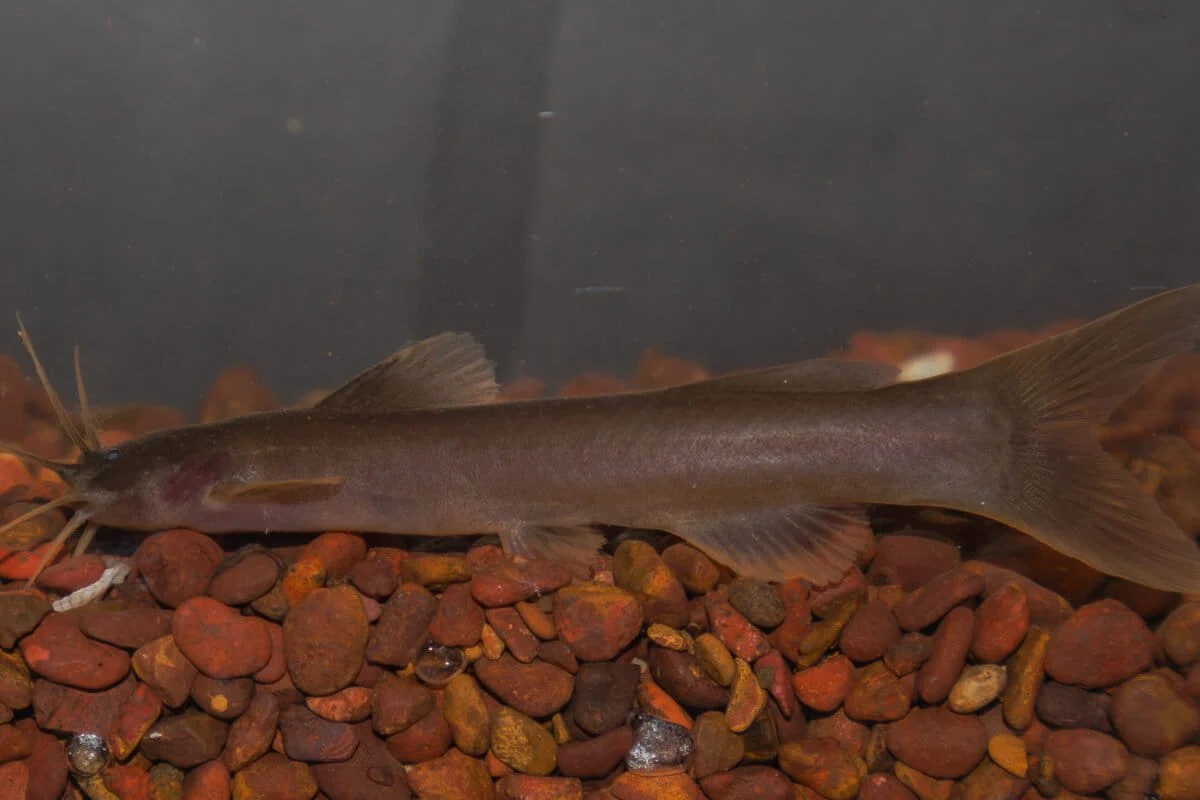
In the labyrinthine river systems of the northern Western Ghats, a region celebrated globally as a biodiversity hotspot, a cryptic new resident has emerged from the shadows. Scientists have formally described a new species of freshwater catfish, Amblyceps vayavy, marking a significant milestone in Indian ichthyology. Discovered in the west-flowing rivers of Maharashtra and Goa, this diminutive predator offers a window into the ecological health of the region’s pristine hill streams while simultaneously sounding an alarm regarding the rapid infrastructure development threatening its survival.
The formal description, published in the prestigious taxonomic journal Zootaxa, introduces the second known species of the genus Amblyceps to be identified in the Western Ghats. Its discovery underscores a profound reality of modern conservation: even in well-trodden landscapes, much of India’s aquatic life remains unknown to science, often teetering on the brink of extinction before it can even be named.
Main Facts: A "Northwestern" Specialist
The species has been named Amblyceps vayavy (pronounced vah-yhav-yah), a name derived from the Sanskrit-origin words for "northwest" in both Konkani and Marathi. This nomenclature is a direct nod to its geographic distribution in the northern reaches of the Western Ghats, a region that has historically been less explored compared to the southern segments of the mountain range.
Taxonomic Context
Amblyceps is a genus of torrent catfishes typically found in South and Southeast Asia. Prior to the 21st century, these fish were largely believed to be restricted to the Himalayan foothills and northern India. However, the discovery of A. accari in the central Western Ghats in 2016 and A. crassioris in the Eastern Ghats in 2023 shifted the scientific consensus, revealing that the genus has a much wider, albeit fragmented, distribution across the Indian peninsula.
Physical and Ecological Traits
Amblyceps vayavy is a highly specialized organism. These catfishes are typically restricted to clear, fast-flowing, and well-oxygenated hill streams. Their presence is often regarded by ecologists as a "biological gold standard" for water quality. Unlike many hardier catfish species, Amblyceps are exceptionally sensitive to environmental stressors such as:
- Siltation: Excess sediment can smother the rocky crevices they inhabit.
- Pollution: Chemical runoff disrupts their specialized physiology.
- Flow Alterations: Dams or diversions that turn lotic (flowing) water into lentic (standing) water are fatal to the species.
Furthermore, A. vayavy is nocturnal and exhibits highly localized endemism. It is currently known only from two specific locations: the Ragada River in Goa and the Kundalika River in Maharashtra.

Chronology of Discovery: 2020–2025
The journey to identifying A. vayavy began not in a laboratory, but through the keen eyes of a citizen scientist, illustrating the growing importance of public participation in modern biology.
The Initial Sighting (2020)
In 2020, Neil Soares, a Mumbai-based citizen scientist, encountered an unusual Amblyceps specimen in the Kundalika River near Kolad, Maharashtra. Recognizing that the only known relative in the Western Ghats, A. accari, was restricted to much further south, Soares alerted professional researchers. This sparked a multi-year investigation to determine if this was a range extension or an entirely new species.
Intensive Fieldwork (2020–2025)
Following the initial report, a team led by independent researcher Balaji Vijaykrishnan, alongside Tejas Thackeray and Abhishek Shirke of the Thackeray Wildlife Foundation, embarked on an exhaustive sampling campaign. Over five years, the team conducted more than 30 surveys in the Kundalika River alone.
The rarity of the fish became immediately apparent. Despite dozens of surveys across varying seasons, only three specimens were located in Maharashtra. Following ethical research protocols, two were released back into the wild, while the third was preserved as a "paratype"—a specimen that helps define the range of physical variation within a species.
The Goa Connection (2021–2025)
The search expanded south into Goa between 2021 and 2025. Researchers focused on the tributaries of the Mahadayi River, conducting over 20 additional surveys. Their persistence was rewarded with the discovery of a single specimen in the Ragada River. This individual was eventually designated as the "holotype"—the definitive reference specimen used to describe the species to the scientific community.
Formal Description (2025)
After years of morphological analysis and comparison with congeners across Asia, the findings were synthesized and published in Zootaxa. The study confirmed that A. vayavy possesses distinct physical characteristics—including specific fin ray counts and body proportions—that separate it from all 24 other identified species in the genus.

Supporting Data: Population Density and Distribution
One of the most striking findings of the study is the extreme rarity of Amblyceps in the Western Ghats compared to other regions.
Comparative Abundance
In the Himalayan foothills and Northeastern India, Amblyceps species are relatively common. Lead author Balaji Vijaykrishnan notes that a single hour of sampling in those northern regions can yield between 3 and 30 specimens. In stark contrast, the research team in the Western Ghats conducted over 50 surveys over five years to find a total of just four fish.
| Region | Surveys Conducted | Specimens Found | Est. Catch Per Unit Effort |
|---|---|---|---|
| North/Northeast India | 1 Hour (Avg) | 3–30 | High |
| Western Ghats (A. vayavy) | 50+ Surveys | 4 | Extremely Low |
Habitat Specificity
The data suggests that the Western Ghats populations may be "relict" populations or highly specialized micro-endemics. The Western Ghats are divided into east-flowing and west-flowing river systems. While large east-flowing rivers like the Krishna and Godavari are relatively well-documented, the smaller, shorter west-flowing rivers—where A. vayavy resides—act as "evolutionary islands." Because these rivers do not connect with one another before reaching the Arabian Sea, species within them evolve in isolation, leading to high levels of localized endemism.
Official Responses and Expert Perspectives
The discovery has prompted a mix of scientific excitement and conservationist dread. Experts emphasize that the naming of a species is merely the first step in a race against its disappearance.
The Voice of the Researchers
Balaji Vijaykrishnan highlighted the significance of the find in the context of Indian geography. "This genus was initially thought to be restricted to the northern parts of India," he explained. "The discovery of A. vayavy confirms that these fish are an integral, though rare, part of the Western Ghats’ aquatic heritage."
Vijaykrishnan also underscored the role of citizen science, noting that without the initial observation by Neil Soares, this species might have remained hidden until its habitat was destroyed.

The Ecological Warning
Beta Mahatvaraj, a renowned freshwater fish expert, provided a sobering look at the challenges of studying such species. "We know very little about how they feed, breed, or live," Mahatvaraj stated. He explained that because Amblyceps are nocturnal and hide under rocks in fast-flowing water, they are incredibly difficult to monitor.
"If intensive sampling yields very few specimens, it suggests either naturally low population densities or a species that is failing to thrive due to human disturbance," Mahatvaraj added. He warned that Amblyceps are "canaries in the coal mine"—their disappearance is a precursor to the collapse of the entire stream ecosystem.
Advocacy and Activism
The citizen group Amche Mollem, which campaigns for the protection of Goa’s forests, has used the discovery to highlight gaps in current environmental policy. They point out that while new species are being found, the Environmental Impact Assessments (EIAs) for major infrastructure projects often ignore them entirely.
Implications: Infrastructure vs. Biodiversity
The discovery of Amblyceps vayavy arrives at a precarious moment for the Western Ghats. Several large-scale projects are currently underway or proposed that directly intersect with the catfish’s known habitat.
The Railway Challenge
In Goa, a controversial project to double the existing railway track through the Bhagwan Mahaveer Wildlife Sanctuary and the Mollem National Park poses a direct threat. The Environment Impact Assessment (EIA) report, prepared by the Rail Vikas Nigam Limited (RVNL) and the Wildlife Institute of India (WII), acknowledges that the railway alignment "intersects numerous streams."
However, Amche Mollem and other conservationists have criticized the report for its "critical gaps." Specifically, the EIA contains almost no evaluation of the impact on freshwater fish.

Mechanisms of Habitat Destruction
Construction activities in these sensitive zones can lead to:
- Silt Smothering: Construction debris and runoff can fill the gaps between riverbed rocks where Amblyceps hide and spawn.
- Hydrological Disruption: Altering the flow of perennial streams can reduce dissolved oxygen levels, making the water uninhabitable for torrent-specialized fish.
- Fragmentation: Physical barriers can prevent the movement of fish between different stretches of the river, leading to genetic bottlenecks.
The Threat of Extirpation
The researchers noted a grim precedent: Amblyceps crassioris, a related species described in 2023 from the Eastern Ghats, is already facing near-extirpation from its type locality due to rampant sand mining. There is a very real fear that A. vayavy could face a similar fate before its life cycle is even fully understood.
Conclusion: The Race Against Time
The description of Amblyceps vayavy is a testament to the enduring mysteries of the natural world. It serves as a reminder that the Western Ghats still hold secrets that require our protection. However, the discovery also highlights a systemic failure in how India balances development with conservation.
As Beta Mahatvaraj noted, when we lose a species like Amblyceps, we don’t just lose a fish; we lose an indicator of pure water and a functioning ecosystem. Taxonomic studies like the one conducted by Vijaykrishnan and his team are vital—they give a name to the nameless, providing a legal and scientific basis for conservation. But as the railway tracks expand and the rivers are silted, the question remains: will the naming of Amblyceps vayavy be a celebration of its life, or an epitaph for a species we barely had the chance to know?
