BENGALURU – In a sprawling display of civic participation and administrative ambition, thousands of residents in India’s "Silicon Valley" gathered late last month to attempt a feat of monumental proportions: setting a Guinness World Record for the most tree saplings planted in a single day. Organized by the Bangalore Development Authority (BDA), the drive saw nearly 1.5 million saplings thrust into the earth across 240 acres of urban landscape.
While the event was celebrated as a milestone for climate resilience, a growing chorus of ecologists and conservation scientists is sounding the alarm. They argue that the frenzy for record-breaking mass plantations is increasingly detached from the nuanced science of urban ecology, potentially prioritizing public optics and measurable logistics over long-term environmental health.
Main Facts: A Massive Undertaking in the ‘Garden City’
The BDA’s plantation drive was not merely a local gardening effort; it was a high-stakes, multi-million-rupee operation. Funded through a combination of Corporate Social Responsibility (CSR) initiatives and government allocations, the project targeted strategic urban zones, including lake peripheries, nala (drainage) buffer zones, and various public open spaces.
The Methodology: The Rise of Miyawaki
Central to this initiative was the Miyawaki method, a technique developed by the late Japanese botanist Akira Miyawaki. This approach advocates for the ultra-dense planting of native species—typically two to four saplings per square meter—to simulate a mature forest’s layers in a fraction of the time. Proponents claim that Miyawaki forests grow ten times faster, are thirty times denser, and boast higher biodiversity than traditional plantations.

Scale and Species Selection
For the Bengaluru drive, the BDA selected a palette of over 350 native species. These included:
- Ficus varieties: Indian banyan (Ficus benghalensis), Mysore fig (Ficus drupacea), and white fig (Ficus virens).
- Hardy natives: Neem (Azadirachta indica) and Indian beech (Pongamia pinnata).
- Fruit-bearing trees: Intended to support urban avian and primate populations.
The BDA has committed to geo-tagging every single sapling, promising a digital monitoring system to track survival rates and growth over the coming years.
Chronology: The Evolution of the Mass Plantation Trend
The recent drive in Bengaluru is the latest in a series of "competitive greening" events across India. To understand the current climate of urban forestry, one must look at the timeline of these massive environmental interventions.
- The Global Proliferation of Miyawaki (2010s-Present): Over the last decade, the Miyawaki method moved from niche botanical circles to become the "gold standard" for urban CSR projects in India. Cities like Mumbai, Hyderabad, and Chennai established "pocket forests" to combat rapid heat rises.
- July 12, 2024: Ahmedabad’s Precedent: Just weeks before Bengaluru’s attempt, the Ahmedabad Municipal Corporation (AMC) planted 361,000 saplings in a single day, successfully entering the Guinness World Records. This sparked a regional rivalry in ecological achievement.
- Late July 2024: The Bengaluru Drive: The BDA organized its massive 1.5-million-sapling drive. BDA Chairman N.A. Haris framed the event as a necessary response to global warming, aiming to restore Bengaluru’s lost status as the "Garden City."
- Post-Event Reality (Early August 2024): Within days of the event, local media and environmental observers began reporting sapling deaths. Critics pointed out that the logistics of maintaining 1.5 million plants during a single season pose an almost insurmountable challenge.
Supporting Data: The Science vs. The Hype
While the visual of a million trees is compelling, scientists suggest the ecological math often doesn’t add up. Several recent studies and expert testimonies highlight the disconnect between planting and restoration.

The Humidity Paradox
A common justification for these drives is the mitigation of the "Urban Heat Island" (UHI) effect. However, a study published in Nature Communications (2026) suggests a more complex reality. While dense canopies provide essential shade, trees with high photosynthetic activity release significant moisture through evapotranspiration. In poorly ventilated urban corridors, this can spike humidity levels, actually increasing the "Heat Index" (the "feels-like" temperature) and making the environment more uncomfortable for humans.
The Evidence Gap
Pooja Choksi, a specialist in restoration science, highlights a 2025 systematic review of the Miyawaki method. The review found:
- Limited Long-Term Data: There is almost no peer-reviewed evidence tracking Miyawaki forests over 30 to 50 years.
- Resource Intensity: The method is incredibly expensive, costing roughly $32,000 (approx. ₹2.6 million) per hectare due to the need for intensive soil preparation, organic amendments, and constant irrigation.
- Growth vs. Health: Rapid early growth—often cited as a success—may be a result of "over-pampering" with fertilizers and water rather than the inherent strength of the ecosystem.
Carbon Sequestration and Biodiversity
Socio-ecologist Anirban Roy led a study comparing Miyawaki plots of different ages (two, four, and five years) in Bengaluru and Palakkad. While he found that carbon storage quadrupled as the forests hit the five-year mark, he warned that the dense canopy often acts as a "biological desert" for the understory. By blocking sunlight from reaching the ground, these forests prevent the growth of native herbs and grasses, which are vital for a balanced tropical ecosystem.
Financial and Operational Accountability
The scale of the Bengaluru drive has raised significant questions regarding the allocation of public and private funds.

The ₹880 Million Price Tag
Preliminary reports suggest the BDA allocated approximately ₹880 million (nearly $10.5 million USD) for the initiative. While BDA Chairman N.A. Haris stated that final expenditure figures would be released post-audit, the sheer volume of capital involved has drawn scrutiny. Critics argue that these funds could be more effectively used for protecting existing old-growth trees or restoring the city’s interconnected lake systems, which are currently facing severe pollution and encroachment.
Logistics over Ecology
Rajkamal Goswami, a scientist at ATREE (Ashoka Trust for Research in Ecology and the Environment), suggests that the drive was "heavy on logistics, but light on ecology."
"Is it about setting a record or greening the city?" Goswami asks. He notes that while the city expands and destroys existing green spaces for infrastructure, these "urban forests" are often used as a band-aid solution without being integrated into a long-term urban development plan.
Official Responses: The Institutional Defense
The BDA and its supporters maintain that the drive is a vital step toward climate resilience. In interviews prior to and during the event, officials emphasized several key defenses:
- Climate Urgency: BDA Chairman N.A. Haris stated, "The idea is to make Bengaluru greener. There is global warming, so we want to start this movement with the city." He argued that the Miyawaki method is the most efficient way to see results within a three-year window.
- Monitoring Technology: To counter claims of negligence, authorities have implemented a geo-tagging system. Every sapling is allegedly linked to a database to ensure that survival rates are monitored and dead plants are replaced.
- Citizen Engagement: Officials highlighted that involving thousands of residents fosters a sense of "environmental ownership," which they believe is more valuable than the immediate survival of every single plant.
Implications: Rethinking the Urban Green Blueprint
The debate in Bengaluru reflects a global tension in conservation: the conflict between "fast" restoration (mass planting) and "slow" restoration (ecosystem management).

The Threat to Savanna Ecosystems
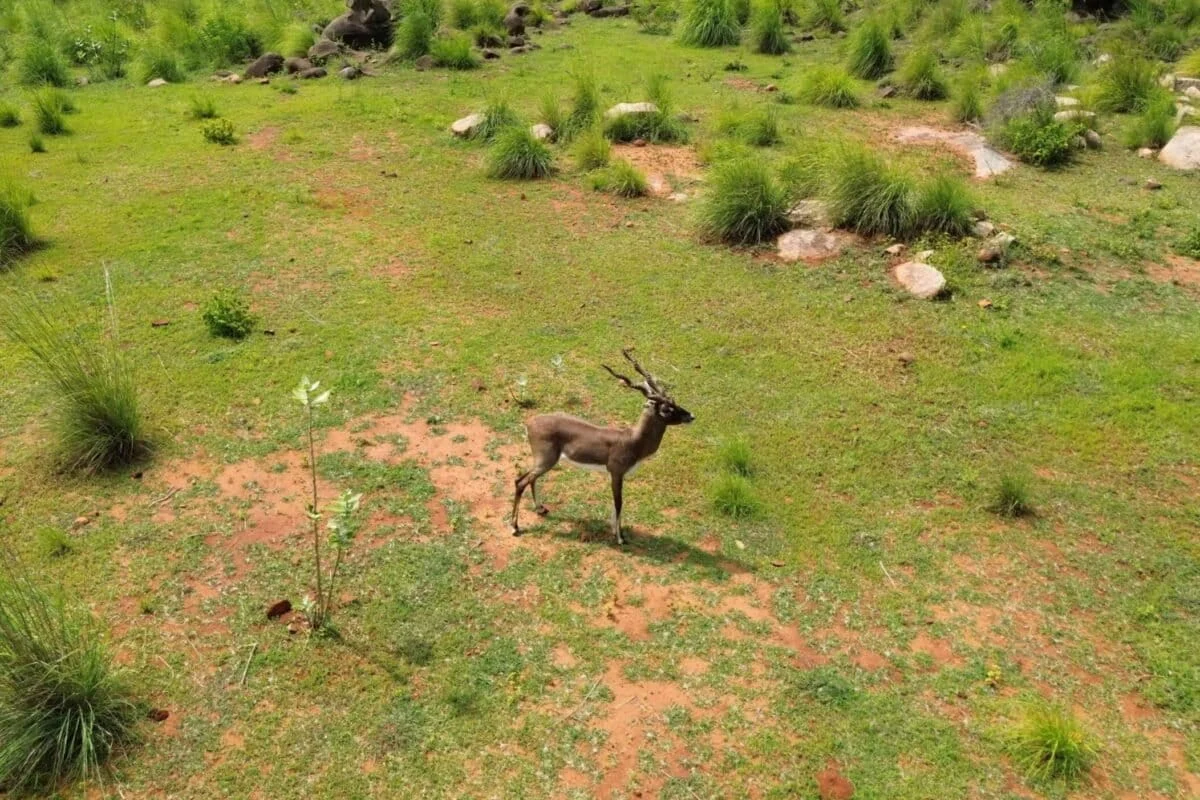
Ecologists point out that Bengaluru’s natural history is not one of dense, rainforest-like canopy. The region was historically a mosaic of granite outcrops, thorn scrubs, and semi-arid savannas.
"In Bengaluru’s climate, what is required are savanna plants," says Goswami. By forcing dense "forests" onto a landscape that naturally supports grasses and shrubs, the city may be placing undue stress on its already depleted groundwater reserves. Savanna ecosystems support unique bird species like the Jerdon’s bushlark and the chestnut-bellied sandgrouse—species that cannot survive in a dense Miyawaki plot.
The Path Toward "Wilder" Cities
Experts like Pooja Choksi argue for a shift in perspective. Rather than "highly manicured, walkable landscapes," cities should embrace a degree of wildness.
"The challenge is to find a balance between biodiversity and people’s needs for recreational spaces," Choksi explains. This would involve:
- Low-density planting: Allowing trees space to grow without intense competition for nutrients.
- Understory Restoration: Prioritizing the planting of native grasses and shrubs alongside trees.
- Staggered Growth: Planting over several years to create a diverse age structure within the forest.
Conclusion: Optics vs. Outcomes
As the dust settles on Bengaluru’s record-breaking attempt, the 1.5 million saplings remain a gamble. If the drive succeeds, it could provide a template for rapid urban cooling. If it fails, it will serve as a cautionary tale of "greenwashing" through Guinness Records—a reminder that nature cannot always be fast-tracked through logistics and corporate funding.
For a city once known for its temperate climate and sprawling bungalows, the stakes could not be higher. The true record will not be the number of trees planted in a day, but the number of trees still standing a decade from now.