

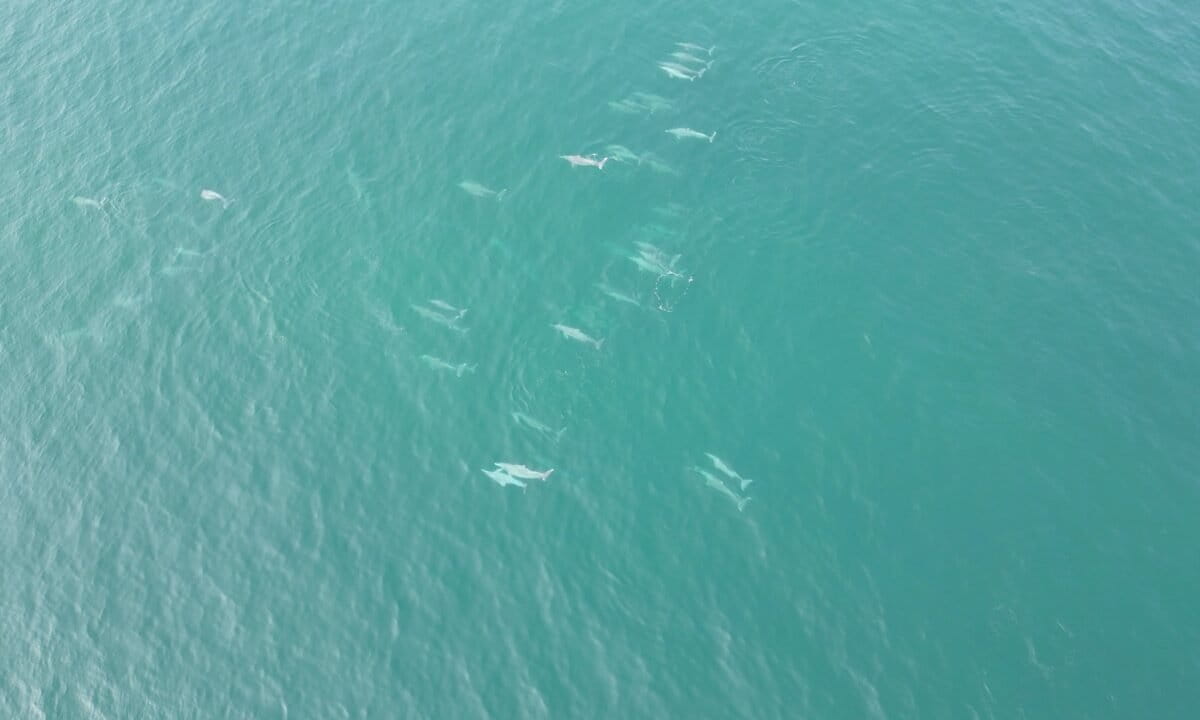
The Arabian Sea off the coast of Maharashtra and Goa often presents a deceptive calm. On a typical morning, the water appears as a listless expanse of green and brown, broken only by the occasional leap of the Indian Ocean humpback dolphin—a species known for its extroverted acrobatics and visible presence. However, beneath this shimmering surface resides a much more elusive inhabitant: the Indo-Pacific finless porpoise (Neophocaena phocaenoides).
Often referred to by researchers as a "ghost" of the coastal shallows, this small cetacean is currently at the center of a scientific revelation. Recent studies suggest that for decades, we have been looking for them the wrong way, missing up to 75% of their population. As industrialization, noise pollution, and commercial fishing intensify along India’s west coast, the race to document and protect this "invisible" species has reached a critical juncture.
Main Facts: The Anatomy of Invisibility
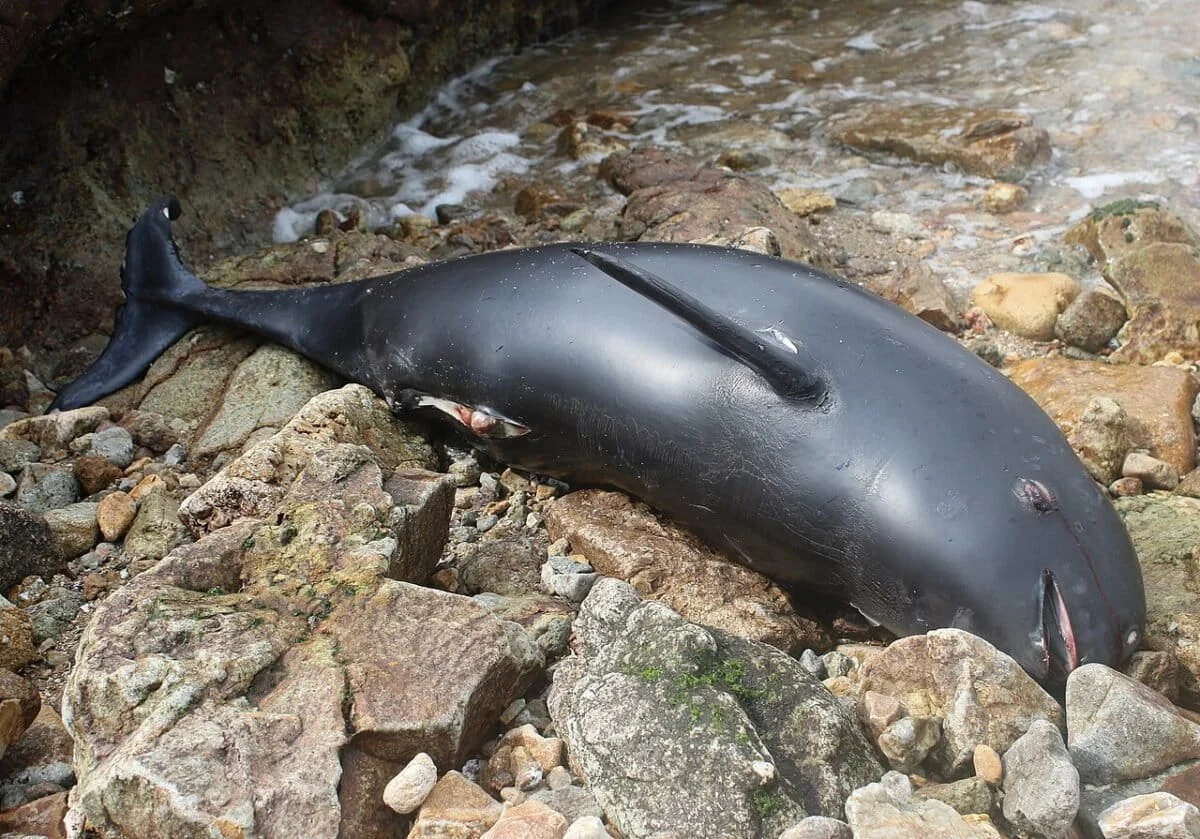
The Indo-Pacific finless porpoise is a biological marvel of minimalism. Measuring between 1.5 and 1.9 meters and weighing roughly 30 to 45 kilograms, it is one of the smallest cetaceans in Indian waters. Unlike its more famous dolphin cousins, the finless porpoise lacks a dorsal fin. In its place is a low ridge of hardened tubercles—small, wart-like bumps—running along its back.
Its physical characteristics are specifically evolved for life in the margins: shallow estuaries, muddy tidal creeks, and mangrove channels. Its head is blunt and rounded, and its mouth is set in what appears to be a perpetual, fixed smile. Inside that mouth, however, are spade-shaped teeth, a distinct departure from the conical, sharp teeth of dolphins.
A Private Acoustic World
While humans see a wall of murky water, the finless porpoise perceives a detailed soundscape. They navigate and hunt using echolocation, emitting narrow-band, high-frequency "ultrasonic" clicks. These pulses are far above the range of human hearing and, crucially, above the hearing range of predators like Orcas or competitors like humpback dolphins.
"Unlike dolphins, porpoises have evolved to communicate and find food using these high-frequency clicks," explains Dipani Sutaria, a veteran marine mammal researcher who has studied Indian coasts since 2001. "This is a great defense mechanism for porpoises to survive in a sea full of larger cetaceans."
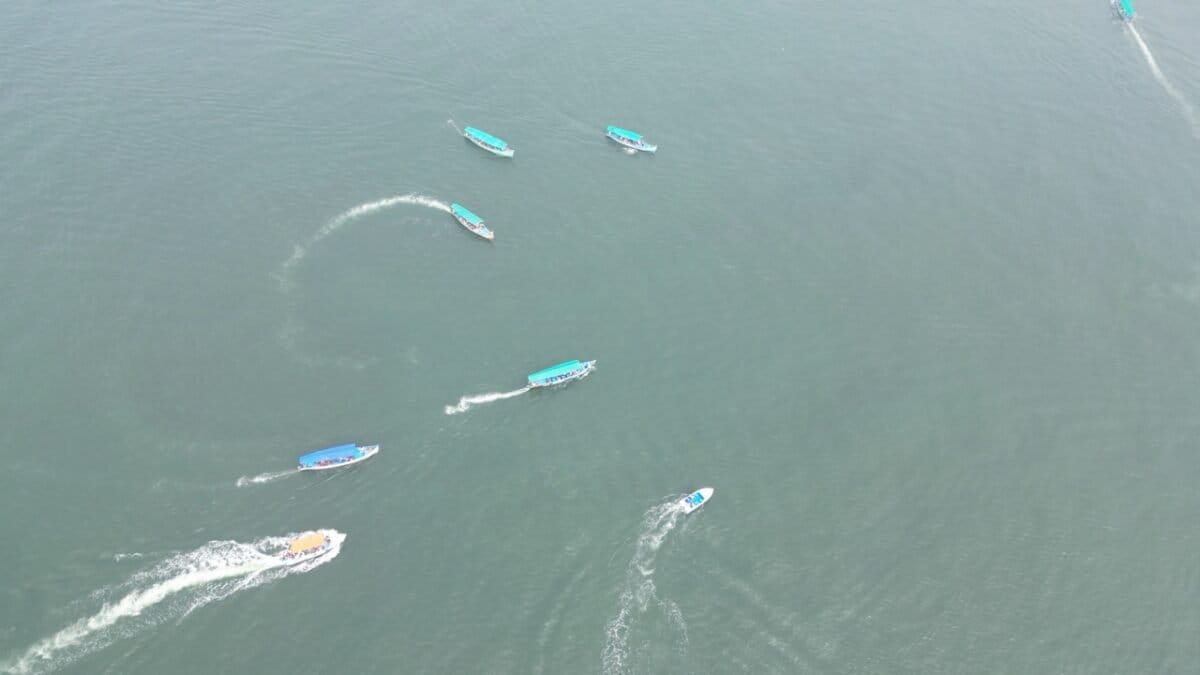
However, this specialized evolution is now becoming a liability. The very waters they depend on—the Sindhudurg-Karwar stretch—are becoming some of the most noise-polluted corridors in the Indian Ocean.
Chronology: From Coexistence to Conflict
The history of the finless porpoise in Indian waters is a narrative of a sudden, violent transition. For centuries, these animals lived in what researchers describe as a "cordial coexistence" with traditional fishing communities.
The Pre-Industrial Era
Before the mid-20th century, fishing in the Arabian Sea was largely artisanal. Using cotton nets and non-motorized boats, fishers shared the estuaries with porpoises. The animals were respected, or at least ignored, as they navigated the shallow banks. Because the gear was visible or audible to the porpoises’ echolocation, and the scale of fishing was limited, accidental deaths were rare.
The Rise of Synthetic Gear (1970s–1990s)
The introduction of monofilament nylon nets and outboard motors changed the landscape. Nylon is nearly "invisible" to the high-frequency clicks of a porpoise. Unlike dolphins, which have a long beak and sharp teeth that allow them to sometimes tear through nets, the blunt-headed porpoise becomes easily entangled.

The Modern Crisis (2000s–Present)
By the turn of the millennium, the Sindhudurg-Karwar coastline was designated an Important Marine Mammal Area (IMMA) by the IUCN (2019). While this recognized the region’s ecological importance, it did little to slow the industrialization of the coast. Today, high-speed vessels and commercial shipping engines create a constant mechanical din that "shatters" the porpoise’s acoustic world, making it nearly impossible for them to distinguish between the echo of a fish and the silent threat of a gillnet.
Supporting Data: The Failure of the Human Eye
The most significant breakthrough in understanding the finless porpoise came in early 2025, with a study published in Nature Scientific Reports. Led by Isha Bopardikar of IISER Tirupati and Cornell University’s K. Lisa Yang Center for Conservation Bioacoustics, the research compared traditional visual surveys with modern acoustic monitoring.
The findings were staggering:
- Visual Detection: Recorded only 0.03 groups per kilometer.
- Acoustic Detection: Recorded 0.12 groups per kilometer.
This data confirms that acoustic sensors are four times more effective at detecting finless porpoises than the most trained human observers. For decades, population assessments—and by extension, conservation policies—have been based on only 25% of the actual population.
The Mortality Rate
The lack of visibility does not translate to a lack of danger. Imran Samad, a Ph.D. researcher at the Indian Institute of Science (IISc), tracks marine megafauna bycatch. His data indicates a grim reality for the Goa coastline:

- Estimated Deaths: 26 porpoises per year along a mere 100 km stretch of Goa.
- Primary Cause: Fisheries interactions, specifically gillnets and trawl nets.
- Biological Vulnerability: Porpoises lack a "beak" to act as a lever against nets. Once entangled, they stress easily. Fishers have frequently reported that entangled porpoises "cry like human children" before they succumb to drowning.
Official Responses and Regulatory Framework
The official response to the porpoise crisis has been characterized by a gap between international recognition and local enforcement.
International Status
The IUCN Red List currently classifies the Indo-Pacific finless porpoise as Vulnerable. The 2019 IMMA designation for the Sindhudurg-Karwar stretch was intended to highlight the area as a global conservation priority. However, IMMA status is an identification tool, not a legal mandate for protection under Indian law.
National Legislation
In India, the finless porpoise is protected under Schedule I of the Wildlife Protection Act (1972), granting it the highest level of legal protection, equivalent to that of a tiger. Despite this, there is a lack of dedicated "Recovery Plans" specifically tailored to small cetaceans.
State forest departments in Goa and Maharashtra have made strides in documenting strandings, but researchers argue that the response remains reactive rather than proactive. "Reliable visual estimates exist for areas like Hong Kong where visibility is better," says Bopardikar. "In our waters, we are limited by visibility. Relying solely on visual estimates is a drawback that government agencies must address by adopting acoustic technology."
The "Paper Park" Problem
Conservationists argue that while the species is "protected on paper," the lack of spatial management in fisheries means that their habitat remains a free-for-all for commercial trawlers. There are currently no "no-take zones" or "acoustic buffer zones" specifically designed to protect the acoustic health of the Sindhudurg-Karwar IMMA.
Implications: The Cost of Silence
The shift from visual to acoustic monitoring is not merely a technical upgrade; it is a fundamental shift in how we value the marine environment. The implications of the recent data are profound for the future of Indian marine conservation.
1. Biased Conservation Strategies
If population estimates are off by 400%, then the "sustainable" level of bycatch is also being calculated incorrectly. We may be witnessing a population in freefall while believing it is stable simply because we cannot see the animals.
2. The Threat of "Extinction Before Discovery"
The finless porpoise is a sentinel species. Its health reflects the health of the nearshore ecosystem. If the porpoise disappears, it signals a collapse in the food web and an unbearable level of acoustic pollution that will eventually affect all marine life, including commercially viable fish stocks.
3. The Need for Technological Integration
The 2025 study proves that India’s marine mammal research must move away from the "borrowed binoculars and film cameras" of the early 2000s. To save the finless porpoise, the Indian government and research institutions must invest in long-term, static acoustic monitoring (SAM). These sensors, placed on the seafloor, listen 24/7, providing a true picture of habitat use that a boat survey can never match.
4. Fishery Reform
The "smiling" porpoise cannot survive in a sea of invisible nylon. Implications for the fishing industry include the potential need for "pingers"—small acoustic deterrent devices—on nets, or seasonal closures of certain tidal creeks where porpoise density is highest.

Conclusion
As the sun sets over the Sindhudurg coast, the water turns to liquid gold, hiding the "ghosts" beneath its surface. The Indo-Pacific finless porpoise does not demand our attention with spectacular leaps or playful follows. It asks only for a quiet corner of the ocean and a habitat where it can navigate without the constant threat of a silent net.
The science is now clear: we have been blind to the porpoise’s presence for too long. If we continue to rely on what we can see with the naked eye, we may only realize the true value of these animals once the last "smile" has vanished from the Arabian Sea. The task now is to start listening—before the silence becomes permanent.
