

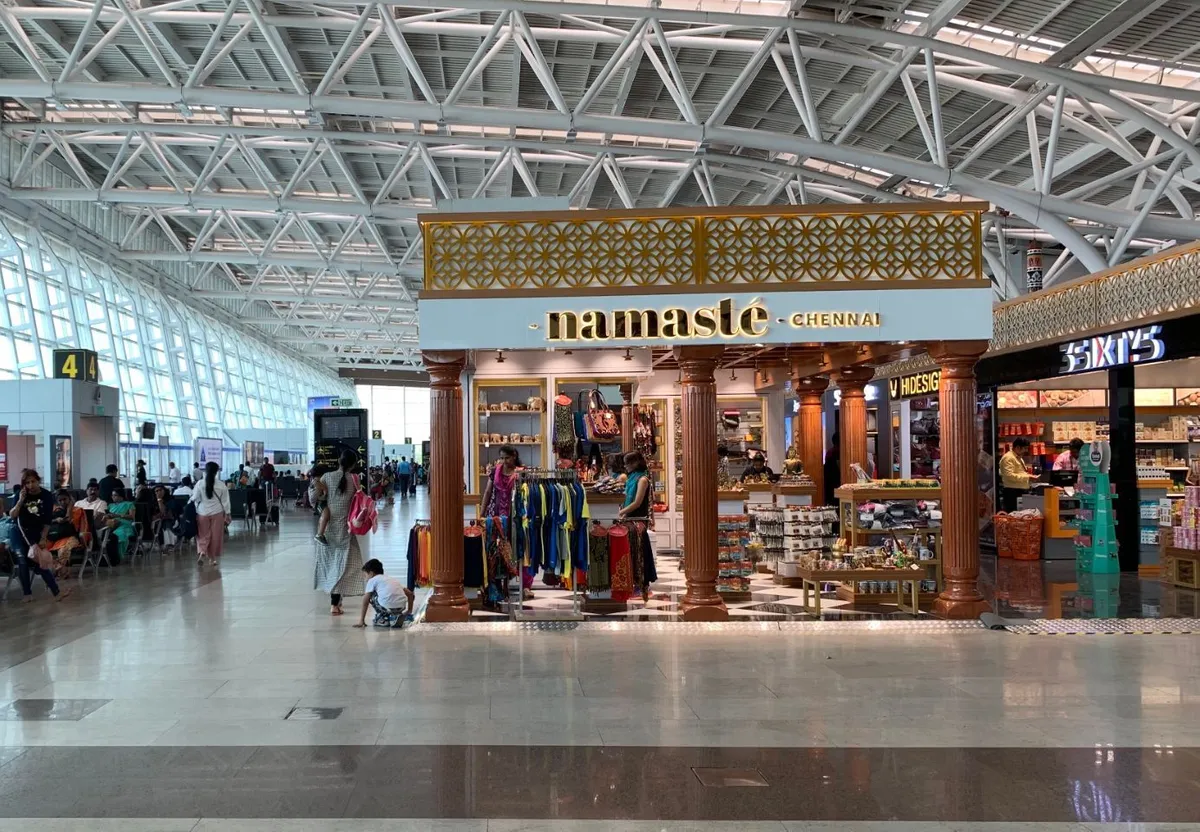
Chennai International Airport (IATA: MAA), a primary gateway to South India, stands as a testament to the region’s rapid industrial and urban metamorphosis. Located in Tirusulam, approximately 4.4 kilometers from the city’s heart, the airport is not merely a transit point but a critical engine for the economy of Tamil Nadu. As India’s aviation sector experiences a post-pandemic surge, the Chennai International Airport is undergoing a multi-phase transformation designed to handle an ambitious 35 million passengers annually.
This report provides an in-depth analysis of the airport’s operational framework, its historical timeline, the technical specifics of its current expansion, and the profound implications for the surrounding real estate and commercial sectors.
1. Main Facts: The Operational Landscape of MAA
Chennai International Airport is the third busiest airport in India in terms of international traffic and serves as the primary aviation hub for the Chennai Metropolitan Area. Managed by the Airports Authority of India (AAI) under the Ministry of Civil Aviation, the airport is a sprawling 1,323-acre facility that bridges the gap between traditional infrastructure and modern technology.
Core Specifications
- Official Name: Chennai International Airport
- Airport Code: MAA (IATA), VOMM (ICAO)
- Location: Tirusulam / Meenambakkam, Chennai
- Ownership: Government of India (Ministry of Civil Aviation)
- Operator: Airports Authority of India (AAI)
- Annual Passenger Traffic: Exceeded 18 million in the previous fiscal year.
- Runways: Two functional runways—a primary 3,662m runway (07/25) and a secondary 2,925m runway (12/30).
The airport operates as a "public" facility, ensuring that it remains a vital utility for both domestic commuters and international business travelers. Its strategic positioning in the southern part of the city provides it with a unique advantage, as it is seamlessly integrated with the Chennai Metro Rail and the suburban railway network, making it one of the most accessible airports in the country.
2. Chronology: From Madras to a Global Hub
The history of Chennai Airport is a narrative of constant adaptation. The facility traces its roots back to the early 1930s, making it one of the oldest established airports in India.
- 1930s – 1950s: The airport began its life at the Meenambakkam site, serving primarily as a military and limited commercial airstrip.
- 1985: A pivotal year when the airport officially began dedicated operations for domestic travelers, reflecting the growing demand for internal connectivity within the newly independent India.
- 1989: The facility expanded its horizons by catering to international travelers, necessitating the creation of specialized customs and immigration infrastructure.
- 2003: Recognizing the limitations of the Meenambakkam site, the airport moved its primary operations to a new terminal complex in the Tirusulam area. The original Meenambakkam terminal was repurposed for cargo and freight, a role it continues to serve today.
- 2023: In April, Prime Minister Narendra Modi inaugurated Phase 1 of the New Integrated Terminal Building (NITB), a state-of-the-art facility designed to mirror the cultural heritage of Tamil Nadu while providing world-class amenities.
- 2026–2027 Outlook: The second phase of the integrated terminal expansion is currently on a fast track. While initial estimates suggested a 2025 opening, official updates from the AAI indicate that Terminal 3 (Phase 2) is now expected to be fully operational by March 2026, with some project components extending into 2027.
3. Supporting Data: Terminals, Technology, and Logistics
The modern Chennai Airport is a complex ecosystem divided into four distinct terminals, each serving a specific niche in the aviation cycle.
Terminal Breakdown
- Terminal 1 (Meenambakkam): The legacy terminal, now the backbone of the region’s logistics, handling massive volumes of international and domestic cargo.
- Terminal 2 (Kamaraj Domestic): The first terminal in India to implement two aerobridges, focusing exclusively on domestic routes.
- Terminal 3 (Anna International): Historically the main international arrival and departure point. It is currently being integrated into the newer expansion phases.
- Terminal 4 (New International): The newest addition, currently handling international departures, featuring advanced architectural aesthetics and passenger flow management.
The New Integrated Terminal (NITB) Impact
Upon the completion of the Phase 2 expansion, the terminal architecture will boast:
- 60 Check-in Counters: Reducing wait times significantly during peak hours.
- 8 Entry Points and 10 Scanning Screens: Streamlining the initial security layer.
- 8 New Aerobridges: Ensuring all-weather, seamless boarding for wide-body aircraft.
- Increased Capacity: A jump from current levels to a massive 3.5 crore (35 million) passengers per year.
Parking and Ground Transportation
To manage the influx of travelers, the airport has introduced a Multi-Level Car Park (MLCP) across two blocks (East and West). This facility is a critical piece of the "Express" airport experience.
| Level | West Block Capacity | East Block Capacity |
|---|---|---|
| Ground | 39 | 12 |
| L1 | 43 | 3 |
| L2 | 40 | 46 |
| L3 | 101 | 22 |
| L4 | 20 | 21 |
| L5 | 121 | 23 |
| Roof | 233 | 366 |
| Total | 597 | 493 |
Technological Integration: DigiYatra and Security
Chennai Airport has embraced the DigiYatra initiative, a biometric-based boarding system. By using facial recognition technology, passengers can navigate from the entry gate to the boarding gate without multiple physical checks of boarding passes or IDs. While not mandatory, the system has significantly reduced "dwell time" in the terminal.
Furthermore, security has been bolstered by the Bureau of Civil Aviation Security (BCAS). By late 2024, the airport is slated to install CTX (Computed Tomography X-ray) machines. These machines generate 3D images of hand baggage, allowing security personnel to inspect contents without requiring passengers to remove electronic devices or liquids, further accelerating the security screening process.
4. Official Responses and Future Expansion Strategy
The Airports Authority of India (AAI) has been transparent about the challenges of managing a land-locked airport. Officials have noted that while the current Tirusulam complex is being optimized to its maximum potential, the long-term solution lies in a dual-airport model.
_0_1200.jpg.webp)
The Parandur Greenfield Project
The Tamil Nadu government, in coordination with the Ministry of Civil Aviation, has approved the development of a second airport at Parandur. This Greenfield project is designed to handle the "overflow" of traffic that the Tirusulam site will eventually be unable to accommodate. Once Parandur is operational, it will likely handle the bulk of long-haul international flights, while the current Chennai Airport continues to serve as a domestic and regional hub.
The Fifth Terminal (Cargo Focus)
In an official response regarding the growth of e-commerce and manufacturing (specifically the "SaaS" and "Electronics" boom in Tamil Nadu), the AAI has confirmed plans for a fifth terminal. This terminal will be built on existing AAI land and will be dedicated exclusively to cargo operations, further cementing Chennai’s position as a logistics powerhouse.
5. Economic and Real Estate Implications
The expansion of Chennai International Airport has acted as a catalyst for a massive real estate bull run in South Chennai. Infrastructure development—such as the expansion of the GST Road and the integration of the Metro—has turned the airport’s vicinity into a prime investment zone.
Growth of Satellite Hubs
The "Airport Effect" is most visible in four key localities:
-
Pallavaram (1.7 km from Airport):
- Character: A mix of residential serenity and IT growth.
- Pricing: INR 4,400 to INR 7,300 per sq. ft.
- Drivers: Connectivity via the Pallavaram railway station and new flyovers.
-
Pammal (3.5 km from Airport):
- Character: A residential-commercial hybrid popular with airport staff and airline professionals.
- Pricing: INR 4,100 to INR 6,300 per sq. ft.
- Drivers: Proximity to the Meenambakkam Metro and major arterial roads.
-
Medavakkam (11.6 km from Airport):
- Character: A strategic hotspot for IT professionals working on the OMR (Old Mahabalipuram Road).
- Pricing: INR 4,400 to INR 7,000 per sq. ft.
- Drivers: Its central location between the airport and the "IT Corridor."
-
Perumbakkam (15.5 km from Airport):
- Character: Home to global giants like Wipro and HCL.
- Pricing: INR 4,000 to INR 5,800 per sq. ft.
- Drivers: High demand for multi-storey apartments and gated communities.
Upcoming Residential Landscape
The market is currently seeing a surge in "ready-to-move" and "upcoming" projects that cater to the modern traveler. Notable projects include Sidharth Greenwoods (Possession July 2025) and Viva Vethathiri, with price points ranging from INR 5,000 to INR 8,800 per sq. ft.
Conclusion: A Vision for 2030
Chennai International Airport is currently at a crossroads. The transition from the aging terminals of the early 2000s to the integrated, high-tech NITB marks a new era for Tamil Nadu’s aviation. While the construction of Terminal 3 Phase 2 and the eventual inauguration of the Parandur Greenfield airport are milestones still on the horizon, the current upgrades are already yielding results in passenger satisfaction and operational efficiency.
For investors, the message is clear: the infrastructure surrounding MAA is no longer just about transit; it is about the creation of a comprehensive "Aerotropolis"—an urban area where the economy is centered around the airport. As the AAI continues to hit its developmental markers for 2026 and 2027, Chennai is well-positioned to remain the undisputed gateway to the Indian South.
