

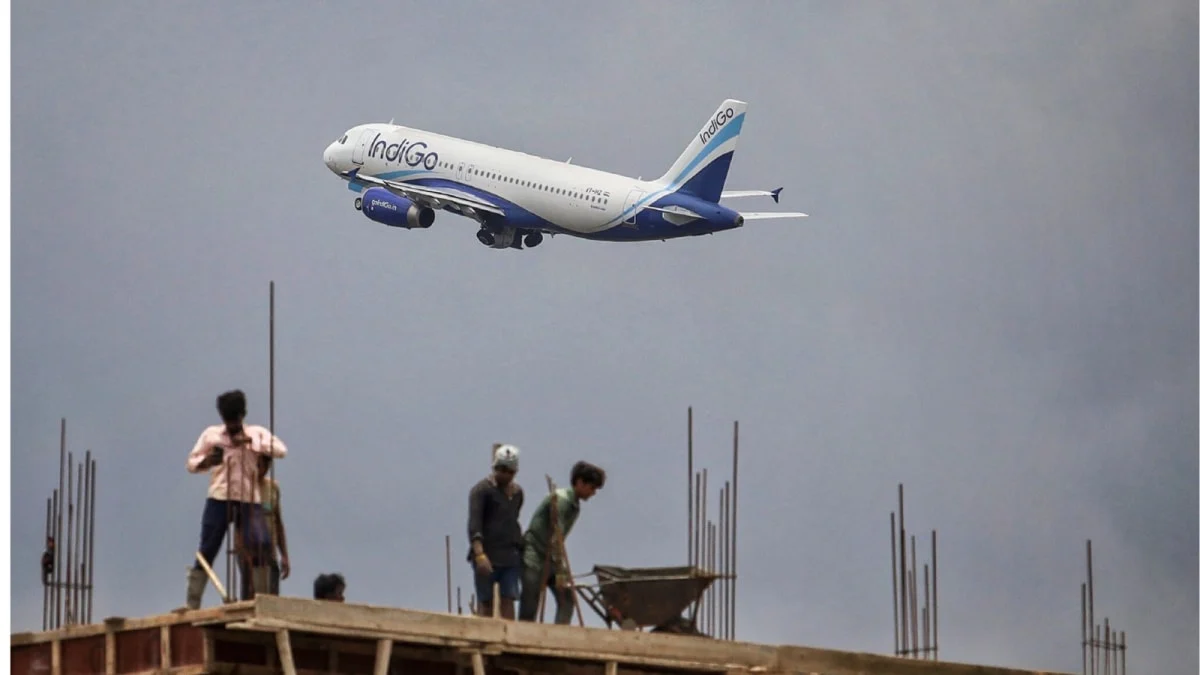
BENGALURU – The landscape of South and West Bengaluru is undergoing a tectonic shift, not in its physical geography, but in its economic valuation. Even as the Karnataka state government deliberates on the final location for the city’s proposed second international airport, a feverish land rush has gripped the Kanakapura, Harohalli, Nelamangala, and Kunigal corridors. Driven by speculative fervor and the historical precedent of the "Devanahalli Boom," investors, developers, and land aggregators are aggressively staking claims in these suburban fringes, betting billions on a project that remains, for now, on the drawing board.
The Main Facts: A Market in Overdrive
The speculation surrounding the second airport has moved from boardroom discussions to the dusty fields of Bengaluru’s outskirts. According to recent market reports and real estate consultants, land prices along the Kanakapura Road-Harohalli stretch have effectively doubled within the last six to eight months. This surge is not merely a localized phenomenon but a broader trend affecting several key corridors in the city’s southern and western quadrants.
In areas such as Chudahalli, Somanahalli, and Kaggalipura, the influx of capital is coming from a diverse pool of investors, including Non-Resident Indians (NRIs) and High-Net-Worth Individuals (HNIs). These buyers are looking beyond immediate utility, viewing these land parcels as high-yield, long-term infrastructure plays.
While Kanakapura is emerging as a residential and lifestyle hub—fueled by its proximity to established neighborhoods and improved Metro connectivity—the Nelamangala-Kunigal belt is being positioned as a logistics and industrial powerhouse. The dual narrative of "Residential Bliss" versus "Industrial Engine" is driving a wedge in investment strategies, with both corridors seeing unprecedented levels of land banking and joint development agreements.
Chronology: From Devanahalli to the New Frontier
To understand the current frenzy, one must look back at the trajectory of Bengaluru’s aviation infrastructure:
- 2005–2008: The North Bengaluru Revolution: The announcement and subsequent opening of the Kempegowda International Airport (KIA) in Devanahalli transformed a quiet agrarian outpost into a global tech and real estate hub. Land prices in the North appreciated by as much as 86% in the decade following the airport’s operational debut.
- 2020–2023: The Capacity Realization: As KIA approached its peak passenger handling capacity and the city’s traffic woes worsened, the Karnataka government began formalizing the need for a second airport. The "One City, Two Airports" model, similar to London or New York, became a policy priority.
- Late 2023 – Early 2024: The Site Shortlist: Public statements by Deputy Chief Minister D.K. Shivakumar and other officials narrowed the focus to South and West Bengaluru. Sites near Kanakapura and the Nelamangala-Kunigal stretch were identified as frontrunners due to their connectivity and availability of large land parcels.
- 2025 – May 2026 (The Present): The Speculative Peak: Despite the lack of an official Government Order (GO) finalizing the coordinates, the "buzz" has reached a crescendo. The period between late 2025 and mid-2026 has seen the sharpest spike in land transactions, with prices doubling in anticipation of an imminent announcement.
Supporting Data: Quantifying the Boom
The numbers behind the land rush tell a story of aggressive capital appreciation and shifting investment priorities.
The Price Surge
In the Kanakapura Road micro-market, land that was trading at relatively modest rates a year ago has seen a 100% appreciation. Market analysts at CBRE India note that this is one of the fastest price escalations recorded in the city’s history for a non-operational infrastructure zone.
Comparative Appreciation Rates
Historical data from the Devanahalli era shows that land values appreciated between 40% and 86% over ten years. In contrast, the Kanakapura belt has hit the 100% mark in under a year based purely on speculation. This suggests a "compressed growth cycle," where modern investors are pricing in future gains much earlier than they did two decades ago.
Sectoral Interest
- Residential/Plotted Developments: 60% of the activity in the South is focused on gated communities, villa projects, and "weekend home" concepts.
- Logistics & Warehousing: In the West (Nelamangala), demand for industrial land has grown by 35% year-on-year, bolstered by the Satellite Town Ring Road (STRR) project, which connects major highways without entering the city core.
- Institutional Land Banking: Large developers are reportedly acquiring "inventories" of 50 to 200 acres through quiet acquisitions to avoid further price bloating once the airport site is officially confirmed.
Official Responses: Caution and Strategic Planning
The Karnataka government, while acknowledging the economic potential, has maintained a stance of cautious deliberation. Deputy Chief Minister D.K. Shivakumar has confirmed that the race is primarily down to two major site clusters, but he has urged the public not to succumb to predatory pricing or misinformation.
"The selection of an international airport site involves complex technical parameters, including air traffic patterns, environmental impact, and connectivity to the existing airport," a senior official from the Infrastructure Development Department (IDD) stated. "While we understand the market enthusiasm, the final decision will be based on the AAI (Airports Authority of India) guidelines and the long-term urban plan for Bengaluru 2050."
Furthermore, officials have noted that the second airport is a "long-horizon" project. Even after a site is finalized, land acquisition, environmental clearances, and construction could take anywhere from seven to ten years. The government is also wary of the "land mafia" exploiting small-scale farmers in these corridors, prompting calls for more transparent land-pooling policies.
Implications: The Future of the "Silicon Valley of India"
The movement toward a second airport carries profound implications for Bengaluru’s urban fabric, economy, and social structure.
1. The Shift of the Economic Gravity
For the last two decades, Bengaluru’s growth has been lopsided toward the North and East (Whitefield and Devanahalli). A second airport in the South or West would balance the city’s development. It would likely lead to the creation of new IT parks, aerospace SEZs, and hospitality hubs in areas that are currently considered "semi-rural."
2. Logistics and the STRR Synergy
The Nelamangala-Kunigal corridor stands to gain significantly due to its intersection with the Satellite Town Ring Road. If the airport is situated here, it would create a massive multimodal logistics hub, linking air cargo with the industrial belts of Peenya and Dobbaspet, and the Chennai-Mumbai industrial corridor.
3. Infrastructure Gaps and Challenges
Unlike Devanahalli, which benefited from the early expansion of the Bellary Road (NH44), the Kanakapura and Nelamangala corridors currently lack mature social infrastructure. Hospitals, international schools, and high-end retail are still in their infancy in these areas. Experts warn that if the airport project faces delays, investors might find themselves holding "dead assets" in regions that lack the immediate rental demand found in the city center.
4. Environmental and Agrarian Concerns
The Kanakapura region is known for its lush greenery and proximity to forest buffers. Environmentalists have raised alarms about the impact of a mega-airport on the local ecosystem and groundwater levels. Additionally, as farmland is converted at a rapid pace, the traditional silk and agricultural economy of Ramanagara and Kanakapura faces an existential threat.
5. The "Devanahalli Lesson" for Investors
Real estate consultants are issuing a "buyer beware" notice. While the Devanahalli story ended in success, it took nearly 15 years for the region to become a self-sustaining ecosystem. Today’s investors, paying "doubled" prices, are entering at a much higher cost basis. The room for astronomical returns may be narrower than it was in 2005, as the market is now more organized and price discovery is instantaneous.
Conclusion: A City in Transition
Bengaluru’s quest for a second airport is more than just a logistical necessity; it is a signal of the city’s intent to remain a global metropolis. However, the current land rush along the Kanakapura and Nelamangala corridors serves as a reminder of the volatility of speculative real estate.
As the state government moves closer to a final decision, the window for "early" investment is closing, replaced by a high-stakes game of wait-and-see. For the farmers of Harohalli or the warehouse operators of Nelamangala, life is changing rapidly. Whether these corridors become the next Devanahalli or remain speculative bubbles will depend on the stroke of a pen in the Vidhana Soudha and the patience of those betting on Bengaluru’s sky-high ambitions.
