

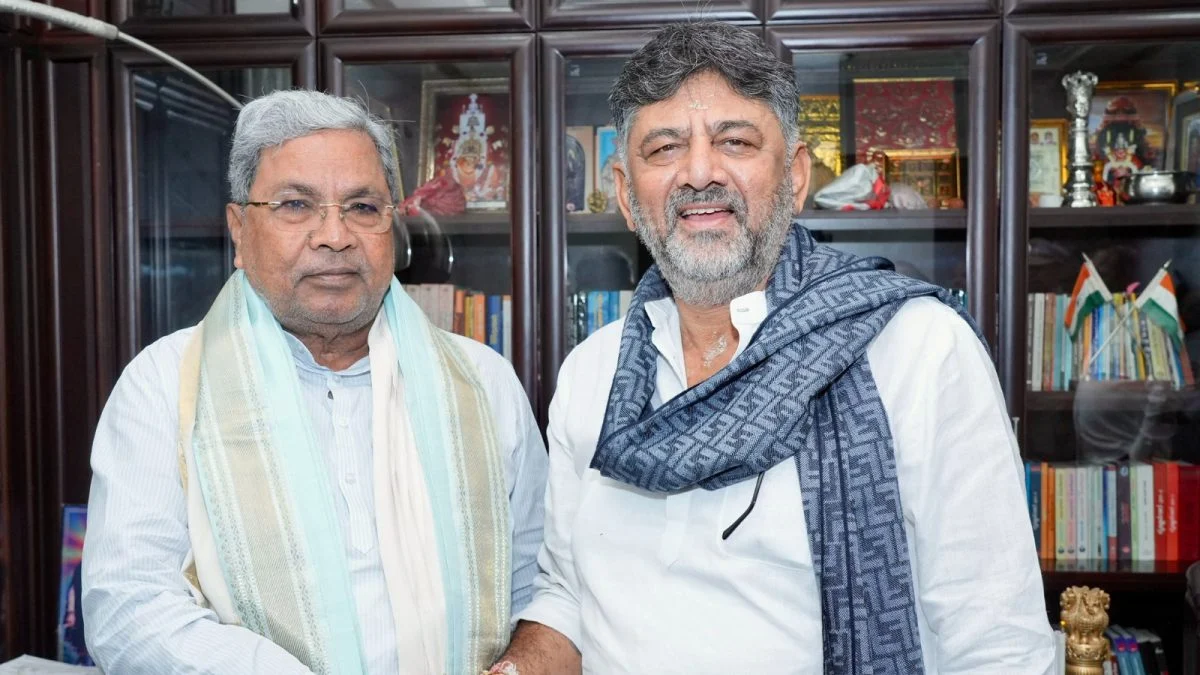
NEW DELHI, India – May 26, 2026 – After months of intense political manoeuvring and high-level deliberations, the Congress party appears to have finally brokered a resolution to its persistent leadership dilemma in Karnataka. Highly placed sources within the party indicate that D.K. Shivakumar, the dynamic state unit president, has been chosen to assume the mantle of Chief Minister, succeeding veteran leader Siddaramaiah. The transition, which marks a significant realignment of power within the state’s ruling party, is expected to see Siddaramaiah step down from his position on May 28, with a potential elevation to the Rajya Sabha as part of a broader strategic move by the Congress high command.
This anticipated leadership change comes nearly three years after the Congress secured a resounding victory in the 2023 Karnataka Assembly elections, a mandate that paradoxically triggered an internal power struggle between its two most prominent leaders. The decision to elevate Shivakumar and transition Siddaramaiah is being hailed by party insiders as a crucial breakthrough, aimed at ensuring stability, fostering unity, and setting the stage for future electoral challenges.
A Pivotal Transition in Karnataka’s Leadership
The impending change at the helm of Karnataka’s government signals the Congress’s determined effort to address the deep-seated rivalries that have simmered beneath the surface of its successful state administration. D.K. Shivakumar, widely recognized for his organizational prowess, financial acumen, and ability to rally party cadres, is now poised to lead the state. His ascent to the Chief Minister’s office culminates a long and often challenging political journey, positioning him at the forefront of one of South India’s most economically vital and politically complex states.
Siddaramaiah, the incumbent Chief Minister, a seasoned politician with a strong administrative record and a significant following among various backward classes (Ahinda communities), is reportedly being offered a Rajya Sabha seat. This move is interpreted not as a sidelining, but as a strategic deployment of his vast experience to the national stage, potentially allowing him to play a crucial role in the party’s parliamentary strategy while ensuring a graceful exit from state leadership. The arrangement reflects the Congress high command’s delicate balancing act to accommodate the ambitions of its key leaders and maintain party cohesion.
The announcement, though from unofficial sources at this juncture, has sent ripples across the political landscape of Karnataka and beyond, sparking widespread speculation about the implications for governance, policy continuity, and the future trajectory of the Congress party in the region.
The Genesis of a Leadership Tussle: A Chronological Account
The roots of the leadership struggle between Siddaramaiah and D.K. Shivakumar trace back even before the 2023 Assembly elections, intensifying significantly in their aftermath. Understanding this chronology is crucial to grasping the significance of the current resolution.
The Resounding Mandate of 2023
The Congress party’s emphatic victory in the May 2023 Karnataka Assembly elections was a significant turning point, not just for the state but for the national political narrative. Defying exit poll predictions, the party secured 135 out of 224 seats, crossing the majority mark comfortably and relegating the then-ruling Bharatiya Janata Party (BJP) to 66 seats and the Janata Dal (Secular) to a mere 19. This victory was attributed to a combination of factors: a strong anti-incumbency wave against the BJP government, a well-orchestrated campaign highlighting local issues, and the popular appeal of the Congress’s "guarantee" schemes, which promised substantial welfare benefits to the populace.
Both Siddaramaiah and D.K. Shivakumar played instrumental roles in this electoral triumph. Siddaramaiah, with his extensive experience as a former Chief Minister and his powerful oratorical skills, galvanized support across diverse communities. Shivakumar, as the Karnataka Pradesh Congress Committee (KPCC) President, was the chief architect of the party’s organizational strategy, campaign financing, and meticulous booth management, often dubbed the "troubleshooter" for his ability to navigate complex political challenges. The victory, however, immediately brought their long-standing, albeit often subdued, rivalry for the top post to the fore.
Months of Deliberation and Discord
Following the 2023 election results, the Congress high command found itself in a delicate predicament. Both Siddaramaiah and Shivakumar staked their claims to the Chief Minister’s position, each backed by a substantial faction of newly elected MLAs. Siddaramaiah, advocating for his experience and popular mandate, pointed to his track record of delivering stable governance. Shivakumar, on the other hand, highlighted his role in rebuilding the party from the grassroots after previous electoral setbacks and his unwavering loyalty, often citing instances where he stood by the party during challenging times, including facing legal scrutiny.
The ensuing days and weeks were marked by intense lobbying, multiple rounds of meetings in New Delhi with the party’s central leadership – including Congress President Mallikarjun Kharge, Rahul Gandhi, and General Secretary K.C. Venugopal – and a flurry of media speculation. The high command employed various mechanisms, including secret ballot surveys among MLAs and extensive one-on-one consultations, to gauge support and find a consensus. While an initial power-sharing agreement was reportedly reached, leading to Siddaramaiah taking the CM’s chair and Shivakumar becoming Deputy CM with crucial portfolios, the underlying tensions never fully dissipated. Rumours of a rotational Chief Ministership or a specified term limit for Siddaramaiah continued to circulate, keeping the leadership question alive and often distracting from governance.
High Command’s Intervention and Resolution
The ongoing internal friction, despite public displays of unity, became a growing concern for the Congress high command, especially with an eye on the upcoming Lok Sabha elections in 2029 and the next state assembly elections in 2028. The need for a decisive and long-term solution became paramount. Recent weeks saw renewed efforts from the central leadership to mediate and enforce a definitive resolution.
Sources reveal that extensive discussions took place over the past few days, involving the party’s top brass and the two leaders. The decision to transition Siddaramaiah to the Rajya Sabha and elevate Shivakumar is seen as a carefully crafted compromise. It acknowledges Siddaramaiah’s contributions and provides him with a dignified national role, while recognizing Shivakumar’s ambition, organizational strength, and the need to empower a new generation of leadership within the state unit. The May 28 deadline for Siddaramaiah’s stepping down suggests a clear timeline has been agreed upon, signaling the party’s intent to move forward decisively.
Profiles in Power: Siddaramaiah and D.K. Shivakumar
To fully appreciate the significance of this leadership transition, it is essential to delve into the political profiles of the two principal figures involved. Both Siddaramaiah and D.K. Shivakumar are political heavyweights, each with distinct strengths, support bases, and career trajectories that have profoundly shaped Karnataka’s political landscape.
Siddaramaiah: The Veteran Administrator’s Journey
Born in 1948 in Siddaramanahundi, Mysuru district, Siddaramaiah is a political veteran with over four decades of experience. A lawyer by profession, he entered politics in the late 1970s, initially associated with the Janata Parivar. He served as Chief Minister of Karnataka from 2013 to 2018, leading a full five-year term, a rare feat in the state’s recent political history. His first stint as CM was marked by a focus on welfare schemes, particularly targeting the marginalized sections of society, often referred to as ‘Ahinda’ (a Kannada acronym for minorities, backward classes, and Dalits). His ‘Anna Bhagya’ scheme, providing subsidized food grains, and ‘Ksheera Bhagya’, offering milk to schoolchildren, earned him significant public goodwill.
Siddaramaiah is known for his sharp intellect, strong administrative capabilities, and a pragmatic approach to governance. He is a powerful orator in Kannada and has a deep understanding of state finances, having presented a record 13 state budgets. His political career has seen him transition from the Janata Dal (Secular) to the Congress in 2006, a move that solidified his position as a formidable leader within the grand old party. His support base is robust among the Kuruba community (his own caste), Dalits, and minorities, making him a crucial figure in the Congress’s caste arithmetic in Karnataka. His elevation to the Rajya Sabha, if it materializes, would allow the Congress to leverage his experience and vocal presence in national debates, particularly on issues of federalism and social justice.
D.K. Shivakumar: The Troubleshooter’s Ascent
D.K. Shivakumar, born in 1962 in Kanakapura, Ramanagara district, represents a different brand of political power. A prominent leader from the dominant Vokkaliga community, he is often referred to as the Congress’s "troubleshooter" due to his proven ability to manage crises, mobilize resources, and keep the party flock together during turbulent times. His political journey began in student politics, leading him to become an MLA at the young age of 27 in 1989. Since then, he has won eight consecutive Assembly elections from the Kanakapura constituency, a testament to his strong regional hold.
Shivakumar has held various ministerial portfolios, including Urban Development, Energy, and Water Resources, showcasing his administrative capacity. However, his real strength lies in his organizational skills and strategic acumen. As KPCC President, he played a pivotal role in rejuvenating the party after its defeat in 2018 and navigating the complexities of opposition politics. His ability to network, manage finances, and command loyalty among a section of MLAs has made him indispensable to the Congress in Karnataka. Shivakumar has also faced several investigations by central agencies, which he and the Congress party have consistently attributed to political vendetta. His resilience through these challenges has further burnished his image as a fighter within party circles. His rise to Chief Minister is a recognition of his unwavering commitment to the party and his significant contribution to its recent electoral success.
Official Reactions and Political Echoes
While the official announcement from the Congress high command is still awaited, the leaked information from sources has already begun to generate significant political reverberations.
Congress High Command’s Stance
The Congress high command, primarily represented by figures like party president Mallikarjun Kharge, Sonia Gandhi, and Rahul Gandhi, is expected to present this leadership change as a consensual decision reflecting the party’s commitment to unity and stable governance. Their official statement will likely emphasize the strategic foresight behind Siddaramaiah’s transition to a national role and Shivakumar’s elevation as a testament to his dedication and leadership qualities. They will aim to project an image of a party that effectively manages internal dynamics and prioritizes collective good over individual ambitions. Expect a narrative that highlights the party’s democratic processes and its responsiveness to the aspirations of its leaders and cadres.
Anticipated Statements from Key Figures
Upon the official announcement, both Siddaramaiah and D.K. Shivakumar are expected to issue statements emphasizing party discipline and unity. Siddaramaiah, known for his dignified public persona, will likely express his gratitude for the opportunity to serve the people of Karnataka and reaffirm his commitment to the party’s national vision from his new role. His statement will be carefully crafted to underscore his loyalty and ensure a smooth handover of power.
D.K. Shivakumar, in his first address as the Chief Minister-designate, will undoubtedly thank the high command for their trust and express his dedication to fulfilling the promises made to the people of Karnataka. He is expected to call for collective effort, unity among party members, and a renewed focus on development and welfare schemes. His initial statements will be crucial in setting the tone for his administration and signaling his approach to governance.
Opposition’s Perspective
The opposition parties in Karnataka, primarily the Bharatiya Janata Party (BJP) and the Janata Dal (Secular) (JD(S)), are likely to react critically to this development. They might frame the leadership change as a sign of continued instability within the Congress, or as an admission of Siddaramaiah’s alleged failure to manage the state effectively. The BJP might attempt to exploit any perceived internal rifts, questioning the long-term viability of the arrangement and projecting itself as a more stable alternative. They could also highlight the duration of the leadership tussle as a distraction from governance.
The JD(S), while having a smaller presence, might also weigh in, perhaps commenting on the caste dynamics at play or suggesting that the change is merely a reshuffling of the same deck, without offering fresh solutions to the state’s challenges. Their reactions will be geared towards undermining the Congress’s narrative of unity and effective leadership.
Far-Reaching Implications for Karnataka and the Congress Party
The leadership transition from Siddaramaiah to D.K. Shivakumar carries significant implications, not only for the internal dynamics of the Congress party but also for the governance of Karnataka and its future political trajectory.
Governance and Policy Outlook
With Shivakumar at the helm, there could be a perceptible shift in the style of governance, though the core policy agenda, particularly the "guarantee" schemes, is expected to remain largely unchanged. Shivakumar is known for his proactive and hands-on approach, often described as a more assertive leader. His administration might see an acceleration in infrastructure projects, a renewed focus on attracting investments, and potentially a more centralized decision-making process. Given his background in water resources and energy, these sectors might receive enhanced attention.
The challenge for Shivakumar will be to ensure continuity while stamping his authority. He will need to effectively manage the state bureaucracy, which has been accustomed to Siddaramaiah’s administrative style. The implementation of the five key "guarantees" – Shakti (free bus travel for women), Gruha Jyothi (200 units of free electricity), Anna Bhagya (10 kg free rice), Yuva Nidhi (unemployment allowance), and Gruha Lakshmi (₹2,000 monthly aid to women heads of households) – will be a critical litmus test for his administration. Ensuring their sustained and efficient delivery will be vital for maintaining public trust and strengthening the Congress’s electoral prospects.
Strengthening Party Unity and Future Elections
The resolution of the leadership tussle is paramount for strengthening party unity. A unified front is crucial for the Congress as it prepares for the 2029 Lok Sabha elections, where Karnataka is a significant battleground, and the 2028 Assembly elections. Shivakumar’s ability to bring together the various factions that supported Siddaramaiah and those loyal to him will be critical. His immediate task will be to build bridges, distribute responsibilities equitably, and ensure that all senior leaders feel valued and included in the decision-making process.
A stable and united Congress in Karnataka can serve as a model for other state units grappling with similar internal conflicts. It sends a message that the high command is capable of mediating and enforcing solutions, thereby projecting an image of a disciplined and cohesive national party. Conversely, any lingering discontent or perceived unfairness could undermine these efforts, creating fresh challenges down the line.
Siddaramaiah’s Evolving Role
Siddaramaiah’s potential move to the Rajya Sabha marks a significant evolution in his long and distinguished career. While relinquishing the Chief Minister’s post, he would transition to a national platform, where his vast legislative experience, oratorical skills, and deep understanding of socio-economic issues can be leveraged by the Congress. He could become a key voice for the party in parliamentary debates, especially on issues concerning federalism, state finances, and social justice. This move could also free him from the day-to-day grind of state administration, allowing him to focus on broader national political strategy and potentially mentor younger leaders. His continued influence within the party and among his traditional support base, even from Delhi, will remain a factor in Karnataka politics.
Shivakumar’s Immediate Challenges and Opportunities
For D.K. Shivakumar, the Chief Minister’s office presents both immense challenges and unparalleled opportunities. His immediate priorities will include:
- Consolidating Power: Establishing his authority firmly within the cabinet and the legislative party, ensuring loyalty and cooperation from all factions.
- Maintaining Governance Momentum: Ensuring that the transition does not disrupt ongoing administrative work or the delivery of welfare schemes.
- Economic Development: Driving economic growth, attracting investments, and addressing unemployment.
- Managing Expectations: Balancing the aspirations of various communities and regions within the state.
- Addressing Opposition: Effectively countering the narrative and criticism from the BJP and JD(S).
- National Contribution: Playing a role in the Congress’s national strategy, especially given Karnataka’s significance in South India.
His ascent represents a generational shift within the Congress in Karnataka, bringing a leader known for his aggressive political style and strong organizational capabilities to the forefront. How he navigates these challenges will define his tenure and significantly impact the Congress’s future in the state.
The coming days will be critical as Karnataka braces for this pivotal leadership change. The Congress high command’s decision, after prolonged deliberation, aims to inject renewed vigor and stability into its most significant state government in South India, setting the stage for a new chapter in Karnataka’s political history.
