

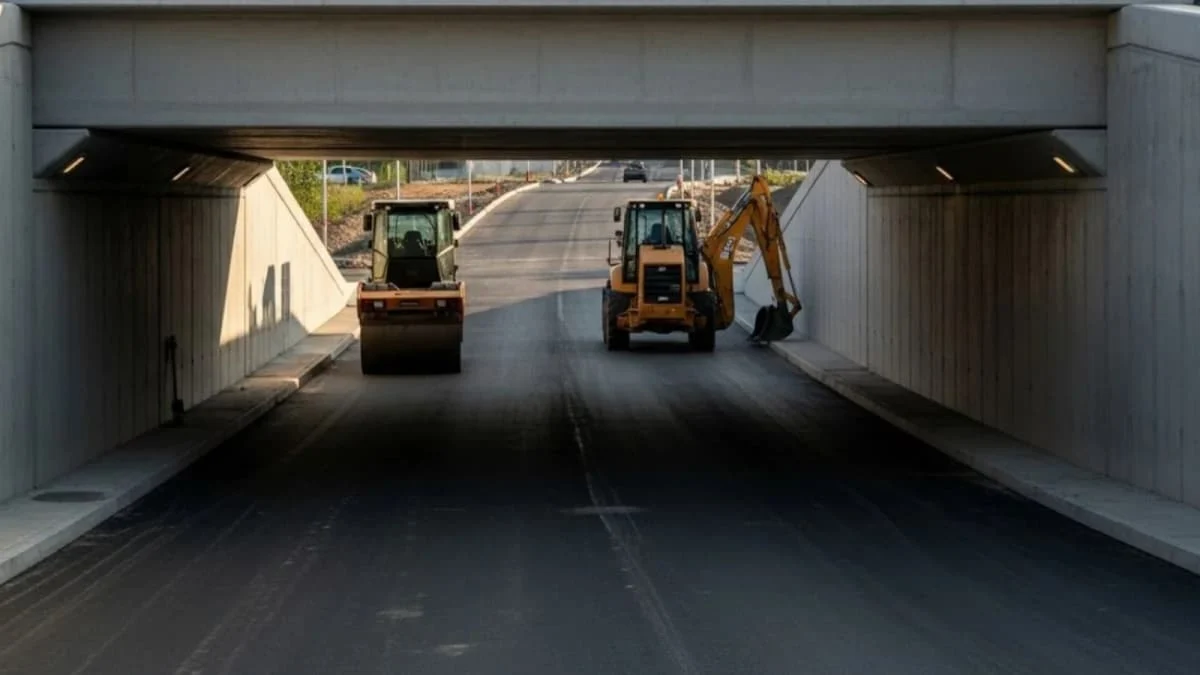
BENGALURU – In the sprawling tech landscape of East Bengaluru, the name "Hope Farm" has long been viewed with a sense of irony by the hundreds of thousands of commuters who traverse the intersection daily. For over a decade, this pivotal junction has served as a symbol of the city’s infrastructure inertia. However, in a significant development for the region’s urban transit, the long-stalled Hope Farm Junction underpass project has finally transitioned from blueprint to breaking ground.
After an agonizing 11-year delay characterized by legal disputes, land acquisition hurdles, and bureaucratic red tape, civic authorities have officially commenced construction on the ₹35-crore underpass. With a strict 200-day deadline looming, the project aims to dismantle one of the most notorious traffic bottlenecks in India’s Silicon Valley.
I. Main Facts: Breaking the Gridlock at the Heart of the IT Corridor
The Hope Farm Junction underpass is not merely a local road project; it is a critical intervention in a high-density economic zone. The junction serves as a primary artery connecting the residential hubs of Kadugodi and Whitefield with the massive employment centers of the International Tech Park Bangalore (ITPL) and the industrial belts toward Chandapura.
Project Specifications and Scope
The centerpiece of the intervention is a 300-metre-long underpass designed to facilitate "signal-free" movement for the heaviest traffic flows. Under the newly implemented design:
- North-South Movement: Vehicles traveling between Whitefield and Kadugodi will utilize the underpass, bypassing the surface-level signals entirely.
- East-West Movement: Traffic moving between ITPL and the Chandapura/Sarjapur corridor will continue to use the surface roads.
- Cost and Timeline: The project is budgeted at ₹35 crore, with a projected completion window of approximately seven months (200 days).
Currently, the junction is managed by a complex signaling system where cycle times often exceed 120 seconds. During peak hours, the resulting tailbacks can stretch over a kilometer in multiple directions, leading to significant loss of productivity and increased vehicular emissions. The underpass is expected to reduce wait times at the intersection by an estimated 60-70% for the primary corridor.
II. Chronology: A Decade of Stagnation and the Path to Progress
To understand the significance of the recent construction activity, one must look back at the project’s tortured history. The underpass was first proposed in 2013-2014, a time when Whitefield was experiencing an unprecedented real estate and commercial boom.
2013–2018: The Proposal and Initial Friction
The project was initially conceived as part of a wider effort to modernize Whitefield’s infrastructure. However, it almost immediately ran into the wall of land acquisition. The junction is flanked by high-value private properties and commercial establishments. Disagreements between the Bruhat Bengaluru Mahanagara Palike (BBMP) and private landowners regarding compensation stalled the project for the first five years.
2019–2022: The TDR vs. Cash Compensation Deadlock
The primary point of contention was the mode of compensation. The civic body preferred the Transferable Development Rights (TDR) model, which allows landowners to build additional floors on other properties in exchange for surrendering land. However, many owners at Hope Farm demanded direct cash compensation based on current market rates, which had skyrocketed since the project’s inception. This period saw several rounds of failed negotiations and litigation that effectively mothballed the project.
2023–Early 2024: Resolution and Greenlighting
Following increased pressure from citizen groups and the state government’s focus on "Brand Bengaluru," negotiations were prioritized. The Bengaluru East civic body managed to reach a consensus with the owners of six critical private properties. By early 2024, the administrative hurdles were cleared, and the tender process was finalized, leading to the mobilization of equipment on-site in May 2026.
III. Supporting Data: The High Cost of the Hope Farm Bottleneck
The necessity of this project is underscored by the staggering volume of traffic the junction handles. According to independent traffic studies conducted over the last few years, Hope Farm Junction sees an average Passenger Car Unit (PCU) count that exceeds the capacity of the existing four-way intersection by nearly 40% during peak hours.
Traffic Flow Analysis
The junction is the meeting point for four major corridors, each with distinct traffic profiles:
- Whitefield Main Road: Primarily residential and retail traffic.
- ITPL Main Road: Heavy commuter traffic consisting of private cars and corporate shuttle buses.
- Kadugodi Road: Connectivity to the Whitefield Railway Station and growing residential outskirts.
- Channasandra/Chandapura Road: A vital link for logistics and commuters from the southern suburbs.
The 120-second signal cycle is currently insufficient to clear the volume of vehicles, leading to "cycle failure"—a phenomenon where vehicles cannot clear the intersection within a single green light phase. This creates a compounding delay that ripples through the entire Whitefield road network.
Environmental and Economic Impact
Beyond the frustration of commuters, the delay has had a measurable environmental impact. Idling vehicles at Hope Farm contribute significantly to localized air pollution. Furthermore, the "economic leak" caused by fuel wastage and lost man-hours is estimated by urban planners to be in the tens of crores annually for this single junction alone.
IV. Official Responses: Civic Authorities Pledge Transparency and Speed
Engineers from the BBMP’s East Zone have expressed a renewed commitment to the 200-day deadline. Speaking on the condition of anonymity, a senior project engineer noted that the primary obstacles—land and legal—are now behind them.
"We are aware of the skepticism from the public, given the 11-year wait," the official stated. "However, the physical work is now in full swing. We have already started the construction of the retaining walls on the Kadugodi side. Our focus now is on managing the utility shifts—water lines and electrical cables—which often cause unforeseen delays."
The Tree Expert Committee (TEC) Involvement
Environmental concerns have also been addressed. The project requires the removal or relocation of approximately 30 trees. The BBMP has worked with the Tree Expert Committee to ensure that the ecological impact is minimized.
- Relocation: Wherever possible, trees are being transplanted rather than felled.
- Clearance Status: Permissions for the first phase of tree clearance (eight trees) have been executed, with subsequent phases timed to match the land acquisition handover.
The authorities have also promised the development of temporary service roads. One such road is currently being leveled on the Whitefield-bound carriageway to ensure that while construction occupies the center of the road, at least two lanes of traffic remain functional in each direction.
V. Implications: A Double-Edged Sword for Whitefield Residents
While the start of construction is a victory for long-term planning, the short-term implications for the neighborhood are complex. The "monsoon factor" is a primary concern for residents. Bengaluru’s heavy rains often turn construction sites into muddy quagmires, and there are fears that the 200-day timeline could stretch if the upcoming rainy season is particularly severe.
The "Induced Demand" Concern
Urban planning experts warn that while the underpass will solve the immediate bottleneck at Hope Farm, it may simply push the problem further down the line. Without similar interventions at neighboring junctions—such as Big Bazaar Junction and Hoodi—traffic may move faster through Hope Farm only to hit a new wall of congestion a few hundred meters away.
Integration with Public Transport
The underpass project is unfolding in the shadow of the recently operational Bengaluru Metro Purple Line extension. Many hope that the combination of improved road infrastructure and high-capacity rail will finally provide Whitefield with a sustainable mobility model. However, the lack of seamless "last-mile" connectivity remains a hurdle that an underpass alone cannot solve.
The Broader Whitefield Mobility Plan
The Hope Farm underpass is a cog in a larger ₹140-crore machinery. This broader plan includes:
- Big Bazaar Junction Underpass: Currently in the planning stage with minimal physical progress.
- Hoodi Flyover: A proposed project intended to bypass the railway crossing and industrial traffic, which has yet to see significant movement.
The success or failure of the Hope Farm project will likely serve as a bellwether for these other critical infrastructure pieces.
VI. Resident Perspectives: Cautious Optimism Amidst Skepticism
For the residents of Whitefield, the sight of excavators at Hope Farm is a bittersweet milestone. "We have been hearing about this underpass since my children were in primary school; now they are heading to college," said Sandeep Anirudhan, a local resident and activist. "While we welcome the work, we are worried about the execution. The temporary traffic diversions are currently inadequate, and the dust levels are already rising."
Community groups have called for:
- Clearer Signage: Better communication regarding diversion routes to prevent gridlock in narrow residential lanes.
- Parking Enforcement: Strict action against roadside parking near the construction zone, which narrows the already constrained carriageways.
- Night Work: Many residents are advocating for a 24/7 work schedule to ensure the 200-day target is met before the peak of the monsoon season.
VII. Conclusion: A Test of Urban Governance
The Hope Farm Junction underpass is more than just a 300-metre stretch of concrete; it is a test of the Bengaluru civic administration’s ability to deliver on its promises. After 11 years of "hope" and very little action, the next 200 days will be a defining period for Whitefield’s urban fabric.
If completed on time, the underpass will provide a template for resolving long-standing land disputes through persistent negotiation rather than perpetual litigation. For the thousands of commuters who spend their mornings and evenings staring at the red lights of Hope Farm, the true measure of success will not be the ribbon-cutting ceremony, but the first time they can drive through the junction without coming to a complete halt.
As the first retaining walls rise, the city watches closely, hoping that this time, the name "Hope Farm" finally lives up to its promise.
