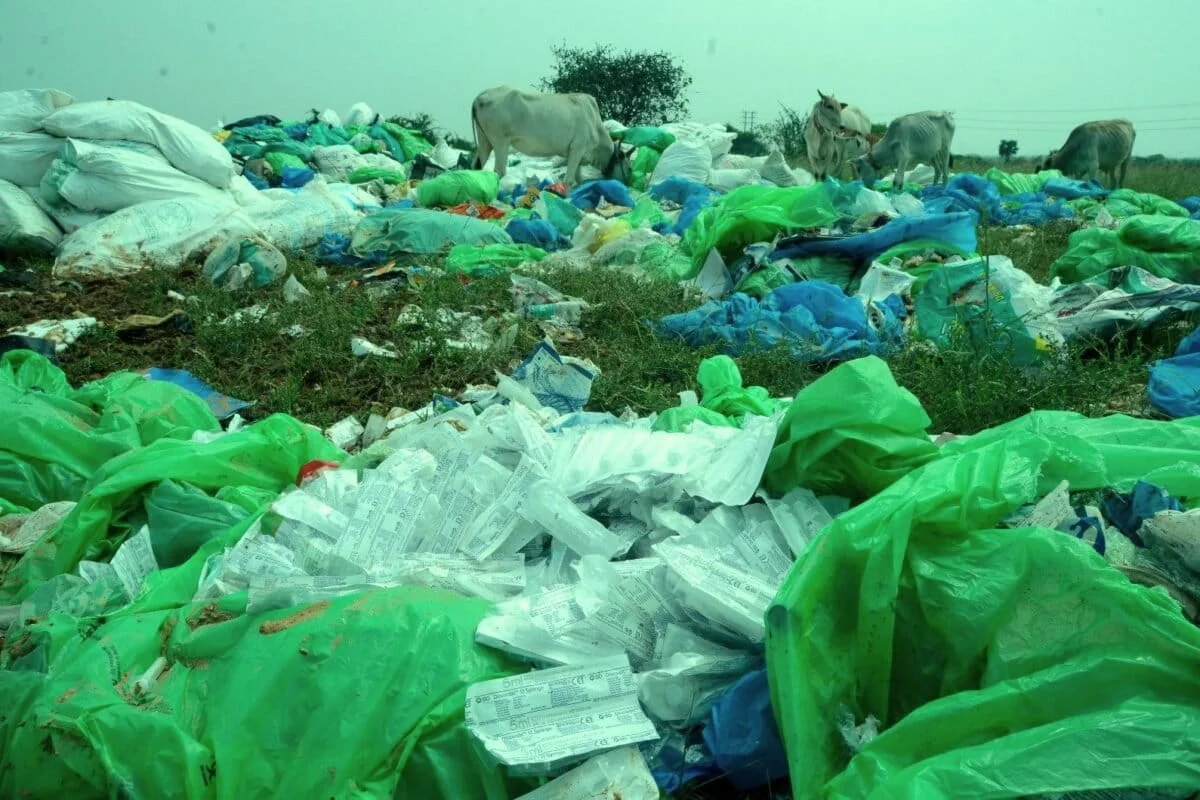
For over a decade, the serene rural landscapes of Tamil Nadu’s border districts have been transformed into clandestine dumping grounds for hazardous waste. What began as sporadic reports of "night-soil" or plastic litter has evolved into a disturbing, systemic pattern of cross-border environmental crime. Trucks laden with biomedical waste—syringes, anatomical remains, and contaminated plastics—regularly bypass checkposts to bury their toxic cargo in the fertile soil of Tamil Nadu.
This is not merely a story of regulatory oversight; it is a narrative of structural imbalance, where one state’s rapid healthcare expansion has far outpaced its waste-processing infrastructure, forcing the environmental burden onto its neighbor.
Main Facts: A Persistent Environmental Transgression
The dumping of biomedical, slaughterhouse, and plastic waste from Kerala into Tamil Nadu has become a chronic issue affecting several border districts, including Coimbatore, Tiruppur, Theni, Tenkasi, Tirunelveli, Virudhunagar, and Kanniyakumari. Environmentalists estimate that hundreds of such incidents have occurred over the last ten years, with a significant number remaining unreported due to the vast, unmonitored interior roads and private farmlands used by waste mafias.

Biomedical waste, as defined by India’s Biomedical Waste Management Rules (2016), includes any waste generated during the diagnosis, treatment, or immunization of human beings or animals. Because this waste is potentially infectious, its mismanagement poses a direct threat to public health, soil integrity, and groundwater purity.
The crux of the issue lies in the "Economics of Evasion." For healthcare facilities in southern Kerala, transporting waste to the state’s centralized treatment plants is a logistical and financial nightmare. Consequently, illegal operators are hired to "dispose" of the waste, which often means driving it across the border to be buried in pits or thrown into open wells in Tamil Nadu.
Chronology of a Crisis: From Isolated Incidents to Legal Reckoning
The timeline of this crisis reveals a shift from local grievances to national legal intervention.

April 2021: The Turning Point in Anaimalai
The issue gained significant legal traction in April 2021 when farmers in Semanampathy, a village near Anaimalai in Coimbatore, intercepted trucks carrying foul-smelling waste from Kerala. Investigations revealed that a private operator had leased 20 acres of land specifically to bury waste. The National Green Tribunal (NGT) took suo motu cognisance, marking the first time the tribunal recognized the issue as a systemic failure of Kerala’s waste management chain rather than a series of one-off violations.
2021–2024: The Infrastructure Gap Widens
During this period, Kerala’s healthcare sector saw an explosion in growth. The number of healthcare facilities rose from approximately 13,800 in 2019 to nearly 29,500 in 2024. However, waste processing capacity did not keep pace. Despite the NGT’s pressure, the state continued to rely heavily on a single facility, IMAGE, in Palakkad.
December 2024: The Tirunelveli Precedent
In a landmark event on December 17, 2024, a major dumping incident in the Tirunelveli district forced a rare diplomatic and administrative reversal. Following a stringent NGT order, the Kerala government was compelled to retrieve approximately 384 tonnes of illegally dumped waste and transport it back across the border for proper disposal. This incident traced waste back to high-profile institutions, including the Regional Cancer Centre in Thiruvananthapuram, exposing the failure of even "authorized" waste chains.

January 2025: Financial and Legal Retribution
Following the Tirunelveli incident, the Kerala Pollution Control Board (KPCB) faced scathing criticism from the NGT. In early 2025, environmental compensation totaling ₹1.12 crore was proposed against those responsible for the illegal dumping, signaling a new era of financial accountability.
Supporting Data: The Math of Mismanagement
To understand why this dumping occurs, one must look at the stark disparity between waste generation and processing capacity.
The Kerala Deficit
Kerala generates an estimated 90 to 96 tonnes of biomedical waste every day. For years, the state relied almost exclusively on the IMAGE (Indian Medical Association Goes Eco-friendly) facility in Palakkad, which has a capacity of 52.8 tonnes per day. Even with the addition of the KEIL (Kerala Enviro Infrastructure Ltd) facility near Ernakulam (16 tonnes per day), the total state capacity remains around 69 tonnes—leaving a daily deficit of over 20 tonnes.

The Distance Factor
Geography plays a major role in the illegal trade. Hospitals in Thiruvananthapuram or Kochi must transport waste 200 to 330 kilometers to reach the Palakkad facility. In contrast, the Tamil Nadu border is often less than 50 to 80 kilometers away. The high cost of fuel and specialized transport makes illegal dumping in Tamil Nadu a "cost-effective" alternative for unscrupulous contractors.
Comparative Infrastructure
In contrast, Tamil Nadu operates a more distributed network of 11 treatment facilities to handle approximately 60 tonnes of waste daily from 31,082 units. This decentralized approach ensures that waste rarely travels the extreme distances seen in Kerala, reducing the incentive for illegal disposal.
On-the-Ground Perspectives: The Human and Ecological Toll
For the farmers of Tamil Nadu, the statistics translate into a grim reality. Kathiresan, a 40-year-old coconut farmer from Semanampathy, has become an accidental activist. He recalls the night his community intercepted the waste trucks.

"They weren’t just burying garbage; they were burying the future of our land," Kathiresan says. "The smell was unbearable. They used heavy JCB machines to dig deep pits in the middle of the night. When we caught them, they admitted they were paid to make the waste ‘disappear.’"
The impact is not just aesthetic. Kathiresan notes that plastic waste often enters his fields through irrigation canals. "One of my 14 cows nearly died after consuming plastic that had been dumped. We saved her, but many others aren’t so lucky."
Gokul Prasanth, a mango farmer in the same region, highlights how the dumping methods have evolved. "Earlier, they would lease land. Now, they are more hit-and-run. They dump sacks of meat waste or syringes along the roadsides or throw them into open, abandoned wells. We’ve had to install our own surveillance cameras because we can’t rely on the authorities to be everywhere at once."

Official Responses: Promises of Reform
The Kerala State Pollution Control Board (KPCB) has acknowledged the severity of the situation while defending its current efforts. KPCB Chairperson Sreekala S. told reporters that while the two existing centers are at capacity, they are not the sole cause of the problem.
"Unauthorised clinics are the primary culprits," Sreekala stated. "These smaller facilities often operate outside the formal tracking system. We are now identifying them, imposing heavy fines, and have mandated GPS tracking for approximately 300 waste transport vehicles to ensure they reach authorized facilities."
However, environmentalists like Sridhar Radhakrishnan argue that the government’s response is "too little, too late." He points out that public opposition to new incinerators—driven by fears of air pollution—has stalled the expansion of waste infrastructure. "The government must find a way to build public trust and expand capacity, or this cross-border crisis will only worsen," Radhakrishnan warned.

On the Tamil Nadu side, the focus has shifted to border surveillance. While major highways are monitored, the Tamil Nadu police have admitted that the "porous" nature of the rural border makes 100% enforcement nearly impossible.
Implications: A "One Health" Crisis
The implications of this ongoing waste war extend far beyond state politics. It is a significant public health and ecological threat that fits into the "One Health" framework—the idea that human health is inextricably linked to the health of animals and the environment.
- Groundwater Contamination: As biomedical waste decomposes in unlined pits, it produces "leachate"—a toxic liquid that seeps into the water table. In agricultural belts like Tirunelveli and Coimbatore, this water is used for both drinking and irrigation, potentially spreading pathogens and chemical residues.
- Zoonotic Risks: Slaughterhouse waste dumped in the open attracts stray dogs and wild animals. If this waste is mixed with biomedical materials, it creates a breeding ground for diseases that can jump from animals to humans.
- Soil Degradation: The burial of non-biodegradable medical plastics and chemical waste alters the pH and microbial balance of the soil, rendering farmlands less productive over time.
- Interstate Tension: The persistent dumping has strained relations between the two states, leading to protests and calls for stricter border controls, which can impact legitimate trade and movement.
Conclusion: The Need for Regional Synergy
The "waste war" between Kerala and Tamil Nadu is a symptom of a larger national problem: the centralization of waste management in a rapidly urbanizing society. Kerala’s model of relying on a few large plants for the entire state has proven vulnerable to logistical failures and high operational costs.

For a permanent solution, experts suggest a three-pronged approach:
- Decentralization: Kerala must fast-track the establishment of smaller, district-level processing units to reduce transport distances.
- Digital Accountability: A real-time, blockchain-based tracking system for every kilogram of waste generated by every clinic—authorized or not—is essential.
- Inter-State Cooperation: Rather than a purely adversarial relationship, the two states could explore a regional waste-sharing agreement where border-area waste is treated at the nearest facility, regardless of state lines, backed by a clear financial clearinghouse mechanism.
Until such structural reforms are implemented, the farmers of Tamil Nadu will continue to keep a watchful eye on the horizon, waiting for the headlights of the next truck to emerge from the darkness of the border.