

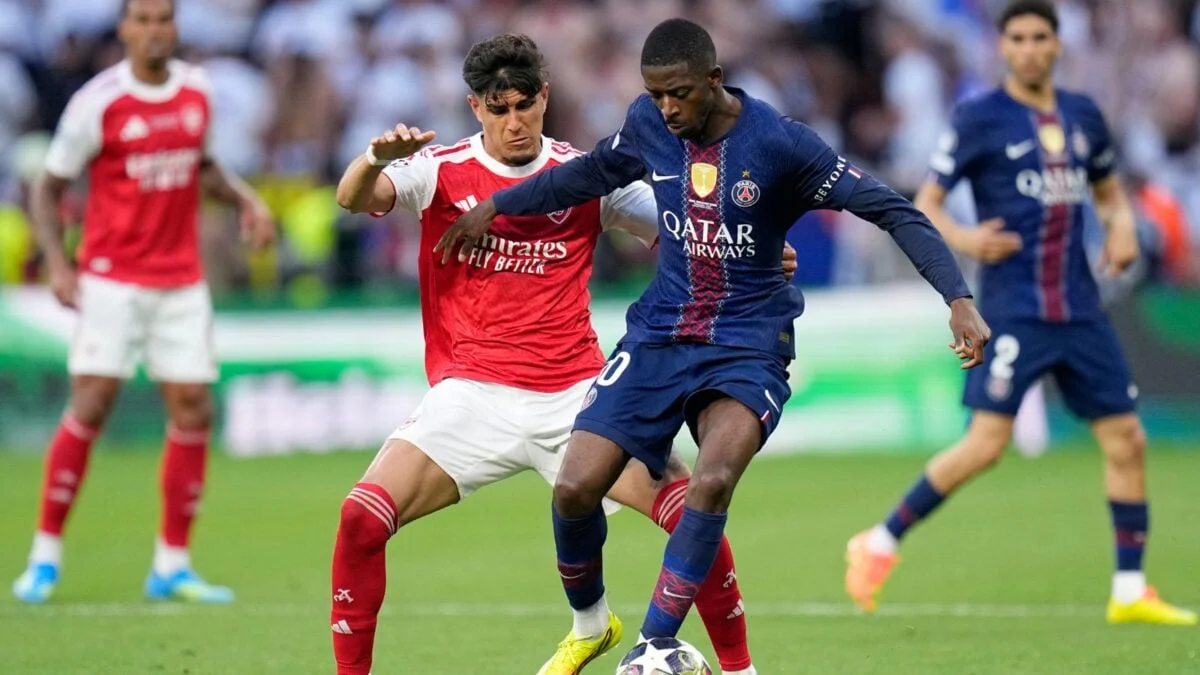
Budapest, Hungary – May 30, 2026 – The pinnacle of European club football, the UEFA Champions League Final 2025/26, has erupted into a captivating deadlock at the iconic Puskas Arena. Defending champions Paris Saint-Germain are locked at 1-1 with history-chasing Arsenal, as the titans of French and English football prepare for an enthralling period of extra time to decide who lifts the coveted trophy.
The atmosphere in Budapest is electric, with fans of both clubs creating a deafening symphony of cheers, chants, and anticipation. What began as a contest between Luis Enrique’s established European giants and Mikel Arteta’s resurgent Gunners has evolved into a nail-biting encounter, where every pass, tackle, and shot carries the weight of a season’s dreams. With the clock ticking past 23:39 IST, the footballing world holds its breath, knowing that 30 more minutes – and potentially a penalty shootout – stand between these two formidable sides and everlasting glory.
Main Facts: A Duel for Supremacy
The 2026 UEFA Champions League Final is more than just a match; it’s a narrative of contrasting ambitions and formidable journeys. Paris Saint-Germain, having finally broken their European duck last year by dismantling Inter Milan, arrived in Budapest with the singular goal of establishing a dynasty. Under the astute guidance of Luis Enrique, they seek to become back-to-back champions, a feat that would solidify their place among Europe’s elite. Their squad, brimming with talent like Ousmane Dembele, Kvaratskhelia, and Marquinhos, embodies the club’s long-standing project to conquer Europe.
On the other side stands Arsenal, a club steeped in tradition but yearning for its first-ever Champions League crown. Led by their transformative manager Mikel Arteta, the Gunners have enjoyed a spectacular resurgence, culminating in their first Premier League title in 22 years. Their journey to Budapest has been marked by resilience, tactical discipline, and a collective belief that has defied expectations. For Arsenal, this final represents the culmination of years of rebuilding and the chance to write a glorious new chapter in their illustrious history.
The Puskas Arena, a fittingly grand stage for such an epic showdown, has witnessed a pulsating contest from the first whistle. Arsenal seized an early advantage through Kai Havertz, only for PSG’s Ballon d’Or holder Ousmane Dembele to restore parity from the penalty spot. As the 90 minutes concluded with the scoreline finely balanced at 1-1, the prospect of extra time underscores the sheer competitiveness and unwavering determination displayed by both sets of players. This final is a testament to the tactical prowess of both managers and the relentless pursuit of victory by their respective squads.
Chronology: A Battle of Wills Unfolds
The match kicked off at the Puskas Arena with an immediate intensity that set the tone for the entire encounter.
Kick-off! French Champions vs English Champions!
The whistle blew, signalling the start of the biggest game in European club football. Both teams began with cautious probing, feeling each other out in the early stages, but the tension was palpable.
5′ GOAL! Kai Havertz Puts Arsenal Ahead! (PSG 0-1 ARS)
The stadium erupted just five minutes in! Arsenal, known for their quick transitions, capitalized on a swift break down the left flank. Kai Havertz, a player with a history of scoring crucial goals in Champions League finals (having done so for Chelsea five years prior), latched onto the pass. With a couple of decisive touches to set himself, he unleashed a powerful strike that left PSG goalkeeper Safanov with no chance, nestling into the back of the net. It was a moment of pure exhilaration for the Gunners, igniting their hopes for a maiden European crown.
11′ Ruiz Running In! PSG’s Immediate Response
Stung by the early setback, PSG immediately pushed for an equalizer. A series of intricate moves led to a dangerous incursion into the Arsenal penalty area, only to be thwarted by a crucial intervention from Gabriel at the back. The resulting corner kick was swung in towards Fabian Ruiz at the far post. Ruiz managed to get a connection, but his effort veered just wide, hitting the wrong side of the netting. It was a clear warning shot from the champions, demonstrating their intent to quickly restore parity.
18′ Arsenal Look to Double Their Lead!
Buoyed by their lead, Arsenal continued to press, showcasing their fluid attacking play. A beautifully orchestrated passage of play originating from their defence saw Odegaard attempt to thread a delicate ball through PSG’s left channel. However, Sedovic was alert to the danger, arriving just in time to cut out the chance and prevent Arsenal from extending their advantage.
21′ Kvara with the Ball… A Glimpse of PSG’s Threat
PSG’s star winger Kvaratskhelia, ever a menace on the left flank, began to assert his influence. He pounced on a loose ball from a diagonal pass, initiating a dazzling run. Kvara attempted to weave his way past several Arsenal defenders, demonstrating his renowned dribbling ability. However, Arsenal’s regrouped defence proved resilient, stifling the Georgian’s surge and putting an end to the immediate threat.
29′ Safonov Holds Steady After Contact! Injury Scare for PSG
A worrying moment unfolded as Arsenal continued to test the PSG defence. Bukayo Saka delivered a dangerous cross into the box, prompting PSG’s goalkeeper Safonov to rush out and punch it clear. In the process, Arsenal’s Leandro Trossard made accidental contact with Safonov’s head. The PSG custodian went down, leading to an immediate stoppage in play. Medical protocols for concussion were swiftly followed, ensuring Safonov was deemed fit to continue, much to the relief of the PSG bench and fans.
37′ Arsenal Hold Strong! Tactical Discipline on Display
As the first half neared its conclusion, Arsenal adopted a more conservative approach, focusing on maintaining their slender lead. They expertly disrupted PSG’s dangerous attacking moves, pushing the French champions back and frustrating their attempts to find an opening. Mikel Arteta’s tactical instructions were evident, with his side exhibiting impressive defensive organization and discipline, hoping to reach halftime with their advantage intact.
44′ PSG on the Prowl! Dembele Misses a Chance
In the final minutes of the first half, PSG intensified their efforts to equalize. They moved the ball with urgency from side to side, probing for a weakness in Arsenal’s resolute defence. Ousmane Dembele found himself in a promising position on the right flank, venturing forward to strike at goal. However, his shot flew high over the bar, a moment of frustration for the Ballon d’Or holder and his teammates.
Half-Time! Arsenal Lead 1-0!
The referee’s whistle brought the first half to an end, with Arsenal holding a crucial one-goal lead. It had been a captivating 45 minutes, marked by Arsenal’s early strike and PSG’s relentless, yet so far fruitless, pursuit of an equalizer.
Second Half Underway! Crucial 45 Minutes!
The teams re-emerged from the tunnel, knowing the second half would be decisive. For Arsenal, it was about holding on; for PSG, it was about breaking through.
49′ PSG Pressure! Enrique’s Words Resonate
With the words of Luis Enrique undoubtedly ringing in their ears, PSG started the second half with renewed vigour. They immediately applied significant pressure on the Arsenal goal, pushing forward in waves. However, Arsenal, true to their disciplined setup, absorbed the early onslaught, regrouping effectively to withstand the champions’ initial flurry.
56′ Arsenal Holding Steady! Kvara a Central Figure
As the second half progressed, PSG continued to gain traction, looking more like their usual selves. Kvaratskhelia emerged as the central point of many of their attacks, his influence growing with each passing minute. The Georgian winger’s dazzling runs and creative play kept Arsenal’s defence on high alert, but the Gunners remained resolute, fending off a flurry of attacks.
64′ GOAL! Dembele Equalizes from the Spot! (PSG 1-1 ARS)
The breakthrough PSG craved finally arrived, albeit from a penalty. Kvaratskhelia, who had been a constant threat, made a surging run into the box where he was fouled by Mosquera. The referee immediately pointed to the spot. Ousmane Dembele, the reigning Ballon d’Or holder, stepped up with supreme confidence. Without hesitation, he rifled the ball into the back of the net, restoring parity for PSG. The goal was a massive relief for the French champions, who had struggled to breach Arsenal’s defence from open play.
79′ In the Balance! Kvara Hits the Bar!
With the score level, the game became even more finely balanced. A brilliant piece of control and movement from Declan Rice in midfield ultimately came to nothing as PSG quickly regained possession from Saka. Kvaratskhelia then launched a devastating counter-attack, carrying the ball for over half the length of the field. His left-footed effort from the edge of the box was powerful, but agonizingly struck the outside of the post, denying PSG a potential lead. The near-miss underscored the razor-thin margins in this high-stakes final.
88′ Impending Extra Time? Vitinha’s Near Miss
As regulation time dwindled, neither side could find a decisive winner. The prospect of extra time loomed large. Vitinha, attempting to find the top corner from just outside the danger area, couldn’t quite bring the ball under control in time, and his shot clipped the wrong side of the net. The tension was almost unbearable, with every missed chance amplifying the significance of the remaining minutes. Six minutes of added time were announced, but the scoreboard remained unchanged.
90+6′ Barcola on the Counter… High and Wide!
Arsenal asserted one final push, putting PSG’s defence under immense pressure with a sequence of play deep in their half, which was ultimately cleared. PSG then launched a rapid counter-attack, with Barcola leading the charge from the halfway line. He dribbled skilfully into the box, creating a shooting opportunity, but his final effort sailed high and wide over the bar. It was the last significant action of regulation time.
Full Time! Extra Time! And on we go! (PSG 1-1 Arsenal)
The referee’s whistle signalled the end of 90 thrilling minutes. With the score locked at 1-1, the UEFA Champions League Final was headed for extra time. Thirty more minutes of football, and potentially a penalty shootout, would be needed to crown the European champions. The drama was far from over.
Supporting Data: The Road to Budapest and Tactical Masterclasses
The journey for both Paris Saint-Germain and Arsenal to the Puskas Arena has been a testament to their respective strengths and tactical evolutions.
PSG: The Quest for a Dynasty
As defending champions, PSG entered the 2025/26 campaign with a target on their back. Their journey through the group stage was not entirely smooth, finishing 11th in what appears to be a reference to their overall ranking across all groups or perhaps a slow start in their domestic league at the time, given they still secured a knockout playoff spot. They amassed 4 wins, 2 draws, and 2 defeats from their 8 group assignments, showcasing a more challenging path than their eventual triumph suggested.
Their knockout stage run, however, was a display of sheer attacking dominance. In a thrilling knockout playoff, they survived a scare against domestic rivals Monaco, progressing 5-4 on aggregate. The Round of 16 saw them unleash their full power against English giants Chelsea, routing them 8-2 over two legs – a performance that sent shockwaves across Europe. The quarter-finals brought another dominant display, as they dismantled Liverpool 4-0, showcasing their ability to control and dictate against top-tier opposition. The semi-final was a classic encounter against German champions Bayern Munich, where PSG edged out a breathtaking 6-5 aggregate victory, confirming their ticket to Hungary and a chance to defend their hard-won title.
Luis Enrique’s tactical philosophy emphasizes possession, fluid attacking movements, and high pressing. Key players like Marquinhos provide leadership at the back, while Hakimi offers explosive width. The midfield maestros Vitinha and Fabian Ruiz dictate tempo, setting the stage for the electrifying Kvaratskhelia and the Ballon d’Or holder Ousmane Dembele to wreak havoc in the final third. The addition of players like Doue, Pacho, and Joao Neves highlights PSG’s continued investment in both established stars and emerging talents.
Arsenal: The Dream of a Maiden European Crown
Arsenal’s path to the 2026 Champions League Final has been nothing short of remarkable, characterized by an unbeaten run in the competition. Under Mikel Arteta, the Gunners have transformed into a tactically astute and resilient unit. They topped their group with a perfect record of eight wins from as many games, demonstrating their consistency and dominance from the outset.
In the knockout rounds, Arsenal continued their impressive form. They overcame a strong Bayer Leverkusen side in the Round of 16 with a convincing 3-1 aggregate victory, showcasing their ability to perform under pressure. The quarter-final saw them navigate a tricky tie against Sporting Lisbon, emerging victorious with a narrow but decisive 1-0 aggregate scoreline, a testament to their defensive solidity. Their semi-final clash against Atletico Madrid was another tight affair, with Arsenal ultimately pipping the Spanish side 2-1 to secure their coveted berth in Budapest.
Arteta has instilled a clear identity at Arsenal, focusing on disciplined defending, intelligent pressing, and dynamic attacking play. David Raya has provided a reliable presence in goal, shielded by a formidable defensive line including William Saliba, Cristhian Mosquera, Piero Hincapie, and Gabriel Magalhaes. In midfield, the formidable trio of Declan Rice, Martin Odegaard, and Kai Havertz (who has proven to be a big-game player) combines defensive steel with creative flair. Upfront, the pace and trickery of Bukayo Saka, Leandro Trossard, and Gabriel Jesus (though Trossard and Havertz started the final) have consistently posed threats to opposition defences. The emergence of young talents like Myles Lewis-Skelly further highlights the depth and future potential of Arteta’s squad.
Head-to-Head History
Historically, PSG and Arsenal have met five times in European competition. The Parisians hold a slight edge, having defeated the Gunners twice, compared to Arsenal’s single victory. The remaining two encounters ended in stalemates, suggesting a history of closely contested battles between these two clubs. This final, already a draw after 90 minutes, adds another chapter to their competitive rivalry.
Venue: Puskas Arena, Budapest
The Puskas Arena in Budapest, a modern marvel of stadium architecture, has provided a magnificent backdrop for this grand final. Known for its superb acoustics and passionate Hungarian crowd, the stadium has been filled to capacity, creating an unforgettable atmosphere that elevates the importance of the occasion. The choice of Budapest reflects UEFA’s commitment to bringing major finals to diverse and enthusiastic footballing nations.
Official Responses: Managerial Philosophies and High Stakes
As the match entered its critical extra time phase, the insights from the two masterminds in the dugouts, Luis Enrique and Mikel Arteta, offer a glimpse into the psychological battle underway. While real-time quotes during extra time are rare, their pre-match sentiments and in-game adjustments speak volumes.
Luis Enrique, PSG Manager:
"We knew this would not be easy. Arsenal have proven themselves to be a formidable opponent, incredibly organized and with dangerous players. Our journey to defend this title has been challenging, but the spirit of this team is unbreakable. When we went down a goal, there was no panic. We trust our process, we trust our players. Ousmane [Dembele]’s penalty was crucial, showing his composure and leadership as our Ballon d’Or winner. We’ve shown our attacking quality throughout this campaign, dismantling teams like Chelsea and Liverpool. Now, it’s about finding that one moment of magic, that one decisive action in extra time. We are the champions, and we will fight until the very last second to keep this trophy."
Enrique, known for his calm demeanour and tactical flexibility, would have emphasized the importance of patience and exploiting any fatigue in the Arsenal ranks. His mid-game adjustments, likely pushing Kvaratskhelia and Dembele to create more one-on-one situations, paid off with the penalty. For him, this final is not just about winning but about cementing PSG’s status as a dominant force in European football, validating years of strategic investment.
Mikel Arteta, Arsenal Manager:
"This is what we have worked for, what we have dreamed of. To be here, in the Champions League final, is a massive achievement for this club and these players. To take an early lead through Kai [Havertz] was a fantastic start, reflecting our intent and confidence. We knew PSG would respond, they are champions for a reason, and Dembele is a world-class player. Their equalizer from the penalty spot was tough, but our resilience has been our hallmark all season. We defended bravely, absorbed pressure, and created our own chances, like Kvara hitting the bar. This team has shown immense character, especially after winning the Premier League. We are unbeaten in this competition, and that belief runs deep. Now, it’s about going again, finding that extra gear, and giving everything for our supporters. We are chasing history, and we will leave absolutely nothing on that pitch."
Arteta’s words would undoubtedly focus on the belief he has instilled in his squad. His emphasis on tactical discipline, collective effort, and mental fortitude has been central to Arsenal’s resurgence. He would be urging his players to maintain their defensive shape while seeking opportunities to exploit PSG’s potential fatigue or any defensive lapses in the extended period. For Arteta, leading Arsenal to their first European crown would be the ultimate validation of his transformative project at the club, etching his name into the annals of Arsenal’s storied history.
Implications: Legacy, Dynasty, and the Future of European Football
The outcome of this UEFA Champions League Final will have profound implications, not only for the two clubs involved but potentially for the broader landscape of European football.
For the Winner:
If PSG were to triumph, it would mark a significant moment in their history: back-to-back Champions League titles. This would solidify their position as a true European powerhouse, silencing any remaining critics who questioned their ability to maintain success after their initial breakthrough. It would validate their long-term project, their immense financial investment, and Luis Enrique’s tactical genius. A dynasty would be born, establishing PSG as a benchmark for ambition and achievement. The individual legacies of players like Dembele (already a Ballon d’Or winner) and Kvaratskhelia would be further enhanced, cementing their status as generational talents.
Should Arsenal emerge victorious, it would be a fairytale ending to a sensational season. Their first-ever Champions League crown would represent the pinnacle of Mikel Arteta’s transformative work, cementing his status as an Arsenal legend alongside Arsène Wenger. It would signify the return of a sleeping giant to the very top of European football, breaking a long-standing European duck and ushering in a new era of potential dominance. For players like Bukayo Saka, Martin Odegaard, and Declan Rice, it would be the crowning achievement of their careers, elevating them to an elite tier of footballers who have conquered Europe. This triumph would resonate deeply with the club’s loyal fanbase, symbolizing the fruits of patience, belief, and unwavering support.
For the Loser:
The sting of defeat in a Champions League final is always acute.
For PSG, losing would be a bitter disappointment, falling short of defending their title. While it wouldn’t diminish their status as a top European club, it would highlight the immense challenge of maintaining continuous success at this level. Questions might arise about their mental fortitude in high-pressure situations, despite their overall strong campaign.
For Arsenal, a defeat, while heartbreaking, would still represent a monumental achievement. Reaching the Champions League final after years of rebuilding is a testament to their progress. It would serve as invaluable experience for a relatively young squad and manager, providing crucial lessons that could fuel future attempts. The journey itself would validate their project and establish them as consistent contenders for major honours, both domestically and in Europe.
Broader Implications:
The 2026 Champions League Final is a clash of narratives: the established new guard versus the re-emerging historical giant. Its outcome could influence transfer market dynamics, sponsorship deals, and the perception of which leagues truly hold sway in Europe. It also highlights the continued competitive balance at the highest level of club football, where even with vast resources, success is never guaranteed, and the fine margins of a single match can define legacies.
As extra time begins, the world watches, poised for a dramatic conclusion to what has already been an unforgettable UEFA Champions League Final. One team will write history, the other will face the agony of defeat, but both will leave an indelible mark on the annals of European football.
