

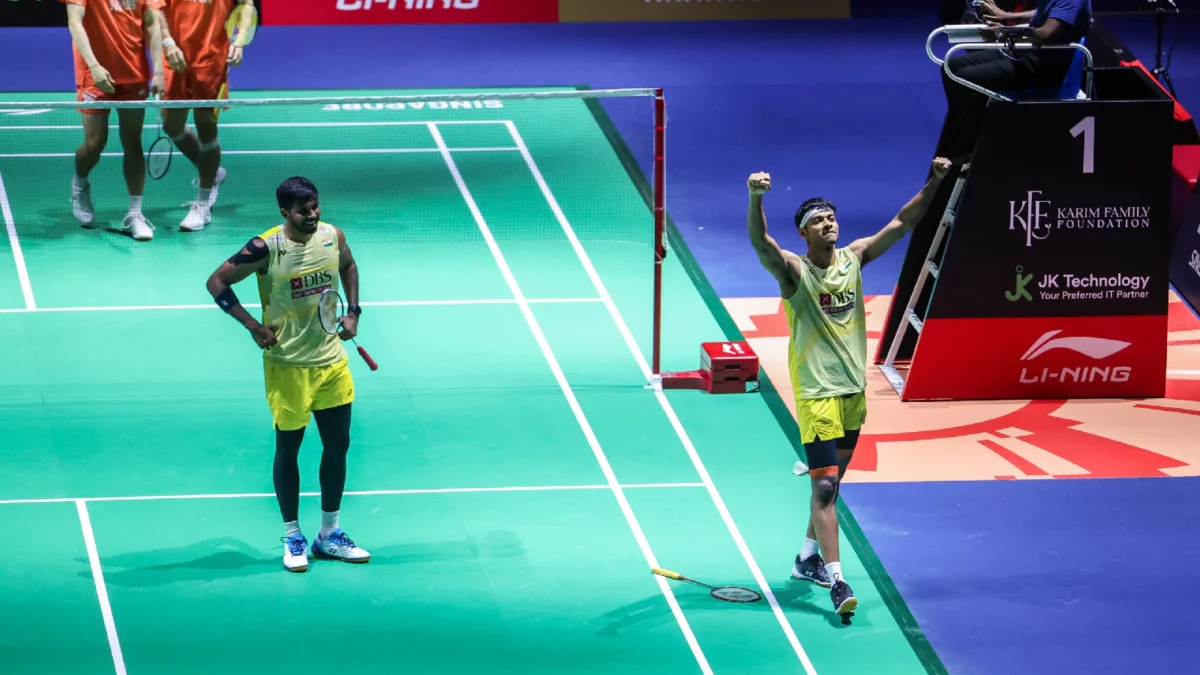
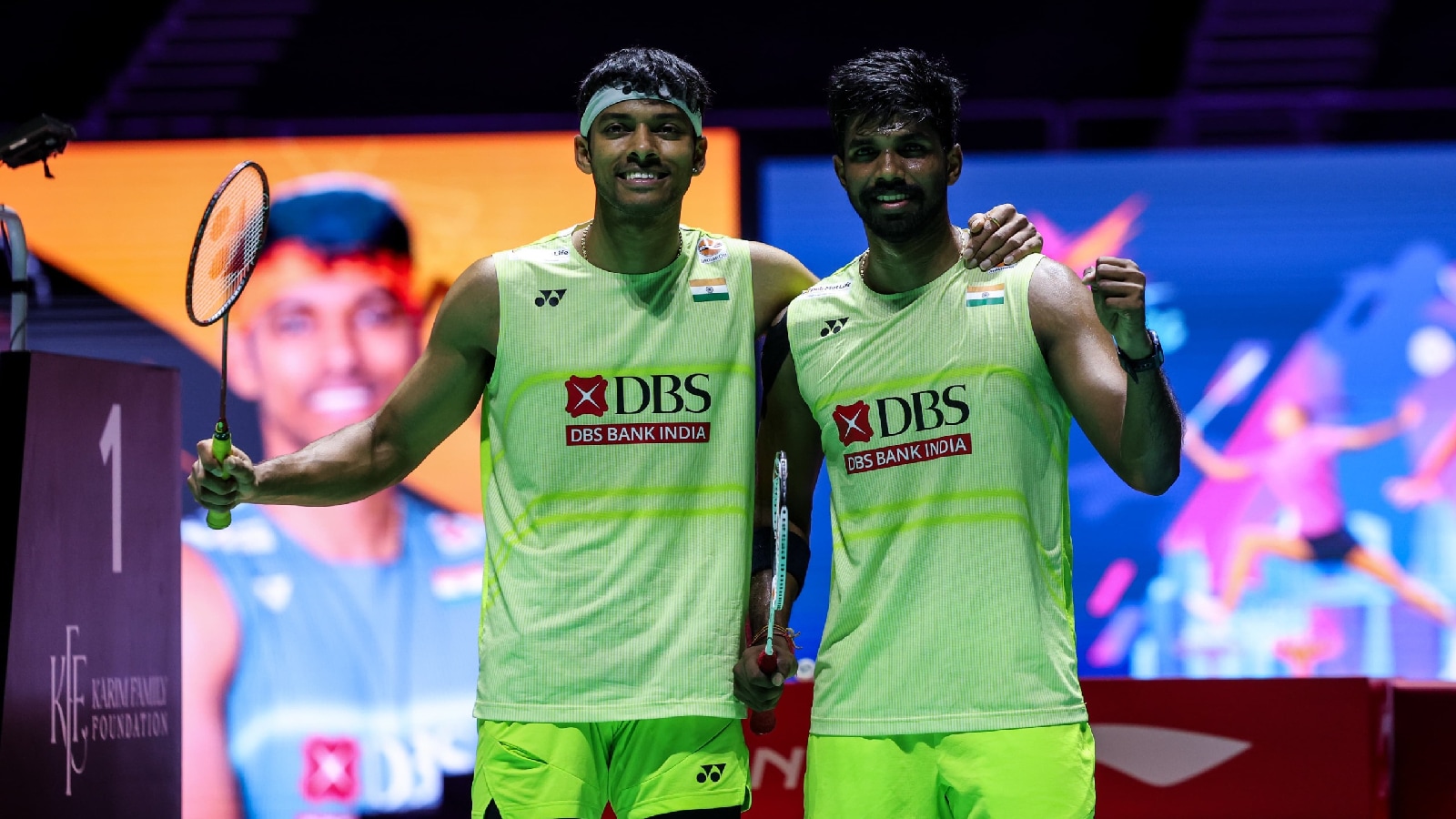
Singapore, [Date of publication, e.g., May 31, 2026] – In a display of audacious skill and unyielding spirit, India’s star men’s doubles pair, Satwiksairaj Rankireddy and Chirag Shetty, delivered one of their most significant victories to date, dismantling reigning World Champions and top seeds Seo Seung-jae and Kim Won-ho of South Korea. The 21-19, 21-18 triumph at the Singapore Open Super 750 not only propelled the formidable duo into their second consecutive final of the month but also marked a pivotal moment in their illustrious careers, ending a daunting 35-match winning streak held by their Korean adversaries.
This wasn’t merely a win; it was a statement forged in the crucible of past defeats and refined by an evolving game. The Indian Express has exclusively learned that the victory, achieved with what has been described as a "post-fear blazing strength," signifies a profound maturation in the pair’s approach, enabling them to overcome a duo that had previously proven to be their kryptonite. The packed Singapore Indoor Stadium bore witness to history, as Satwik-Chirag became the first Indian men’s doubles pair to reach the final of the prestigious tournament, igniting a fervent roar from the neutral yet appreciative crowd.
Main Facts: A Landmark Victory Unpacked
The monumental quarter-final clash saw Satwiksairaj Rankireddy and Chirag Shetty, often referred to as the ‘Indian Express’ of badminton, overcome the formidable South Korean World Champions, Seo Seung-jae and Kim Won-ho, in a straight-sets thriller. The scores of 21-19, 21-18 underscore the tight, fiercely contested nature of the encounter, where every point was a battle. This victory, secured at the Singapore Open Super 750, is remarkable for several reasons:
- Breaking the Jinx: It was Satwik-Chirag’s inaugural win against the "dreaded Koreans," a pair known for their superior skills and tactical prowess that had previously bested the Indians. This breakthrough marks a psychological turning point for the Indian duo.
- Ending a Dominant Streak: Seo and Kim arrived in Singapore riding an astonishing 35-match winning streak, having not tasted defeat since last autumn, a run spanning seven tournaments. To be the pair that halted such a formidable run speaks volumes of the Indians’ performance.
- Successive Finals: This triumph secures Satwik-Chirag’s spot in their second successive final in the month of May, highlighting their consistent high-level performance and peak form.
- Historic First for India: The achievement of reaching the Singapore Open final is unprecedented for an Indian doubles pair, creating a new chapter in the nation’s badminton history. The roaring crowd, usually accustomed to local or East Asian finalists, was captivated by the Indians’ "gleaming attack."
- Pressure Release: For the tall Indian shuttlers, who have often faced "headwinds of the flat game and service return troubles," this victory offered a "massive release of pressure," validating their relentless pursuit of an all-around game. Their ability to not only out-skill a "contemporary doubles great" like Seo Seung-jae but also to recover from trailing positions in both sets showcased their mental fortitude.
Chronology: The Battle Unfolds
The match was a narrative of resilience, tactical brilliance, and sheer willpower, played out in two gripping sets.
The Buildup: Forging Post-Fear Strength
The path to this momentous encounter was paved with challenges and lessons. Satwik-Chirag had encountered Seo-Kim twice in the preceding year, succumbing to the Koreans’ relentless pressure and intricate play. These losses, coupled with the lingering sting of "Olympic disappointments," had spurred a profound evolution in the Indian pair’s game. They weren’t just seeking revenge; they were seeking mastery. Over the last year, their game had "evolved by leaps and bounds, becoming more complete than even when they were World No 1s." This maturation wasn’t about eradicating fear but transforming it into a "post-fear blazing strength," a determination to confront and conquer their most challenging adversaries. The Singapore Open presented the perfect stage for this crucible moment.
First Set – A Gritty Comeback
The opening set began with familiar struggles for the Indian pair. The Koreans, with their precise strokes and tactical acumen, quickly established a "usual vantage," pulling ahead to an 8-13 lead. Satwik-Chirag found themselves grappling with "headwinds of the flat game and service return troubles," compounded by being "faulted on high serves plenty," which briefly left them "a little jagged." The momentum seemed firmly with Seo-Kim, who were executing their game plan with characteristic efficiency.
However, what followed was a testament to the Indians’ transformed mindset. The period from 9-13 to 17-17 marked the critical turnaround, a phase for which they had been "prepping for the last one year." The "drifty conditions" in the arena, initially a challenge, began to be harnessed by the Indians. They eschewed their often-anticipated "slam bang smash machines" reputation, instead employing "snappy, flat drives" that pushed Seo-Kim deep into their court. This subtle yet significant tactical shift disrupted the Korean rhythm, creating "wide spaces to kill."
Crucially, the southpaw Seo Seung-jae, a player renowned for his front-court command and ability to course-correct, found himself perpetually in two minds. His ingrained wariness of the Indians’ powerful smash, their signature weapon, led him to anticipate deep shots, allowing Satwik-Chirag to "gleefully tap onto the forecourt" and seize their first lead at 18-17. The shift in gears, from trailing by five points, was almost imperceptible in its execution, highlighting their seamless adaptability.
The set’s climax was a masterclass in controlled aggression. Satwik, despite his often "iffy in confidence," operated in a "classic 1-2 move" with Chirag. A soaring smash from Satwik was immediately followed by Chirag "leaping like a second giant wave" to deliver another powerful blow. A momentary lapse with a service error from Satwik was instantly redeemed by an "aggressive cross net," catching the Koreans off guard. The final point was a "fast, taut, tense rally," an attacking flurry from the Indians met by the Koreans’ formidable defense, until a definitive Satwik smash finally breached Seo’s "usually watertight defense." The "whole packed Singapore Indoor arena was on the edge of seat," erupting in "frenzied reactions" as the Indians claimed the first set 21-19, answering the question of "Why must anyone watch doubles badminton?"
Second Set – Asserting Dominance
Despite losing the first set, Seo-Kim’s status as "No 1, and on an undefeated streak, for a reason," meant the Indians could expect no respite. True to form, the Koreans once again took a slender lead, moving from 0-3 to 3-4. However, the psychological battle had begun to tilt. Seo, in particular, was now "convinced the Indian attack was an almighty headache."
This set saw Satwik-Chirag unleash their full arsenal of evolved tactics. They introduced the "decoy smash," the "ultimate woot woot moment of men’s doubles," where Chirag would "merely jump as if to hit," only for Satwik to "rise like a booming echo and actually complete the action while standing right behind." This deceptive play sowed further seeds of doubt in the Koreans’ minds. Chirag followed this with "cheetah-like front court interceptions," even "boldly attacking the Korean serve," a move of sheer audacity. Satwik then took command on returns, "rattling Kim" and sending "his high flats at face height," placing the Koreans in an "awkward bind."
The "real war bugle was blown at 9-9," accompanied by the iconic "Chirag cry of ‘Maar’" (Hit!). Even as the Koreans managed a slim 11-10 lead, they had been "bisected twice – with both Seo and Kim not going for the shuttle," a tell-tale sign of their growing disarray, especially after they had tried to destabilize the Indians with a flick serve.
Falling behind to 11-14, the Indians showed no panic, "quite prepared" for the ebb and flow. Their strategy focused on denying Seo, the Korean playmaker, time and space. By employing "hard pushes," they kept him "at bay," preventing him from "creating openings while going on the attack themselves." Satwik skillfully "drew out cross lifts with his smashes," setting up Chirag for decisive kills. Another instance of "bisecting the Koreans" rattled Seo enough to commit a "rare smash long" when presented with an opportunity.
The Koreans, growing visibly frustrated, attempted to regain control. Seo, "enraged," tried to take charge at the net at 17-15, but a "poor lift from Kim" led to "another smash belt down." With "Satwik’s attack near unretrievable" and the Indians "looking assured at the net," the Koreans’ resistance crumbled. Seo erred on a service, and whatever Kim attempted next was insufficient to stem the tide. With Korean legend Park Boo Jong, part of the Indian coaching setup, observing from the sidelines, Satwik-Chirag secured a famous 21-18 victory, etching their names into the tournament’s history.
Supporting Data: Context and Analysis
The magnitude of Satwik-Chirag’s win is best understood by examining the broader context of their journey and the caliber of their opponents.
Historical Context
Seo Seung-jae and Kim Won-ho were not just any top seeds; they were the reigning World Champions, a pairing that had established a formidable dominance with an astounding "35-match winning streak," their last defeat occurring "last autumn, seven tournaments ago." This unprecedented run underscored their consistency and tactical superiority. For Satwik-Chirag, this win was also a matter of overcoming personal history, having lost to the Korean pair "twice last year." These previous encounters, though defeats, served as invaluable learning experiences, shaping the "evolution of their game."
Furthermore, the Singapore Open itself held a unique challenge for Indian doubles. The tournament, with its rich history, "has never had an Indian doubles finalist." Satwik-Chirag’s achievement thus transcends a mere match win; it’s a pioneering moment, shattering a long-standing barrier and inspiring future generations of Indian shuttlers. Their journey, marked by "Olympic disappointments," has evidently been a catalyst, pushing them to become "more rounded in their skills" and "better armed at beating pairings who make them uncomfortable."
Player Analysis
The match showcased the distinct yet complementary strengths of both pairs.
- Satwik-Chirag: Their "early days and prevailing reputation of being Slam bang smash machines" proved to be a tactical advantage. This reputation meant opponents like Seo Seung-jae were "perennially in two minds," constantly anticipating the "big smash to come to back court," which the Indians shrewdly exploited with forecourt plays. While Satwik can be "iffy in confidence," his synergy with Chirag allows them to "operate on auto-pilot" in critical moments. Chirag, with his "cheetah-like front court interceptions" and ability to "leap like a second giant wave," provides the crucial aggressive follow-up and net presence. Their "gleaming attack" combined with adaptable "snappy, flat drives" demonstrated their newfound completeness. The "drifty conditions" in Singapore, rather than hindering them, were expertly leveraged to neutralize Korean skills and enhance their attacking flair.
- Seo Seung-jae and Kim Won-ho: Seo Seung-jae is undeniably a "contemporary doubles great," known for his "superior skills" and ability to "take charge on front court." His "usually watertight defense" is a hallmark of his game. Kim Won-ho, whose "mother is an Olympic legend," brings a strong lineage and complementary skills to the partnership. Their previous dominance was built on a combination of relentless pressure, precise shot-making, and exceptional defense. However, in this match, the "fast conditions" seemed to "neutralize Korean skills" to some extent, and the Indians’ strategic variations kept them on the back foot.
Match Dynamics and Statistical Implications
While exact statistics are not available from the provided text, the narrative highlights key dynamics:
- Comebacks: Trailing in both sets (8-13 in the first, 0-3 then 11-14 in the second) and recovering to win demonstrates exceptional mental fortitude and tactical adjustments mid-match.
- Tactical Innovation: The successful implementation of the "decoy smash" and the focused strategy of "keeping Seo at bay with hard pushes" while simultaneously creating "wide spaces to kill" were pivotal.
- Pressure Points: The crucial shifts, such as the 9-13 to 17-17 run in the first set, and Chirag’s "Maar" cry at 9-9 in the second, underline moments where the Indians seized momentum.
- Opponent Frustration: Seo’s "rare smash long" and "enraged" reactions, coupled with Kim’s "poor lift" and service errors, indicated the immense pressure the Indians exerted, forcing uncharacteristic mistakes from the World Champions.
Official Responses: Reflections from the Camp
While direct quotes from the players or coaching staff are not immediately available, the implications of such a monumental victory resonate deeply within the Indian badminton contingent.
Coaching Insights
The presence of Park Boo Jong, a respected Korean legend, on the Indian coaching chair during this momentous victory against his compatriots, adds an intriguing layer. While his specific "official response" is not documented, his strategic input and understanding of Korean playstyles would undoubtedly have been invaluable. His tacit approval, or even just his watchful presence, signifies a belief in the Indian pair’s potential and their successful execution of a well-devised game plan. This win validates the strategic direction and training regimen implemented by the coaching staff.
Player Reflections (Inferred)
For Satwiksairaj and Chirag, the win represents a profound "release of pressure." Having faced the Koreans twice previously and losing, this victory would instill immense confidence, particularly in their ability to perform under pressure against the very best. It validates their year-long efforts to evolve their game, moving beyond their reputation as mere "smash machines" to a more "complete" and tactically nuanced pair. One can infer a sense of exhilaration, relief, and renewed self-belief, knowing they have conquered a significant psychological barrier. This performance underscores their readiness to compete at the absolute pinnacle of the sport.
Opponent’s Perspective (Inferred)
From the Korean camp, particularly Seo and Kim, the defeat would necessitate a period of intense reflection. Having enjoyed an extraordinary 35-match winning streak, this loss signals a new challenge. Seo’s visible frustration during the match, his uncharacteristic errors, and the inability to effectively counter the Indian’s evolving tactics suggest a dawning realization that their playbook against Satwik-Chirag needs a significant overhaul. The article explicitly states that their game "will be threadbared by Koreans – not just the coaches, Kim’s mother is an Olympic legend too." This implies an acknowledgement that "next time, a Plan B will be necessary," indicating a respect for the Indian pair’s development and the need for renewed strategic preparation from the Korean side.
Implications: A New Era for Indian Doubles
The reverberations of Satwik-Chirag’s victory extend far beyond the confines of the Singapore Indoor Stadium, promising significant implications for their careers, Indian badminton, and the global men’s doubles landscape.
For Satwik-Chirag: Momentum Towards Greatness
This victory is a colossal confidence booster for Satwik-Chirag. Overcoming a pair they had previously struggled against, and doing so by ending their dominant winning streak, validates their tactical evolution and mental fortitude. It solidifies their status as genuine contenders for every major title and provides immense momentum heading into the crucial Olympic year. The "post-fear blazing strength" they demonstrated suggests a newfound psychological resilience, essential for navigating the pressures of elite competition. The win reinforces their belief in their "more complete" game, assuring them that their diligent work on varied strokes, defensive capabilities, and strategic play is bearing fruit. The immediate implication is their pursuit of the Singapore Open title, aiming to "end a title drought" and further cement their place at the summit of world badminton.
For Indian Badminton: Breaking New Ground
The historical significance of becoming the first Indian doubles pair to reach the Singapore Open final cannot be overstated. This achievement will undoubtedly inspire a new generation of shuttlers in India, demonstrating that sustained excellence in doubles is attainable on the global stage. It raises the profile of Indian men’s doubles, moving it from a niche interest to a mainstream spectacle. This landmark moment contributes to a broader narrative of Indian badminton’s rise, following successes in singles and mixed doubles, proving the nation’s versatility across disciplines.
For the Men’s Doubles Landscape: A Shift in Power
Seo-Kim’s 35-match winning streak had established them as the undisputed kings of men’s doubles. Satwik-Chirag’s triumph shatters that aura of invincibility, signaling a potential shift in the global hierarchy. It serves as a warning shot to all top pairs that the Indian duo is not only a formidable attacking force but also a tactically astute and resilient opponent. This result injects renewed excitement and unpredictability into the men’s doubles circuit, promising more fiercely contested matches as other pairs analyze the blueprint for defeating the Korean champions.
The Road Ahead: Eyes on the Prize
While the immediate focus remains on the Singapore Open final, the long-term implications are clear. The "threadbared by Koreans" comment suggests that future encounters will be even more intensely strategic, requiring "a Plan B" from both sides. This tactical chess match will push both pairs to continually innovate and refine their game. For Satwik-Chirag, this win is a critical stepping stone on their journey towards Olympic glory. It demonstrates they possess the caliber, the temperament, and the tactical depth to challenge for the highest honors in the sport, making their upcoming matches and tournaments highly anticipated events. The quest for global supremacy continues, now with a newfound confidence and a historic triumph under their belts.
