

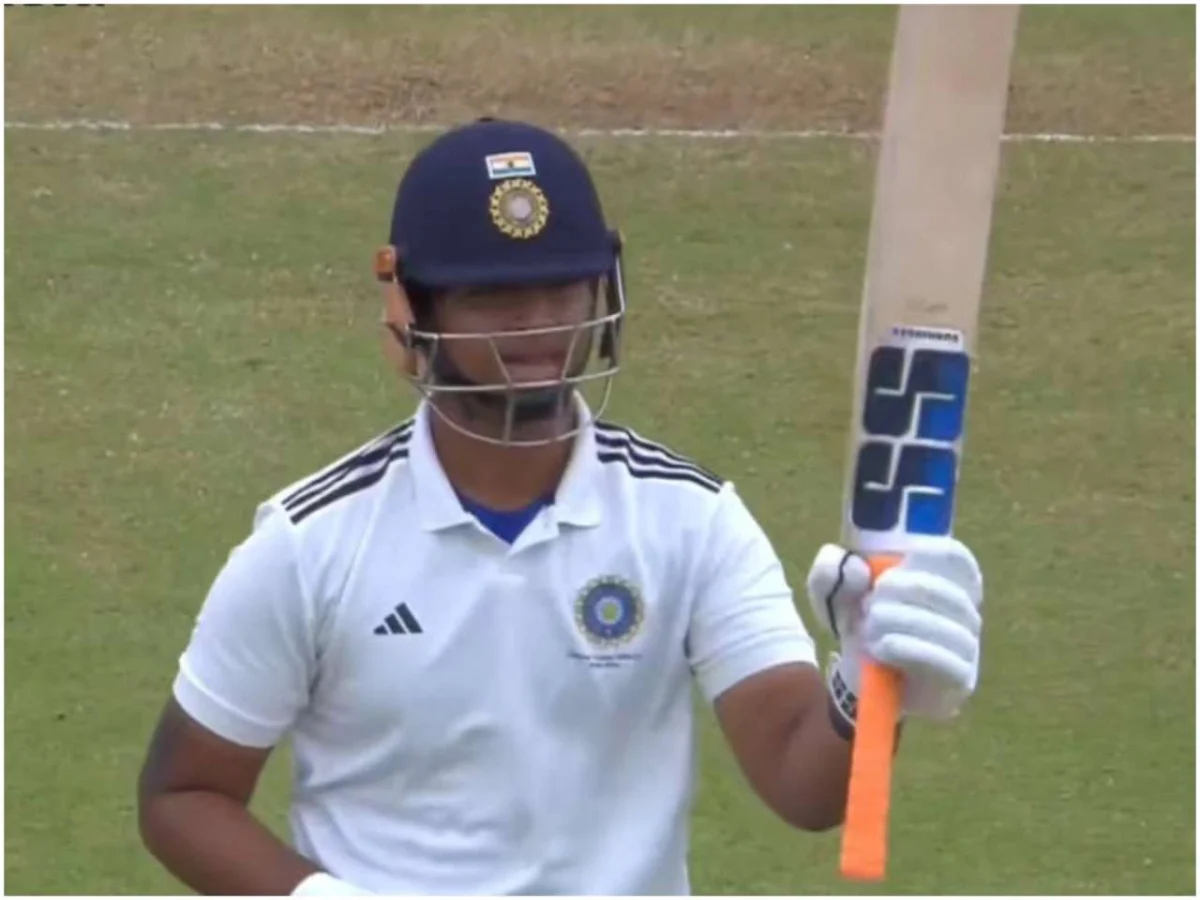
Bengaluru, India – In a dazzling display of precocious talent, Vaibhav Sooryavanshi has etched his name into the annals of Indian cricket, becoming the youngest player ever to score a half-century in the prestigious Duleep Trophy. The 15-year-old sensation achieved this monumental feat during the ongoing semi-final clash between East Zone and Central Zone at the BCCI Centre of Excellence in Bengaluru, breaking a 57-year-old record that stood as a testament to cricketing longevity. His remarkable innings, which saw him score a fluent 92, not only provided a crucial impetus to his team but also ignited a fresh wave of excitement about the future of Indian cricket.
Sooryavanshi’s historic knock transcended mere statistics, offering a glimpse into the temperament and skill that belies his tender age. Facing seasoned first-class bowlers, he demonstrated an impressive array of strokes and a maturity beyond his years, showcasing why he is already being touted as one of the most promising young talents in the country. This record-breaking achievement underscores the Duleep Trophy’s enduring role as a crucible for emerging stars, providing a high-stakes platform for the next generation of cricketers to prove their mettle.
A Star is Born: The Record-Breaking Innings Unfolds
The stage was set at the BCCI Centre of Excellence in Bengaluru, a venue synonymous with nurturing cricketing talent. The Duleep Trophy semi-final between East Zone and Central Zone had reached a critical juncture. After East Zone won the toss and elected to bowl, Central Zone had posted a competitive total of 266 in their first innings, setting up a challenging reply for Sooryavanshi’s side. It was in this high-pressure scenario that the young left-hander stepped onto the field, tasked with providing a solid foundation alongside his experienced opening partner, Abhimanyu Easwaran.
From the outset, Sooryavanshi displayed an uncanny calmness, belying his age and the enormity of the occasion. He rotated the strike effectively, punishing loose deliveries with authority and showing no signs of nerves against a potent Central Zone attack. His footwork was precise, his judgment impeccable, and his stroke play a blend of classical elegance and modern aggression. As the innings progressed, a sense of anticipation began to build, first among his teammates, then among the small but discerning crowd, and finally, as news spread, across the cricketing fraternity.
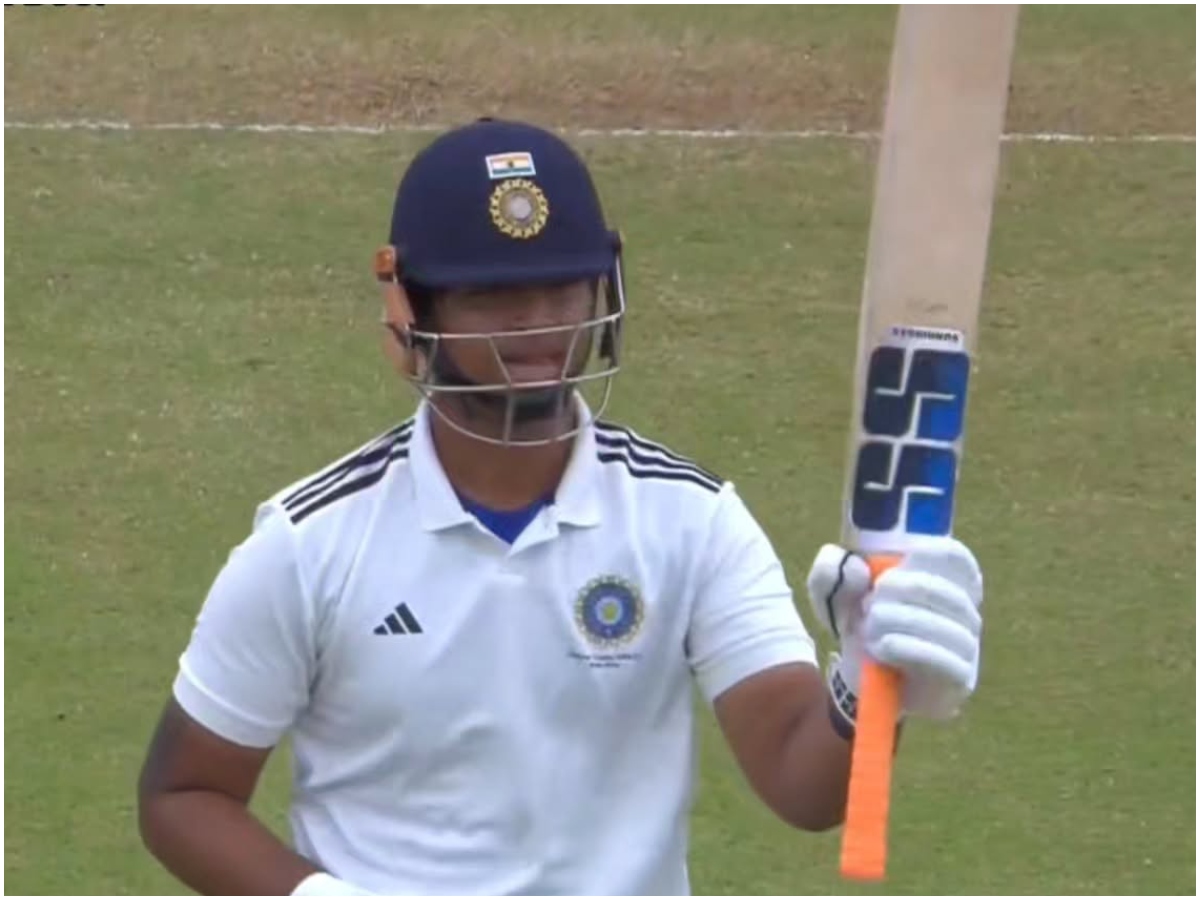)
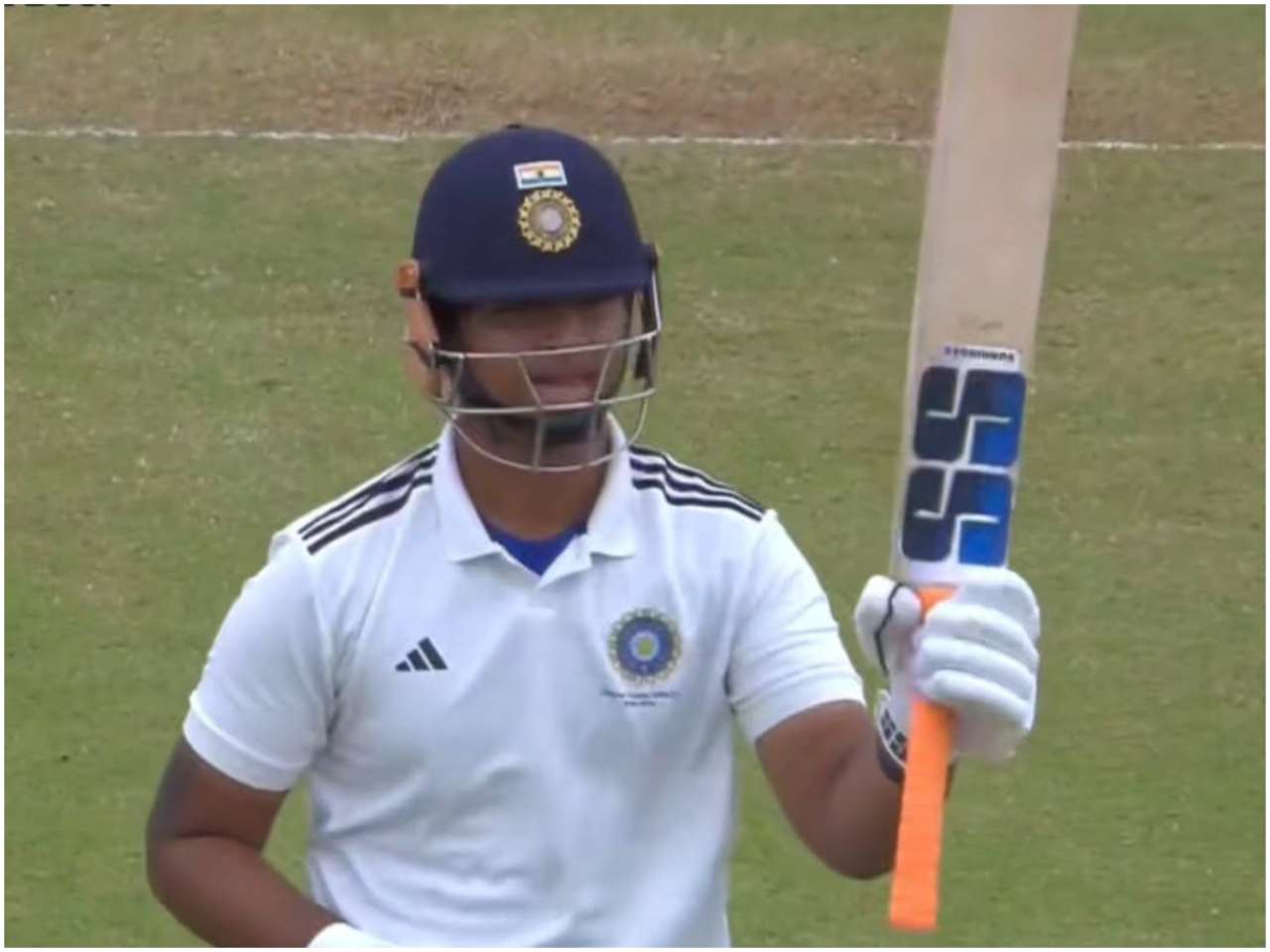
The moment of history arrived with a flourish. Sooryavanshi, nearing his fifty, faced the spin of Saransh Jain. With a confident stride and a powerful swing of the bat, he dispatched the ball over the boundary ropes for a maximum. That six not only brought up his half-century in just 42 balls but also officially crowned him as the youngest player to score a Duleep Trophy fifty. The celebration was understated yet profound – a raised bat, a nod to his partner, and a collective acknowledgment of a significant milestone. He had surpassed the long-standing record held by Laxman Singh for 57 years, a testament to his exceptional talent and unwavering focus.
His innings didn’t stop there. Buoyed by the milestone, Sooryavanshi continued to build, forging a crucial opening partnership that steadied East Zone’s reply. He continued to dominate, playing shots all around the wicket, demonstrating his versatility and command. The prospect of a century, which would have further embellished his historic day, seemed increasingly likely. However, his remarkable innings eventually came to an end at 92, caught off the bowling of Harsh Dubey. While the century eluded him, his knock had already carved a permanent place in the record books and set a formidable platform for East Zone’s pursuit of Central Zone’s total. His dismissal, though disappointing, did little to diminish the brilliance of his performance, which had already captured the imagination of cricket enthusiasts.

A Glimpse into History: Precedents and Near Misses
Vaibhav Sooryavanshi’s achievement is remarkable not just for his age, but also for the caliber of players whose records he has surpassed or nearly eclipsed. The Duleep Trophy, inaugurated in 1961-62, has always been a proving ground for India’s best, and setting a record in such a tournament speaks volumes about a player’s potential.
Breaking the 57-Year-Old Barrier
Before Sooryavanshi’s heroics, the record for the youngest Duleep Trophy half-centurion was held by Laxman Singh. In the 1969 edition of the tournament, Singh had scored a fifty at the age of 16 years and 23 days. His record had stood for nearly six decades, a testament to the difficulty and rarity of such an early breakthrough at this level. Later, another prodigious talent, Piyush Chawla, came close to matching Singh’s feat, scoring a half-century at 16 years and 307 days. For Sooryavanshi, at just 15 years old, to not only break but significantly lower this benchmark, highlights an extraordinary talent pool emerging in Indian cricket. It’s a testament to the intensified scouting, coaching, and opportunities available to young cricketers today, allowing them to hone their skills and compete at higher levels earlier than ever before.
)
The Tendulkar Century Record: A Whisker Away
Perhaps the most tantalizing aspect of Sooryavanshi’s innings was the proximity to yet another monumental record – that of the youngest player to score a century in the Duleep Trophy. Had he converted his 92 into a triple-figure score, he would have come agonizingly close to challenging one of the most hallowed records in Indian cricket, held by none other than the ‘Little Master’ himself, Sachin Tendulkar. Tendulkar, whose career is a benchmark for aspiring cricketers, scored his maiden Duleep Trophy century in the 1990/91 season at the age of 17 years and 262 days.
Tendulkar’s record is significant not just for its age, but for the legacy it represents. It was one of the early indicators of his unparalleled talent that would eventually see him become a global icon. For Sooryavanshi to even be in the conversation, at two years younger than Tendulkar was at the time of his century, speaks volumes about his inherent ability and mental fortitude. While he missed out on the century on this occasion, the fact that he was so close adds another layer of intrigue to his blossoming career. It suggests that this record, too, may not be safe for long if Sooryavanshi continues his upward trajectory.
)
The Elusive First-Class Century Record
Beyond the Duleep Trophy, there’s an even broader first-class cricket record for the youngest Indian to score a century. This record is currently held by Dhruv Pandove, who, in a truly astonishing feat, smashed a ton at the tender age of 14 years and 293 days during the 1988/89 Ranji Trophy season. Pandove’s record stands as one of the most extraordinary achievements in Indian domestic cricket history, a benchmark of precocious talent that remains untouched. While Sooryavanshi, even with a century, would have been the second youngest, the mere discussion places him in an elite club of child prodigies who made significant impacts in senior cricket before they could even legally drive. These comparisons, while pressure-inducing, also serve to underscore the immense potential that Vaibhav Sooryavanshi possesses and the excitement he has generated within the cricketing fraternity.
Echoes from the Pavilion: Official Responses and Expert Opinions
The cricketing world has buzzed with reactions following Vaibhav Sooryavanshi’s historic Duleep Trophy innings. From seasoned coaches to former international stars and administrators, the consensus is clear: a special talent has emerged. While official statements are still consolidating, the initial responses highlight the significance of his achievement and the bright future that potentially awaits him.
)
Speaking on the condition of anonymity due to the ongoing tournament, a member of the East Zone coaching staff expressed immense satisfaction with Sooryavanshi’s performance. "Vaibhav has always shown glimpses of this talent in the nets and in junior cricket, but to deliver such a composed and aggressive innings on a Duleep Trophy semi-final stage, against quality opposition, is truly exceptional," the coach remarked. "His temperament is what stands out. He doesn’t get flustered, assesses situations well, and has a wide range of shots. He’s a quick learner, and we believe he has the hunger to keep improving." The coach also lauded the opening partnership, emphasizing how Sooryavanshi complemented the more experienced Abhimanyu Easwaran, showcasing an ability to play alongside established players without being overawed.
Former Indian cricketer and renowned commentator, VVS Laxman, often seen as a mentor to young talent, is understood to have been highly impressed. While not providing a direct quote, sources close to the BCCI suggest that Laxman, known for his elegant batting and keen eye for talent, views Sooryavanshi as a "long-term prospect" who needs careful nurturing. "Such early success can bring immense pressure, but if managed well, he has the potential to represent India at the highest level," a source relayed, paraphrasing Laxman’s sentiments.
)
Cricket pundits and analysts have also weighed in, drawing parallels and offering insights. "What’s striking about Sooryavanshi is not just his age, but the confidence with which he plays," observed a leading cricket journalist. "He didn’t just survive; he dominated phases of his innings. The Duleep Trophy is a tough competition, and to break a 57-year-old record here is a testament to his raw talent and the quality of his preparation." The journalist further elaborated on the technical aspects, noting his strong base and ability to play both pace and spin with equal comfort, suggesting he possesses a solid foundation for future development.
Officials from the Board of Control for Cricket in India (BCCI) have also taken note. A senior BCCI official, speaking off the record, reiterated the board’s commitment to youth development. "The Duleep Trophy, alongside the Ranji Trophy, is vital for identifying and grooming our next generation of cricketers. Vaibhav Sooryavanshi’s performance is a shining example of the talent that exists in our domestic system," the official stated. "We are constantly working to create pathways for these young players, and seeing someone like Vaibhav perform so brilliantly validates our efforts."
)
The reactions from the Central Zone camp, though disappointed with their own performance, were also appreciative of the young prodigy. "He played a fantastic innings," admitted a Central Zone player after the day’s play. "We tried various plans against him, but he looked composed and hit the good balls for boundaries. To bat like that at 15 is special." This acknowledgment from the opposition speaks volumes about the quality and impact of Sooryavanshi’s knock, confirming that his performance was not merely a flash in the pan but a display of genuine skill against experienced professionals. The collective sentiment is one of cautious optimism, recognizing the immense potential while also emphasizing the long and challenging road ahead for the young cricketer.
The Road Ahead: Implications for Sooryavanshi and Indian Cricket
Vaibhav Sooryavanshi’s historic Duleep Trophy half-century is far more than just a personal milestone; it carries significant implications for his burgeoning career, the trajectory of Indian cricket, and the enduring relevance of domestic tournaments like the Duleep Trophy.
)
For Vaibhav Sooryavanshi: A Launchpad to Stardom?
For the 15-year-old prodigy, this record-breaking performance serves as a powerful launchpad. It instantly propels him into the national cricketing consciousness, marking him as a talent to watch. The immediate implications include increased scrutiny and expectations, which can be a double-edged sword for young athletes. However, if managed effectively by his mentors, coaches, and family, this attention can fuel his ambition and provide access to better resources, training facilities, and expert guidance.
His performance suggests he is already equipped for senior-level cricket, opening doors to regular inclusion in his state’s Ranji Trophy squad, potentially even at an earlier age than most. The next logical step would be to consistently perform in first-class cricket, converting these promising starts into larger scores. Opportunities in age-group international cricket, such as the U-19 World Cup, would also likely follow. Beyond that, the Indian Premier League (IPL) franchises, always on the lookout for young domestic talent, will undoubtedly have him on their radar. The challenge for Sooryavanshi will be to remain grounded, continue his rigorous training, and evolve his game against increasingly sophisticated opposition, ensuring that this early success translates into a sustained, impactful career.
)
For Indian Cricket: Reinforcing the Talent Pipeline
Sooryavanshi’s emergence is a powerful affirmation of India’s robust cricketing talent pipeline. It underscores the effectiveness of the extensive grassroots programs, junior tournaments, and regional academies that continually unearth and groom exceptional players. His story will undoubtedly inspire countless young cricketers across the country, proving that age is no barrier to making an impact if talent and dedication converge.
This achievement also adds to the rich narrative of India’s cricketing future. With a continuous stream of young talents like Sooryavanshi coming through, the national team’s feeder system remains incredibly strong, ensuring a healthy competitive environment and a steady supply of world-class players for years to come. It reaffirms India’s status as a cricketing powerhouse, capable of producing not just quantity, but also exceptional quality in its player base.
)
For the Duleep Trophy: Renewed Significance
In an era where T20 leagues often dominate headlines, Sooryavanshi’s record-breaking innings injects fresh relevance and excitement into the Duleep Trophy. This inter-zonal competition, a traditional cornerstone of Indian domestic cricket, is designed to test players against the best from different regions, simulating the competitive intensity of international cricket. Sooryavanshi’s performance highlights the trophy’s crucial role in identifying future stars and providing them with invaluable experience at a high level.
Such individual brilliance acts as a powerful marketing tool for the tournament, reminding fans and stakeholders alike of its prestige and importance. It encourages greater viewership and interest, reinforcing the idea that the Duleep Trophy is not just a stepping stone but a stage where history is made and legends are born. It reaffirms that long-format cricket, even in its domestic avatar, continues to be a vital proving ground for temperament, technique, and tactical acumen – qualities essential for success at the highest echelons of the sport.
)
In conclusion, Vaibhav Sooryavanshi’s Duleep Trophy heroics represent more than just a broken record; they symbolize the boundless potential within Indian cricket. His journey has just begun, but with this historic knock, he has firmly announced his arrival, setting the stage for what promises to be an exhilarating and impactful career, further enriching the already vibrant tapestry of Indian cricketing history.
