

Introduction: A New Chapter for the Iconic Off-Road Brand
The global automotive landscape is currently witnessing a significant realignment as legacy manufacturers grapple with the dual challenges of electrification and cost-efficiency. At the heart of this transformation is Stellantis, the multi-brand conglomerate that houses the legendary Jeep marque. During the Stellantis 2026 Investor Day presentation, a single teaser image sent shockwaves through the industry, offering a glimpse of an upcoming SUV that represents more than just a new model; it symbolizes a radical shift in Jeep’s manufacturing and platform strategy.
This mystery vehicle, characterized by its boxy silhouette and modernized Jeep DNA, is at the center of a swirling vortex of speculation. Industry analysts are divided: is this the long-awaited second-generation Renegade destined for Western markets, or is it the first fruit of a high-stakes collaboration with India’s Tata Motors? As the dust settles on the presentation, the outlines of a multi-year roadmap have emerged, pointing toward a 2027–2028 launch window and a strategic reliance on Tata’s ARGOS platform to conquer emerging markets and revitalize Jeep’s entry-level global presence.

I. Main Facts: Decoding the Mystery Teaser
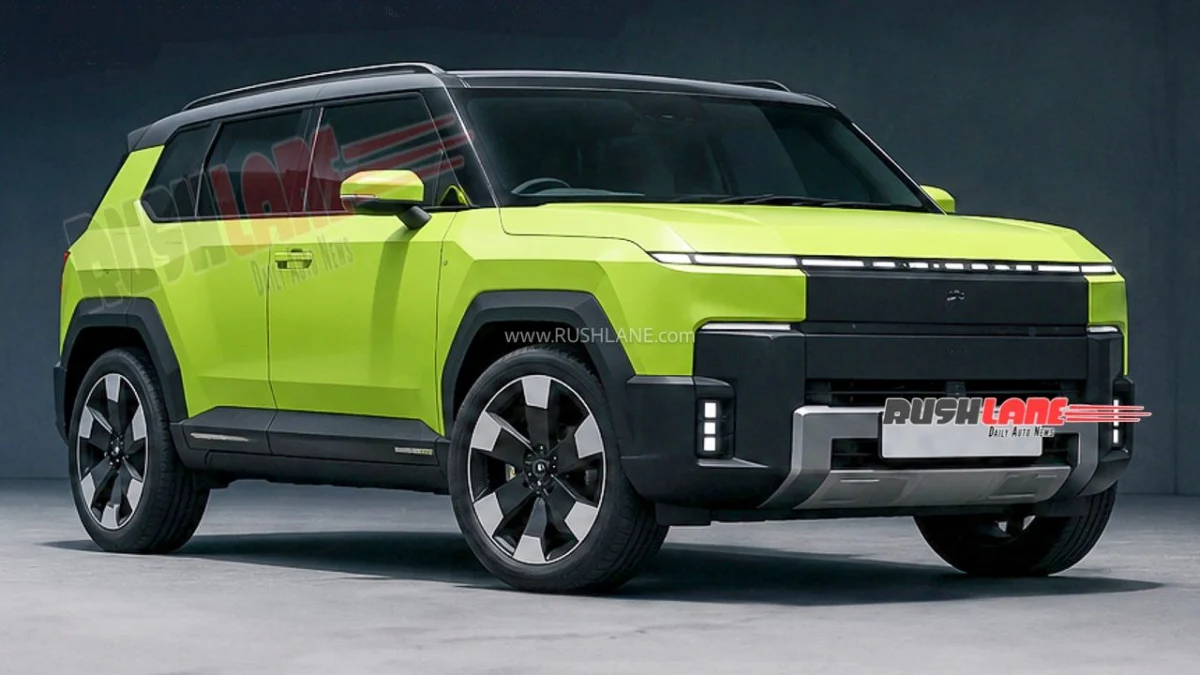
The teaser image released by Stellantis provides a tantalizing preview of Jeep’s future design language. While the company remained tight-lipped regarding the vehicle’s official name, the visual cues suggest a subcompact SUV that bridges the gap between rugged utility and urban sophistication.
Visual Identity and Design Cues
The mystery SUV retains the "boxy" profile that has defined Jeep since the Willys MB, but with a contemporary twist. The front fascia features an upright stance with a re-imagined seven-slot grille, which now appears to incorporate LED illumination—a nod to the brand’s electric future. Flanking the grille are sleek, top-mounted LED Daytime Running Lights (DRLs), while the primary headlamp units are integrated into a rugged front bumper designed for improved approach angles.
Key side-profile elements include:
- Hexagonal Wheel Arches: A departure from the traditional trapezoidal arches, suggesting a more "tech-forward" aesthetic.
- Floating Roof Effect: Achieved through blacked-out B-pillars and a dual-tone roof treatment.
- High Ground Clearance: Emphasized by large, sporty alloy wheels that suggest the vehicle will maintain Jeep’s "Trail Rated" promise.
The Identity Crisis: Renegade or India-Specific Project?
The industry is currently tracking two parallel developments. First, the need for a successor to the Jeep Renegade, which was recently phased out in North America and Europe. Second, the confirmed "Project 526"—a made-in-India SUV developed in partnership with Tata Motors. Given that the Renegade’s replacement is expected by 2027 and the Indian project is slated for 2028, there is a strong possibility that these two paths will converge, with the India-made vehicle serving as the global base for Jeep’s entry-level lineup.

II. Chronology: The Road to 2028
To understand the significance of this upcoming SUV, one must look at the timeline of Jeep’s subcompact segment and its evolving relationship with the Indian market.
- 2014: The original Jeep Renegade is launched globally, built on the Small Wide 4×4 platform. It becomes a cult hit but struggles with high production costs.
- 2023: Stellantis discontinues the Renegade in the United States and Canada, citing a shift in consumer preference toward larger segments and the need for a more price-competitive entry model.
- 2024 (Early): Rumors emerge regarding a "low-cost" Jeep SUV for emerging markets.
- 2025: The Renegade is scheduled for discontinuation in Europe, leaving a significant void in Jeep’s sub-compact portfolio.
- May 2026: Stellantis Investor Day reveals the teaser image of the new SUV.
- 2027: Expected global debut of the next-generation Renegade, likely utilizing the Stellantis "Smart Car" platform.
- 2028: Confirmed launch of the Jeep SUV built on the Tata-Stellantis collaborative platform (ARGOS) in India, with exports commencing to over 50 global markets.
III. Supporting Data: The Tata-Stellantis Synergy
The most groundbreaking aspect of this story is the deepening relationship between Stellantis and Tata Motors. While Jeep has traditionally relied on internal platforms (like the CMP or STLA Frame), the upcoming India-made SUV is expected to utilize Tata’s ARGOS platform.
The Ranjangaon Joint Venture
The foundation of this partnership is the Fiat India Automobiles Private Limited (FIAPL) facility in Ranjangaon, Maharashtra. This 50:50 joint venture is already a powerhouse, manufacturing the Jeep Compass and Meridian alongside the Tata Nexon. By leveraging Tata’s local supply chain and the ARGOS platform, Stellantis aims to achieve a level of localization previously unseen in the Jeep brand.
Economic Targets and Pricing
Stellantis has set an aggressive price target for the next-generation Renegade/subcompact SUV. In North America, the goal is a sub-$25,000 (approx. ₹20.8 lakh) starting price. To achieve this, the company must move away from expensive European-derived architectures.

- Localization Advantage: By using the ARGOS platform, Jeep can tap into Tata’s cost-optimized component sourcing, reducing manufacturing costs by an estimated 20-30% compared to traditional Jeep platforms.
- Market Positioning: In India, this SUV will likely compete in the mid-size SUV segment against the Hyundai Creta and Kia Seltos, while globally, it will act as the gateway to the Jeep brand.
Powertrain Versatility
The new platform is being designed as "powertrain agnostic." This means the upcoming SUV can support:
- Internal Combustion Engines (ICE): Likely a 1.2L or 1.5L turbo-petrol engine.
- Hybrid Systems: To meet tightening emission norms in Europe and North America.
- Battery Electric Vehicle (BEV): Aligning with Stellantis’ "Dare Forward 2030" strategy for total electrification.
IV. Official Responses and Strategic Outlook
During the 2026 Investor Day and the subsequent APAC (Asia-Pacific) strategy presentation, Stellantis executives emphasized the importance of India as a "global export hub."
Statements from Leadership
While specific names were not confirmed, Stellantis leadership highlighted that the new SUV is a "key pillar" of their growth in the APAC region. They confirmed that the project is being developed to meet global safety and quality standards, ensuring that a vehicle manufactured in Ranjangaon is indistinguishable from one made in Toledo or Melfi.
Stellantis listed Tata Motors as a "key partner for manufacturing and sourcing synergies." This official acknowledgment solidifies the theory that the upcoming Jeep SUV is not a solo effort but a masterclass in cross-continental industrial cooperation. The company confirmed that this new model would be exported to more than 50 countries, effectively making India the primary production base for Jeep’s entry-level global portfolio.

V. Implications: A Paradigm Shift for the Industry
The implications of a Jeep SUV built on a Tata platform are profound, affecting everything from brand perception to global trade dynamics.
1. The "Democratization" of the Jeep Brand
For years, Jeep has struggled to maintain a premium image while competing in price-sensitive segments. By utilizing a Tata-derived platform, Jeep can finally offer a product that is "attainable" without sacrificing the rugged aesthetics and off-road capability that customers demand. This could significantly increase Jeep’s market share in South America, Southeast Asia, and Africa.
2. India as a Global Engineering Hub
This move reinforces India’s growing status as a global hub for automotive engineering, not just low-cost manufacturing. If Jeep—a brand synonymous with American ruggedness—is comfortable using an Indian-developed platform for its global entry-level model, it signals a massive vote of confidence in Indian R&D.
3. Strategic Pressure on Competitors
The arrival of a sub-$25,000 Jeep with genuine off-road DNA and modern tech will put immense pressure on brands like Ford (with the Bronco Sport), Volkswagen (Taos), and Toyota (Corolla Cross). In India, it will provide a premium alternative to the established Korean and Japanese players, potentially disrupting the status quo of the mid-size SUV segment.

4. The Future of the Stellantis-Tata Relationship
This collaboration may be the precursor to even deeper integration. As Stellantis looks to optimize its 14 brands, the "India-for-the-world" model developed with Tata could serve as a blueprint for other brands under the Stellantis umbrella, such as Citroen or Fiat, further utilizing shared platforms and manufacturing facilities.
Conclusion: The Road Ahead
The teaser image revealed at the 2026 Investor Day is more than a marketing tactic; it is a declaration of intent. Whether it carries the Renegade badge or a new moniker, the upcoming Jeep SUV represents the brand’s most ambitious attempt to balance heritage with the harsh realities of the modern economy.
By merging American design sensibilities with Indian engineering efficiency and Tata’s ARGOS platform, Stellantis is preparing to launch a vehicle that could redefine the subcompact SUV segment. As we approach the 2027 and 2028 launch windows, the automotive world will be watching closely to see if this "global-local" hybrid can truly deliver a vehicle that is as comfortable on the streets of Mumbai as it is on the trails of Moab. One thing is certain: the future of Jeep is no longer just "Made in America"—it is increasingly "Engineered for the World."
