

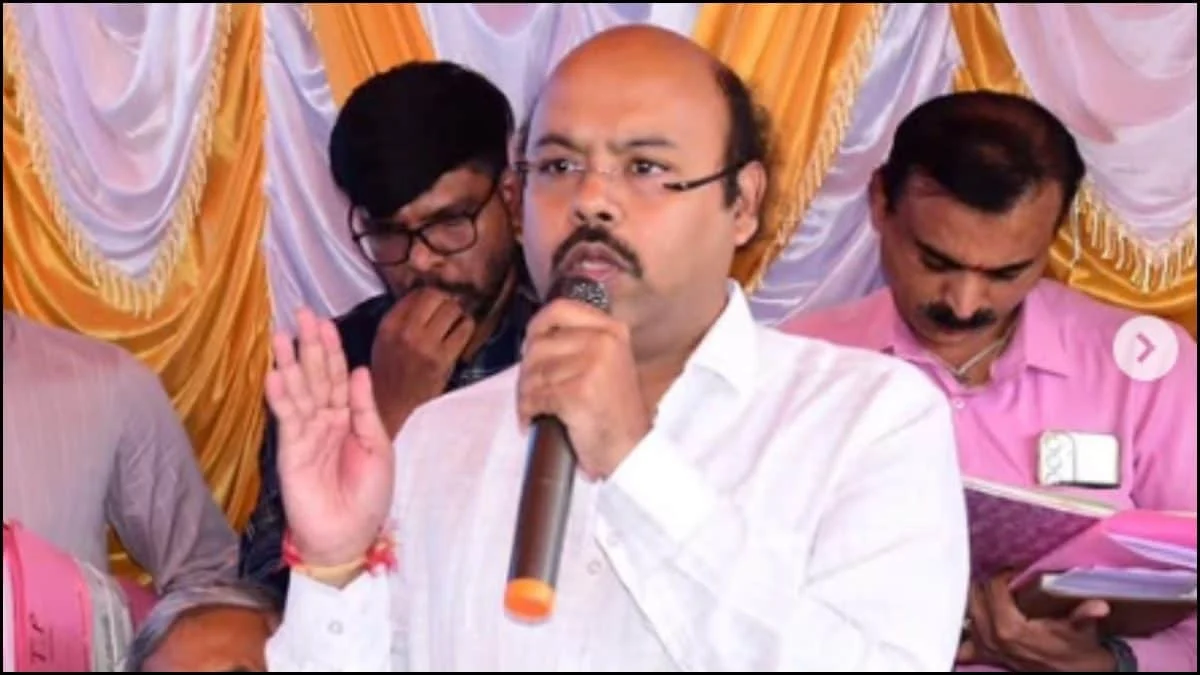
Bengaluru, India – As the Congress party in Karnataka prepares to unveil its new cabinet under the leadership of Chief Minister-designate D.K. Shivakumar, significant attention is being drawn to the aspirations of its prominent members, particularly the offspring of its stalwarts. Yathindra Siddaramaiah, Congress MLC and son of outgoing Chief Minister Siddaramaiah, has publicly expressed confidence in securing a ministerial berth, stating that the party’s high command has provided him with an assurance. However, he acknowledges that final decisions remain pending, adding a layer of suspense to the intricate process of government formation.
Yathindra’s remarks, made to reporters in Bengaluru on May 31, 2026, come amidst intense speculation and lobbying within the party, highlighting the delicate balance the Congress must strike to ensure stability and appease various factions. "Nothing has been decided yet. I am an aspirant for a ministerial berth, and the high command has also assured me that I will be made a minister. So, naturally, I am hopeful," Yathindra stated, exuding a mix of optimism and pragmatism.
The Political Crucible: Hopes and Assurances
The declaration from Yathindra Siddaramaiah is more than just an individual’s aspiration; it’s a window into the complex political negotiations currently unfolding within the Karnataka Congress. The party, fresh off a significant electoral victory that saw it reclaim power in the state, is now grappling with the formidable task of translating its mandate into a cohesive and functional government. The formation of a cabinet is often the first major test of a new administration’s internal unity and its ability to manage diverse expectations.
The timeline leading up to Yathindra’s statement is crucial. His father, Siddaramaiah, had tendered his resignation as Chief Minister on May 28, paving the way for a leadership transition. This resignation followed days of intense deliberations in Delhi between the state leadership and the Congress high command, a period marked by backroom negotiations and strategic maneuvering. Reports had surfaced during this critical phase, suggesting that Siddaramaiah senior had actively lobbied for his son to be appointed as a Deputy Chief Minister, a move that would have significantly elevated Yathindra’s standing within the party hierarchy and the new government.
While such reports fueled speculation and sparked debate about dynastic politics, Yathindra himself has distanced himself from demanding such a high-profile position. When directly questioned about the Deputy CM post, he clarified that neither he nor his supporters had made any such demand, leaving the ultimate decision to the party’s central leadership. This measured response, while denying a specific ambition, does not diminish his overarching hope for a place in the cabinet, underscoring the political finesse required in such situations. His current status as an MLC, having previously served as an MLA, provides him with legislative experience, which he and his supporters would likely highlight as a qualification.
Navigating the Labyrinth of Cabinet Formation
The process of forming a cabinet in a state like Karnataka, with its rich political tapestry and diverse demographics, is an arduous exercise. The Congress high command, typically comprising the party president, senior general secretaries, and other influential figures, plays a pivotal role in mediating disputes, ensuring regional and caste representation, and balancing the interests of various factions.
The Karnataka Congress, in particular, has historically been characterized by the interplay of several powerful groups, often coalescing around charismatic leaders. The current scenario sees the emergence of a clear leadership duality with D.K. Shivakumar taking the helm as Chief Minister. The Siddaramaiah camp, undeniably a significant force, naturally expects its share of influence and representation in the new government. This dynamic creates a delicate balancing act for the high command, which must distribute portfolios in a manner that not only rewards loyalty and experience but also prevents potential dissent or internal strife.
Cabinet berths are not merely about power; they are also about resource allocation, policy direction, and projecting a unified image to the electorate. Each ministerial portfolio comes with its own set of responsibilities and opportunities for public service, making the competition for these positions fierce. The high command’s assurance to Yathindra, if confirmed, would signify a strategic decision to acknowledge the influence of his father while also integrating younger leaders into the administrative framework. However, such assurances are often conditional and subject to the broader exigencies of cabinet formation, where many aspirants vie for a limited number of positions.
The Weight of Dynastic Succession
Yathindra Siddaramaiah’s aspiration also brings into sharp focus the enduring debate surrounding dynastic politics in India. While not unique to the Congress, the party has often been associated with promoting the progeny of its veteran leaders. Critics argue that such practices undermine meritocracy and democratic principles, favoring lineage over ability. Proponents, however, contend that these individuals often gain valuable political exposure from a young age, possess a deep understanding of the party’s ethos, and can leverage their family’s political capital to connect with the electorate.
In the context of Karnataka, sons and daughters of former Chief Ministers and powerful ministers have frequently sought and secured political roles. This trend reflects a broader societal acceptance, to some extent, of political families as legitimate contenders for power. For Yathindra, being the son of a two-time Chief Minister like Siddaramaiah places him under intense scrutiny but also grants him a distinct advantage in terms of visibility, political network, and access to the party’s inner circles. His previous electoral victory as an MLA demonstrated his ability to win public support, further bolstering his claim for a ministerial role.
The challenge for the Congress, and for Yathindra, lies in demonstrating that his inclusion in the cabinet is based on merit and contribution, rather than solely on his lineage. A ministerial role would offer him a platform to prove his administrative capabilities and build his own political identity, separate from his illustrious father.
Official Voices and Calculated Silences
The public statements from the key players involved offer a glimpse into the ongoing political choreography. Yathindra Siddaramaiah has been forthright about his ambition and the alleged assurance from the high command, yet careful to acknowledge the provisional nature of these discussions. His decision to personally congratulate Chief Minister-designate Shivakumar, rather than just meeting him in official settings, is a subtle but significant gesture aimed at demonstrating deference and fostering a collaborative spirit. "I have met him only at Vidhana Soudha and on a few occasions elsewhere. I had not met him in his office or at his residence. So I just wanted to come and personally congratulate him," he explained, indicating a conscious effort to build rapport.
Chief Minister-designate D.K. Shivakumar, on the other hand, has maintained a more guarded stance. When pressed on the prospect of Yathindra becoming a Deputy CM or even a minister, Shivakumar chose his words carefully. "He is my colleague. We have worked together in the party before, we should continue to work together," he stated. This response, while acknowledging their professional relationship, skillfully sidesteps any direct commitment regarding a cabinet position. Such calculated ambiguity is typical in high-stakes political negotiations, allowing for flexibility until all pieces of the cabinet puzzle are in place. The high command, true to its nature, has yet to issue any official statement regarding individual ministerial berths, preferring to announce the complete list once it has been finalized. This collective silence from the top tier underscores the gravity and complexity of the decisions being made.
Beyond the Berth: Policy and Regional Dynamics
Beyond the immediate scramble for ministerial positions, Yathindra Siddaramaiah also shed light on other critical discussions he had with the Chief Minister-designate. He mentioned discussing the "Special Intensive Revision in the state and political affairs in Mysuru district," without elaborating further. This brief mention, however, opens a window into the broader concerns that inform cabinet formation and governance.
The "Special Intensive Revision" could refer to a range of critical administrative or policy matters. It might pertain to electoral roll revisions, a significant exercise that impacts future elections, or perhaps a comprehensive review of state-level development schemes and administrative reforms initiated by the previous government. Such discussions underscore that ministerial roles are not merely titular but involve engagement with substantive policy matters crucial for the state’s progress.
The reference to "political affairs in Mysuru district" is particularly significant. Mysuru is Siddaramaiah’s home turf and a politically crucial region in Karnataka. Discussions about its political dynamics would naturally involve strategies for consolidating the party’s base, addressing local grievances, and ensuring effective governance at the district level. A ministerial position for Yathindra, particularly one with a portfolio relevant to regional development or local administration, could be seen as a way to empower the Mysuru leadership and strengthen the party’s presence in a key electoral battleground. This highlights the intricate web of regional representation and political strategy that underpins every cabinet decision.
Implications for Karnataka’s New Government
The eventual composition of the D.K. Shivakumar-led cabinet will have profound implications for Karnataka.
Intra-Party Harmony
The careful allocation of portfolios is essential to maintain unity within the Congress. Any perceived imbalance or neglect of influential factions could sow seeds of discontent, potentially leading to instability down the line. The integration of leaders like Yathindra Siddaramaiah will be a key indicator of how effectively the high command is managing the power dynamics between the Shivakumar and Siddaramaiah camps.
Public Trust and Perception
The new government’s initial appointments will send a strong signal to the electorate. While political considerations are inevitable, the public will be watching to see if the cabinet reflects a commitment to meritocracy, good governance, and representation across all sections of society. The inclusion of individuals based on perceived dynastic privilege, even if qualified, can sometimes attract criticism regarding the party’s adherence to democratic ideals.
Governance Effectiveness
Ultimately, the quality of governance will depend on the capabilities and commitment of the ministers. A cabinet composed of experienced and dedicated individuals, irrespective of their political lineage, is crucial for addressing the state’s pressing challenges, from economic development to social welfare. The "Special Intensive Revision" mentioned by Yathindra suggests an early focus on administrative efficiency and policy implementation, which will be vital for the government’s success.
Yathindra’s Political Trajectory
For Yathindra Siddaramaiah, a ministerial berth would be a pivotal moment in his political career. It would provide him with an opportunity to step out of his father’s shadow, forge his own identity, and demonstrate his leadership qualities. Conversely, if he is not included, it could be a setback, potentially leading to questions about his future role and the high command’s long-term plans for him.
Stability of the Shivakumar-led Government
The early days of any new government are critical for establishing its authority and setting its agenda. A smoothly formed cabinet, reflecting internal consensus, will contribute significantly to the stability and effectiveness of the D.K. Shivakumar administration, allowing it to focus on delivering on its electoral promises rather than managing internal dissent.
Conclusion
As Karnataka awaits the final announcement of its new cabinet, the hopeful pronouncements from Yathindra Siddaramaiah underscore the intricate interplay of individual ambition, dynastic legacy, and party strategy. The Congress high command faces the formidable task of crafting a government that is not only representative and capable but also unified and stable. The decisions made in the coming days will not only shape the trajectory of leaders like Yathindra but will also define the early narrative and long-term prospects of the D.K. Shivakumar-led administration, setting the tone for governance and political dynamics in the vibrant state of Karnataka. The delicate balance between political expediency and effective administration will be the ultimate test for the nascent government.
