

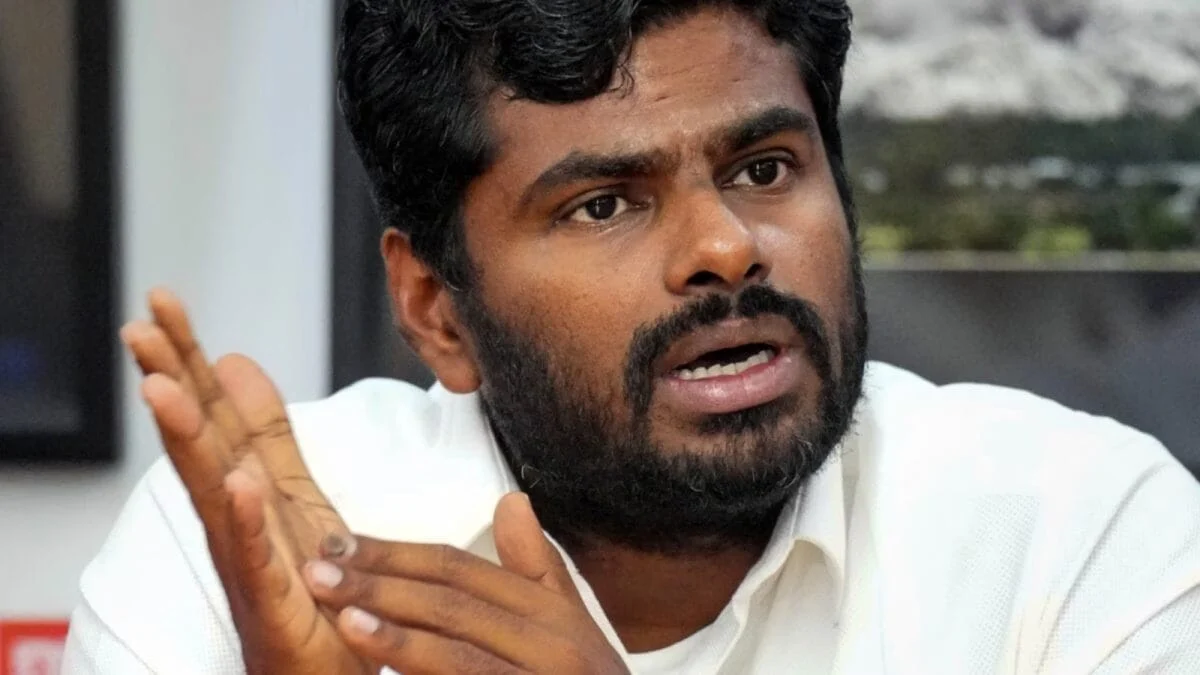
Chennai, India – June 1, 2026 – Tamil Nadu’s volatile political landscape is on the brink of a potentially seismic transformation as K. Annamalai, the charismatic and often controversial former President of the state unit of the Bharatiya Janata Party (BJP), is reportedly weighing a momentous decision: to sever ties with the national party and launch his own political outfit. Sources close to the prominent leader suggest an official announcement could be made as early as June 3, sending ripples of anticipation and uncertainty across the state and raising critical questions about the future trajectory of its political alliances and power dynamics.
The speculation, which has been building for weeks and intensified over the weekend, points towards a significant recalibration for Annamalai, a former IPS officer who rose rapidly within the BJP’s ranks. His potential departure comes amidst a backdrop of recent electoral setbacks for the BJP in Tamil Nadu and persistent rumours of his dissatisfaction with the party’s strategic decisions and alliances. Should he indeed embark on this independent political journey, it would not only mark a crucial turning point in his own career but also reshape the opposition space in a state traditionally dominated by Dravidian majors, the DMK and AIADMK, and now witnessing the emergence of new forces like the Vijay-led TVK.
A Crossroads Moment for K. Annamalai and Tamil Nadu Politics
The murmurs surrounding Annamalai’s future have reached a fever pitch, with an official communication from his camp expected within the next 48 hours. This impending announcement holds immense significance, not just for the BJP, which has struggled to establish a firm foothold in Tamil Nadu, but also for the broader political ecosystem of the state. Annamalai, known for his aggressive rhetoric, media savviness, and a perceived anti-establishment stance, has cultivated a dedicated following, particularly among the youth and those seeking an alternative to the traditional Dravidian parties.
His rapid ascent from a decorated police officer to a state political chief within a national party was meteoric. However, his tenure was also marked by a series of controversies and a confrontational style that, while energizing his base, often alienated potential allies and segments of the electorate. The current reports suggest that the internal friction and strategic disagreements have reached an untenable point, compelling Annamalai to consider a path independent of the BJP’s national directives. The proposed new party, if launched, would aim to capitalise on this unique political space, potentially drawing support from various disgruntled factions and unaligned voters looking for a fresh voice. The coming week is undeniably crucial, poised to define not only Annamalai’s destiny but also to cast a long shadow over the political chessboard of Tamil Nadu.
The Chronology of Discontent and Divergence
K. Annamalai’s journey in politics has been a whirlwind of rapid elevation, strategic shifts, and simmering dissent. Understanding the current juncture requires a look back at the key events that have shaped his trajectory and led to this rumoured potential split.
Early Entry and Rapid Rise (2020-2021): Annamalai, a former Karnataka cadre IPS officer, resigned from service in 2019, citing personal reasons and a desire to engage in public service. He joined the BJP in August 2020, a move that was immediately seen as a significant boost for the party in Tamil Nadu, given his clean image, intellectual prowess, and youth appeal. His articulate defence of BJP’s policies and sharp attacks on opposition parties quickly earned him visibility. Within a year, in July 2021, he was appointed the President of the Tamil Nadu BJP, replacing L. Murugan. This appointment was widely interpreted as the national leadership’s intent to infuse new blood and a more aggressive approach into the state unit, aiming to expand its footprint in a challenging linguistic and cultural landscape.
Controversial Stance and Alliance Frictions (2022-2024): Annamalai’s tenure as state chief was characterised by an assertive and often confrontational style. While it endeared him to a segment of the BJP’s base, it also created significant friction with the party’s primary ally in the state, the All India Anna Dravida Munnetra Kazhagam (AIADMK). His public remarks, particularly those perceived as critical of Dravidian stalwarts like C.N. Annadurai and J. Jayalalithaa, leaders revered by the AIADMK cadre, caused considerable strain. These statements were seen by many within the AIADMK as an attempt by Annamalai to establish the BJP as an independent force in Tamil Nadu, even at the cost of alliance harmony.
The culmination of these tensions was the breakdown of the BJP-AIADMK alliance ahead of the 2024 Lok Sabha elections. Despite efforts from the national BJP leadership to mediate, AIADMK chief Edappadi K. Palaniswami reportedly made a leadership change within the Tamil Nadu BJP a condition for a renewed alliance. This impasse ultimately led to both parties contesting the Lok Sabha elections independently in Tamil Nadu, a decision that proved detrimental to both, as the DMK-led alliance swept the state, leaving the BJP with no seats and the AIADMK with a significantly reduced tally. The failure to secure even a single seat in the national elections was a massive setback for the BJP’s ambitions in the South.
Post-2024 Lok Sabha and 2026 Assembly Elections: Following the 2024 Lok Sabha debacle, there was a period of introspection within the BJP’s state unit. In late 2025, Annamalai was replaced as Tamil Nadu BJP chief by Nainar Nagendran. While the party officially maintained that this was a routine organizational change, many political observers viewed it as a direct consequence of the alliance breakdown and the electoral performance. The subsequent 2026 state assembly elections saw the BJP, despite renewed efforts and campaigning, fare poorly, managing to secure only one seat. This outcome further highlighted the party’s struggles to make significant inroads in Tamil Nadu, regardless of leadership.
Recent Public Disagreements (Late 2025 – Early 2026): Even after being replaced as state chief, Annamalai continued to maintain a high public profile and an independent voice, often diverging from the official party line. A significant point of contention arose from his public criticism of the Central Board of Secondary Education’s (CBSE) three-language formula for Class 9 students. He argued that it would impose "unnecessary mental stress" on children and parents, a stance that resonated with regional linguistic sentiments in Tamil Nadu but put him at odds with the BJP’s national education policy.
Furthermore, reports suggest that Annamalai was deeply unhappy with the BJP’s decision to revive its alliance with the AIADMK for the recent assembly elections, especially after the previous breakdown. Although he eventually toed the party line and campaigned extensively for the National Democratic Alliance (NDA), his reservations were reportedly well-known within party circles. Adding to this, Annamalai has also been a vocal critic of the Vijay-led TVK government in Tamil Nadu, positioning himself as a strong opposition voice, which some interpret as an attempt to carve out a distinct political identity independent of traditional alliances.
Current Rumours (June 2026): The confluence of these factors – his independent positions, perceived marginalization within the state unit, and the party’s continued electoral struggles – has fuelled the current wave of speculation. The timing of the rumoured announcement on June 3rd suggests a carefully calculated move, indicating that Annamalai has likely reached a definitive decision after months of deliberation and internal consultations.
The Undercurrents of Dissatisfaction: Supporting Data and Analysis
The persistent rumours of K. Annamalai’s impending departure from the BJP are not isolated incidents but rather symptoms of deeper underlying currents of dissatisfaction, strategic divergences, and a challenging political reality for the BJP in Tamil Nadu. A closer look at the supporting data and contextual analysis reveals the factors pushing Annamalai towards this independent path.
Electoral Performance and BJP’s Tamil Nadu Conundrum: The most glaring piece of evidence for the BJP’s struggles, and implicitly Annamalai’s frustration, is the party’s dismal electoral performance. Despite significant investments of time, resources, and high-profile national leadership visits, the BJP secured only one seat in the recent state assembly elections. This outcome is not merely a setback; it underscores the profound difficulty the party faces in penetrating the Dravidian political bastion. Even under Annamalai’s aggressive leadership, and later under Nainar Nagendran, the party has been unable to translate its national popularity into a significant electoral presence in Tamil Nadu. For a leader like Annamalai, who came into politics with a clear ambition to make a mark and offer a viable alternative, this repeated failure to gain traction within the BJP framework could be deeply disheartening and a strong impetus to seek a new vehicle for his political aspirations. The single seat victory, while a statistical improvement over zero, is far from the kind of breakthrough many had hoped for.
Ideological Divergence and Regional Identity: Annamalai’s public criticism of the CBSE’s three-language formula is a crucial indicator of a potential ideological chasm. While the BJP at the national level champions the National Education Policy (NEP) which includes the three-language formula, Annamalai’s opposition, citing "unnecessary mental stress" for students, aligns with Tamil Nadu’s deeply entrenched anti-Hindi imposition sentiment. This stance, while popular locally, places him at odds with a core tenet of the BJP’s cultural policy. Such disagreements suggest a leader unwilling to compromise on issues he believes are vital to his state’s identity and aspirations, even if it means clashing with his national party’s ideology. This divergence highlights a fundamental tension between Annamalai’s regionalist leanings and the BJP’s more unitary nationalistic approach.
Leadership Style and Alliance Compatibility: Annamalai’s "aggressive media presence" and "controversial remarks" on Dravidian icons like C.N. Annadurai and J. Jayalalithaa, while perhaps aimed at carving out a distinct space, proved highly detrimental to the BJP’s alliance with the AIADMK. The AIADMK’s demand for a leadership change as a precondition for alliance revival post-2024 Lok Sabha elections speaks volumes about the incompatibility of Annamalai’s style with traditional alliance politics in Tamil Nadu. While Annamalai eventually campaigned for the NDA in the recent assembly elections, his reported unhappiness with the renewed alliance suggests a deep-seated belief that the BJP’s strategy in Tamil Nadu, particularly concerning alliances, was flawed or not conducive to its long-term growth. His willingness to criticise the ruling TVK government also demonstrates an independent streak, suggesting he isn’t afraid to challenge established powers, even if it means standing alone.
Supporter Base and Social Media Momentum: The most tangible evidence of an independent movement brewing is the "several of his supporters floating party names and flag designs on social media handles." This is not a spontaneous, uncoordinated effort. It indicates an organised or at least highly motivated cadre of followers who are actively anticipating and preparing for Annamalai’s independent foray. The digital realm has become a powerful tool for political mobilisation, and this online activity suggests that Annamalai has successfully cultivated a loyal base that is ready to follow him outside the BJP structure. This organic, grassroots digital support could be a crucial asset for a new political outfit.
Vacuum in Opposition and Political Opportunity: Tamil Nadu’s political landscape, despite the DMK’s current dominance, presents a unique opportunity for a new force. The AIADMK, while still a significant party, is grappling with internal fissures and a struggle to regain its past glory. The emergence of the Vijay-led TVK further fragments the opposition space, but also indicates a public appetite for fresh faces and alternatives. Annamalai, with his anti-corruption image (stemming from his IPS background), youth appeal, and strong communication skills, might perceive a vacuum that neither the traditional Dravidian parties nor the national BJP has effectively filled. Launching a new party could be his strategic move to position himself as a third, credible alternative, particularly appealing to the growing urban electorate and first-time voters.
In essence, the amalgamation of persistent electoral underperformance, ideological differences, alliance incompatibilities, a dedicated supporter base, and a perceived political opening forms the compelling ‘supporting data’ for the current speculation surrounding K. Annamalai’s potential independent political venture.
Official Responses and Counter-Narratives
Amidst the swirling vortex of rumours, the official responses from the Bharatiya Janata Party have been predictably cautious, aiming to downplay the significance of the speculation while simultaneously managing potential fallout. This delicate dance reflects the BJP’s desire to either retain Annamalai within its fold or, failing that, to mitigate the public perception of an internal revolt or significant loss.
BJP’s Official Stance: Downplaying the Rumours: A senior BJP leader in Tamil Nadu was quoted as saying, "We have no information that he is leaving the BJP or planning to launch a new party." This statement, while offering a formal denial, is couched in language that doesn’t explicitly guarantee Annamalai’s continued affiliation. The phrase "no information" suggests either a genuine lack of official communication from Annamalai to the party high command, or a strategic attempt to deflect and buy time. From the BJP’s perspective, acknowledging such rumours prematurely could legitimize them, potentially encouraging more fence-sitters within their state unit to consider their options. By downplaying the reports, the party aims to maintain an image of internal cohesion and stability, hoping to quell any anxiety among its cadre and supporters. This response is a standard damage control mechanism, designed to project business as usual even as internal discussions and concerns likely mount.
The "National Role" Speculation: An Alternative Narrative: Interestingly, alongside the denials, another narrative has emerged from certain BJP circles: the possibility that Annamalai could be given a national role within the party. "There is also speculation that Annamalai could be given a national role," the original report noted. This counter-narrative serves several strategic purposes. Firstly, it offers a plausible alternative to his exit, suggesting that his perceived dissatisfaction might be resolved by a promotion rather than a defection. This could be an olive branch extended by the national leadership, aiming to accommodate his ambitions at a higher level, away from the immediate complexities of Tamil Nadu state politics. A national role might involve a position in the central party organisation, perhaps as a national general secretary or a spokesperson, allowing him to operate on a broader canvas.
For Annamalai, accepting a national role would entail a different set of considerations. While it offers a higher profile and greater influence, it would also mean moving away from the direct, grassroots political engagement in Tamil Nadu that he seems to favour. It would also likely require him to conform more closely to the national party line, potentially stifling the independent voice he has cultivated. This option presents a dilemma: national recognition versus regional autonomy. From the BJP’s perspective, offering a national role is a way to leverage his talent and popularity while potentially mitigating the risks of him becoming a formidable opponent in Tamil Nadu. It’s a strategic move to absorb a potential challenge rather than confront it.
Annamalai’s Calculated Silence (or Leaks): Crucially, Annamalai himself has maintained a conspicuous silence on the matter, at least publicly. This silence, punctuated by strategic leaks from "sources close to the BJP leader," has only served to amplify the speculation. In political communication, silence can often be more potent than speech. It allows narratives to build, public curiosity to peak, and creates a sense of anticipation that can be leveraged effectively. His camp’s decision to allow these rumours to proliferate, culminating in a proposed "official announcement" on June 3rd, suggests a deliberate strategy to build momentum and gauge public reaction before making a definitive move. This calculated ambiguity keeps both his supporters and opponents on tenterhooks, ensuring maximum impact when he finally breaks his silence.
In essence, the BJP’s official response is a blend of denial and alternative speculation, while Annamalai’s camp appears to be orchestrating a strategic build-up to a potentially game-changing announcement. The coming days will reveal whether these counter-narratives hold sway or if Annamalai is indeed set to chart an independent course.
Potential Implications for Tamil Nadu and National Politics
The potential departure of K. Annamalai from the BJP and the launch of a new political party are not mere internal party affairs; they represent a significant inflection point with far-reaching implications for the political landscape of Tamil Nadu and, by extension, the BJP’s national ambitions. The ripple effects of such a move could redraw electoral equations, fragment vote bases, and introduce new variables into an already complex political arena.
Impact on BJP in Tamil Nadu: For the BJP, Annamalai’s exit would undoubtedly be a considerable blow. Despite the party’s consistent struggle to gain a strong foothold in Tamil Nadu, Annamalai was arguably its most recognisable and vocal face. His aggressive campaigning, articulate defence of party policies, and ability to connect with a certain segment of the electorate, particularly urban youth and anti-DMK voters, made him an invaluable asset. His departure would strip the state unit of its most prominent leader, leaving a void that would be challenging to fill. It could further demoralise the existing cadre, who have already weathered multiple electoral setbacks. The BJP’s efforts to expand its base in the South, a key strategic objective for the national leadership, would suffer a significant setback, forcing a re-evaluation of its Tamil Nadu strategy from the ground up. The party would likely find it even harder to gain traction without a strong local voice capable of countering the Dravidian narrative.
Impact on AIADMK: A new party led by Annamalai could have a complex and potentially detrimental impact on the AIADMK. The AIADMK is still recovering from internal strife and struggling to consolidate its position as the primary opposition to the ruling DMK. Annamalai’s new party could further fragment the anti-DMK vote, making it harder for any single opposition entity to effectively challenge the incumbent. While Annamalai’s previous confrontational stance alienated the AIADMK, his new outfit might still attract disgruntled elements from within the AIADMK’s traditional support base, especially those who are dissatisfied with the current leadership or are seeking a more dynamic alternative. This could lead to a further erosion of AIADMK’s vote share, benefiting the DMK indirectly by splitting the opposition.
Impact on DMK/TVK: The ruling DMK, currently enjoying a dominant position, might initially view Annamalai’s new party as a fragmentation of the opposition, potentially easing their path in future elections. However, Annamalai’s aggressive, anti-establishment rhetoric and his willingness to directly confront the government could also make him a potent opposition force. His criticism of the Vijay-led TVK government suggests he is prepared to challenge emerging players as well. If his new party gains traction, it could present a fresh, dynamic challenge to the DMK, particularly on issues of governance and corruption, areas where Annamalai has often focused his attacks. For the nascent TVK, Annamalai’s new party would mean yet another formidable competitor in the quest for establishing a strong third front or alternative voice.
Annamalai’s Future and Challenges: Launching a new political party is an arduous undertaking. Annamalai would face immense challenges, including securing adequate funding, building a robust grassroots cadre network from scratch, establishing a clear ideological identity, and gaining official recognition from the Election Commission. While his youth appeal, anti-corruption image (from his IPS background), and strong communication skills are assets, translating personal popularity into a sustainable political organisation requires monumental effort. He would need to articulate a compelling vision for Tamil Nadu that distinguishes him from both the Dravidian majors and the national parties. However, if successful, he could emerge as a powerful regional leader, potentially holding the balance of power in future coalition scenarios.
Broader National Picture and BJP’s Southern Strategy: Annamalai’s exit would signify a significant setback for the BJP’s broader southern strategy. The party has been aggressively trying to expand its footprint beyond its traditional Hindi heartland strongholds, viewing states like Tamil Nadu, Kerala, and Andhra Pradesh as crucial for future growth. Losing a prominent, articulate leader like Annamalai would complicate these ambitions, forcing the BJP to recalibrate its approach and potentially invest even more heavily in identifying and nurturing new local leadership. It could also signal to other regional leaders within the BJP in the South that the path to influence lies more in independent regional assertion than in conforming to national party directives.
The "June 3rd" Deadline: The impending announcement on June 3rd carries immense weight. If Annamalai indeed announces his new party, Tamil Nadu’s political landscape will instantly become more dynamic and unpredictable. The immediate aftermath would see frantic political realignments, statements from various parties, and intense media scrutiny. If, however, he chooses to remain within the BJP, perhaps accepting a national role, it would represent a strategic retreat, but one that would still leave questions about his long-term ambitions and the underlying causes of his reported dissatisfaction. In either scenario, the event will be closely watched, as it could set a precedent for how national parties navigate regional aspirations and leadership ambitions in diverse states.
In conclusion, the potential move by K. Annamalai is more than just a personal career decision; it is a moment pregnant with political possibilities and uncertainties. Regardless of the precise outcome, Tamil Nadu’s political stage is poised for significant shifts, promising a period of intense competition and evolving alliances as the state gears up for its next electoral battles.
