

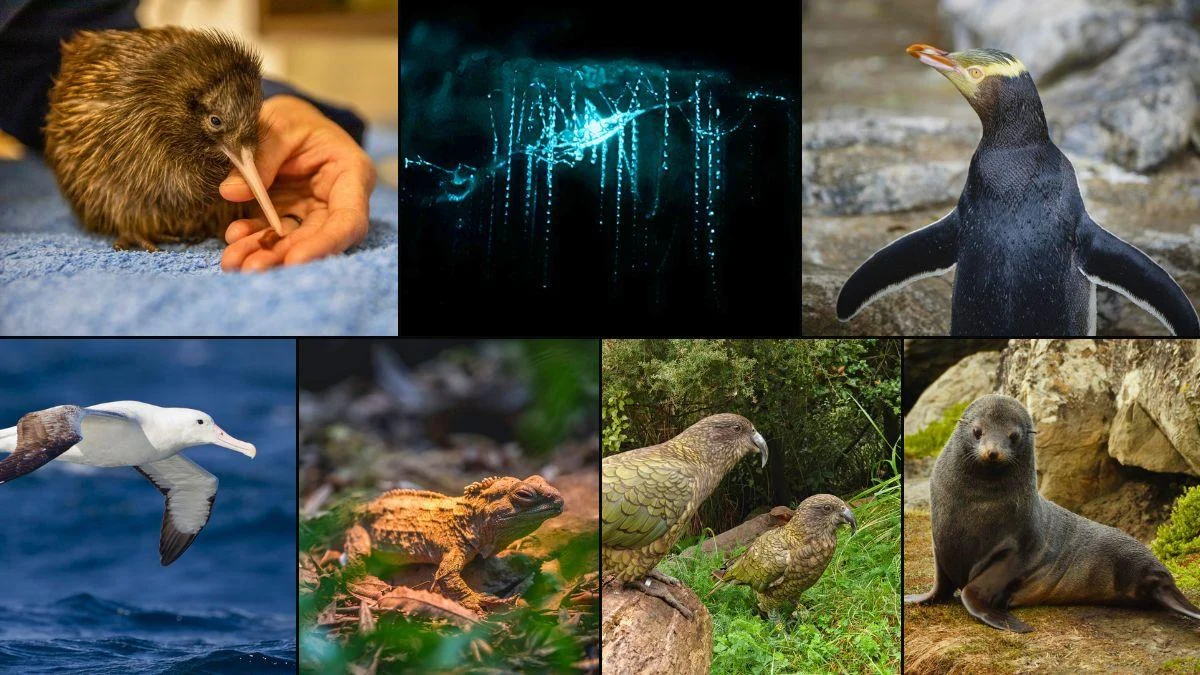
New Zealand, a land forged in isolation by the slow tectonic drift of the ancient supercontinent Gondwana, is a living testament to the power of evolution in isolation. For millions of years after its separation from Gondwana approximately 85 million years ago, these islands remained devoid of terrestrial mammals. This extraordinary absence allowed an entirely different cast of creatures to flourish, with birds, reptiles, and insects assuming ecological roles typically occupied by mammals elsewhere. Today, these unique inhabitants survive in scattered pockets across the nation, remnants of a biological past both wondrous and precarious. This article delves into the profound efforts being made to safeguard this fragile Eden, exploring the historical context, the innovative conservation strategies, and the deep cultural connection that fuels New Zealand’s fight to preserve its unparalleled wildlife.
The Echoes of Absence: A History of Uniqueness and Loss
The story of New Zealand’s wildlife is intrinsically linked to its geological isolation. The breakup of Gondwana left the islands a blank canvas for life, allowing for the development of species found nowhere else on Earth. Birds, in particular, seized this opportunity, evolving into forms that filled the niches of predators, grazers, and scavengers. This evolutionary trajectory, however, was irrevocably altered with the arrival of humans.

The most poignant symbol of this ecological shift is the moa. Before Polynesian settlers arrived around the 1300s, several species of these giant, flightless birds dominated the New Zealand landscape, with the largest specimens towering over three meters tall. Their reign, however, was tragically short-lived. Within a century of human arrival, sustained hunting and habitat destruction led to the moa’s collapse, marking one of the fastest large-animal extinctions in recorded history. This catastrophic event had a ripple effect, leading to the demise of the Haast’s eagle, the apex predator that depended entirely on the moa for survival.
Bodie Tihoi Taylor, a cultural educator and iwi representative at Sanctuary Mountain Maungatautari, eloquently captures the weight of this history. "Anyone that comes here, there’s an innate desire and aspiration for Nature to thrive. Or you wouldn’t be here," he states, standing within the 3,400-hectare ecological sanctuary. For Māori communities, the country’s wildlife is deeply intertwined with the memory of what has been lost. The moa, in particular, remains a central figure in this narrative, representing a profound ecological rupture.

Taylor emphasizes that conservation in modern New Zealand is a direct consequence of this history. "For Māori communities, the country’s wildlife is inseparable from the memory of what was already lost," he explains. This sentiment is powerfully articulated through the Māori concept of kaitiakitanga, often translated as guardianship. It embodies a deep sense of responsibility, loyalty, and duty towards the natural world. "It’s a sense of responsibility and loyalty and duty," Taylor reiterates, explaining that "there needs to be a balancing between conservation of our modern day and conservation of our ancestral days."
Rebuilding an Eden: Sanctuary Mountain Maungatautari and the Power of Exclusion
Sanctuary Mountain Maungatautari, nestled in the Waikato region of the North Island, stands as a beacon of hope and a testament to human ingenuity in restoring what was lost. This immense ecological sanctuary is built around an extinct volcano, encircled by an impressive 47-kilometer fence. This barrier serves a critical purpose: to exclude invasive mammalian predators that have wreaked havoc on New Zealand’s native fauna. Inside this protected haven, a dramatic shift has occurred, with native birds now outnumbering their invasive threats.

The restoration effort at Maungatautari began with the meticulous construction of this pest-exclusion barrier. Stoats, rats, possums, and other feral predators were systematically removed, creating a safe haven for vulnerable native species. The result is a forest that feels unnervingly alive, a stark contrast to the quieter woods found elsewhere in the world.
"I was very fortunate to be brought up in some traditional ways," says Taylor, guiding visitors through the ancient forest lined with towering rimu and tawa trees. "Those ways are not taught in classrooms, they’re taught in the bush with the people." This connection to traditional knowledge underscores the holistic approach to conservation at Maungatautari, integrating Indigenous wisdom with modern scientific management.

The sanctuary now supports reintroduced populations of critically endangered species, including the flightless rail takahē, once feared extinct. Alongside them thrive kākā, hihi (stitchbirds), korimako (bellbirds), pīwakawaka (fantails), and North Island robins. The sanctuary estimates it now hosts more than 3,000 kiwis within its protected ecosystem, a remarkable success story for the iconic national bird.
The success of Maungatautari highlights the effectiveness of exclusion zones in allowing native ecosystems to rebound. It also underscores the crucial role of Māori communities in these restoration efforts. Contemporary conservation in New Zealand increasingly operates through partnerships between iwi groups, government agencies, and private trusts, a model born from generations of Māori land dispossession under colonial settlement. Ecological recovery at sites like Maungatautari is, therefore, also an act of cultural reclamation, as iwi communities reassert their authority over ancestral lands and waterways.

The Enchantment of the Caves: Spellbound Glowworm Cave
Further northwest, within the limestone cave systems of the Waikato region, lies another unique natural wonder: the Spellbound Glowworm Cave. This attraction showcases the mesmerizing bioluminescence of Arachnocampa luminosa larvae, a species found exclusively in New Zealand. These tiny creatures illuminate the cavern ceilings with an ethereal blue-green glow, a captivating lure for their insect prey, which become entangled in sticky silk threads.
Visitors embark on a silent boat journey along an underground river, venturing into a realm where the darkness transforms into an inverted galaxy. Thousands of glowworms pulse overhead, their reflections shimmering on the water below. As eyes adjust to the profound darkness, individual silk threads become visible, adding to the otherworldly spectacle. The experience is so profound that, as the owner and guide at Spellbound notes, visitors are "known to fall asleep or cry. Both are acceptable."

Near the cave entrance, the river is home to the New Zealand longfin eel, or tuna. This endemic freshwater species can live for decades before undertaking an epic migration thousands of kilometers to breed near Tonga. The tactile experience of touching an eel, its skin impossibly smooth and fluid, offers a glimpse into the unique adaptations of life in these subterranean waterways.
Spellbound’s approach, focusing on small groups and extended periods of darkness, distinguishes it from larger commercial tours. The operator notes the growing influence of international tourism and film production on the region, with recent nearby farmland serving as a backdrop for productions like the upcoming The Legend of Zelda adaptation and Andy Serkis’s Hunt for Gollum.

Guardians of the Night and Day: Willowbank Wildlife Reserve
Heading south to Christchurch, the Willowbank Wildlife Reserve offers a concentrated experience of New Zealand’s endangered species. This facility serves as both a breeding center and an educational site, providing crucial insights into the country’s unique biodiversity.
The reserve’s kiwi house is a rare opportunity to observe these nocturnal birds active during daylight hours. Under dim red lighting, visitors can witness the different subspecies of kiwi – North Island brown, South Island brown, Okarito, and great spotted kiwi – foraging for insects using their sensitive nostrils. The stark reality of their declining numbers, from an estimated 12 million before human settlement to around 70,000 today, is a sobering reminder of the ongoing conservation challenge.

Equally captivating are the kea, the intelligent and mischievous alpine parrots. Housed in a traversable enclosure, their reputation for dismantling cars and pilfering belongings on the South Island is quickly understood. The kea’s remarkable intelligence has been the subject of international scientific study, exploring their statistical reasoning, tool use, and problem-solving abilities. One resident, Bruce, even gained global attention for using pebbles to compensate for a damaged beak, showcasing an extraordinary capacity for adaptation.
Willowbank also serves as a sanctuary for the tuatara, a reptile often described as a "living fossil." This unique creature, the sole survivor of an evolutionary lineage dating back over 200 million years, resembles a lizard but belongs to a distinct reptilian order that thrived during the age of dinosaurs. Its presence is a living link to a distant, prehistoric past.

Majestic Flyers and Resilient Survivors: The Royal Albatross Centre and The OPERA
Further south, on the Otago Peninsula, the focus shifts to marine and coastal ecosystems, increasingly threatened by climate change, fishing pressures, and coastal development. The Royal Albatross Centre on Taiaroa Head is a vital sanctuary for the northern royal albatross, or toroa. A long staircase leads to a glass observatory overlooking a protected mainland breeding colony, offering a rare glimpse into the lives of these magnificent seabirds.
With a wingspan of up to three meters, royal albatrosses spend approximately 85% of their lives at sea, traversing vast distances using dynamic soaring techniques. The colony at Taiaroa Head is globally significant as the world’s only mainland breeding site for this species. Despite their impressive adaptations, these birds remain vulnerable to threats such as bycatch from long-line fishing, plastic pollution, and the broader impacts of climate change on ocean ecosystems. The centre’s live albatross camera allows global audiences to monitor nesting pairs and chicks in real-time, fostering a worldwide connection to these remarkable creatures.

Nearby, the Otago Peninsula Eco Restoration Alliance (The OPERA) dedicates its efforts to species facing severe pressure along New Zealand’s southern coastline. Austin Hamilton, a guest ambassador and ranger with the organization, highlights the critical work being done for the yellow-eyed penguin, known in Māori as hoiho. These penguins are among the rarest in the world, facing a confluence of threats including warming ocean temperatures, declining food availability, disease outbreaks, and human disturbance.
Viewing restrictions are in place across many nesting areas to minimize stress during the breeding season, as even perceived threats can lead to nest abandonment. The OPERA’s rehabilitation facilities play a crucial role during annual moulting periods, when penguins temporarily lose the waterproofing in their feathers and become vulnerable on land. Along with hoiho, Fiordland crested penguins, little blue penguins, and Snares crested penguins are monitored, treated, and released back into the wild once their new plumage has fully developed.

The New Zealand fur seals, also present along the Otago coast, represent a different conservation narrative. Once hunted to near collapse in the 19th century, their populations have gradually rebounded due to legal protections. Tourists can observe them resting on rocks and grassy outcrops, a testament to the resilience of nature when given a chance to recover.
The Future of Aotearoa: Partnership and Preservation
Across these diverse landscapes – from the forested sanctuary of Maungatautari to the subterranean marvels of Spellbound Cave, the avian sanctuaries of Willowbank, the majestic seabird colonies of Taiaroa Head, and the penguin havens of The OPERA – New Zealand’s wildlife tourism industry has become a vital public-facing extension of its conservation infrastructure. What truly distinguishes New Zealand’s approach is the profound way in which absence shapes the visitor experience, as much as presence. Nearly every guide and conservationist speaks with familiarity about the animals that are no longer here, weaving their stories into the narrative of the living.

The journey through Aotearoa reveals a land that was, from its very inception, biologically improbable. Its unique evolutionary path, shaped by millions of years of isolation, has created a tapestry of life found nowhere else. This inherent fragility, coupled with the deep cultural understanding of loss and responsibility, fuels the nation’s unwavering commitment to preserving its extraordinary natural heritage. The fight to keep this fragile Eden alive is a testament to the enduring power of nature and the collective will to protect it for generations to come.
This writer was in New Zealand at the invitation of Tourism New Zealand.
