

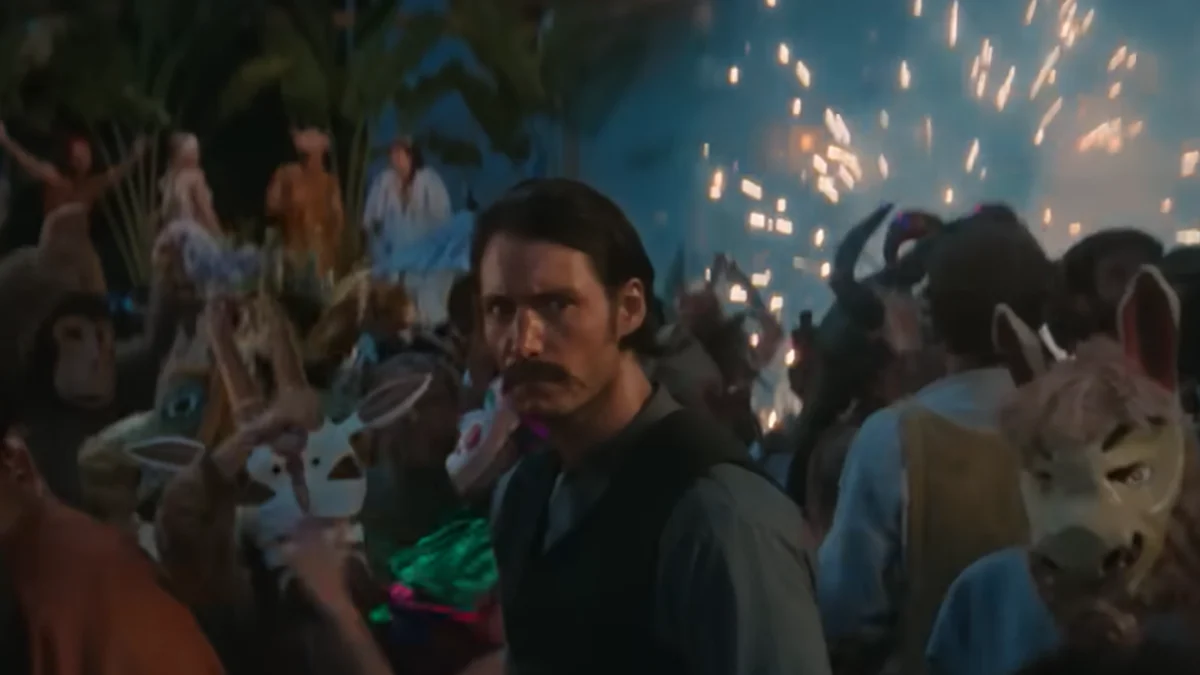
Gabriel García Márquez’s "One Hundred Years of Solitude" is not merely a novel; it is a universe. A sprawling, incandescent tapestry woven from myth, history, and the deepest currents of human experience, it has long been considered unadaptable. Yet, Netflix’s ambitious 16-episode series, helmed by directors Alex García López, Laura Mora, and Carlos Moreno, has dared to confront this monumental task, and in doing so, has created something truly extraordinary. This adaptation is not a mere retelling, but a profound reimagining, one that beckons viewers into the cyclical, mesmerizing, and ultimately devastating world of the Buendía family and their mythical town of Macondo.
The series, produced with the explicit blessing of the Márquez estate, makes a daring structural choice from its very inception. Instead of commencing with the iconic opening – Colonel Aureliano Buendía remembering his father showing him ice – the adaptation thrusts us into the apocalyptic aftermath. We are immediately confronted with a dead, bloodied, pregnant woman, the spectral ruins of Macondo, and the insatiable hunger of carnivorous ants. This jarring, visceral opening immediately establishes the novel’s central theme of cyclical destiny and the inescapable weight of the past. It’s a bold stroke that, rather than alienating the viewer, immediately captures the essence of Márquez’s magic realism, where the fantastical and the tragic are inextricably intertwined.
This approach mirrors the very experience of reading "One Hundred Years of Solitude." Upon reaching the novel’s melancholic conclusion, where the last Buendía is consumed by ants and the town is wiped from existence, a powerful urge arises to return to the beginning, to the genesis of this cursed lineage. The series masterfully evokes this same desire. As Leonard Cohen so poetically sang of drawing aside "to see the serpent eat its tail," this adaptation embodies that cyclical contemplation. The 16 magnificent episodes, each a miniature masterpiece of storytelling and visual artistry, compel a re-watch, a deeper dive into the intricate web of relationships, prophecies, and recurring tragedies that define the Buendía saga.
The Serpent’s Coil: A Chronology of Buendía Fates
The series, like the novel, is a testament to the elastic nature of time. While meticulously charting the passage of years and generations, it simultaneously bends and warps time, allowing characters and events to echo across centuries. The narrative structure, initially disorienting, ultimately reveals its genius. After the prologue of desolation, the series gracefully winds back to the origins of Macondo and the founding of the Buendía dynasty.
We are introduced to the patriarch, José Arcadio Buendía (portrayed with a compelling blend of visionary zeal and stubbornness by Diego Vásquez), a man driven by an insatiable curiosity that leads him to discover the wonders of the outside world, most notably, ice. This initial spark of wonder, however, soon gives way to the obsessive pursuit of knowledge, a trait that will ripple through his descendants.
The series then delves into the tumultuous lives of his children and grandchildren, showcasing the recurring patterns of love, war, and isolation that plague the family. Colonel Aureliano Buendía (a nuanced performance by Claudio Cataño) emerges as a central figure, his early revolutionary fervor eventually dissolving into a profound disillusionment and a solitary existence. His numerous illegitimate sons, all named Aureliano, further emphasize the cyclical nature of their fates, each destined to face their own form of solitude.
The female characters, often the anchors of resilience and pragmatism amidst the family’s chaos, are equally compelling. Fernanda del Carpio (Margarita Rosa de Francisco), with her rigid adherence to social conventions and her desperate attempts to impose order on her children’s lives, provides a stark contrast to the wilder, more instinctual nature of the Buendía women. Her dreams of papal influence for her son and musical prowess for her daughter, Renata Remedios (Juanita Molina), are, of course, destined to crumble.
The series beautifully captures the fantastical elements that define Márquez’s work. Remedios the Beauty (Yiseth Garcerant) ascends to heaven while folding sheets, a moment of ethereal grace amidst the earthly struggles. José Arcadio Segundo (Julián Román) becomes a pivotal figure in the ill-fated banana rebellion, his attempts to expose the truth met with brutal suppression. The forbidden love between Renata Remedios and the mechanic Mauricio Babilonia (David Palacio), marked by the symbolic presence of yellow butterflies, is a poignant illustration of the family’s doomed affections. Their son, Aureliano Babilonia (Sebastián Osorio), inherits the burden of deciphering Melquíades’ prophecies, a solitary scholar grappling with the weight of his lineage.
As the narrative hurtles towards its inevitable conclusion, the final generations of Buendías are depicted grappling with their inherited solitude. Amaranta Úrsula (Estefanía Piñeres), returning from Belgium with her aviator husband Gastón, embodies a fleeting hope for a different future, a hope that is ultimately crushed by the reemergence of the primal curse. The birth of a child with a pig’s tail – the ultimate symbol of the family’s incestuous history and their predetermined fate – marks the final descent into oblivion.

Supporting Data: A Symphony of Senses
The success of this adaptation hinges not only on its narrative structure and performances but also on its breathtaking visual and auditory landscape. The production design is nothing short of spectacular, transforming Macondo into a character in itself. It is a place of dreamlike beauty and nightmarish decay, a "paradise of ruin." The cinematography captures the ephemeral magic of yellow butterflies flitting through the air, the oppressive weight of rain that falls for "Four years, eleven months and two days," and the chilling horror of Fernanda’s statues of saints being consumed by flames.
The costumes are meticulously crafted, period-accurate, and contribute significantly to the storytelling, reflecting the social standing and internal struggles of the characters. The music, a haunting and evocative score, weaves seamlessly through the narrative, enhancing the emotional resonance of each scene. The depiction of violence, while often brutal and unflinching, is never gratuitous; it serves to underscore the tragic trajectory of the Buendía family and the destructive forces at play in Macondo, from civil wars to the brutal suppression of the banana workers.
The series also makes a conscious effort to acknowledge the marginalized voices within the narrative, even as they are ultimately erased. The presence of the Wayuu people, who inhabited the land before the Buendías, and their subsequent marginalization, serves as a powerful commentary on colonialism and the erasure of indigenous histories. Visitación and her brother Cataure, existing on the periphery, represent the forgotten narratives that lie beneath the grander saga of the Buendía family.
Official Responses and Critical Acclaim
The adaptation has been met with widespread critical acclaim, with many praising its faithfulness to the spirit of Márquez’s novel while also celebrating its innovative approach. The Márquez estate’s involvement has ensured a level of authenticity and respect for the source material, a crucial factor in the adaptation’s success.
The directors have spoken about the immense challenge and responsibility of bringing such a beloved and complex novel to the screen. Their vision has been lauded for its ability to capture the essence of magic realism, a genre notoriously difficult to translate visually. The casting has been praised for its depth and nuance, with actors embodying the intricate psychological landscapes of their characters.
Implications and Enduring Legacy
The Netflix adaptation of "One Hundred Years of Solitude" is more than just a television series; it is a cultural event. It has introduced a new generation to Márquez’s unparalleled literary genius and has undoubtedly reignited interest in the novel itself. The experience of watching the show in Spanish, with English subtitles, offers a unique layer of circularity, especially for those familiar with Gregory Rabassa’s seminal English translation, which Márquez himself lauded. Hearing the original Spanish while following along with Rabassa’s eloquent prose creates a profound connection to the novel’s linguistic and cultural roots.
The series forces us to confront universal themes of love, loss, fate, and the cyclical nature of history. It reminds us that while we may strive for progress and escape the past, the echoes of our ancestors and the patterns of human behavior are often inescapable. The "city of mirrors" that José Arcadio Buendía founded has indeed become a "city of mirages," a testament to the illusionary nature of progress and the enduring power of human foibles.
Ultimately, the greatest compliment one can pay this adaptation is that it mirrors the experience of reading the novel: it leaves you wanting more, not in the sense of a cliffhanger, but in the desire to revisit its world, to ponder its mysteries, and to lose yourself once again in its mesmerizing embrace. The serpent has indeed devoured its tail, and in doing so, has offered us a profoundly moving and unforgettable journey into the heart of a literary masterpiece. It is a testament to the enduring power of storytelling, a reminder that even the most daunting literary challenges can yield magnificent results when approached with vision, passion, and a deep reverence for the source material. To surrender to "One Hundred Years of Solitude," whether on the page or on the screen, is a "sweet surrender," a descent into a world of yellow butterflies, burning saints, endless rain, doomed loves, and the inescapable, cyclical dance towards destiny.
