NEW YORK, NY – October 14, 2026 – Apple, the Cupertino-based technology giant, has once again set its sights on the burgeoning smart home market, unveiling its latest offering, the HomeView. Priced at USD 299 and slated for a November launch, this 7-inch smart home screen is positioned not merely as another device, but as an elegant extension of the iPhone experience, leveraging personalized Siri AI to challenge the decade-long dominance of Amazon and Google in the connected living space. Far from a radical reinvention, Apple’s strategy for HomeView is, by its own admission, "boring" – a deliberate embrace of simplicity, reliability, and unparalleled privacy, designed to foster deep user trust in an increasingly complex digital world.
The Main Facts: Apple’s Renewed Smart Home Ambition
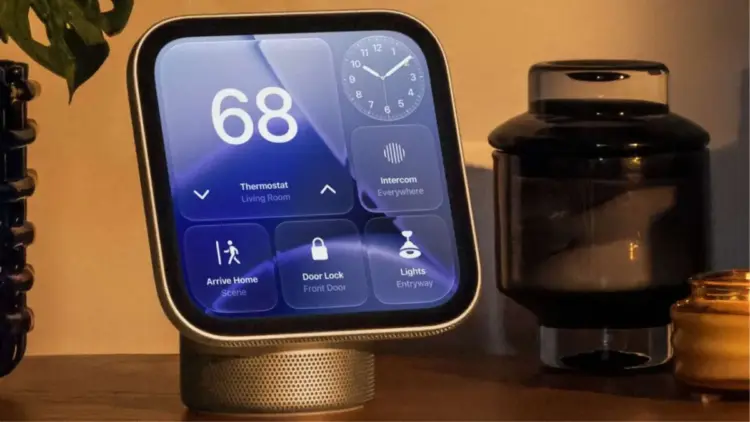
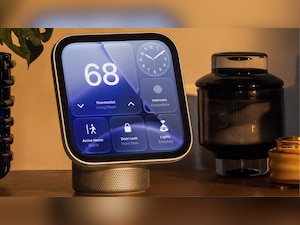
Apple’s HomeView represents a calculated, strategic re-entry into the smart home display segment, a space where its rivals have enjoyed a significant head start. At its core, HomeView is a 7-inch touchscreen device engineered for intuitive interaction within the home environment. It is designed to be versatile, capable of being placed elegantly on an aluminium base or discreetly mounted on a wall, seamlessly blending into modern interiors.
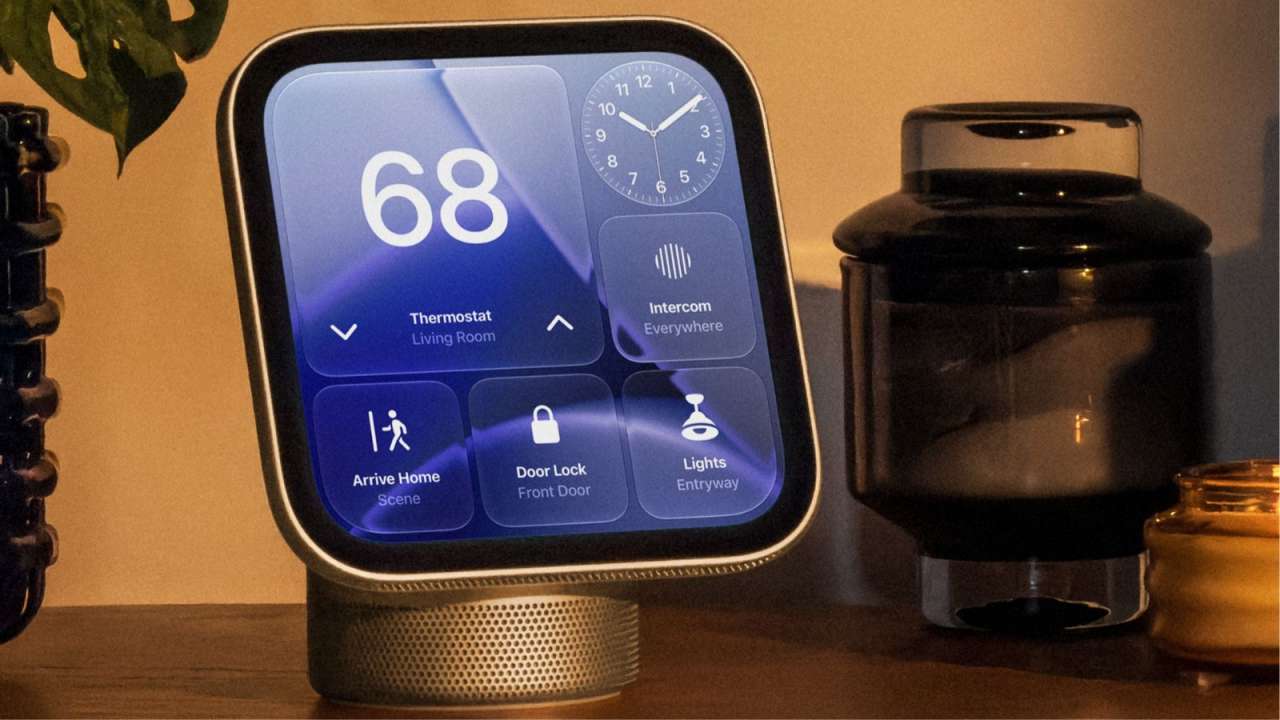
What truly differentiates HomeView is its profound integration with the Apple ecosystem, particularly the iPhone. Unlike standalone smart displays, HomeView acts as a contextual extension of a user’s primary Apple device. Utilising advanced camera and voice recognition technologies, it personalizes home screens, displaying relevant apps, calendar appointments, and notifications tailored to individual users as they approach or interact with the device. This personalization is primarily orchestrated by Siri AI, which, in HomeView’s implementation, is designed to be more contextually aware and privacy-centric.
The device does not store personal data directly on its hardware. Instead, it intelligently relies on a nearby iPhone for context, ensuring that sensitive information remains within the secure confines of the user’s primary device. While built-in Apple applications like FaceTime and Apple Music are natively supported, the system’s reliance on the iPhone extends to third-party services. For instance, accessing a personalized Spotify account requires the presence and authentication of a user’s iPhone, reinforcing the device’s role as a companion rather than a standalone hub. Apple introduced HomeView at a New York event, with executives underscoring the device’s design philosophy centered on "simplicity and elegance," hallmarks of the company’s product ethos. This approach aims to provide a sophisticated, reliable, and trustworthy smart home experience, directly addressing perceived complexities and privacy concerns associated with competing offerings.
A Chronology of Apple’s Smart Home Journey
Apple’s journey into the smart home arena has been marked by ambition, innovation, and learning curves. The company’s initial forays into this space were characterized by a cautious yet premium approach, often prioritizing sound quality and privacy over sheer market share.
The Dawn of the Smart Home Era (Mid-2010s)
The smart home market truly began to take shape in the mid-2010s with the advent of voice assistants and smart speakers. Amazon’s Echo, launched in 2014, pioneered the category, quickly followed by Google Home (now Nest Hub) in 2016. These devices rapidly became ubiquitous, offering convenience through voice control, information retrieval, and basic smart home automation. Their accessible price points and broad third-party integrations allowed them to capture significant market share, establishing a duopoly that has largely defined the smart home landscape for nearly a decade.

Apple’s First Attempt: The HomePod (2018)
In February 2018, Apple made its first significant foray into the smart speaker market with the launch of the original HomePod. Positioned as a high-fidelity audio device with integrated Siri intelligence, it aimed to differentiate itself through superior sound quality and Apple’s renowned privacy standards. The HomePod was priced at USD 349 (later reduced to USD 299), significantly higher than its competitors, the Amazon Echo and Google Home.
While praised for its exceptional acoustic performance and elegant design, the HomePod faced several challenges. Its Siri integration, while secure, was initially less capable and versatile compared to Amazon Alexa and Google Assistant, particularly concerning third-party app support and general knowledge retrieval. Its strict adherence to the Apple ecosystem meant limited compatibility with non-Apple services and smart home devices outside of HomeKit. As a result, despite its premium appeal, the HomePod struggled to gain traction, capturing only around 6% of the smart speaker market share in its prime. This limited success eventually led to the discontinuation of the original HomePod in March 2021, though its legacy continued with the more affordable and successful HomePod mini, launched in 2020. The HomePod mini offered a more accessible entry point into Apple’s smart speaker ecosystem, maintaining a focus on privacy and HomeKit integration.

The Evolution Towards Smart Displays
As the market matured, smart displays – devices combining voice assistants with touchscreens – emerged as a natural evolution of smart speakers. Amazon’s Echo Show and Google’s Nest Hub offered visual feedback, video calling, recipe guides, and enhanced smart home control interfaces. This segment quickly gained popularity, highlighting a gap in Apple’s smart home portfolio. While the iPad could serve some of these functions, it lacked the always-on, dedicated appliance-like nature of a smart display.
The Genesis of HomeView (2026)
Recognizing the evolving demands of the smart home market and the limitations of its previous approaches, Apple embarked on developing HomeView. This new device represents a deliberate pivot, learning from the HomePod’s challenges while leveraging Apple’s core strengths: a powerful ecosystem, a loyal user base, and an unwavering commitment to user privacy. HomeView is designed to fill the smart display void, offering a dedicated, iPhone-centric experience that promises to be more integrated, personalized, and trustworthy than anything currently available from its competitors. Its unveiling at a New York event underscores Apple’s renewed focus on the home, aiming to establish HomeView as an indispensable part of the Apple user’s daily life.

Supporting Data: Market Dynamics and Apple’s Differentiated Strategy
The global smart home market is a rapidly expanding sector, projected to reach hundreds of billions of dollars in valuation within the next few years. Within this broad category, smart displays constitute a crucial and growing segment, driven by consumer demand for visually enhanced interactions and centralized control of connected devices.
The Competitive Landscape: Amazon and Google’s Entrenched Position
For nearly a decade, Amazon and Google have dominated the smart display market. The Amazon Echo Show line and Google Nest Hub series have captured the lion’s share, largely due to their early market entry, aggressive pricing, broad compatibility with third-party smart home devices, and powerful AI assistants (Alexa and Google Assistant) that are deeply integrated into various web services. These devices have become household staples, offering a wide array of functionalities from video calls and streaming content to recipe guidance and security camera feeds.

However, their extensive data collection practices, often tied to advertising models and service improvements, have raised persistent privacy concerns among a segment of consumers. The sheer breadth of their ecosystems can also lead to a somewhat fragmented user experience, with varying levels of integration and consistency across different devices and services.
Apple’s Ecosystem Advantage and "Boring" Strategy
Apple enters this crowded market with a distinct advantage: its unparalleled ecosystem and a loyal, premium customer base. The iPhone, with over a billion active users globally, serves as the central pillar of this ecosystem. HomeView is explicitly designed to capitalize on this, functioning as a seamless "iPhone extension" rather than an independent smart hub. This approach allows HomeView to leverage the iPhone’s processing power, secure enclave, and existing user data (with explicit permissions), bypassing the need for extensive on-device storage of personal information.

This deep integration fosters a unified, consistent user experience, mirroring the seamless connectivity seen across Apple products like AirPods and Apple Watch. For users already invested in the Apple ecosystem, HomeView promises an intuitive and familiar interface, significantly reducing the learning curve often associated with new smart home devices.
The "boring" strategy championed by Apple for HomeView is, in fact, a sophisticated differentiation play. In an era where AI products are often characterized by their complexity, experimental features, and sometimes questionable data handling, Apple is deliberately prioritizing simplicity, trustworthiness, and predictability. This strategy directly addresses the growing consumer apprehension about data privacy and the potential for AI systems to become overwhelming or intrusive.

By focusing on a refined, reliable, and secure experience, HomeView aims to build user confidence. Its personalized features, such as individual Spotify accounts or tailored iMessages and FaceTime calls, are powered by context from the user’s iPhone, meaning the data processing for these personal interactions largely occurs within the familiar and secure environment of the iPhone itself. This contrasts sharply with cloud-centric AI models that aggregate vast amounts of user data, often raising red flags for privacy-conscious individuals.
Apple’s consistent success in the high-end market, despite often higher price points (e.g., iPhones compared to Android flagships), demonstrates a clear demand for premium products that deliver on design, performance, and user experience. HomeView’s USD 299 price tag, while higher than many entry-level smart displays from Google and Amazon, is consistent with Apple’s premium positioning. The company believes there is a significant market segment willing to pay a premium for a simpler, more secure, and deeply integrated gadget that resolves privacy issues and works harmoniously with their existing Apple devices. This is not about winning the mass market on price, but about capturing the high-value segment that prioritizes quality and trust.

Official Responses: Apple’s Narrative and Analyst Perspectives
The launch of HomeView has been accompanied by a clear narrative from Apple, alongside a flurry of analysis and commentary from industry experts.
Apple’s Official Stance and Messaging
Apple’s messaging surrounding HomeView consistently emphasizes a few core tenets: simplicity, elegance, privacy, and seamless integration. While specific quotes from executives are not yet widely published beyond the initial announcement, the underlying philosophy is evident. Apple positions HomeView as a natural and necessary evolution of the iPhone experience, designed to extend the utility of its flagship product into the ambient environment of the home.

The company highlights HomeView’s role in personalizing the home experience without compromising user data. The "boring" moniker, far from being an apology, is presented as a strength – a commitment to reliability and a rejection of the often-overhyped, complex, and potentially insecure aspects of nascent AI technologies. Apple aims to instill confidence, assuring users that HomeView is a trustworthy companion, operating within the established boundaries of Apple’s robust privacy framework. The design ethos, typical of Apple, focuses on a minimalist aesthetic that is meant to blend into any home décor, further reinforcing the idea of a simple, unobtrusive, yet powerful device. HomeView is portrayed as enhancing daily life through thoughtful, context-aware assistance rather than overwhelming users with a multitude of often-unused features.
Analyst Reactions and Industry Commentary
Initial reactions from tech analysts and industry commentators have been mixed but generally intrigued. Many acknowledge Apple’s strategic brilliance in embracing "boring" as a differentiator, especially in the context of growing privacy concerns.

Analysts like those from Gartner and IDC often point out that Apple’s premium pricing strategy, while a barrier for some, rarely deters its loyal customer base. The USD 299 price point for HomeView is seen as consistent with Apple’s brand positioning and value proposition. Commentators frequently draw parallels to the iPhone’s success in the premium smartphone market, where despite being more expensive than Android counterparts, it consistently captures a significant share of profits and customer loyalty.
There’s a consensus that HomeView isn’t intended to directly compete on price or sheer feature count with the vast array of Amazon and Google smart displays. Instead, it aims to carve out a premium niche, much like the HomePod mini successfully did in the smart speaker segment. Analysts suggest that HomeView’s success will hinge on the perceived value of its deep iPhone integration and Apple’s promise of superior privacy and a more coherent ecosystem experience.

Some critics, however, question whether "boring" might be too cautious, potentially limiting HomeView’s appeal to only the most dedicated Apple users. They argue that Amazon and Google have already established broad user bases with diverse needs, and Apple’s focus on simplicity might miss opportunities for more advanced, experimental AI features that some users crave. Nevertheless, the prevailing sentiment is that Apple’s strategy is a calculated risk, leveraging its unique strengths to address a critical pain point in the smart home market.
Early Buzz and Public Perception
While HomeView is yet to launch, the initial public discourse revolves around anticipation for a truly integrated Apple smart display and the ongoing debate about privacy versus functionality. Apple enthusiasts are eager for a dedicated device that seamlessly extends their iPhone experience, offering a more elegant and secure alternative to existing smart displays. The promise of personalized Siri AI that respects privacy is particularly appealing to this demographic. The "boring" narrative, when explained as a commitment to reliability and trust, resonates positively with users tired of buggy software or data breaches. The challenge for Apple will be to effectively communicate this nuanced strategy to a broader audience, demonstrating that simplicity doesn’t equate to a lack of innovation, but rather a focus on essential, high-quality experiences.

Implications: Future Outlook and Apple’s Smart Home Vision
The introduction of HomeView carries significant implications for the smart home market, Apple’s long-term strategy, and the evolving landscape of personalized AI.
Impact on the Smart Home Market
HomeView’s launch could act as a catalyst, prompting Amazon and Google to re-evaluate their own strategies, particularly concerning privacy and ecosystem integration. While unlikely to immediately disrupt the established duopoly, HomeView is poised to carve out a substantial premium niche, potentially shifting consumer expectations towards more secure and personalized smart home experiences. Competitors may be compelled to enhance their privacy features, offer more seamless cross-device integrations, or further differentiate their products beyond price. The presence of a strong Apple contender could also accelerate the overall adoption of smart displays, especially among iPhone users who have previously held back due to privacy concerns or a lack of a cohesive Apple-centric option. It reinforces the idea that the smart home market is maturing, with different segments valuing different attributes.

Evolution of Apple’s Smart Home Strategy
HomeView signals a more aggressive and confident push by Apple into the smart home. It suggests that the company has learned valuable lessons from the HomePod’s journey and is now ready to commit more fully to creating a comprehensive, interconnected home ecosystem. This device could serve as a foundational element for future Apple smart home innovations. We might see larger screen variations, deeper HomeKit integration capabilities, and perhaps even a more central role for HomeView in managing a wider array of smart devices and services. It solidifies Apple’s commitment to the "ambient computing" paradigm, where technology seamlessly fades into the background, providing assistance without demanding constant attention. HomeView is not just a product; it’s a statement about Apple’s vision for how technology should interact with our living spaces – intelligently, elegantly, and privately.
The Future of Personalized AI and Privacy
Perhaps the most profound implication of HomeView lies in its approach to personalized AI. By primarily relying on the nearby iPhone for context and processing, Apple is setting a new standard for privacy in smart home devices. This "on-device first" or "ecosystem-centric" approach minimizes the amount of personal data that needs to be transmitted to and stored in the cloud, offering users greater control and peace of mind.

This strategy could influence the broader AI industry, encouraging other players to explore more privacy-preserving models for personalized experiences. As AI becomes more pervasive, the debate around data privacy and user consent will only intensify. HomeView’s deliberate choice to prioritize trust and simplicity, rather than raw data collection, positions Apple as a leader in advocating for a more ethical and user-centric approach to artificial intelligence in the home. It underscores the belief that powerful personalization doesn’t have to come at the cost of privacy, but can instead be achieved through intelligent, localized processing and a strong commitment to user control.
Challenges and Opportunities Ahead
Despite its promising outlook, HomeView faces challenges. Its premium price point will always be a hurdle for budget-conscious consumers. Overcoming the entrenched market positions of Amazon and Google, which boast vast libraries of third-party integrations and often lower price points, will require persistent innovation and compelling value propositions. Ensuring robust and seamless support for third-party apps, even with iPhone reliance, will be critical for a truly comprehensive user experience.

However, the opportunities are immense. Leveraging Apple’s formidable brand loyalty, HomeView has the potential to expand the HomeKit ecosystem significantly, drawing in more developers and device manufacturers. By setting new benchmarks for privacy and user experience in the smart display category, HomeView could redefine what consumers expect from their connected home devices, ultimately solidifying Apple’s position as a dominant force in the high-end smart home market for years to come. The "boring" approach, in this context, is not a lack of ambition, but a deliberate and sophisticated strategy to build a foundation of trust and reliability that is increasingly rare, and profoundly valued, in the modern technological landscape.