


LONDON, England – In a significant development that has sent a wave of anticipation through the Pakistan cricket camp, star batsman and reappointed Test skipper Babar Azam is poised to make his return to the Playing XI for the second Test against England at Lord’s. The news comes as a major boost for the touring side, reeling from a crushing defeat at Headingley, and places immense pressure on Azam to help his team salvage pride and reignite their series hopes.
The question looming large is whether the return of one of the world’s premier batsmen can indeed change Pakistan’s fortunes and inspire a turnaround against a formidable English side. As the team’s bowling coach, Umar Gul, cautiously affirmed Babar’s readiness, the focus now shifts to the iconic "Home of Cricket" where Pakistan will seek to rewrite the narrative of a challenging tour.
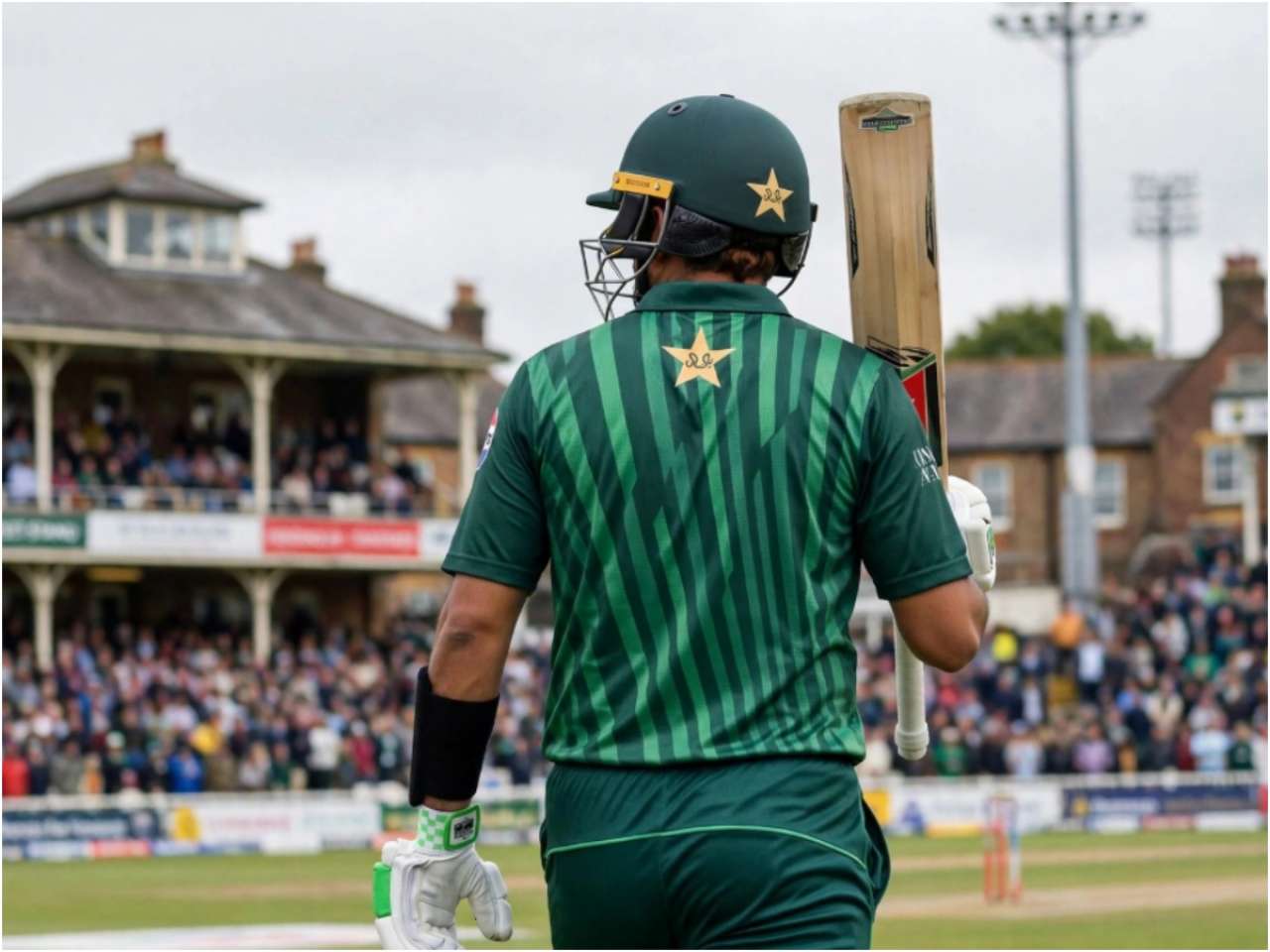
The Weight of Expectation: Babar Azam’s Return
The announcement of Babar Azam’s impending return for the Lord’s Test has been met with a mixture of relief and fervent expectation within Pakistani cricketing circles. His absence from the first Test at Headingley was keenly felt, leaving a significant void in the batting lineup and contributing to a palpable lack of stability. As a former captain and currently the reappointed Test skipper, Babar carries not just the weight of his own performance but also the hopes of a nation desperate for cricketing success, especially in the challenging away conditions of England.
Pakistan’s Test cricket landscape has been marked by inconsistency in recent years, particularly when touring formidable opponents. While flashes of brilliance have been observed, the team has often struggled to sustain collective performances across all departments for the duration of a five-day match. This vulnerability was brutally exposed at Headingley, making Babar’s comeback not merely a personnel change but a potential psychological lifeline. His presence is expected to inject confidence, experience, and a much-needed anchor in a batting order that appeared adrift in the series opener.
)
A Timeline of Injury and Absence
Babar Azam’s journey back to the Test arena has been punctuated by an unfortunate finger injury, a recurring setback that sidelined him at a critical juncture. The initial injury occurred last month during Pakistan’s home series against the West Indies. Despite the discomfort, Babar had showcased remarkable resilience and form in that series, emerging as Pakistan’s leading run-scorer with 193 runs at an impressive average of 96.50, including two crucial half-centuries. His performance then underscored his importance as the team’s linchpin.
However, fate dealt a cruel blow during the team’s practice session at Beckenham just ahead of the England tour. Babar re-aggravated the same finger injury, rendering him unavailable for the first Test at Headingley. This recurrence was a significant setback for both the player and the team management, who had high hopes for his leadership and batting prowess against England.

His absence left a gaping hole in the middle order, forcing the team to reshuffle its batting lineup and rely on players who were either less experienced or out of form. The impact was starkly evident in the Headingley Test, where Pakistan’s batsmen struggled to build substantial partnerships or withstand England’s relentless pace and swing attack. The lack of a steadying influence, particularly in crucial periods, led to collapses that ultimately proved fatal to their chances. The "humiliation" at Headingley, characterized by significant batting failures and an inability to challenge England meaningfully, served as a stark reminder of Babar’s irreplaceable value to the side.
Behind the Scenes: The Road to Recovery
The path to Babar Azam’s return has been a carefully monitored one, involving a dedicated rehabilitation process aimed at ensuring his complete fitness for the rigours of Test cricket. Pakistan’s bowling coach, Umar Gul, offered crucial insights into Babar’s recovery, confirming the positive progress made during training sessions.
)
"Babar batted in the nets, faced fast bowlers, spinners and throwdowns. We’re hopeful he will be available for the game, and today he was looking good; he batted well in the nets. He had a full batting session," Gul was quoted as saying by Cricinfo. This statement suggests that Babar has not only regained mobility in his injured finger but has also been able to face the full spectrum of deliveries, indicating a return to match readiness. The full batting session, encompassing various forms of bowling, is a critical benchmark for any returning batsman, signaling that he can withstand the impact and pressure of competitive play.
The medical team would undoubtedly have played a pivotal role in assessing his recovery, ensuring that the finger was strong enough to endure the demands of gripping the bat, absorbing impact from fast bowlers, and fielding. The psychological aspect of returning from injury, especially a recurring one, cannot be overstated. A batsman needs complete confidence in his body to perform at the elite level, and Babar’s ability to undergo a full batting session implies that he has overcome both the physical and mental hurdles associated with his injury. His determination to return, coupled with the meticulous care from the support staff, highlights the urgency and importance placed on his presence in the squad.
)
The Strategic Implications: Batting Order Reshuffle
Babar Azam’s return is set to trigger a significant reshuffle in Pakistan’s top and middle order, a tactical adjustment that the team management hopes will bring much-needed stability and depth. Babar typically bats at the crucial number four position, a slot that demands both solidity and the ability to accelerate scoring. To accommodate his return, either Shan Masood or Abdullah Shafique will likely be asked to adjust their positions or, potentially, one might make way for the returning skipper.
Shan Masood, an experienced opener and former captain himself, has often been a reliable performer, but his recent form in Test cricket has been inconsistent. Abdullah Shafique, on the other hand, is a promising young talent with elegant stroke play, but perhaps still finding his feet in the challenging English conditions. The decision of who to move or drop will be a delicate one for the coaching staff, balancing experience with potential and current form.
)
Babar’s presence at number four is vital for several reasons. It allows him to dictate the pace of the innings, rebuild if early wickets fall, and capitalize on scoring opportunities. His ability to rotate the strike and play both pace and spin with equal comfort provides a calming influence in the middle. Furthermore, his partnership-building capabilities are crucial for setting competitive totals, especially on pitches that offer assistance to bowlers. The reshuffle is not merely about slotting a player in; it’s about optimizing the entire batting unit to maximize its potential and withstand the formidable English attack. His return is expected to solidify the middle order, providing a strong foundation for the lower order to play with more freedom.
Babar’s Pedigree in English Conditions
One of the most compelling arguments for Babar Azam’s immediate impact lies in his impressive track record on English soil. The conditions in England, known for their lateral movement, often prove to be a stern test for touring batsmen. The Duke’s ball, the overcast skies, and the seaming pitches demand exceptional technique, patience, and concentration. Babar, however, has consistently demonstrated his mastery over these challenges.
)
His statistics in England are noteworthy: an average of 65.75 in six Test innings, including three vital half-centuries. This record stands in stark contrast to many of his contemporaries and highlights his adaptability and temperament. He possesses a compact technique, a strong defense, and the ability to leave the ball judiciously, all essential attributes for success in England. His capacity to ride the bounce and play through the line, combined with excellent hand-eye coordination, allows him to counter both swing and seam effectively.
This proven ability to perform under challenging English conditions makes him an invaluable asset. While other batsmen might struggle to adapt, Babar has shown he can not only survive but thrive, scoring runs when it matters most. His experience will be crucial in guiding younger players and setting an example of how to approach batting in these unique circumstances. Furthermore, his global Test record, which consistently places him among the top batsmen in the world, adds another layer of gravitas to his return, signaling to both his teammates and the opposition that a truly world-class player is back in action.
)
Beyond Babar: The Team’s Collective Responsibility
While Babar Azam’s return is undoubtedly a significant morale booster, the Pakistan team management is acutely aware that success cannot hinge on one individual alone. Bowling coach Umar Gul articulated this sentiment clearly, emphasizing the need for a collective effort and a holistic improvement across all facets of the game.
"We’ll have to learn from the mistakes we made in the previous game. If you want to win a Test match, you have to perform in all departments. One can’t be carrying the other," Gul stated, highlighting the team’s shortcomings at Headingley. This candid assessment points to a broader systemic issue that needs addressing.
)
The bowling unit, despite moments of brilliance, struggled to maintain consistent pressure and take 20 wickets – the ultimate prerequisite for winning a Test match. "But in these conditions, the responsibility lies more with the bowlers. Until you take 20 wickets, you can’t win a Test match," Gul reiterated. This underscores the need for greater penetration, tighter lines, and more disciplined lengths from Pakistan’s pace battery and spin options. At Headingley, they often released pressure, allowing England’s batsmen to score freely and build commanding leads.
Furthermore, the fielding and catching, critical components of Test cricket, also came under scrutiny. Dropped catches and lapses in the field can deflate a team’s morale and turn the tide of a match. The coaching staff will undoubtedly be working intensely on improving these areas, recognizing that even the most brilliant individual performances can be undermined by collective errors.
)
The pressure is not solely on Babar; it extends to captain, the vice-captain, the senior bowlers, and indeed every player in the XI. They must learn from their errors, adapt their strategies, and execute their plans with precision. The Lord’s Test offers an immediate opportunity for redemption, but it demands a significant uplift in performance from every single player, demonstrating that the team has absorbed the lessons from Headingley and is ready to compete as a cohesive unit.
The Lord’s Test: A Crucible of Fortune
The second Test at Lord’s carries immense significance, not just for the series but for the broader narrative of Pakistan cricket. The "Home of Cricket" is steeped in history and tradition, a venue where careers are forged and legends are made. For Pakistan, it represents an opportunity to erase the bitter taste of defeat from Headingley and demonstrate their resilience on a global stage.
)
The psychological battle against England will be intense. Having suffered a heavy loss in the opener, Pakistan will need to display immense mental fortitude to bounce back. England, buoyed by their dominant performance, will be eager to press their advantage and secure an unassailable lead in the series. The conditions at Lord’s, typically offering a good balance between bat and ball, could play a crucial role. The iconic slope, the potential for swing early on, and a pitch that often flattens out, present a unique set of challenges and opportunities.
A strong performance, whether a win or a competitive draw, would be instrumental in restoring Pakistan’s morale and keeping the series alive. It would send a powerful message of defiance and capability. Conversely, another heavy defeat could have long-lasting implications for the team’s confidence and potentially trigger further introspection about their Test cricket strategy and player development.
)
For Babar Azam, his return to Lord’s is more than just another match; it’s a personal test of character and a chance to immediately stamp his authority. His leadership, even if not formal captaincy in this instance, and his batting prowess will be under intense scrutiny. The cricketing world will be watching to see if he can indeed be the trump card Pakistan desperately needs, inspiring his teammates to rise to the occasion and deliver a performance worthy of their potential.
Conclusion
Babar Azam’s anticipated return to the Pakistan Test squad for the Lord’s match is undeniably a pivotal moment for the team. After the stark reality check at Headingley, his presence offers a beacon of hope and a much-needed injection of class and experience into the batting lineup. His proven track record in English conditions and his stature as one of the game’s elite batsmen make him a crucial figure in Pakistan’s quest for redemption.
)
However, as wisely noted by Umar Gul, the responsibility for success transcends individual brilliance. The Lord’s Test will be a comprehensive examination of Pakistan’s collective strength, their ability to learn from past mistakes, and their resolve to perform consistently across all three departments – batting, bowling, and fielding. While Babar Azam’s return provides a significant boost, the ultimate outcome will depend on the entire squad’s commitment to excellence and their determination to challenge England fiercely on cricket’s grandest stage. All eyes will be on Lord’s as Pakistan seeks to turn the tide and rewrite their fortunes in this compelling Test series.
