

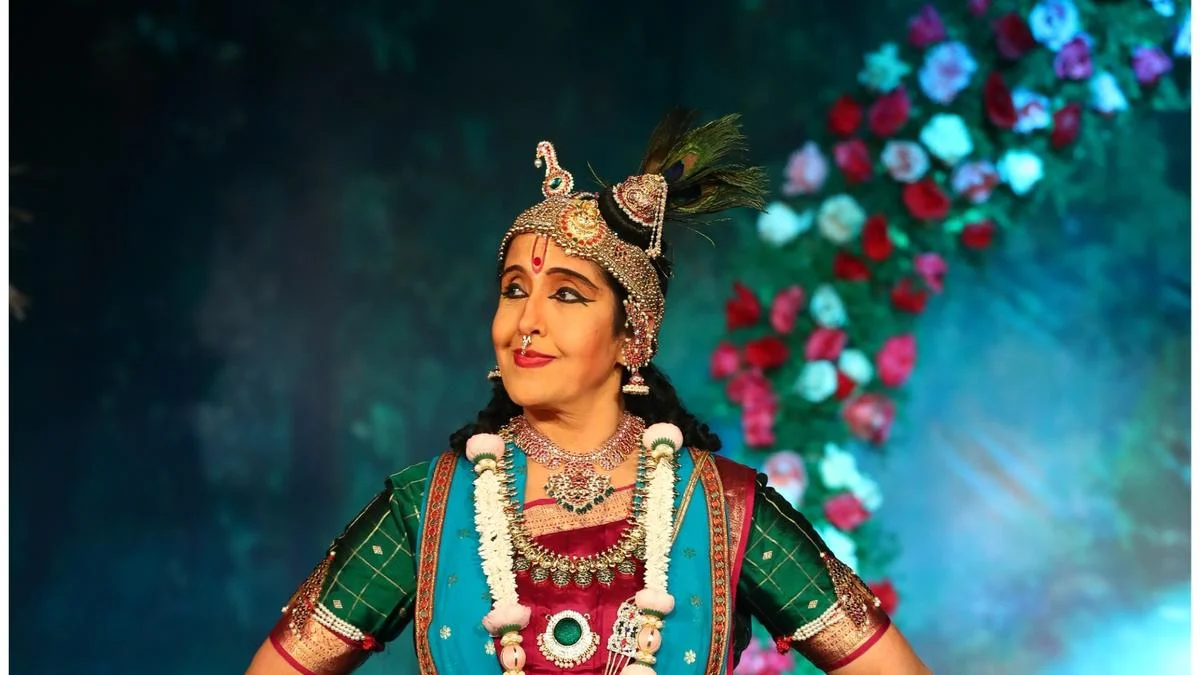
Chennai, August 18, 2026 – Renowned Bharatanatyam exponent Bala Devi Chandrashekar recently captivated audiences at Kalakshetra with her deeply resonant thematic production, "Mauli: A Timeless Tradition." More than a mere dance performance, the ekaharya (solo) presentation, executed in the evocative bhanika style, transcended the conventional stage to offer a profound spiritual pilgrimage through Maharashtra’s venerable 800-year-old Varkari tradition. The production meticulously guided attendees on a virtual journey, tracing the sacred pathways from the hallowed grounds of Alandi and Dehu to the divine abode of Pandharpur.
A Spiritual Sojourn Rooted in Compassion
"Mauli," meaning "mother" or "one who is crowned," serves as a poignant epithet for the Varkari saints, embodying their maternal love and spiritual guidance. Chandrashekar’s artistic vision for this production was not to present a linear narrative but to unfold the multifaceted essence of bhakti (devotion) across four distinct acts. From the very outset, her core premise resonated with clarity: true devotion is not an abstract concept measured by rigid rituals or intellectual scholarship, but is fundamentally rooted in the profound wellspring of compassion.
Drawing inspiration from the lives and philosophies of illustrious saint-poets such as Gnaneshwar, Namdev, Janabai, Tukaram, and Eknath, Chandrashekar masterfully illustrated how the most ordinary acts of kindness and empathy can blossom into powerful expressions of the divine. This profound connection elevated "Mauli" beyond a mere exploration of spirituality; it became a poignant reflection on the very essence of humanity itself.
The Sacred Geography and the Festive Spirit of Vari
The inaugural act of "Mauli" commenced with the establishment of the sacred geography of Pandharpur, the spiritual heartland of the Varkari tradition. This was achieved through a graceful Pushpanjali, a traditional offering of flowers, set in the melodious raga Hamsadhwani and presented in the intricate Misra Jhampa tala. The atmosphere was further enriched by evocative abhangs (devotional songs) rendered in a spectrum of ragas, including Misra Kalavati, Misra Bhoopalam, Megh, and Misra Bilawal.
The vibrant and festive spirit of the annual Vari, the grand pilgrimage to Pandharpur, was vividly brought to life through compelling imagery. The audience was transported to witness pilgrims, attired in traditional attire, converging for their sacred journey. The visual spectacle was amplified by the sight of fluttering bhagwa pataka (saffron flags) held aloft by the devotees, symbolizing their unwavering faith and collective spiritual aspiration.
Illuminating Acts of Selfless Devotion and Universal Truth
Among the most impactful episodes woven into the narrative was the poignant story of Pundalika. His unwavering and selfless service to his aged parents, a testament to filial piety, compelled Lord Vittala himself to wait patiently on a brick. This timeless tale powerfully affirmed the Varkari tenet that selfless duty, performed with pure intention, is itself a supreme form of worship. Equally compelling was the philosophical realization of Narahari, who attained enlightenment by understanding that Shiva and Vishnu, often perceived as distinct deities, are in fact but two radiant manifestations of the singular, supreme reality.
Gnaneshwar’s Universal Vision and Namdev’s Divine Encounter
The second act delved deeper into the spiritual landscape, commencing with a depiction of Gnaneshwar’s profound vision of universal divinity. This was eloquently portrayed through the rendering of his seminal abhang, "Roopa pahata lochani" (Upon seeing the form, my eyes…). The narrative then gracefully transitioned to the beloved saint-poet Namdev. His devotional offering of milk to Lord Krishna was beautifully depicted through an abhang set in the soulful raga Abheri.

One of the most unforgettable moments of the entire recital unfolded with the portrayal of Namdev’s encounter with a stray dog. In a profound act of divine grace and Namdev’s heightened spiritual perception, when a dog absconded with his rotis, Namdev did not see a mere animal. Instead, he recognized the divine presence of Vittala himself in the act, demonstrating the saint’s extraordinary ability to perceive the divine in all beings and all circumstances.
Janabai’s Intimate Bond and Tukaram’s Profound Philosophy
The intimate bond between a devotee and the divine was beautifully exemplified in Janabai’s segment. Her daily chores, performed with unwavering faith, were elevated to acts of worship as the divine presence of Vittala was shown assisting her in washing clothes and cleaning vessels. This segment poignantly highlighted the personal and deeply connected relationship that can exist between a devotee and the divine, even in the most mundane of activities.
The third act further deepened the philosophical core of the production. Chandrashekar’s astute choice of Sant Tukaram’s celebrated abhang, "Bolava Vitthal, pahava Vitthal" (Let Vittala speak, let me see Vittala), resonated with profound spiritual yearning. The narrative then moved to the compassionate spirit of Eknath. His act of offering sacred Ganga water to a dying donkey, rather than reserving it solely for ritualistic worship, powerfully distilled the production’s central message of universal compassion. The performance reached a crescendo of emotional resonance with Eknath’s yearning for divine union, depicted through the abhang "Kashi jau mi vrindavana" (How can I go to Vrindavan?), set in the deeply evocative raga Gamanashrama.
The Culmination of the Pilgrimage and the Power of Namasankirtanam
The final act brought the spiritual pilgrimage full circle, culminating in the joyous invocation of "Jai jai ramakrishna hari" in the auspicious raga Yaman Kalyan. This segment underscored the transformative power of namasankirtanam, the congregational chanting of the divine name. Tukaram’s heartfelt praise of the Lord flowed seamlessly into the ceremonial wedding of Tulasi and Damodara, a significant ritual within the Varkari tradition. The production concluded with the sublime vision of Pandharpur as Vaikuntha on earth, its spiritual significance magnified by the resounding chants of "Vittala, Vittala," leaving the audience with a profound sense of spiritual fulfillment.
A Symphony of Artistic Collaboration
"Mauli: A Timeless Tradition" was not only a testament to Bala Devi Chandrashekar’s artistic vision and choreographic prowess but also a product of exceptional collaborative effort. The entire production was conceived and choreographed by Chandrashekar herself. The musical composition, a crucial element in weaving the spiritual narrative, was masterfully crafted by O.S. Arun, who also lent his powerful vocal talents to the rendition of the songs, alongside Vinaya and Usha Raj. The script, which provided the textual foundation for the abhangs and narrative flow, was penned by Umapathy and Abhang Radhakrishnan, ensuring historical and spiritual accuracy.
Orchestrating the Divine Melody
The intricate rhythmic patterns, known as jathis, which are the backbone of Bharatanatyam choreography, were composed and rendered with exceptional skill by Sheejith Krishna. The accompanying orchestra formed a vital ensemble, contributing to the rich sonic tapestry of the production. The tabla was expertly played by Martin, while Rakesh provided the foundational rhythms on the mridangam. The haunting melodies of the sitar were brought to life by Kishore, and Venkataraman skillfully manipulated the keyboard to enhance the musical textures.
The classical Indian string instruments added layers of depth and emotion: Usija Nachiyar graced the stage with her soulful veena, while Sruthi Sagar’s flute playing evoked moments of profound serenity and longing. The familiar strains of the violin were rendered by Usha Rajagopalan, and the vibrant sounds of the nagaswaram and shehnai were masterfully handled by Mambalam Sivakumar, bringing a distinctive regional flavour and celebratory spirit to the performance. This collective artistry ensured that "Mauli" was not just seen but deeply felt, a truly immersive experience for all who had the privilege to witness it. The performance served as a potent reminder of the enduring power of faith, compassion, and the timeless traditions that connect us to the divine.
