

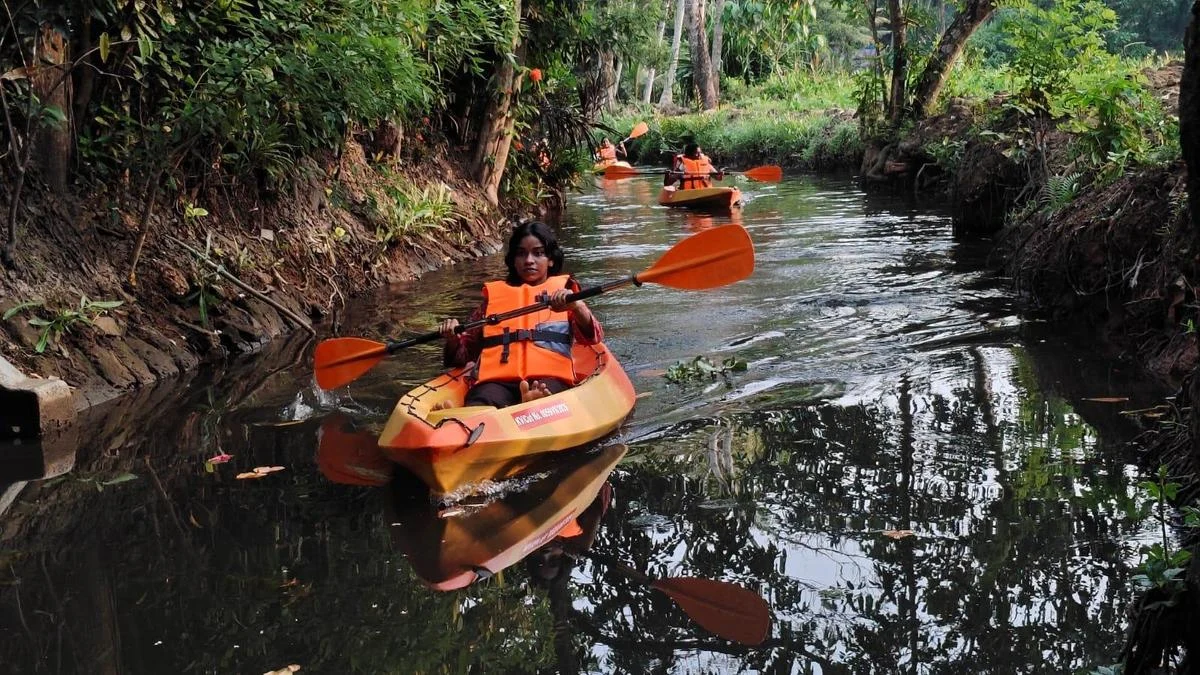
MARAVANTHURUTH, KERALA — In the quiet, sun-drenched village of Maravanthuruth, where the Muvattupuzha River branches into a labyrinth of emerald canals, a quiet revolution is taking place on the water. While the midday heat of a Kerala summer typically drives residents into the shade of coconut groves, 63-year-old N.G. Indira is heading in the opposite direction.
Indira, a communicative English trainer by profession, has traded her classroom chalk for a fiberglass paddle. She is the president of Harithatheeram, Kerala’s first all-woman kayaking club. This initiative, launched under the aegis of the Kerala Responsible Tourism (RT) Mission, marks a significant milestone in the state’s efforts to decentralize tourism and empower rural women through adventure sports and environmental stewardship.
The Vanguard of Maravanthuruth: A New Morning Routine
The Arivalthodu canal, a vital waterway linking two tributaries of the Muvattupuzha River, has become the training ground for a diverse group of women. The club’s roster defies age-old stereotypes, featuring members ranging from a Class X student balancing her studies with the oar, to senior citizens like Ms. Indira.
Every morning at 6:00 a.m., the silence of the canal is broken by the rhythmic splashing of paddles. The women gather at the local ghats, maneuvering their kayaks through the narrow, scenic stretches of the Arivalthodu. By evening, after completing their domestic chores or professional commitments, they return for a second session. This routine is not merely for fitness; it is the groundwork for a professional tourism venture that aims to place Maravanthuruth on the global map of experiential travel.
“We have completed the preliminary paddling training, and the confidence among the members is palpable,” says Ms. Indira. “This isn’t just about recreation. It is about reclaiming our waterways and proving that age or gender is no barrier to mastering the currents.”
Chronology: From Clogged Canal to Tourism Hub
The transformation of Maravanthuruth into a burgeoning tourism destination did not happen overnight. It is the result of a multi-year effort to revive the village’s neglected water bodies.
- The Restoration Phase (2021–2023): The Arivalthodu canal was once heavily silted and choked with plastic waste and invasive weeds. Under the Kerala RT Mission’s "Water Street" project, the canal underwent several rounds of intensive cleaning. Local community participation was key, with residents realizing that a clean waterway was the primary asset for any future tourism prospects.
- Conceptualization of ‘Water Street’ (2023): Maravanthuruth was selected as a pilot site for the ‘Street’ project—an initiative designed to create themed streets (Water Street, Art Street, Food Street) to offer immersive experiences to travelers.
- Formation of Harithatheeram (Early 2026): Recognizing the potential for water sports, the RT Mission identified a group of local women interested in kayaking. Unlike traditional boatmen, these women were trained to handle modern kayaks, blending traditional knowledge of the tides with contemporary sporting techniques.
- Advanced Training and Fleet Expansion (Current): Following preliminary sessions, the club is now preparing for the next phase. A select group of members will travel to Alappuzha next month for a 10-day advanced training program, while a new fleet of professional-grade paddle boats is scheduled for delivery.
Supporting Data: The Economics of the Water Street
The Harithatheeram club operates on a structured business model designed to provide affordable yet high-quality experiences for tourists while ensuring a steady income for the women involved. The pricing reflects a "farm-to-table" approach to tourism, integrating local cuisine with physical activity.
Visitor Packages and Pricing
The club has designed three primary tiers of engagement for visitors:
- The Sunrise Paddle (6:00 a.m. – 7:30 a.m.): Priced at ₹300, this 90-minute session includes a guided kayaking tour followed by a traditional Kerala breakfast (such as appam and vegetable stew or puttu and kadala curry) prepared by local households.
- The Midday Expedition (3 hours): Priced at ₹500, this package is aimed at those seeking a deeper immersion. It includes a longer navigation of the canal system and concludes with a traditional lunch featuring local fish delicacies, highlighting the "river-to-plate" culinary heritage of the region.
- The Sunset Cruise (Evening): A 90-minute ride priced at ₹250, inclusive of tea and local snacks (pazham pori or ela ada).
Inclusive Participation
To encourage family participation and nurture a love for the outdoors among the youth, the club has implemented a tiered fee structure for younger age groups:
- Ages 10–14: ₹50
- Ages 14–18: ₹100
Currently, the kayaking activities are concentrated along a pristine one-kilometer stretch of the Arivalthodu canal, but plans are underway to expand the route as more members complete advanced training.
Official Responses: Tourism as a Tool for Conservation
K. Rupesh Kumar, the Chief Executive Officer of the Responsible Tourism Mission Kerala, views the Maravanthuruth project as a blueprint for the rest of the state. According to Mr. Kumar, the success of the initiative lies in its ability to marry economic incentives with environmental conservation.
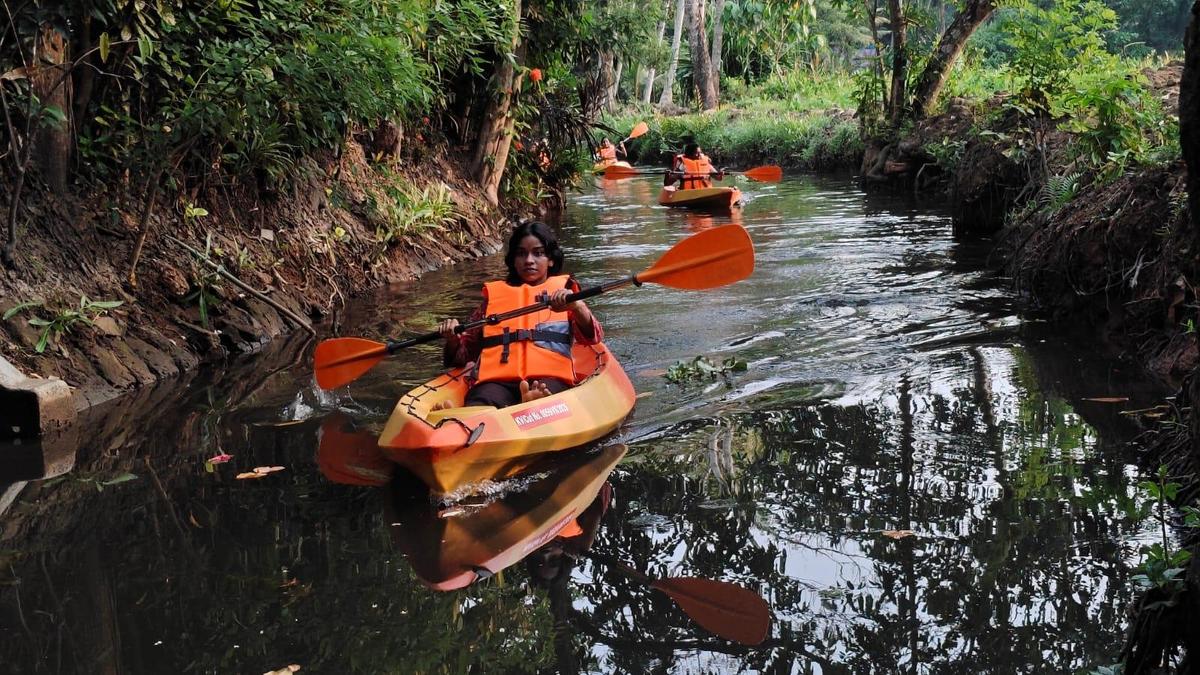
“The Arivalthodu canal forms the heart of the Water Street project envisioned for this village,” Mr. Kumar stated. “The formation of the all-woman paddling club is a masterstroke in sustainability. When the community—specifically the women—depends on the waterbody for their livelihood, they become its natural guardians.”
Mr. Kumar emphasized that the "Harithatheeram" model solves the problem of maintenance that plagues many government-led infrastructure projects. “This canal has been restored and cleared of garbage several times. Now, each stretch of the canal will be maintained by the families living along its banks. The women of the kayaking club are the frontline monitors of this ecosystem.”
Furthermore, the CEO indicated that the village’s transformation is holistic. Plans are already in motion to restore the damaged portions of the Art Street, an adjacent project where local walls and public spaces are adorned with murals depicting the village’s history and folklore.
Socio-Economic Implications and the Road Ahead
The launch of Harithatheeram carries weight far beyond the borders of Maravanthuruth. It signals a shift in the "God’s Own Country" brand—moving away from passive houseboat cruises toward active, participatory tourism.
1. Empowerment and Gender Norms
In many rural parts of India, water-based activities like fishing and rowing have traditionally been male-dominated spheres. By forming an all-woman club, Maravanthuruth is challenging these gender norms. The sight of a 63-year-old woman or a teenage girl navigating a kayak empowers other women in the community to seek roles beyond the domestic sphere. It provides them with financial independence and a sense of pride as "ambassadors" of their village.
2. Environmental Stewardship
The "Responsible" in Responsible Tourism is put to the test here. By utilizing non-motorized paddle boats, the club ensures zero carbon emissions and minimal disturbance to the local aquatic life. The presence of the kayakers also acts as a deterrent for illegal waste dumping, a common issue in Kerala’s inland waterways.
3. Replicability of the Model
The Maravanthuruth experiment is being closely watched by tourism boards across India. The model of "Micro-Destinations"—where a single village offers a specialized, high-quality experience—is seen as an antidote to over-tourism in popular hubs like Munnar or Alappuzha. If successful, Harithatheeram could inspire similar all-woman cooperatives in other coastal and riverside panchayats.
4. Integration with Local Economy
The club does not operate in isolation. It supports a network of local caterers, homestay owners, and artisans. The "Water Street" project ensures that the tourist’s dollar is distributed among the community rather than being concentrated in the hands of large resort chains.
Conclusion
As the sun sets over the Muvattupuzha River, casting long shadows across the Arivalthodu canal, the women of Harithatheeram pull their boats onto the banks. They are tired, but their spirits are high. In a few months, they will be hosting international travelers, sharing stories of their village while navigating the very waters they helped save.
For N.G. Indira and her team, the paddle is more than a tool for propulsion; it is a symbol of their agency. Maravanthuruth has proven that when a community is given the tools to protect its environment and the platform to showcase its culture, the results are transformative. The "Water Street" is open, and for the first time, it is the women who are steering the ship—or in this case, the kayak—into a sustainable future.
