

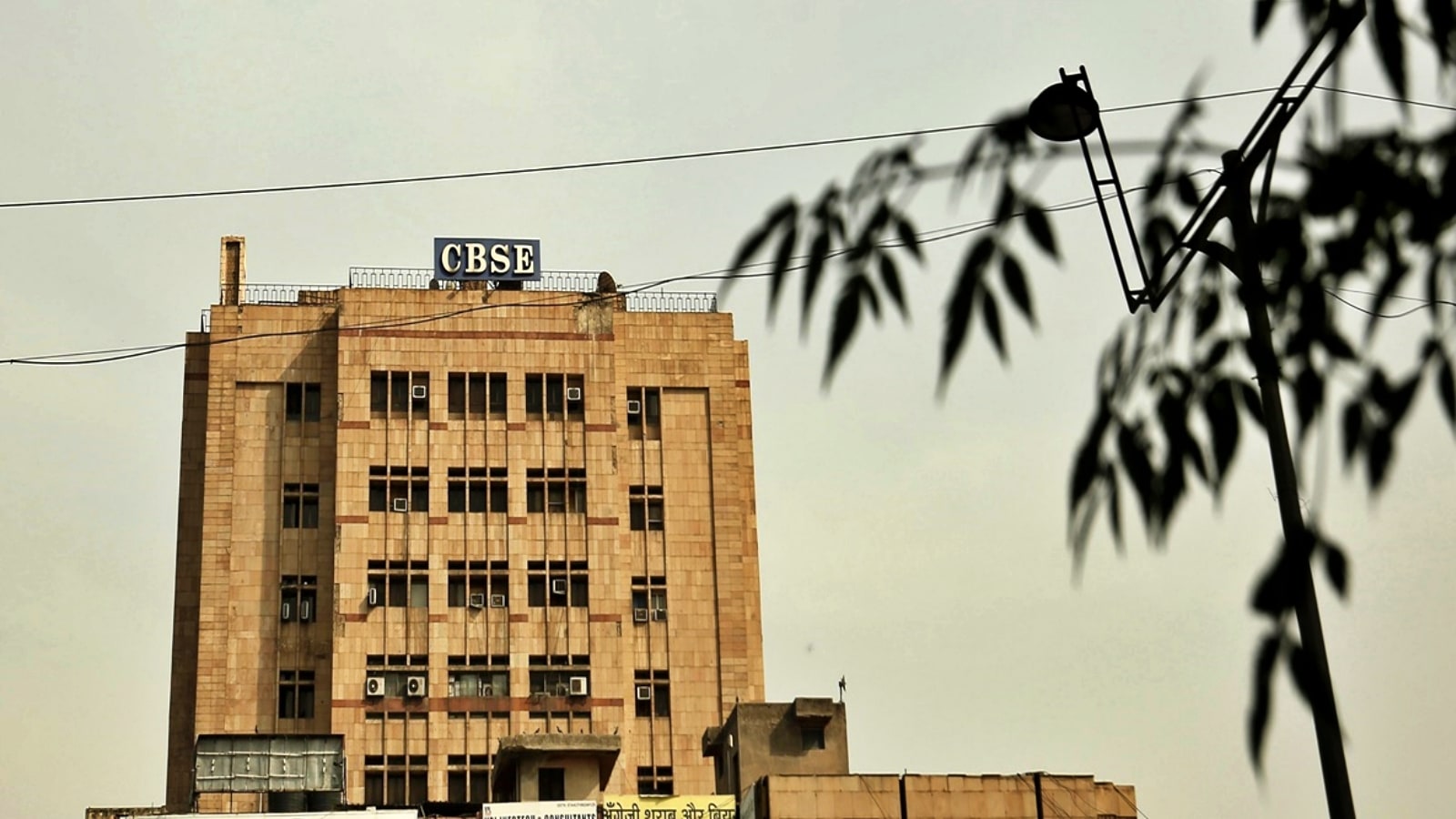
New Delhi – The Central Board of Secondary Education (CBSE) is once again under the scanner following a significant controversy involving a Class 12 student’s Physics answer script. The incident, which gained widespread attention after student Vedant Shrivastava publicly alleged a mix-up in his re-evaluation, has ignited a fresh debate about the reliability and transparency of the board’s examination and evaluation processes, particularly its On-Screen Marking (OSM) system.
The controversy escalated when Vedant, who uses the X handle @VEDANTSHRIV17, shared screenshots of his Physics answer sheet provided by the CBSE during the verification process. He claimed that the script did not match his handwriting, the answers provided, or even the questions he had attempted. This assertion quickly went viral, prompting an official admission from the CBSE that an error had indeed occurred.
The Unfolding Controversy: From Allegation to Admission
The ordeal began when Vedant Shrivastava, a Class 12 student, approached the CBSE for verification of his Physics answer script. During this process, he was provided with scanned copies of his examination paper. However, upon reviewing these copies, Vedant was dismayed to find that they did not appear to be his own work. In a series of posts on X, he meticulously detailed his concerns, highlighting discrepancies in handwriting, the content of answers, and even the presence of attempted questions that he did not recall writing.
His allegations did not remain isolated. The student’s posts resonated with a growing sentiment among students and parents who have voiced concerns about alleged inconsistencies in the CBSE’s evaluation process this year. These concerns range from improperly checked pages to unexpectedly low marks and apparent errors in answer script management. Vedant’s viral posts acted as a catalyst, bringing these simmering issues to the forefront of public discussion and attracting significant media attention.
The widespread scrutiny compelled the CBSE to respond. On Monday, the board officially contacted Vedant, acknowledging that an "answer sheet mix-up had indeed occurred." This admission by the CBSE lent significant weight to Vedant’s claims and further amplified the concerns surrounding the board’s internal processes. Vedant himself confirmed the board’s acknowledgment and stated that he had received his "correct" Physics answer booklet, validating his initial allegations.
A Glimpse into the "Corrected" Answer Sheet: Manual Markings Emerge
Following the CBSE’s admission and the subsequent provision of the corrected answer script, Vedant shared new screenshots on social media. These images, intended to showcase the resolution of the mix-up, have, however, opened up a new avenue for debate and raised further questions about the board’s evaluation methodology.
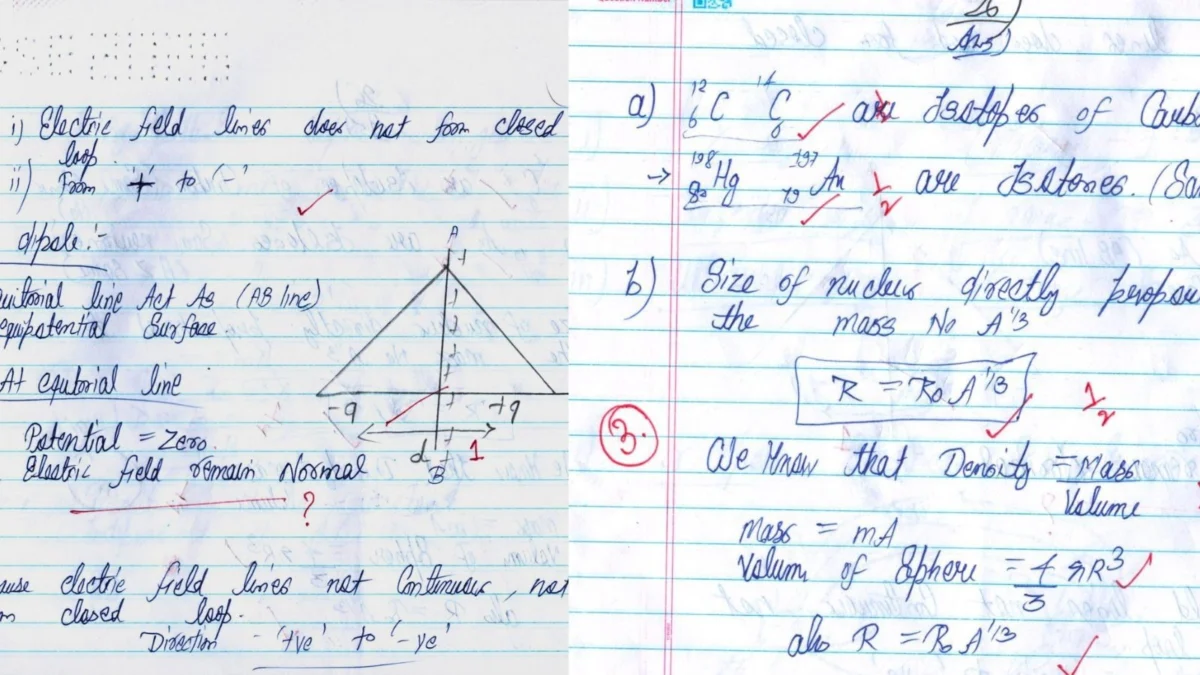
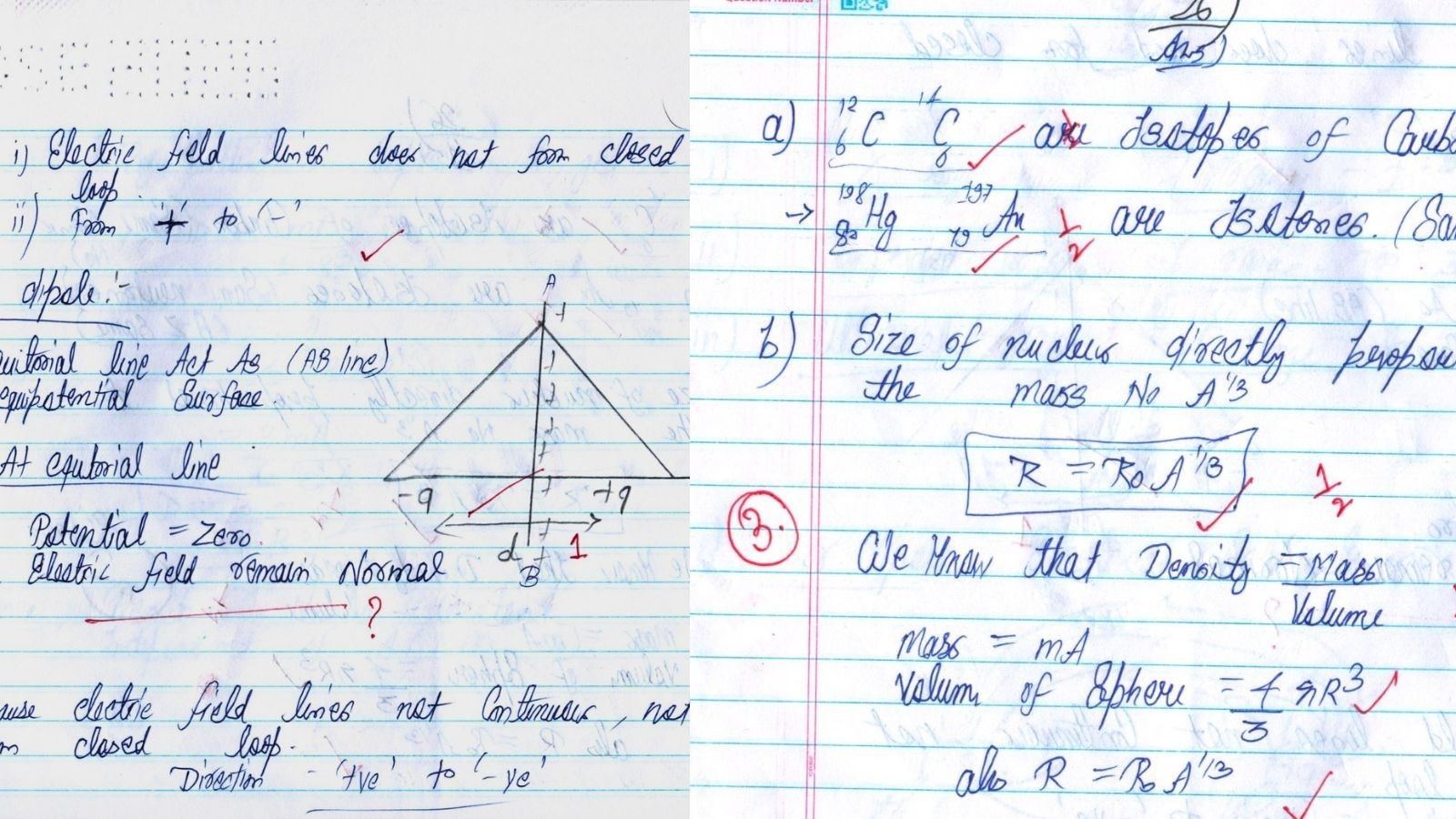
The newly shared screenshots reveal Class 12 Physics answer booklets on standard blue-lined sheets, complete with printed question numbers and QR codes, features expected in the CBSE’s digitized evaluation system. However, what has drawn significant attention is the prominent presence of red-ink markings throughout these scanned pages. These markings, which include red ticks indicating correct answers, circled question numbers with awarded marks, handwritten notations, and examiner symbols, are typically associated with traditional, manual evaluation of physical answer copies.
This observation has fueled speculation that the CBSE may have resorted to manual checking of Vedant’s Physics paper after the controversy erupted publicly. The contrast between these markings and the digital annotations expected under the OSM system has led many to question whether the board’s automated processes were indeed followed, or if a manual intervention was deemed necessary in response to the public outcry.
The On-Screen Marking (OSM) System: Promises and Perils
The CBSE had introduced the On-Screen Marking (OSM) system with the objective of modernizing and streamlining the evaluation process. The system aims to digitize answer scripts, allowing examiners to assess scanned copies electronically. This transition from traditional pen-and-paper marking to digital assessment was envisioned to enhance efficiency, reduce errors, and improve transparency. Under the OSM system, evaluators are expected to annotate digitally on the scanned images of the answer sheets, rather than making physical marks on the original documents.
However, the visual evidence presented in Vedant’s case appears to diverge from this digital paradigm. The presence of traditional red-ink markings on the scanned pages has raised doubts about the consistent application of the OSM system. While the CBSE has maintained that the OSM system is in place, the nature of the markings in Vedant’s corrected script suggests a possible deviation from the intended digital workflow, at least in this instance.
The board’s earlier provided answer script, presumably checked under the OSM system, showed a cleaner, digitally annotated format, contrasting sharply with the manually marked "corrected" version. This disparity further fuels the narrative that a manual review might have been conducted to address the specific concerns raised by Vedant and potentially to mitigate the fallout from the public relations crisis.
A History of Challenges: Supporting Data and Broader Context
This incident is not an isolated event but rather an addition to a series of challenges faced by the CBSE in its examination and evaluation processes. The board has been grappling with technical glitches and systemic issues, particularly in its post-result services. Just recently, it was reported that the CBSE is seeking assistance from the Indian Institutes of Technology (IITs) Madras and Kanpur to address persistent technical issues plaguing its post-result services portal, including those related to re-evaluation. This collaboration underscores the ongoing efforts by the board to fortify its digital infrastructure and ensure the smooth functioning of its online services.
Furthermore, the debate around different levels of examination difficulty has also been a recurring theme. The accompanying data in the original article highlights that the CBSE’s experience with offering Mathematics at two levels in Class 10 indicates a significant preference for the basic level by a substantial portion of students. In the 2023-24 Class 10 Board exam, nearly 30% of students registered for the basic mathematics paper, with 15,88,041 students opting for the standard paper compared to 6,79,560 for the basic. This suggests a nuanced understanding of student needs and academic aspirations is crucial when designing examination structures. While this data point relates to a different aspect of the board’s operations, it points to the complex landscape of educational assessment and the need for adaptable and student-centric approaches.
Unresolved Grievances and Future Implications
Despite the resolution of the answer script mix-up, Vedant Shrivastava has expressed that he is not entirely satisfied with the marking of his Physics paper. He has indicated his intention to pursue re-evaluation, asserting that some of his correct answers appear to have been under-marked. This lingering dissatisfaction underscores that even after correcting an initial error, the underlying assessment quality remains a point of concern for students.
The entire episode has undoubtedly intensified the conversation around transparency, accountability, and the accuracy of examination evaluation systems. As educational bodies increasingly adopt digitized assessment mechanisms, the CBSE’s experience serves as a critical case study. It highlights the imperative for robust quality control measures, stringent error-checking protocols, and a transparent communication strategy to maintain the trust of students, parents, and educators.
The incident raises fundamental questions about the current state of the CBSE’s OSM system. Was the manual intervention a one-off measure to salvage a difficult situation, or does it indicate a systemic reliance on manual checks even within a purportedly digital framework? The board’s response to these questions, and its proactive steps to reinforce the integrity of its evaluation processes, will be closely watched by the entire academic community. The future reliability of the CBSE’s assessment procedures hinges on its ability to address these concerns comprehensively and demonstrate a commitment to upholding the highest standards of fairness and accuracy in the examination of millions of students.
