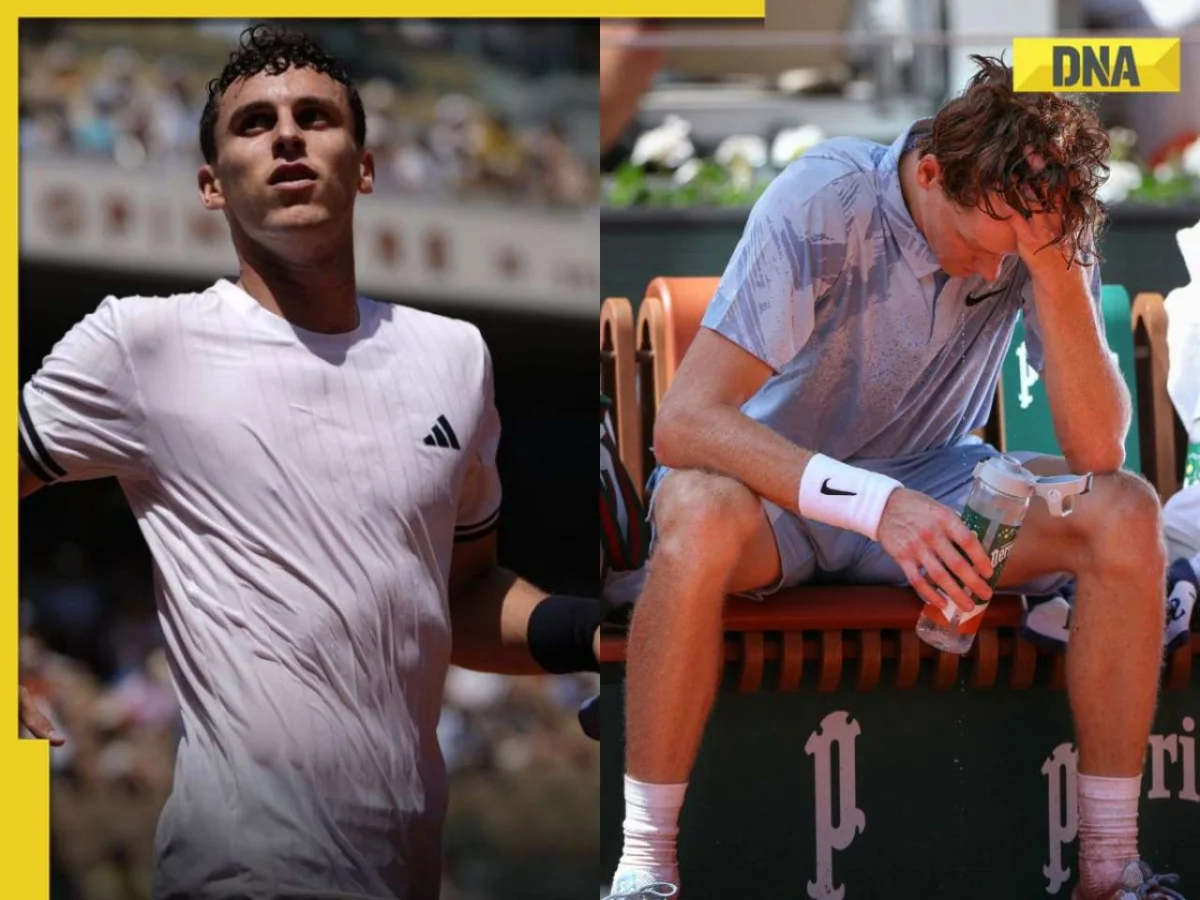
Paris, France – May 28, 2026 – In a seismic shock that has reverberated throughout the tennis world, Argentina’s Juan Manuel Cerúndolo, ranked a modest No. 67, orchestrated one of the most monumental upsets in French Open history today, dethroning reigning World No. 1 Jannik Sinner in a gripping five-set thriller. The clay-court specialist battled back heroically from a two-set deficit, ending Sinner’s remarkable and previously unblemished 30-match winning streak at Roland Garros 2026 and throwing the men’s singles draw wide open.
The 23-year-old Argentine delivered a performance of astonishing resilience and tactical brilliance, outlasting the seemingly invincible Italian in a gruelling four-hour, 12-minute epic under the sweltering Parisian sun. The final scoreline, a testament to Cerúndolo’s indomitable spirit, read 3-6, 4-6, 7-5, 6-3, 6-4, etching his name into the annals of Grand Slam lore and marking a career-defining moment on tennis’s grandest clay stage.
The Unthinkable Unfolds: A Chronology of the Epic Battle
The second-round clash on Court Philippe-Chatrier began precisely as most pundits and fans had anticipated. Jannik Sinner, the undisputed world leader, took control from the outset, displaying the sublime form that had seen him dominate the tour and amass an incredible winning streak. His groundstrokes were precise, his serve potent, and his movement fluid. He broke Cerúndolo early in both the first and second sets, quickly establishing a commanding 5-1 lead in the opening frame and closing it out 6-3. The second set followed a similar trajectory, with Sinner again demonstrating his superior firepower and composure to take it 6-4, leaving Cerúndolo seemingly on the brink of an inevitable defeat.
At this juncture, the narrative appeared set. Spectators were witnessing another routine victory for the top seed, a testament to his status and the formidable challenge he presented on any surface, let alone his increasingly comfortable stance on clay. Commentators were already discussing Sinner’s path to the latter stages of the tournament, with Cerúndolo’s spirited but ultimately futile effort expected to be just a footnote. However, the brutal Parisian heat, which had been a constant companion throughout the day, began to exert its influence, and with it, a dramatic shift in momentum commenced.
The Tide Turns: Cerúndolo’s Resilience Emerges
As the third set unfolded, a subtle but significant change became apparent. While Sinner still produced moments of brilliance, his intensity began to wane, and his movement, previously so effortless, appeared to lose some of its spring. The oppressive heat, combined with the sheer mental and physical toll of maintaining such a high level of play for an extended period, started to chip away at the Italian’s resolve. Cerúndolo, a natural clay-court artisan accustomed to grinding out long points in challenging conditions, sensed an opening.
The Argentine, who earlier in the match seemed overwhelmed by the occasion and his opponent’s relentless assault, found a new gear. He began to lengthen rallies, injecting more topspin into his forehand and deploying his crafty lefty serve to pull Sinner out wide. He broke Sinner’s serve in a crucial moment in the third set, consolidating it with fierce determination to clinch the set 7-5. This set win, against all odds, ignited a spark not only within Cerúndolo but also among the stunned crowd, who suddenly found themselves witnessing the potential for a monumental upset.
A Marathon to the Finish: Sets Four and Five
With the scoreboard now reading two sets to one, the atmosphere on Court Philippe-Chatrier transformed from one of expectant routine to fervent anticipation. Cerúndolo, fuelled by newfound belief and the crowd’s growing support, continued his relentless assault. He exploited Sinner’s visibly declining physical state, forcing the Italian to cover more ground and pushing him to the limits. Sinner, known for his incredible stamina, was struggling. His unforced error count began to climb, and his usually impeccable shot selection faltered. Cerúndolo capitalised on these lapses, playing with an intelligent aggression that belied his ranking. He secured a vital break in the fourth set and served it out confidently, 6-3, sending the match into a decisive fifth set.
The final set was a testament to both players’ will, though with contrasting energy levels. Cerúndolo, despite the monumental effort, appeared to draw strength from the sheer audacity of his comeback. He remained composed, continuing to execute his game plan of high-percentage tennis, deep groundstrokes, and strategic dropshots. Sinner, meanwhile, fought valiantly, drawing on every ounce of his champion’s spirit, but his body seemed to betray him. His serves lacked their usual pace, his movements were laboured, and his face showed the strain of the brutal conditions and the relentless pressure from his opponent. Cerúndolo secured the decisive break midway through the fifth set, holding his nerve to serve out the match at 6-4, culminating in an emotional celebration that will be replayed for years to come.
The Architect of the Upset: Who is Juan Manuel Cerúndolo?
For many casual tennis fans, Juan Manuel Cerúndolo was not a household name, often overshadowed by his older brother, Francisco Cerúndolo, who is also a prominent figure on the ATP Tour. However, within the confines of the clay-court circuit, Juan Manuel is a respected and formidable opponent. The 23-year-old lefty from Buenos Aires, Argentina, possesses a game perfectly suited for the red dirt: gritty, intelligent, and relentlessly consistent.
His ATP main-draw debut in 2021 saw him capture the Córdoba Open title as a qualifier, a remarkable feat that demonstrated his potential to rise to the occasion against the odds. While his career since then has been marked by solid performances on the Challenger circuit and sporadic breakthroughs on the main tour, this victory over Sinner transcends all previous achievements. It is not merely a win; it is a declaration.
Cerúndolo’s playing style is characterised by his superb defensive skills, his ability to absorb pace, and his knack for turning defence into offence with well-placed topspin forehands. His serve, while not overwhelmingly powerful, is strategically deployed, particularly his lefty slice out wide, which can pull opponents off the court. Against Sinner, he showcased an incredible mental fortitude, refusing to yield even when two sets down, gradually wearing down his illustrious opponent with his consistent depth and tireless retrieving. This victory is set to propel him into a new echelon of recognition and respect within professional tennis.
The Reigning King Dethroned: Jannik Sinner’s Unprecedented Streak
Jannik Sinner arrived at Roland Garros 2026 as the undisputed World No. 1, a position he had earned through a meteoric rise characterised by consistent excellence, powerful groundstrokes, and an unwavering mental game. His 30-match winning streak was the envy of the tour, a testament to his dominance across various surfaces and a clear indication of his status as the sport’s premier player. This streak included titles at the Australian Open earlier in the year, several ATP Masters 1000 events, and an impressive string of victories on the clay courts leading up to Paris.
Expectations for Sinner at the French Open were sky-high. Many saw him as the favourite, despite the traditional prowess of other clay-court specialists, given his current form and newfound comfort on the surface. His early rounds were anticipated to be mere formalities, a warm-up for the sterner tests awaiting him in the later stages.
However, the unforgiving nature of Grand Slam tennis, particularly the French Open with its long matches and often brutal conditions, proved to be his undoing on this occasion. While Cerúndolo deserves immense credit for his performance, the visible struggles of Sinner with the intense Parisian heat cannot be understated. Towards the end of the second set and increasingly into the third, his energy levels plummeted. His usually razor-sharp focus wavered, his footwork became heavy, and the characteristic zip on his shots diminished. This physical decline, whether due to the heat, a nascent illness, or simply the cumulative fatigue of his extensive winning streak, undoubtedly played a significant role in his downfall. It serves as a stark reminder that even the fittest and most dominant players are susceptible to the demands of the sport and its environment.
Official Reactions and the Buzz on Social Media
The immediate aftermath of Cerúndolo’s victory saw an outpouring of shock and congratulation across social media and tennis circles. The official Roland Garros Twitter account was quick to acknowledge the unprecedented nature of the upset, posting a message alongside a clip of the match:
"Jannik Sinner loses to Juan Manuel Cerundolo after facing physical difficulties. Hope you get better soon #RolandGarros"
This official acknowledgement of Sinner’s physical struggles, while empathetic, also highlighted the brutal reality of the conditions and the circumstances surrounding the defeat.
Tennis pundits and former players were quick to weigh in, with many calling it one of the biggest upsets in recent Grand Slam memory. "This is why we love tennis," exclaimed one veteran commentator, "the unpredictability, the raw emotion, the underdog defying all odds. Sinner’s streak was phenomenal, but Cerúndolo’s fight today was simply inspiring." Fans, both on-site and watching globally, expressed a mixture of disbelief and exhilaration, celebrating the Argentine’s triumph while also extending sympathy to Sinner. The buzz around Juan Manuel Cerúndolo’s name instantly amplified, catapulting him into the global sporting consciousness.
The Ripple Effect: Implications for Roland Garros and Beyond
The reverberations of this monumental upset will be felt deeply throughout the remainder of the French Open 2026 and could have lasting implications for both players’ seasons and the broader tennis landscape.
For Juan Manuel Cerúndolo: This victory is undeniably a watershed moment in his young career. Beating the World No. 1 at a Grand Slam, especially in such dramatic fashion, will provide an immense boost to his confidence, profile, and potentially his ranking. He has proven to himself and the world that he can compete with and defeat the very best. This breakthrough could be the catalyst for a more consistent presence in the latter stages of ATP tournaments and an elevated status within the sport. The prize money and ranking points earned from even a deeper run at Roland Garros will be invaluable, offering him more opportunities in higher-tier events. More importantly, he has transcended his identity as "Francisco’s younger brother" to forge his own distinct legacy.
For Jannik Sinner: While undoubtedly a bitter pill to swallow, this defeat serves as a significant learning experience for the World No. 1. The end of his 30-match winning streak, while disappointing, also removes the immense pressure associated with maintaining such an unprecedented run. It allows him to regroup, reassess his physical conditioning, and potentially refine his strategy for handling extreme conditions in future Grand Slams. Sinner’s team will undoubtedly investigate the factors contributing to his physical decline. While a setback, it is unlikely to derail his long-term trajectory as a dominant force in men’s tennis, but it serves as a stark reminder of the challenges inherent in Grand Slam competition.
For the Men’s Singles Draw: The elimination of the top seed in the second round has blown the men’s draw wide open. What was previously seen as a potential procession for Sinner to the final is now a labyrinth of possibilities. Other contenders, who might have felt overshadowed by Sinner’s dominance, will now view their chances with renewed optimism. The absence of the World No. 1 creates an unpredictable vacuum, potentially paving the way for a surprising finalist or even a first-time Grand Slam champion. This increased unpredictability is precisely what captivates audiences, promising an enthralling narrative for the remainder of the tournament.
Historical Context and the Enduring Allure of the Underdog:
Cerúndolo’s victory joins a revered list of iconic Grand Slam upsets, moments where the established order is dramatically overturned. While perhaps not on the scale of a Robin Söderling defeating Rafael Nadal at Roland Garros, or a Lukas Rosol stunning Nadal at Wimbledon, it certainly carries the weight of a monumental shock given Sinner’s recent dominance and World No. 1 status. Such upsets are the lifeblood of tennis, reminding us that rankings, form, and expectations can be shattered on any given day by sheer will, strategic brilliance, and the unpredictable nature of the sport. They underscore the mental and physical rigours of Grand Slam tennis, where every point, every set, and every minute on court can contribute to a dramatic swing in fortune.
In a sport often dominated by a handful of superstars, the rise of an underdog like Juan Manuel Cerúndolo is a narrative that resonates deeply with fans worldwide. It is a story of perseverance, belief, and the sheer audacity to challenge the seemingly unchallengeable. As Roland Garros 2026 continues, all eyes will now be on the Argentine, who has not just won a match, but has ignited a dream and created a legacy that will be remembered for years to come.


)

)
)
)
)
)
)
)
)
)
)
