

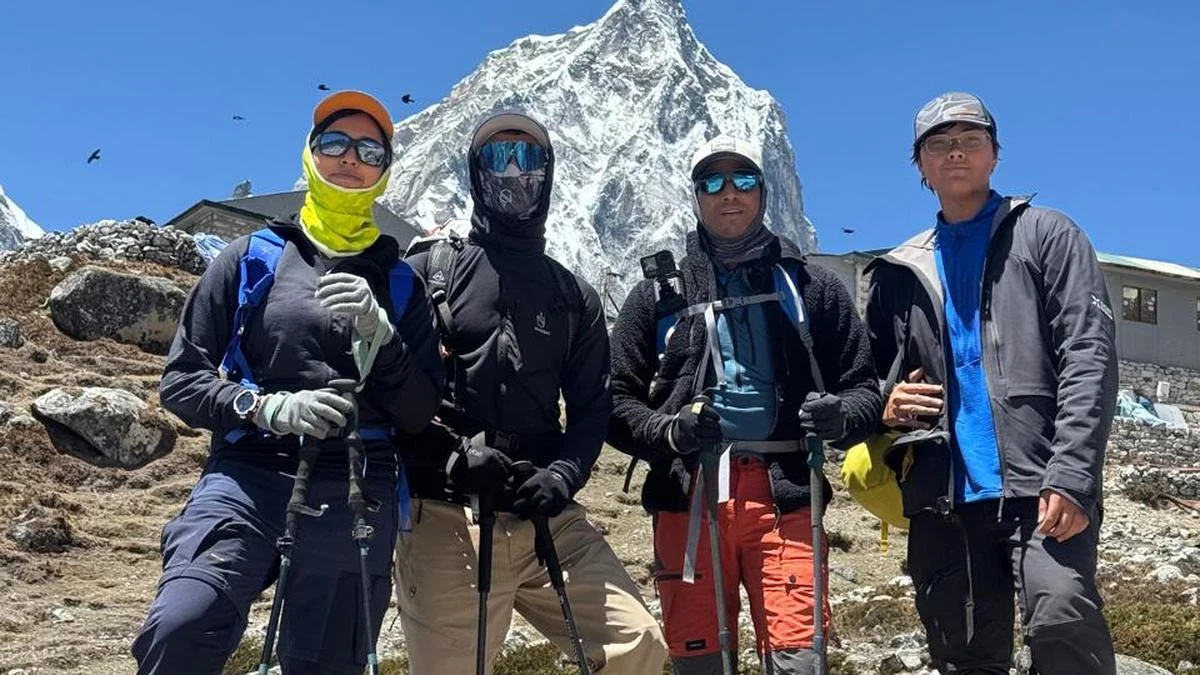
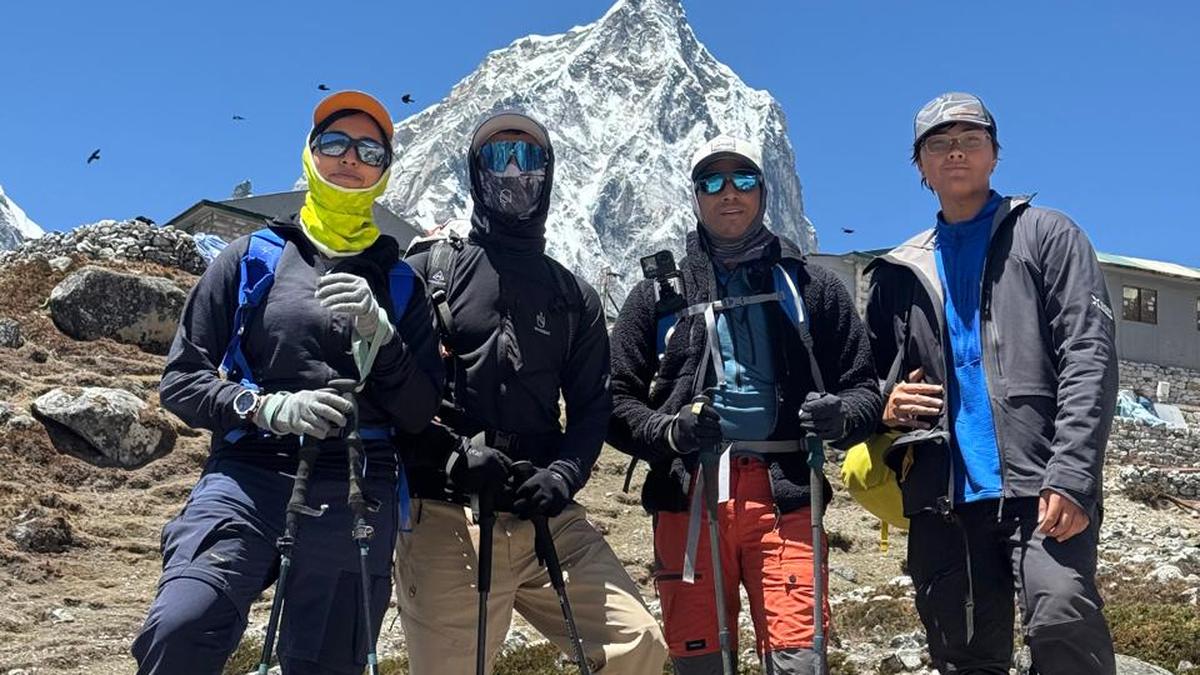
KATHMANDU/CHENNAI – In an extraordinary display of physical endurance and mental fortitude, 16-year-old Nisha Sasikumar has etched her name into the annals of mountaineering history. On May 25, 2026, the Chennai-born climber reached the summit of Mount Everest, the world’s highest peak, becoming one of the youngest individuals globally to achieve the feat via the traditional South Col route from the Nepalese side.
Standing at 8,848.86 meters above sea level, Nisha reached the "Roof of the World" at the age of 16 years and 80 days. Her achievement is not merely a personal victory but a significant moment for Indian adventure sports, highlighting the burgeoning talent emerging from non-traditional climbing regions like South India.
The Summit Push: A Test of Resilience
The expedition, organized by the renowned high-altitude guiding company Elite Exped, culminated in the early hours of May 25. According to reports from the base camp, Nisha and her team of Sherpas and fellow climbers navigated the treacherous "Death Zone"—the area above 8,000 meters where oxygen levels are insufficient to sustain human life for long periods—under clear but frigid conditions.
Nisha’s ascent followed the classic South Col route, a path famously pioneered by Sir Edmund Hillary and Tenzing Norgay in 1953. This route requires climbers to negotiate the Khumbu Icefall, the Western Cwm, the Lhotse Face, and the Hillary Step. For a teenager, the physiological demands of such a journey are immense, requiring years of cardiovascular conditioning and prior high-altitude experience.
Speaking from the safety of a lower camp during her descent, Nisha expressed a sense of profound humility. “This journey taught me the importance of resilience, preparation, and believing in yourself, even in the toughest conditions,” she said. “Standing on the summit was a moment of clarity. It wasn’t just about the height; it was about the discipline it took to get there.”
Chronology of a Prodigy: The Path to 8,848 Meters
Nisha Sasikumar’s journey to the top of Everest was not an overnight endeavor. It was the result of a meticulously planned multi-year strategy to conquer the "Seven Summits"—the highest peaks on each of the seven continents.
- Early Training (2022-2023): Nisha began her training in the Western Ghats and later moved to the Himalayan Mountaineering Institute (HMI) in Darjeeling. Her coaches noted her exceptional lung capacity and psychological stability under stress.
- Mount Kilimanjaro (Africa): Her first major international success came with the scaling of Kilimanjaro (5,895m). This served as her introduction to high-altitude trekking.
- Mount Elbrus (Europe): Shortly after, she summited the highest peak in Europe (5,642m), testing her skills in icy, glaciated terrain.
- Mount Kosciuszko & Carstensz Pyramid (Oceania): Nisha demonstrated her versatility by tackling both the "easy" walk-up of Kosciuszko (2,228m) and the technical rock climbing required for the Carstensz Pyramid (4,884m) in Indonesia.
- Mount Aconcagua (South America): In early 2025, she summited Aconcagua (6,961m). As the highest peak outside of Asia, this was the definitive test of her readiness for the "eight-thousanders."
- Mount Everest (Asia): On May 25, 2026, she completed the crown jewel of her collection.
Nisha is now on a narrow timeline to finish the Seven Summits circuit. She is scheduled to fly to Alaska in June 2026 to attempt Mount Denali (6,190m) and will conclude her quest in November 2026 with Vinson Massif (4,892m) in Antarctica.
Supporting Data: The Technicality of the South Col Route
Mountaineering experts emphasize that the South Col route, while the most popular, remains fraught with objective hazards. Nisha’s success is backed by data that illustrates the magnitude of the challenge:
- Atmospheric Pressure: At the summit, the atmospheric pressure is approximately one-third of that at sea level. This results in a severe lack of oxygen, making every step an agonizing effort.
- The Khumbu Icefall: Climbers must cross this shifting glacier multiple times during the acclimatization process. It is considered one of the most dangerous stages of the South Col route due to the risk of collapsing seracs and deep crevasses.
- Temperature Extremes: Temperatures during the summit push can drop to -40°C. Maintaining core body temperature is a constant battle against frostbite and hypothermia.
- Logistics: Nisha’s expedition was managed by Elite Exped, a firm known for its high success rates and rigorous safety protocols. The use of supplemental oxygen and a high Sherpa-to-climber ratio are standard for teenage climbers to mitigate the risks associated with developing adolescent physiology.
Official Responses and Global Recognition
The news of Nisha’s summit has triggered a wave of congratulations from the mountaineering community and government officials.
Elite Exped Statement:
In a press release, the expedition organizers praised Nisha’s composure. “Nisha demonstrated a level of maturity far beyond her years. Her technical skills are impressive, but her mental strength during the weather windows was what truly set her apart. She is a testament to the new generation of Indian climbers who are professional, driven, and environmentally conscious.”
Sports Authority of India (SAI) Representative:
“Nisha Sasikumar’s achievement is a proud moment for Chennai and the entire nation. We are seeing a shift where adventure sports are gaining traction among the youth. Her story will undoubtedly inspire thousands of young girls to look toward the mountains not just as a challenge, but as a career and a passion.”
The Mountaineering Association of India:
Officials noted that while records for "youngest climbers" are often debated due to varying age-limit regulations between Nepal and China (Tibet), Nisha’s climb is undisputed and follows all legal frameworks established by the Nepalese Ministry of Tourism.
Implications: The Rise of Youth Mountaineering and the "India Factor"
Nisha’s feat brings several critical discussions to the forefront of the global climbing community.
1. The Professionalization of Young Climbers
The era of the "amateur" climber is being replaced by young athletes who treat mountaineering with the same rigor as Olympic sports. Nisha’s success suggests that with the right financial backing, elite coaching, and technological support, the traditional barriers to entry for high-altitude climbing are shifting.
2. India’s Growing Footprint in Adventure Sports
Historically, mountaineering in India was dominated by the military or residents of the Himalayan states. Nisha, hailing from the coastal city of Chennai, represents a geographical diversification. Her success points to a growing middle class in India that is willing to invest in high-cost, high-risk adventure sports, and a cultural shift where parents support non-traditional career paths.
3. Ethical Considerations of Age
While Nisha’s achievement is celebrated, it also renews the debate regarding age limits on Everest. Critics argue that the adolescent brain and body may not be fully equipped to handle the extreme trauma of 8,000-meter peaks. However, proponents argue that with modern medicine, satellite tracking, and high-flow oxygen systems, the risks are manageable for well-trained teenagers. Nisha’s safe descent and her methodical approach through lower peaks serve as a counter-argument to those who view youth climbing as inherently reckless.
4. The Economic Impact of the "Seven Summits"
Nisha’s pursuit of the Seven Summits is an expensive undertaking, often costing upwards of $200,000 to $300,000 in total. Her ability to secure sponsorships and support highlights the commercial viability of mountaineering icons in India. As she nears the completion of her goal, she is likely to become a major brand ambassador for fitness and outdoor equipment companies.
Looking Ahead: Denali and Beyond
As Nisha Sasikumar begins her journey back to Chennai, her eyes are already set on the horizon. Mount Denali in Alaska presents a different set of challenges—unpredictable weather, heavy sled-hauling, and a lack of porter support compared to the Himalayan infrastructure. If she succeeds in June, she will be on track to become one of the youngest people in history to complete the Seven Summits.
Her message to the youth remains consistent: "The mountain doesn’t care about your age or where you come from. It only cares about your preparation and your respect for the environment. I hope my journey shows that even if you are from a city with no hills, you can still reach the highest point on Earth."
For now, the 16-year-old from Chennai stands as a symbol of a new India—one that is adventurous, resilient, and unafraid to scale the world’s most daunting heights. The global mountaineering community will be watching closely as she prepares for the final two chapters of her historic quest.
